

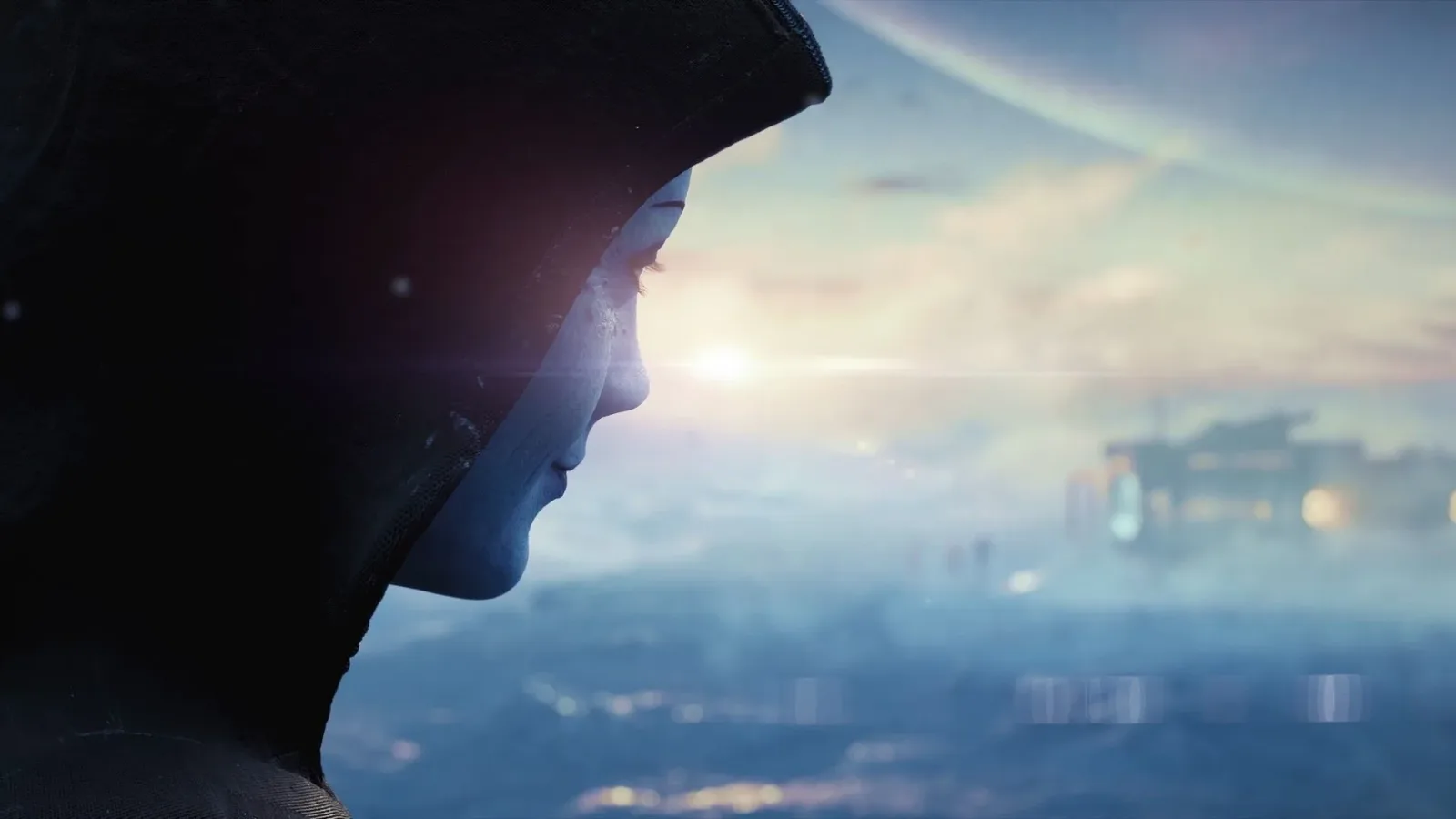
Former Mass Effect franchise art director Nicolas "Sparth" Bouvier has shared an emotional response to BioWare's closure and the cancellation of the studio's in-development Mass Effect project. Bouvier, a veteran artist whose career includes work on the original Assassin's Creed and the Halo series during 343 Industries' era, revealed that he had led art direction for the franchise from April until the studio's closure.
His comments offer a rare glimpse at the people and ambitions behind the now-canceled project, which was later identified as Mass Effect Universe. While little has officially been shown from the game, a trailer that surfaced online after the closure announcement intensified the disappointment around its cancellation. For Bouvier, however, the most painful part is not simply that players may never see the work. It is the breakup of a team he considered exceptionally capable.
"Knowing that this work will never see the light of day is truly heartbreaking," Bouvier said. "We were good at this. We really were. I'm thinking about the team, the talent, what we could have achieved."
A Veteran Artist Steps Into Mass Effect
Bouvier's career gives his assessment of the team considerable weight. He previously worked as a senior artist on the first Assassin's Creed, a landmark project for Ubisoft that established the visual language of a long-running franchise. He also contributed to Halo titles from the 343 Industries period, placing him among the artists who have worked on some of gaming's most recognizable science-fiction worlds.
For useful background on this topic, read Mass Effect's 12 Defining Moments, From Virmire to Andromeda's Unanswered Secrets.
That background made him a notable fit for Mass Effect, a series whose identity has always depended heavily on art direction. From the stark, militarized spaces of the Systems Alliance to the elegant forms of Citadel architecture, the alien cultures, planetary vistas, spacecraft, armor, interfaces, and even the color of a star-filled sky all play a central role in making Mass Effect feel distinct.
Bouvier said the team's aim was to explore fresh creative possibilities without losing sight of what made the original trilogy meaningful to players. That balancing act is one of the hardest challenges for any legacy series. A new installment needs enough change to justify its existence, but it also must feel recognizably connected to the world fans remember.
For Mass Effect in particular, that task comes with enormous expectations. The original trilogy's visual style evolved over three games while retaining a coherent universe: polished near-future technology, alien civilizations with deeply established identities, high-stakes galactic politics, and a mixture of grounded military science fiction with more fantastical cosmic ideas. Any future chapter would be judged not only on whether it looked impressive, but on whether it understood that identity.
BioWare's Closure Ends the Project
BioWare announced its closure last week, ending the studio's long history and bringing development on its current Mass Effect game to a halt. The closure came months after EA was acquired by private investors, amid indications that cuts were expected. Alongside the studio shutdown, the Mass Effect project being developed at BioWare was canceled.
The project was subsequently identified as Mass Effect Universe after a trailer leaked online shortly following the announcement. The footage's emergence prompted a renewed wave of fan reaction because it suggested that the team had been building toward a potentially compelling continuation of the series.
Leaked materials can only reveal so much. A trailer, especially one from an unreleased game, cannot communicate the full state of production, the scale of its systems, the final narrative direction, or how close a project may have been to completion. Still, the reaction reflects the strength of the attachment players have to Mass Effect and the appetite for a new entry after years of uncertainty.
For the developers involved, the cancellation has a more immediate human cost. Games are made through long periods of iteration, collaboration, compromise, and specialized labor. Art teams establish visual pillars, concept artists test possibilities, designers and technical teams determine what can work in an engine, and every department contributes to turning early ideas into a playable world. When a studio closes, those shared processes stop abruptly, and years of collective expertise can scatter across the industry.
"Rarely Seen a Group So Tightly Knit"
Bouvier emphasized that the people at BioWare stood out even within an industry he has worked in for nearly three decades. He described the Mass Effect group as tightly connected, highly experienced, and unusually effective at working together.
"In nearly 30 years in this industry, I've rarely seen a group so tightly knit, so experienced, and so good at working together," Bouvier said.
That sentiment matters because game development is not merely a question of hiring talented people individually. Major projects often involve hundreds of staff members across many disciplines, and a group's ability to communicate, trust one another, and solve problems together is as important as the resumes of the people in the room.
An experienced team can develop a shared shorthand. Artists understand the visual priorities of the project. Writers can work with cinematic teams to identify the emotional needs of a scene. Gameplay designers can collaborate with animators and audio staff to make a moment feel responsive and dramatic. Technical teams can anticipate the needs of content creators before those needs become bottlenecks. That cohesion is difficult to establish and easy to lose when a team is dissolved.
Bouvier's remarks therefore underline why the closure has landed so heavily with fans and former staff alike. The cancellation does not just mean one unannounced game will not arrive. It means the end of a particular gathering of developers, one that had formed around the challenge of carrying Mass Effect forward.
The Difficulty of Continuing a Beloved Sci-Fi Series
Mass Effect's future has long carried unusual pressure. The trilogy concluded a sweeping story that was shaped by player choices and closely associated with Commander Shepard and the Normandy crew. Returning to that universe means addressing the expectations attached to those characters, while also finding a story that can stand on its own.
That is where art direction becomes especially important. It can establish a new era, signal a new tone, and create a visual bridge between familiar history and unexplored territory. A fresh location, ship design, or alien culture can tell players that the series is moving forward. At the same time, recognizable elements can reassure them that they are still in the Mass Effect universe.
Bouvier's statement that the team wanted to find new creative ground while honoring the trilogy suggests that this was a central concern for Mass Effect Universe. It does not confirm specific story details or gameplay features, but it does indicate that the project's leadership was conscious of the franchise's legacy rather than treating the name as a blank slate.
The leaked trailer's appearance has made that lost potential harder to dismiss. Unreleased games are often remembered through rumors, concept art, or a few ambiguous development details. In this case, fans had visual material to examine immediately after hearing that the project had been canceled. That sequence naturally sharpened frustration, even though it remains impossible to know what the final game might have become.
A Personal Farewell to a Lost Team
Bouvier ended his reflection by saying he was honored to have been part of the Mass Effect team. It is a brief sentiment, but it carries the sense of a professional farewell to colleagues and to work that will remain unfinished.
His account also serves as a reminder of the distinction between a franchise and the people who build it. Major series can appear permanent from the outside: recognizable logos, decades of history, established characters, and vast communities of players. Yet every installment depends on teams that can change dramatically over time. When those teams are separated, creative knowledge and momentum do not automatically survive.
There is no announced path forward for Mass Effect Universe following BioWare's closure. The project has been canceled, and Bouvier's comments make clear that he expects the work created by the team not to be seen publicly. What remains is the legacy of a group he believes had the talent and unity to make something special.
For Mass Effect fans, the news is another painful chapter in the series' uncertain future. For the developers who made up the team, it is the end of a shared effort that had only recently found its art director and was still pursuing a new vision for one of science fiction gaming's most enduring worlds.
Community
Discussion
Start the conversation.
No comments have been posted yet.