

The reported shutdown of BioWare has put an understandably somber focus on one of role-playing gaming's most influential legacies: Mass Effect. Across four released games, the series built its reputation on a combination of vast science-fiction mythology, intensely personal squadmate stories, and decisions that asked players to carry the consequences well beyond a single mission.
That combination made the Normandy crew feel unusually permanent in players' memories, even when the games themselves insisted that nobody was safe. Command decisions could leave a chair empty. A misplaced assignment could cost a teammate their life. A final conversation could reframe an entire trilogy. Even Mass Effect: Andromeda, the series' most separate chapter, planted mysteries that now appear unlikely to receive their intended resolution following the cancellation of Mass Effect: Universe.
These are 12 scenes that capture what made the series work at its highest points. They are not simply the biggest battles or the most famous twists. They are moments where BioWare's writing, role-playing systems, performances, and world-building collided to make the stakes feel personal.
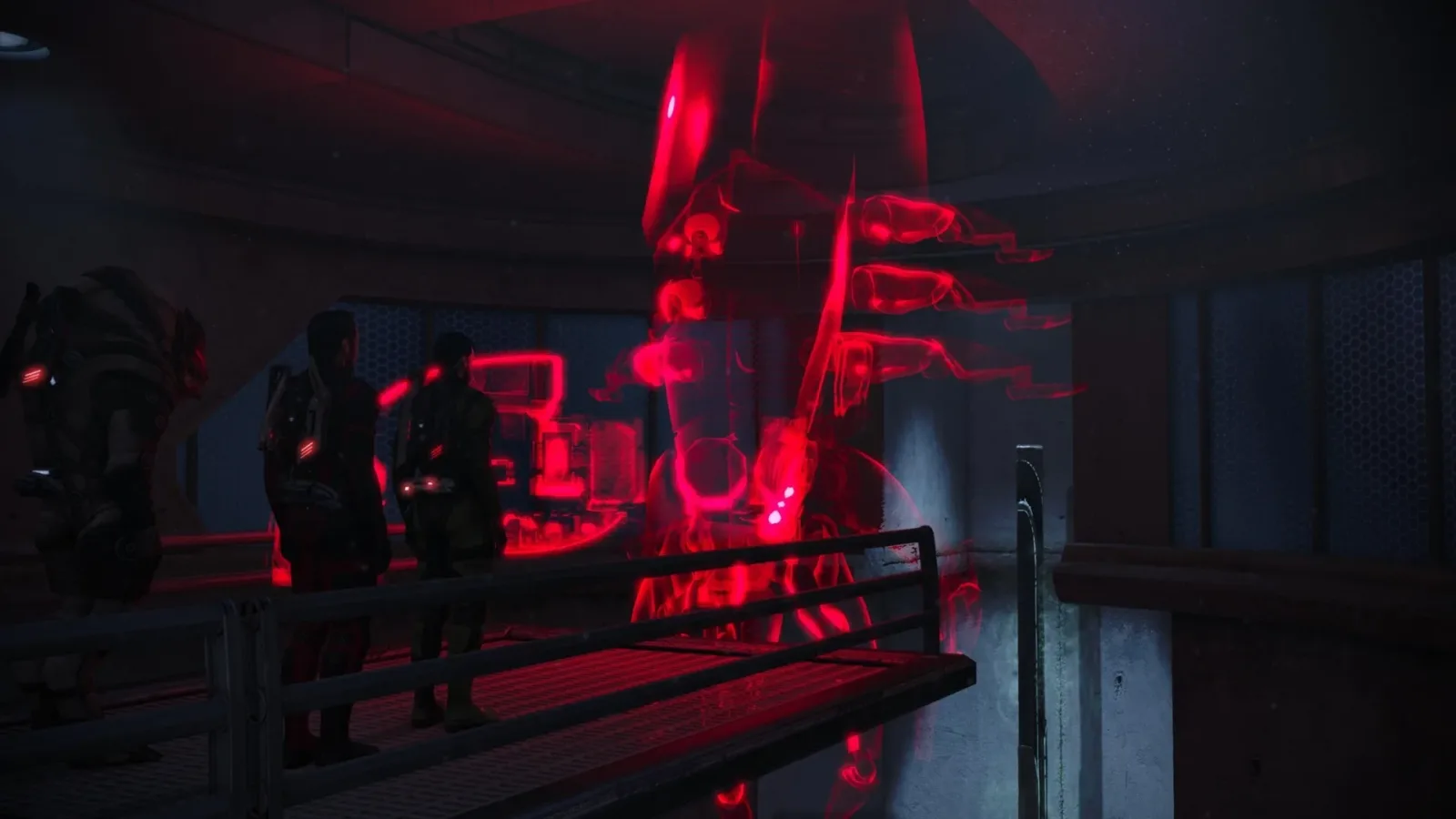
1. Speaking with Sovereign changed the scale of Mass Effect
The first Mass Effect spends considerable time making its universe feel immense. The Citadel is sprawling, alien cultures have generations of political baggage, and humanity is still finding its place among older galactic powers. Then Shepard communicates with Sovereign, and the game reveals that the known galaxy is smaller than its heroes ever imagined.
For useful background on this topic, read Kotaro Uchikoshi Says AI Could Have Helped Prevent Crash Keys Game Cancellation.
Sovereign's declaration that the Reapers are beyond organic understanding is frightening because it refuses to treat humanity as special. Civilizations have lived, advanced, and been erased before. The Reapers have done this repeatedly over incomprehensible stretches of time. Shepard's response--humanity will resist where others failed--becomes a defining act of defiance for the trilogy.
It is an effective villain introduction precisely because it is more than a threat. It redraws the entire premise. What looked like a political conspiracy suddenly becomes a war for survival against an ancient, cyclical force.
2. Virmire proved that command has a cost
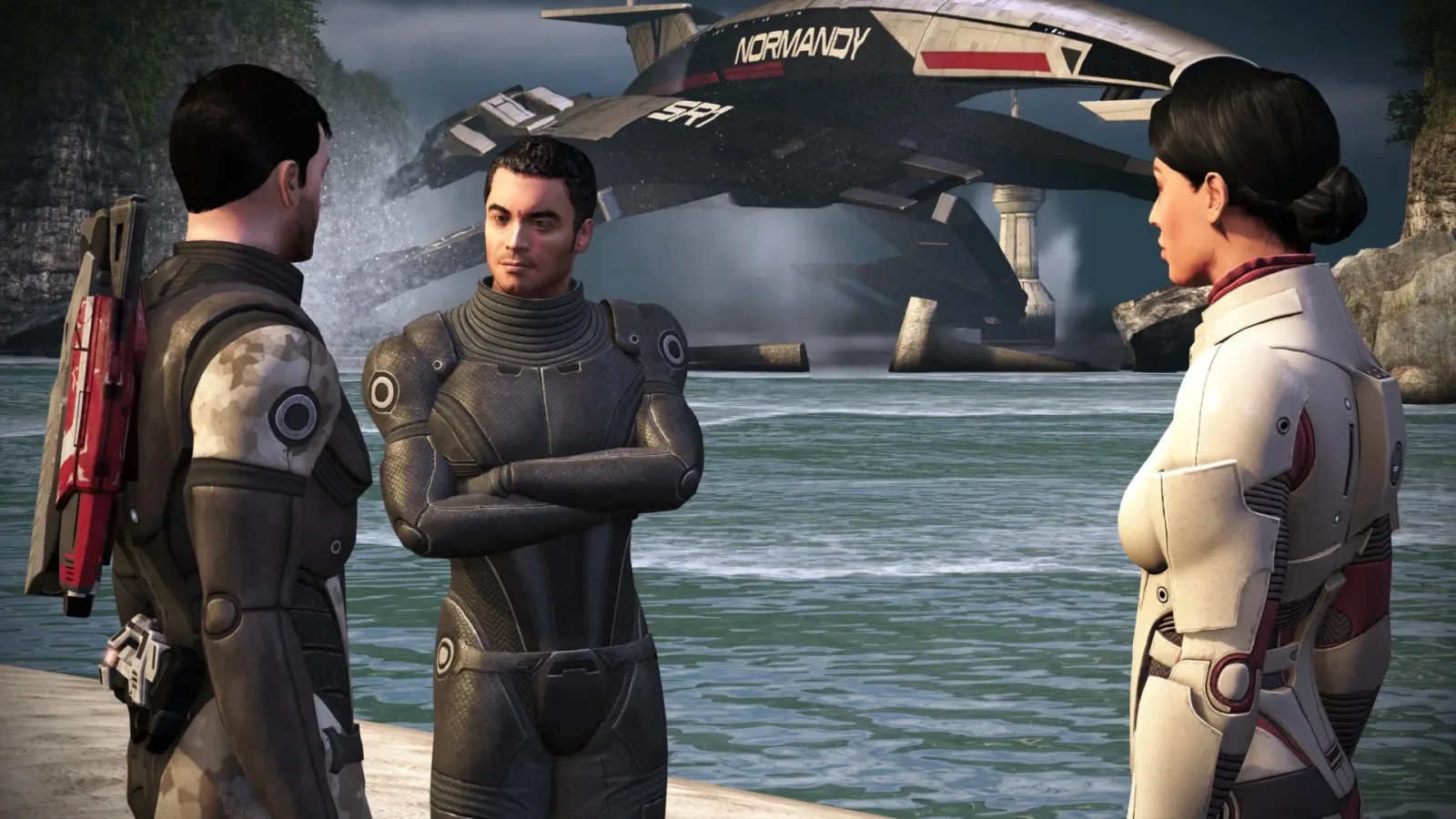
Mass Effect's Virmire choice is still among the clearest demonstrations of what the series meant when it promised consequential decisions. Ashley Williams and Kaidan Alenko are trapped at separate points during the assault on Saren's base. Shepard can save one. The other dies.
There is no clever dialogue option that preserves both squadmates. There is no late-game reversal. Whoever is left behind remains gone, while the survivor continues to have a meaningful place in the next two games. The Normandy itself underlines the absence, with an empty seat serving as a quiet reminder of the decision.
The sequence gives the player responsibility rather than the illusion of it. Being the commander is not about always finding a perfect outcome; sometimes it means choosing which loss can be endured.
3. Vigil turned lore into a revelation
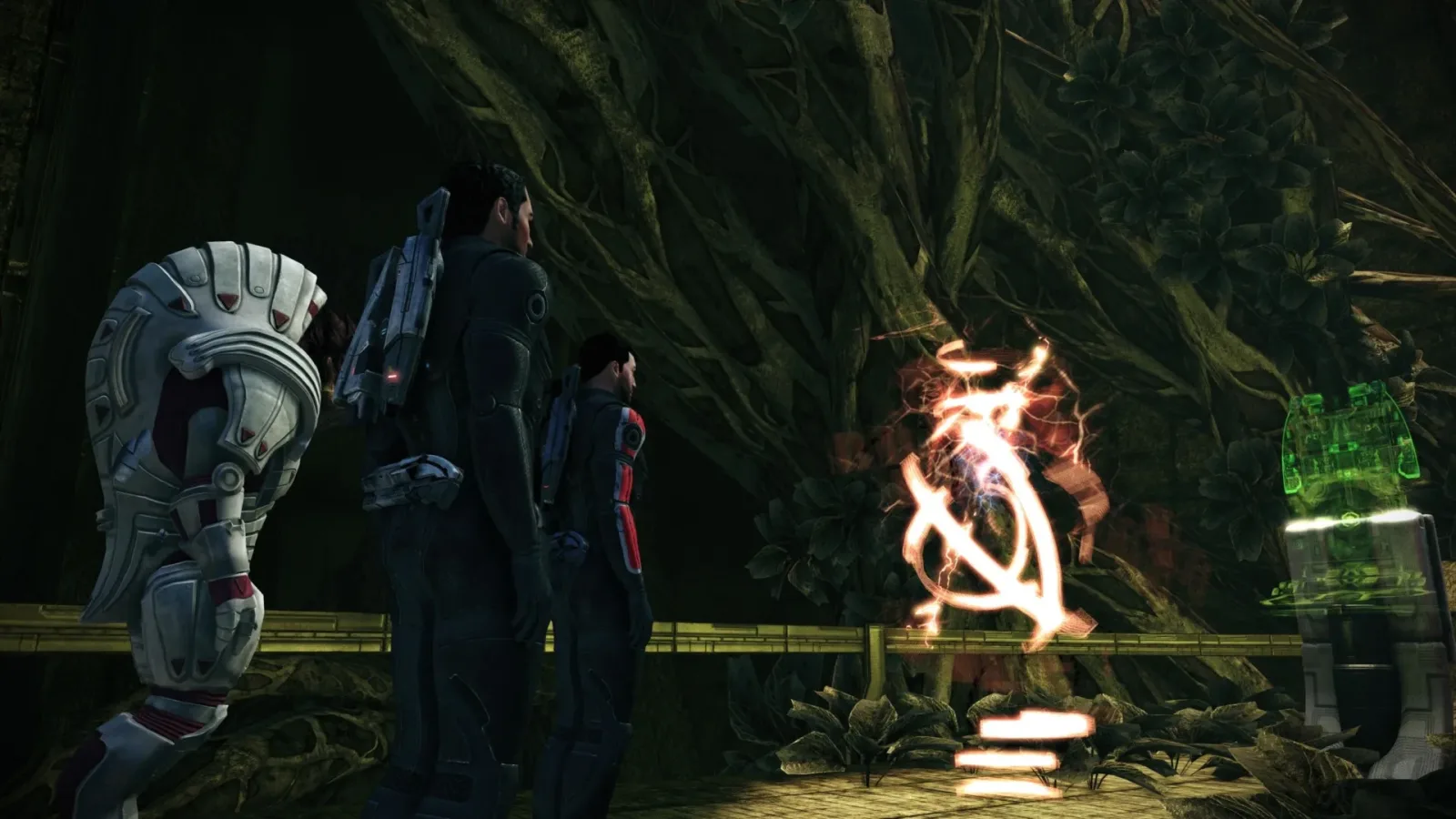
Mass Effect has no shortage of exposition, but the conversation with Vigil on Ilos remains one of its strongest lore-heavy scenes. The Prothean virtual intelligence explains the desperate effort to disrupt the Reapers' plans and, in doing so, changes how players see the Citadel.
The station introduced as the center of galactic civilization is revealed to be tied directly to the enemy's design. The keepers, initially part of the Citadel's scenery, become vital pieces of an old defense that has quietly delayed the Reapers' return. It is a bleak explanation, but it gives Shepard a path forward.
Vigil also preserves mystery. It offers enough information to make the threat coherent without fully explaining the Reapers' ultimate purpose. That restraint makes the impending confrontation feel even more ominous.
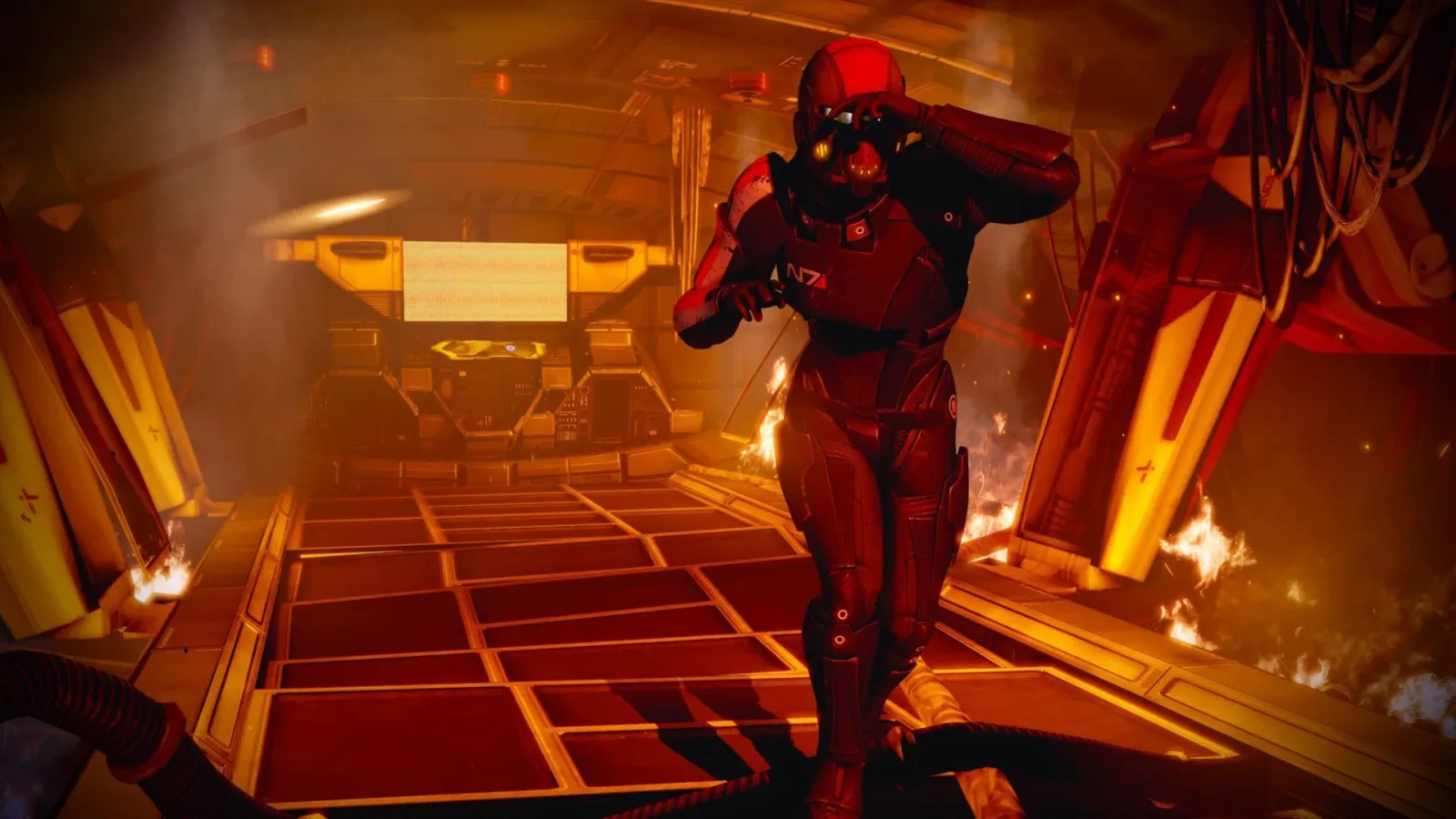
4. The Normandy's destruction made Mass Effect 2 feel dangerous immediately
Few sequels open by killing their protagonist and destroying their iconic home base. Mass Effect 2 does both. The Normandy is ambushed, torn apart, and abandoned. Shepard dies while trying to escape.
The fact that Shepard is restored through the Lazarus Project does not make the scene meaningless. Instead, it establishes the game's core anxiety: a second chance is not the same as safety. The rebuilt Normandy can fly again, but the commander now knows how quickly everything familiar can be taken away.
That loss also gives the new mission an unsettling edge. Cerberus offers Shepard a way back, but at a cost. The player begins the game not from a victory lap after the first game's ending, but from a catastrophe.
5. Tali's trial put politics, family, and loyalty on one stage
Tali'Zorah's loyalty mission in Mass Effect 2 is exceptional because it makes a deeply personal conflict inseparable from the politics of the quarian people. Facing exile after evidence appears to connect her father with active geth research, Tali needs Shepard to act as her advocate before the Admiralty Board.
As the investigation unfolds, the situation becomes more complicated than a straightforward defense. The leaders of the Migrant Fleet have competing agendas, and the findings around Tali's father create a painful choice between protecting her name, preserving her loyalty, and exposing the political manipulation behind the trial.
The mission makes the quarian-geth conflict feel immediate long before the trilogy resolves it. It also shows why Tali endures as one of Mass Effect's most beloved companions: the stakes are never only military. They are about heritage, grief, trust, and home.
6. The Suicide Mission tested whether players truly knew their crew
The Collector Base finale is one of the great role-playing game endgames because it does not simply ask whether players completed enough preparation. It asks whether they understood the people they recruited.
Every major choice during the Suicide Mission has a practical consequence. Who can lead a second fire team? Who should maintain the biotic barrier? Who is best suited for a technical task? Which squadmates can be trusted to protect the crew? Wrong answers can lead to permanent deaths.
The tension is elevated by the fact that squad loyalty, ship upgrades, and prior choices all matter. Players who have spent the entire game building a team have to prove they were paying attention. The final mission turns character knowledge into survival strategy, creating a level of dread and adrenaline that is difficult to replicate on a first playthrough.
7. Mordin's sacrifice completed a trilogy-long arc
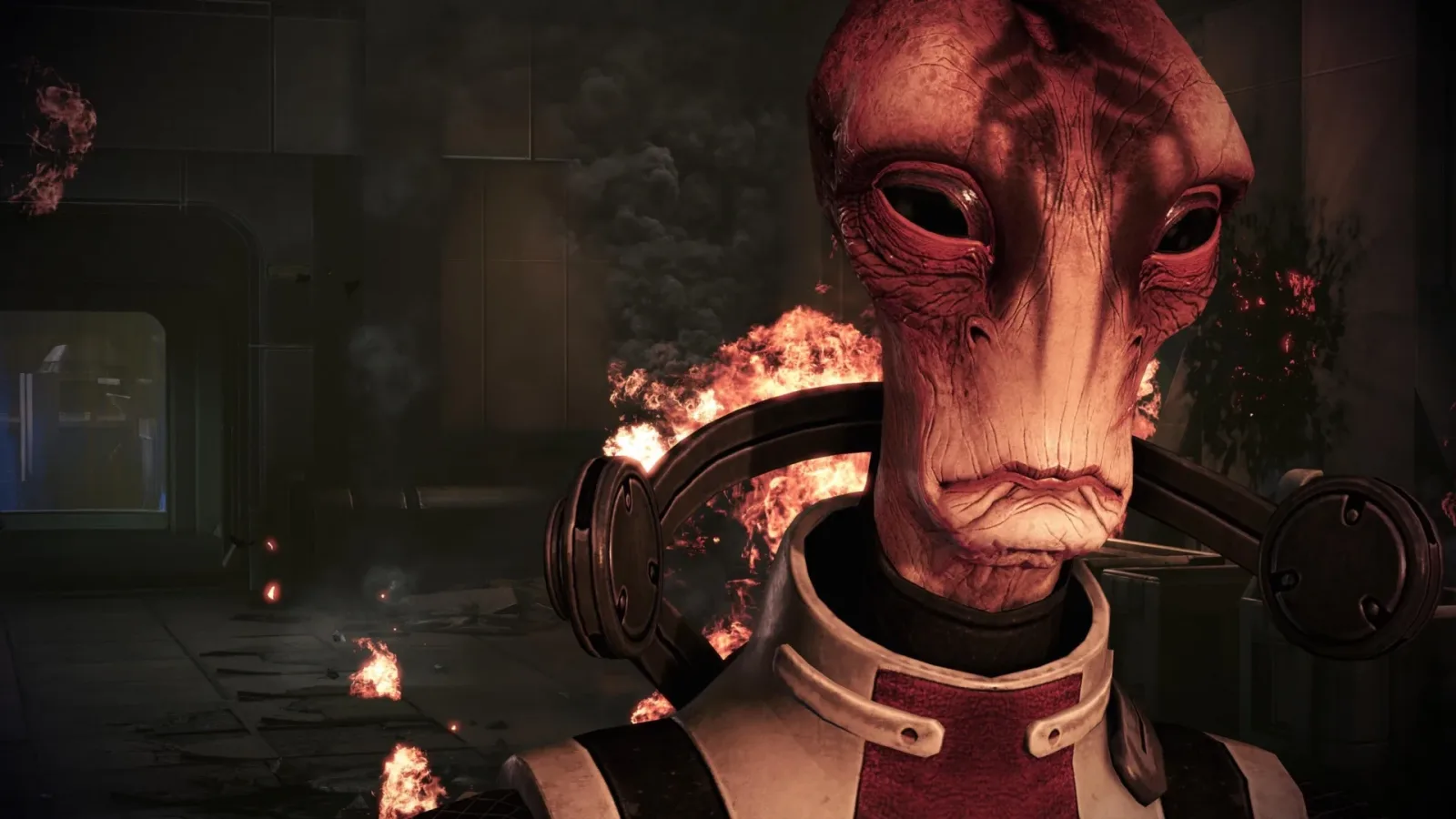
Mordin Solus enters Mass Effect 2 as a brilliant, fast-talking salarian scientist whose clinical reasoning is often at odds with the human cost of his work on the genophage. By Mass Effect 3, he is forced to confront what it means to correct that history.
His path can diverge based on Shepard's actions, including outcomes in which the genophage cure is sabotaged. But the most powerful version sees Mordin commit to releasing the cure into the atmosphere of Tuchanka despite the danger. He climbs toward the dispersal system as the structure fails around him.
It is a sacrifice that feels earned rather than merely tragic. Mordin's final words and his brief return to the song he once performed connect humor, guilt, conviction, and courage in a single scene. His conclusion remains one of the trilogy's sharpest examples of a character choosing who he wants to be.
8. Thane's final prayer brought tenderness to the war
Thane Krios' death hits differently. Where Mordin's fate is tied to a monumental political decision, Thane's final moments are quieter and more intimate. Already terminally ill, the drell assassin gives what strength he has left while protecting the people he cares about.
His farewell centers on a prayer to Kalahira. Too weak to complete it himself, he asks Shepard to read it, and its focus is not on Thane's own destination. It is for the person he is leaving behind. That detail says everything about his character: he approaches death with concern for another person's future.
Mass Effect 3 is full of loss, but Thane's scene stands out because it allows grief to linger. It is not a spectacular battlefield death. It is a final act of connection between friends.
9. The Citadel party gave the Normandy crew room to breathe
The Citadel expansion for Mass Effect 3 understands that an ending is more meaningful when players have time to enjoy what is at risk. Its story delivers a playful spy adventure, but its lasting value is the chance to gather surviving companions for one loud, chaotic party.
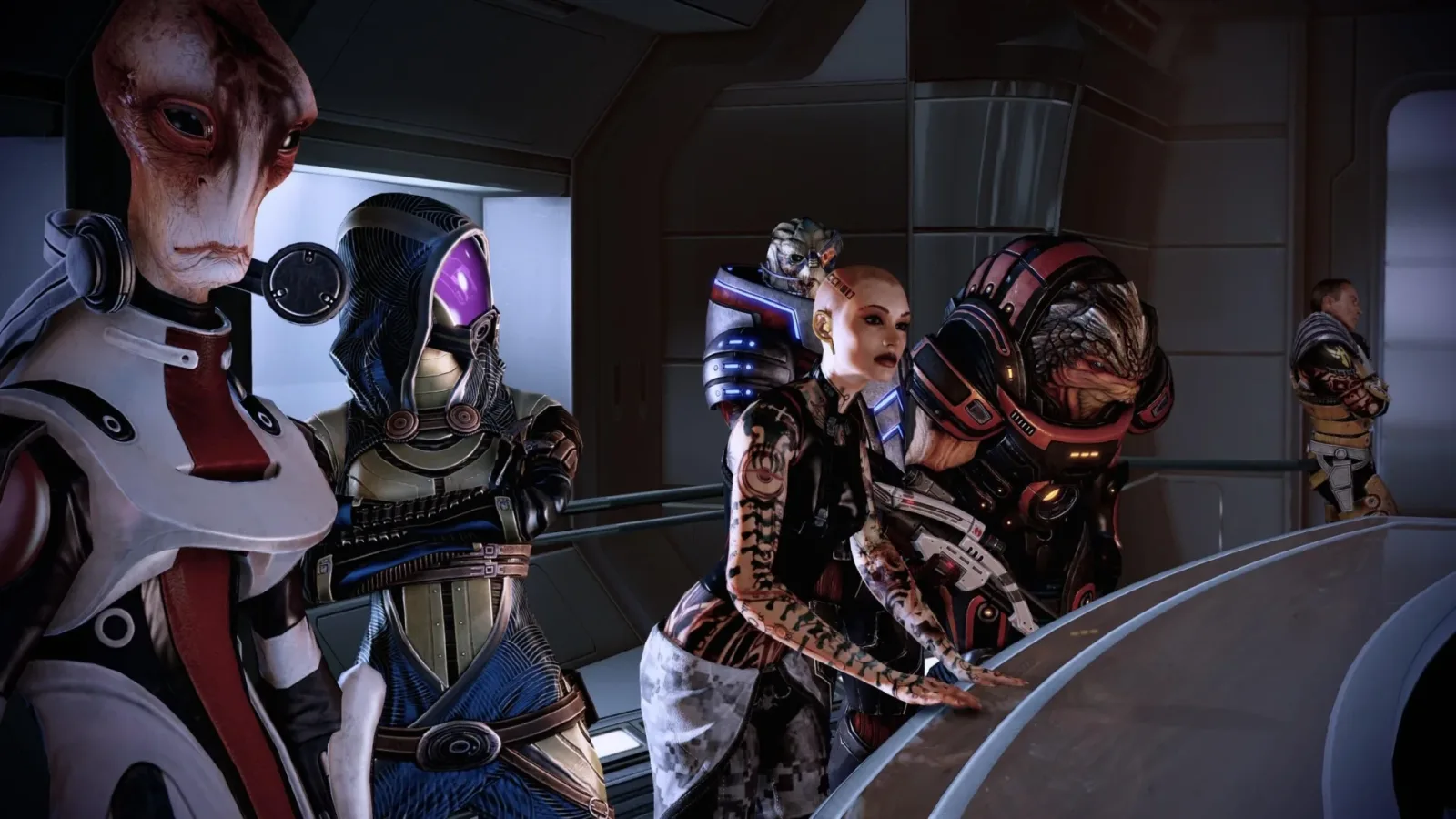
Squadmates who rarely interact elsewhere can joke, compete, reminisce, and relax. The celebration embraces the series' comedy without pretending the Reaper war has disappeared. The shore leave will end. Everyone knows the final battle is waiting.
That contrast is exactly why the party works. It is a farewell to the crew as a family, not just as a roster of combat abilities. The closing exchange--"It's been a good ride" and "The best"--lands because players have lived through that ride with these characters for years.
10. Anderson's pride offered Shepard a true goodbye
Admiral David Anderson has been central to Shepard's journey since the beginning. He is a mentor, an advocate, and a steady presence in a galaxy where institutions repeatedly fail the people they are supposed to protect. At the end of Mass Effect 3, his final words give the story one of its most human moments.
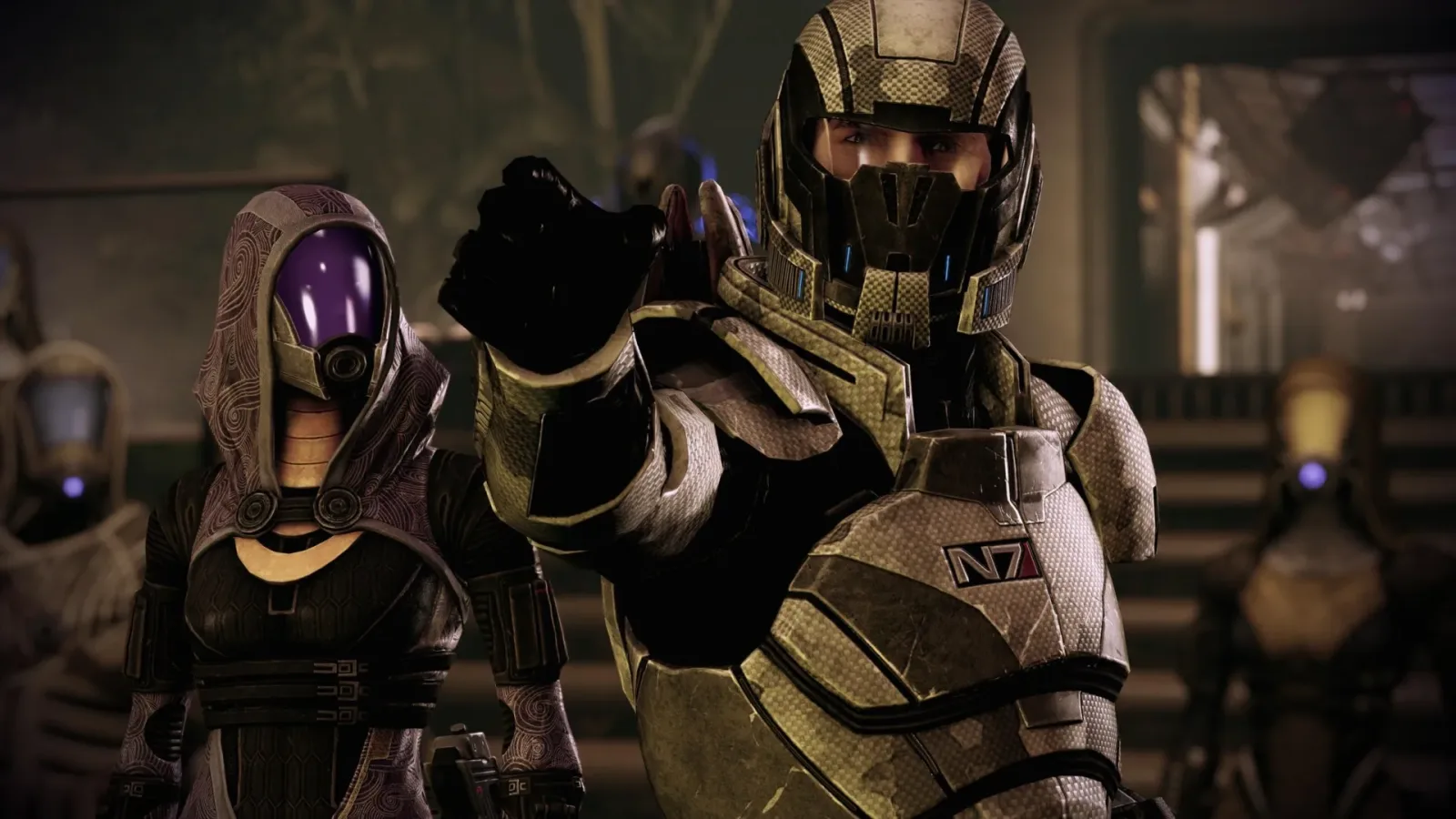
Anderson telling Shepard that he is proud is not just a reward for saving the galaxy. It recognizes the journey from an N7 officer with potential into the person capable of carrying impossible decisions. Keith David's warm, authoritative performance gives the exchange its power.
For many players, this is the emotional ending of the trilogy. Before any final choice is made, Shepard receives the approval of the person who believed in them first.
11. The final choice made players define Shepard's legacy
The ending of Mass Effect 3 remains debated, but its final decision has lasting power because it asks players to act rather than explain themselves. Shepard can destroy synthetic life to end the Reaper threat, seize control of the Reapers, or pursue Synthesis and fundamentally alter the relationship between organic and synthetic beings.
None of the paths are free of sacrifice. Destruction can mean the loss of friendly synthetic life. Control puts Shepard in an extraordinary position over the future. Synthesis makes a galaxy-wide transformation on behalf of everyone. The choice is a culmination of the questions raised throughout the trilogy: Can organics and synthetics coexist? Is peace worth compromise? Is control ever truly benevolent?
Most importantly, the game does not require a final speech to define the answer. The player makes the decision through action, leaving Shepard's reasoning internal. That makes the outcome feel like a personal legacy rather than just another dialogue-wheel selection.
12. Ryder Family Secrets revealed Andromeda's most tantalizing mystery
Mass Effect: Andromeda takes place far from the Milky Way, but the optional Ryder Family Secrets arc creates a powerful link back to the original trilogy. By unlocking Alec Ryder's memories, players learn that the Andromeda Initiative may have had motives far more complicated than exploration.
The revelations indicate that the initiative was, in part, an attempt to evacuate as many people as possible before the Reapers arrived in the Milky Way. They also raise larger questions about the initiative's mysterious benefactor, the funding behind the project, and whether its hidden architects intended to reach Andromeda themselves.
Those threads now carry additional weight. With Mass Effect: Universe canceled, it appears unlikely that players will learn what was planned for the benefactor or how the initiative's story might have connected to the Reaper War. The unanswered questions are frustrating, but they also demonstrate that even the series' most divisive entry still found compelling new territory.
Mass Effect's legacy is ultimately built on moments like these. The series excelled when it made galaxy-level conflict feel like something happening to a friend, a family, a crew, or a commander forced to live with an impossible call. Whatever comes next for the franchise, those choices and voices remain embedded in the medium's science-fiction canon.
Community
Discussion
Start the conversation.
No comments have been posted yet.