

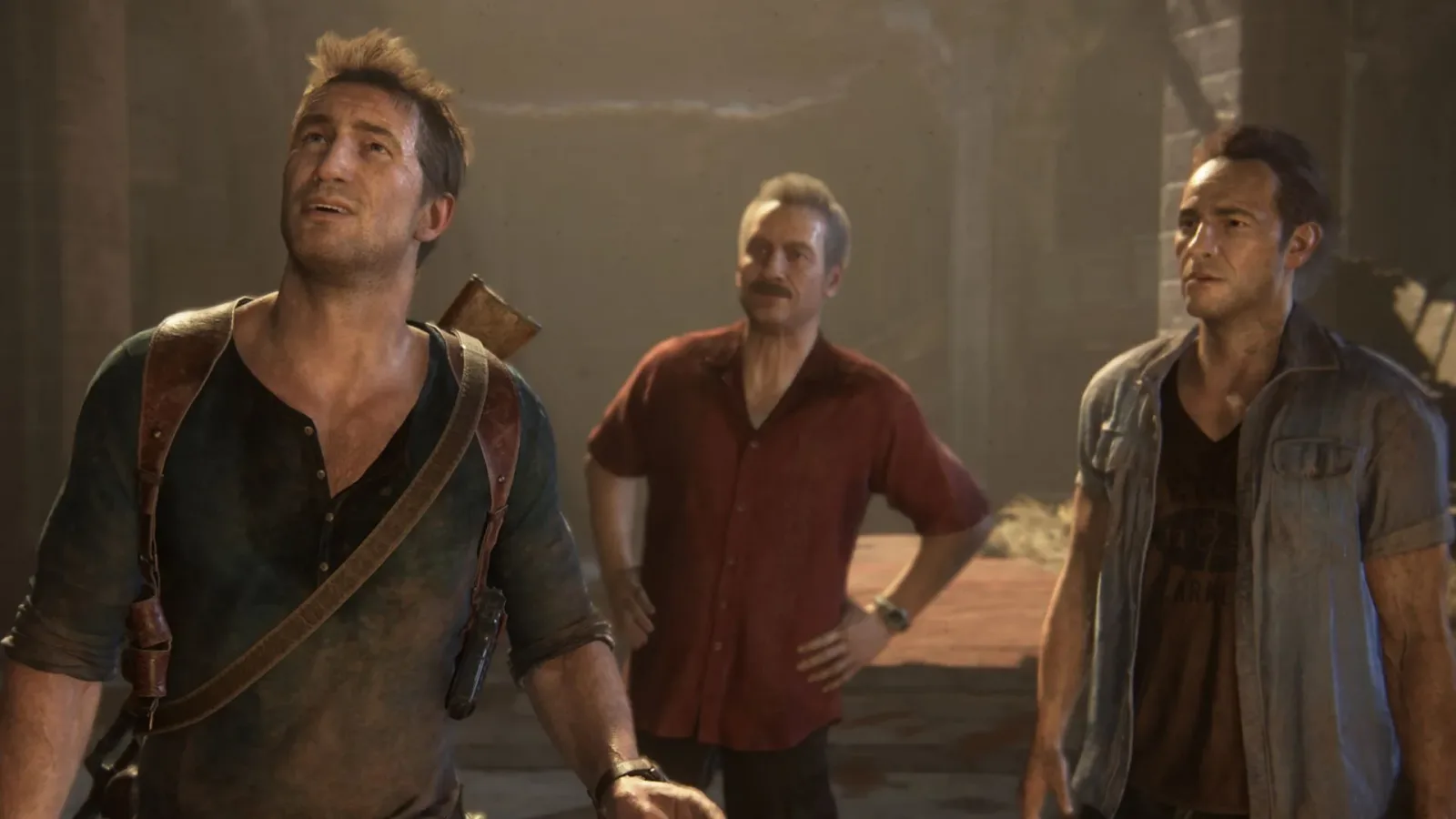
More than a decade after development began, Uncharted 4: A Thief's End remains one of the most discussed examples of a major game changing direction during production. The final adventure arrived in 2016 as a polished, emotional conclusion to Nathan Drake's story, but it was also the product of a difficult transition behind the scenes. Amy Hennig, a central creative voice on the earlier Uncharted games, departed Naughty Dog while the project was underway. Neil Druckmann and Bruce Straley subsequently led the game through to release.
Now, former Naughty Dog visual effects artist Matt Radford has offered another recollection of the version associated with Hennig's early plans. Speaking in an interview with Kiwi Talkz, Radford described what he saw as a dramatically different game from the Uncharted 4 players eventually received. His comments do not provide a complete blueprint for the unreleased iteration, but they reinforce several details that have emerged over the years: Sam Drake was part of the concept, the relationship between the brothers was more adversarial, and the project was still taking shape in a highly experimental form.
Sam Drake was reportedly closer to an antagonist
Radford said Hennig's version did not use "the same characters" in the same way as the finished game. His most notable recollection concerns Sam, Nathan Drake's older brother, who is introduced in A Thief's End as a supposedly long-lost sibling whose return pulls Nathan back into a dangerous hunt for pirate treasure.
In the released game, Sam is not a conventional villain. He is secretive, reckless, and frequently selfish, but the story frames his reunion with Nathan as a complicated family wound rather than a simple battle between hero and enemy. By the ending, the brothers have reached a measure of understanding, even after Sam's lies place nearly everyone around him in serious danger.
For useful background on this topic, read Stargate Homebrew Brings Williams Arcade Action to the Commodore VIC-20.
Radford's memory suggests the earlier approach pushed the tension much further. He said that Sam was "the villain" in the version he encountered, while also emphasizing that Hennig's game was "very different" from the final release. That wording is important because game development often involves ideas that evolve across multiple prototypes. A character described as a villain in one production phase could still have had a more nuanced role than a straightforward final boss or enemy.
Even so, the idea aligns with comments Hennig made in 2019. She said Sam represented an antagonistic presence in Drake's life in her version of the story, though she stopped short of calling him an antagonist in the most traditional sense. Her outline involved Nathan confronting a ghost from his past before the brothers moved toward reconciliation and reunification. In other words, the basic emotional subject matter appears to have survived the transition, while the exact dramatic shape of Sam's role changed considerably.
The core premise may have endured the leadership change
Hennig's previous remarks painted a more complicated picture than the popular notion that one entire Uncharted 4 was discarded and replaced by a completely unrelated game. She said the project's "DNA" and core story were already present. The main difference was how the newly introduced brother fit into Nathan's life and how directly that relationship created conflict.
That is visible in the 2016 game itself. Sam is the catalyst for Nathan's return to the world of thieves, mercenaries, lost cities, and pirate legends. He also acts as an uncomfortable reflection of the life Nathan claims he has left behind. Nathan has built a future with Elena, while Sam remains obsessed with the romanticized version of their shared past. The conflict between responsibility and adventure became one of the final game's defining themes.
Radford's account suggests Hennig may have explored the same family connection through a sharper and potentially darker conflict. A Sam who functions more clearly as an enemy would have changed the rhythm of the story, its late-game revelations, and perhaps Nathan's final decision about the life he wants to lead. It also would have altered how players viewed the brothers' childhood history, their criminal upbringing, and Sam's influence over Nathan.
That alternate path is unlikely to ever be fully known. Developers' recollections can cover different milestones, while early material may represent only one stage in a project that was continuously changing. Still, the recurring agreement between Hennig's own explanation and Radford's memories makes the broad outline increasingly convincing: Sam was always a major idea, but his antagonism was more pronounced before the game's final direction was established.
An early demo built under rough conditions
Radford also recalled how early and improvised the production felt when he joined. He said the team created a greenlight demo for Uncharted 4 that ran at roughly one frame per second on a PC. It was, in his words, "crazy scrappy" at that point.
That anecdote offers a useful reminder of how far removed a greenlight demonstration can be from a finished blockbuster. Such work is meant to help a studio test ideas, demonstrate technical ambitions, and earn the confidence needed to continue investing in a project. It is not expected to resemble a release-ready game in either performance or presentation.
Uncharted 4 eventually became one of the most technically ambitious games on PlayStation 4, featuring large environments, extensive climbing systems, vehicle sequences, detailed facial animation, and cinematic set pieces. The later PC release likewise carried the game to another audience. Knowing that an early internal build could barely run makes the scale of that final technical achievement even more striking.
Radford said Hennig's vision seemed cool to him, despite the rough state of the material at the time. Yet he also expressed appreciation for the version that ultimately shipped. That perspective avoids treating the released game as a failure simply because a different concept existed first. Uncharted 4: A Thief's End was widely regarded as a strong installment in a strong adventure series, and it gave Nathan Drake a final chapter built around his marriage, his family, and the cost of chasing one more impossible prize.
Unused material has fueled years of speculation
Interest in Hennig's Uncharted 4 has endured partly because pieces of unused material have surfaced over time. Earlier this year, dataminer Michael Kemp, also known as Thekempy on YouTube, examined material connected to the game and presented scenes and references he believed did not match recognizable events in the finished release.
The findings included indications of levels that did not appear in the final game, along with story elements that were seemingly abandoned or reworked. Among the most intriguing details was the suggestion of additional shipwreck exploration involving Nathan and Elena. The unused concepts were also characterized as having less gun violence than the released version.
None of that material can conclusively reconstruct a full lost campaign. Cut scenes, obsolete level references, and incomplete assets are common in major productions, especially on a game with a development history as complex as Uncharted 4's. But the discoveries complement the testimony from people who were there. They point to a project that had already established many of its broad ingredients while still exploring substantially different missions, relationships, and story emphasis.
For fans, that creates an enduring fascination. The final game exists as a complete work, but its production history leaves room to imagine another version: one with a more openly hostile Sam, different scenes between Nathan and Elena, and perhaps a less combat-heavy approach to adventure.
Hennig's next project carries renewed attention
Radford said he wants to see Hennig have a comeback, praising her talent and asking when audiences will get to play her games again. Hennig is currently working on Marvel 1943: Rise of Hydra, which has been delayed. She previously came up with the story concept for Square Enix's 2023 action RPG Forspoken.
Her work on the original Uncharted trilogy left a lasting mark on cinematic action-adventure games, particularly through its mix of character banter, globe-trotting archaeology, pulp serial influences, and big-screen staging. That legacy is one reason every newly revealed detail about her Uncharted 4 plans attracts attention so many years later.
Still, the newly discussed memories are best viewed as another fragment rather than a final answer. The game under Hennig was different, Radford says, and Sam's role seems to have been much more directly antagonistic. But the family conflict, the idea of Nathan being drawn back toward his former life, and the eventual need for reconciliation may have been there from much earlier in development.
That makes the story of Uncharted 4 less about two entirely separate games and more about a major creative work being reshaped under extraordinary circumstances. Players will likely never see Hennig's version in full, if it ever existed as a single fully settled vision. The pieces that remain, however, continue to reveal how many possible paths Nathan Drake's last adventure could have taken.
Community
Discussion
Start the conversation.
No comments have been posted yet.