

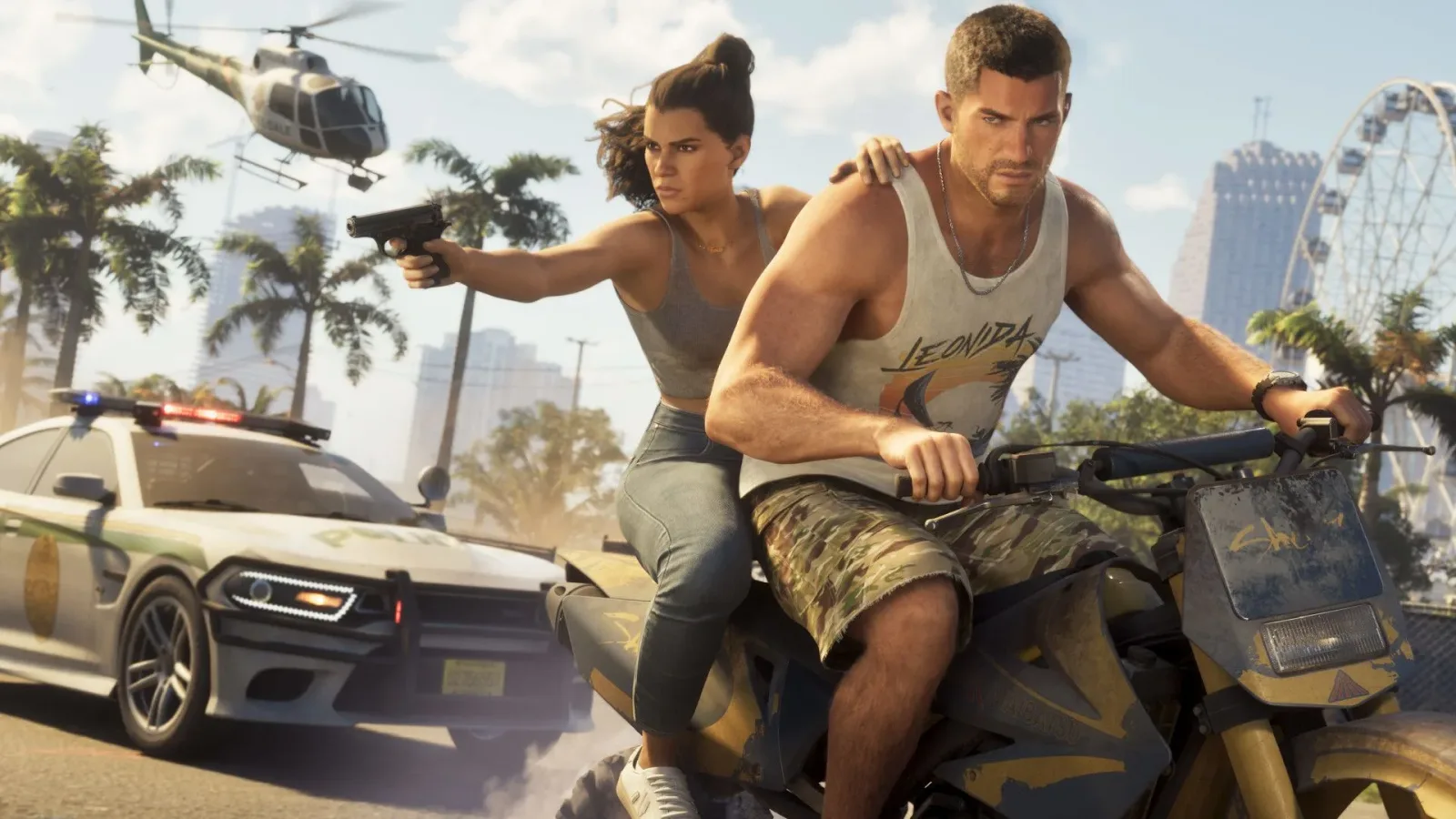
A Grand Theft Auto movie or television series has not been ruled out by Take-Two Interactive, but the company is setting an exceptionally high threshold for any attempt to bring Rockstar Games' crime saga to the screen.
Speaking on The David Rubenstein Show, Take-Two chief executive Strauss Zelnick addressed the long-running question of why one of gaming's largest and most influential franchises has never received a conventional film or TV adaptation. His answer was not a promise that a project is coming, nor an indication that one is currently being developed. Instead, Zelnick emphasized that Take-Two treats extensions into other media with caution, and would only proceed if its creative teams believed an adaptation could genuinely serve players and audiences.
"We're very careful about line extensions," Zelnick said, referring to adaptations beyond games. He explained that Take-Two sees itself as a creative company whose ambition is to make outstanding entertainment, rather than simply turning its best-known properties into as many products as possible.
That distinction matters for Grand Theft Auto. The series is not merely a recognizable brand name with an existing audience. Over the course of three decades and six mainline installments, it has become a landmark in open-world game design, popular culture satire, cinematic presentation, radio comedy, and player-driven storytelling. Any film or series would therefore face an unusual challenge: it would have to find a reason to exist beyond recreating car chases, neon-soaked cityscapes, and crime-movie references that the games already deliver in interactive form.
For useful background on this topic, read Wolfenstein 3 Officially Enters Production as Motion Capture Begins.
Passion, audience value, and the risk of failure
Zelnick said Take-Two would consider a movie or television show based on its intellectual property if the company's creative teams were enthusiastic about the idea and felt it could "engage and delight" consumers. But he also stressed that the standard is demanding, and that every such project carries a risk of falling short.
That may sound like a careful corporate answer, but it also reflects a practical concern that has followed Grand Theft Auto for years. Rockstar's games are built around freedom and scale. Players choose how to explore a city, when to pursue a mission, what to listen to on the radio, and how much time to spend on a story's central campaign versus its distractions and side activities. A two-hour movie, or even a multi-season TV drama, cannot replicate that flexibility.
Screen adaptations would need to offer something different: perhaps a sharply defined crime story, a new cast of characters, or an angle on a fictional city that could not be told as effectively through a game. Simply adapting the plot of an existing entry could prove difficult. Grand Theft Auto protagonists are memorable partly because players spend dozens of hours beside them, absorbing the rhythms of their cities and their worlds. Condensing that relationship into a traditional screenplay would be a major creative gamble.
There is also the matter of tone. Grand Theft Auto routinely combines violence, broad comedy, social commentary, music, parody advertisements, and pastiches of American entertainment. It can move from an elaborate heist to a ridiculous radio broadcast in moments. A screen project would have to decide whether to lean into that satire, pursue a more grounded crime-drama approach, or find a balance between the two. Each route could alienate part of an audience if handled without a clear point of view.
A crowded era for game adaptations
The possibility arrives during a period when video game adaptations have become a major priority across film and television. In 2026, audiences saw releases including Resident Evil, Mortal Kombat 2, Street Fighter, Iron Lung, Exit 8, Return to Silent Hill, and the latter half of Fallout season two. The pipeline for 2027 is already substantial, with a The Legend of Zelda movie, A Minecraft Movie 2, and Sonic 4 among the announced projects, alongside the possibility of more game-based television productions.
That boom creates opportunity, but it also makes Take-Two's restraint easier to understand. Modern adaptations can become hits when they identify what makes a game's world, characters, or emotional core distinctive. Yet the wave has also made audiences more alert to projects that feel like branding exercises. For a property of Grand Theft Auto's stature, a merely competent adaptation could be viewed as a missed opportunity rather than a success.
Grand Theft Auto is particularly unusual because the games have always been deeply informed by cinema and television. Rockstar has drawn on the language of gangster stories, heist films, action thrillers, cop dramas, tabloid culture, reality television, and music-video aesthetics. That history means an adaptation would not just be translating a game into Hollywood's language; it would be translating a game that has spent decades responding to, borrowing from, and satirizing that language.
It also raises a fascinating creative question. Could a renowned filmmaker associated with the crime genre make a Grand Theft Auto project feel essential rather than redundant? Directors such as Michael Mann or Martin Scorsese are frequently invoked when people discuss the influences visible across Rockstar's body of work. If a filmmaker with that kind of stature wanted to engage with the series, the prospect might be harder to dismiss. Even then, Take-Two's stated approach suggests that a famous name alone would not be enough. The company would need confidence that the resulting work could meet the franchise's standards and offer audiences a fresh experience.
Why Grand Theft Auto may have more to lose
Many game adaptations begin with a straightforward commercial argument: an established game brings name recognition, while a film or show can reach viewers who may never play it. Grand Theft Auto certainly has global recognition, but it may have less need to prove itself outside gaming than many other series. Its releases are cultural events in their own right, and its games already occupy a space that blends gameplay, spectacle, music, storytelling, and social observation.
That makes the reputational stakes unusually high. A screen adaptation that misunderstands the series' voice, treats its world too seriously, or turns its satire into empty edginess could affect how audiences view the brand. Conversely, a project that chases jokes and references without emotional or dramatic weight could fail to satisfy fans looking for more than a collection of Easter eggs.
There is no single definitive Grand Theft Auto tone to adapt, either. Grand Theft Auto III established a new open-world template with a largely silent protagonist. Vice City embraced an 1980s-inspired crime epic mood. San Andreas offered an expansive story about family, loyalty, corruption, and state-wide escalation. Grand Theft Auto IV took a more melancholic and grounded direction, while Grand Theft Auto V used three protagonists to skewer wealth, celebrity, media, and modern Los Santos. A new film or show would need to determine which aspects are foundational and which can be reimagined.
That could mean using an original story instead of adapting a particular game. A new protagonist and a new criminal arc might give filmmakers room to explore a recognizable Rockstar-style city without being constrained by expectations around characters such as Niko Bellic, CJ, Tommy Vercetti, Michael De Santa, Franklin Clinton, or Trevor Philips. But an original narrative would bring its own pressure: it would need to prove that it belongs under the Grand Theft Auto name.
The shadow of The Gamechangers
The closest prior screen project connected to Rockstar's history remains The Gamechangers, the 2015 docudrama starring Daniel Radcliffe as then-Rockstar Games president Sam Houser. The production focused on Rockstar's legal clash with Florida attorney Jack Thompson, who argued that violent games had damaging psychological effects.
That project was not a Grand Theft Auto adaptation in the usual sense, and Rockstar publicly made clear that it was not pleased with the portrayal. The company mocked the production in a social-media post, describing it as invented nonsense. The episode illustrates why control, creative alignment, and trust are likely to be central factors in any future screen deal involving Rockstar's best-known series.
For now, there is no announced Grand Theft Auto film, no confirmed television show, and no indication that Take-Two has selected a studio, writer, director, cast, or format. Zelnick's comments amount to an open door rather than a development announcement. Still, they are notable because they confirm that a future adaptation is possible if the right creative circumstances emerge.
Attention remains on Grand Theft Auto VI
At present, the immediate focus remains Grand Theft Auto VI, the long-awaited next entry set in Vice City. The game is scheduled to release on November 19. Interest around the launch is enormous, with recent discussion also circling a leaked map that may point toward a UFO-related Easter egg.
Whether Grand Theft Auto eventually reaches theaters or television screens may depend on what happens after that game arrives. Take-Two has signaled that it will not pursue an adaptation simply because the market is full of them or because the franchise is famous enough to support one. For a series whose games already draw so heavily from screen culture, that restraint may be the most fitting approach: any future movie or show would need to earn its place alongside the games, not merely borrow their name.
Community
Discussion
Start the conversation.
No comments have been posted yet.