

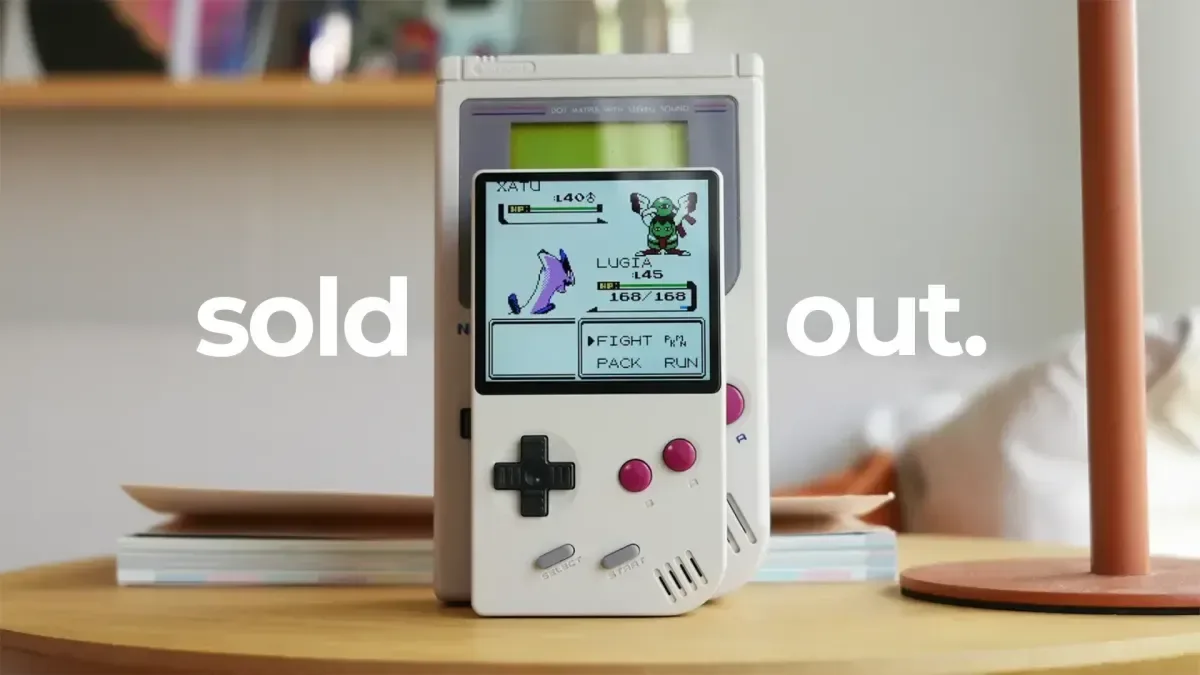
The surprise launch of FunnyPlaying's FPGB Mini has created immediate demand for one of the smallest new FPGA-focused retro handhelds aimed at original Game Boy cartridges. The first batch was exceptionally small, with just 20 units made available worldwide, and it disappeared in under 10 minutes. For anyone who missed that brief window, there is encouraging news: FunnyPlaying has indicated that more systems could be sold in roughly 20 days.
There is an important limitation, however. The upcoming replenishment does not appear set to transform the FPGB Mini into a readily available product. FunnyPlaying has said that only around 30 to 50 additional consoles are currently expected to be sold after an approaching National Holiday. That means prospective buyers may again be dealing with a very limited release, rather than an open preorder or a sustained retail launch.
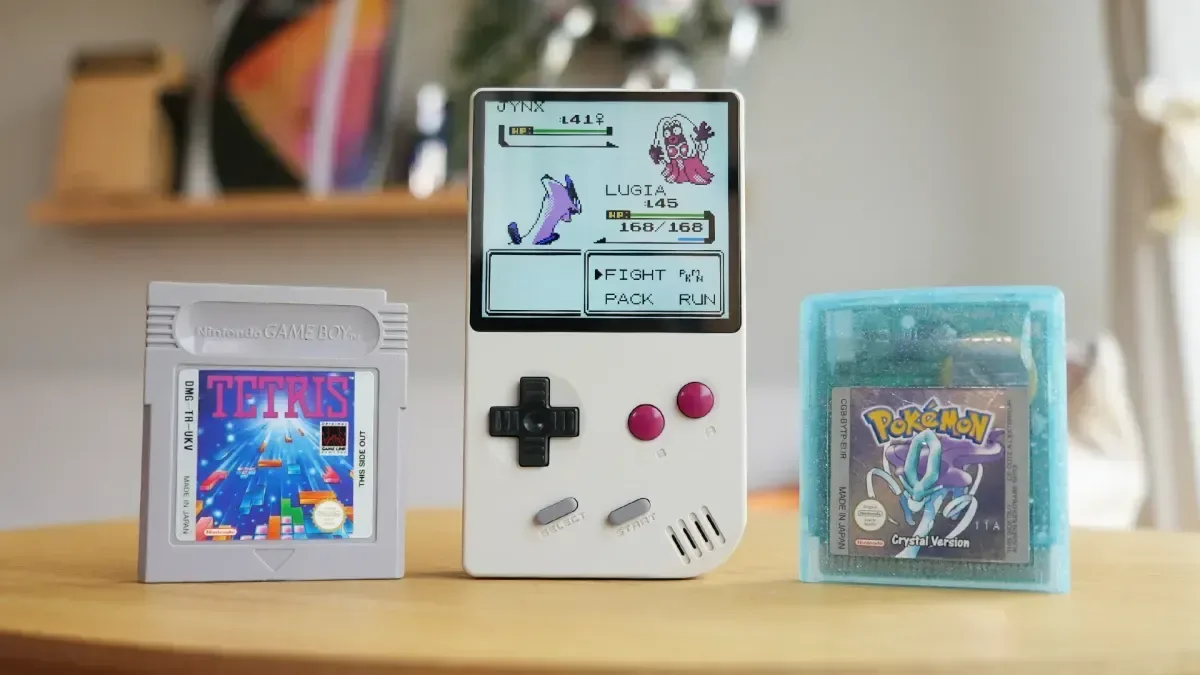
The FPGB Mini is a pocket-sized handheld designed to run physical Game Boy and Game Boy Color cartridges. Its FPGA-based approach is a central part of its appeal, as it is intended to recreate the original hardware behavior more closely than a conventional software-emulation handheld. Combined with its compact Game Boy-inspired form factor, that has made it a notable release among collectors and players who still use their original cartridge libraries.
A Restock Is Planned, but It Is Not a Major Supply Drop
FunnyPlaying's explanation for the constrained launch points to both technical work and timing. The company said there are still issues that need improvement, while the nearby National Holiday has also affected when remaining systems can be sold. The estimate of 30 to 50 units suggests that a second wave is on the way, but not one large enough to satisfy broad interest.
For useful background on this topic, read Space Trolls of Mahlsdorf Brings a New Shoot 'Em Up to ZX Spectrum Hardware.
"Since there are still some issues, we need to make some improvements. Moreover, we are approaching a National Holiday soon, and there are still 30-50 consoles that can only be sold after the holiday," FunnyPlaying said.
That statement lines up with a "wait for 20 days" notice that was added to the FPGB Mini product listing. The wording should not be treated as a firm public launch schedule, particularly given the tiny quantities involved, but it provides the clearest indication so far that the device is not a one-off run.
For buyers, the practical concern is less about whether the FPGB Mini will return and more about how it will return. A release of a few dozen devices can sell out almost as quickly as the original 20-unit allocation. Without a clearly announced preorder period, a larger production batch, or a predictable stock schedule, availability could continue to favor people who closely monitor FunnyPlaying's channels and the wider retro handheld community.
Why the FPGB Mini Drew So Much Attention
There is no shortage of retro gaming handhelds, but the FPGB Mini arrives with a combination that is particularly attractive to Game Boy fans. It is made for authentic Game Boy and Game Boy Color cartridges rather than a generic library of downloaded ROM files, and it uses FPGA hardware rather than relying solely on a typical emulation setup.
That distinction matters to a segment of the retro audience. FPGA devices are commonly valued for low-latency play and for their ability to model the logic of legacy hardware. For cartridge collectors, a dedicated device that can take the games already sitting on a shelf is also more compelling than another handheld requiring a separate digital collection.
Portability is equally important here. Larger FPGA machines and console-focused solutions have their own audiences, but the FPGB Mini is positioned as something closer to an everyday carry device: a compact machine for dropping a Game Boy or Game Boy Color cartridge into and playing on the move. Its small footprint has helped it stand out in a market where many retro handhelds have moved toward larger screens, more controls, and more general-purpose designs.
The initial response demonstrates that there is substantial curiosity around this format. Still, rapid sellouts can generate a distorted sense of a product's long-term prospects. The real test will be whether FunnyPlaying can increase production, communicate future drops more clearly, and address early hardware concerns before the FPGB Mini reaches a much larger group of customers.
Early Feedback Suggests the Hardware Still Needs Work
The limited launch was not simply a matter of demand exceeding supply. FunnyPlaying itself has acknowledged that refinements are needed, and early hands-on testing has identified some specific rough spots. The system is not yet being presented as a flawless replacement for original Game Boy hardware.
One reported compatibility issue concerns Game Boy rumble cartridges. Those carts reportedly do not fit in the FPGB Mini, which could matter to players with games or accessories that use the larger cartridge design associated with rumble hardware. A handheld built around physical cartridge support needs to accommodate as much of that ecosystem as possible, so this is the sort of detail prospective buyers will want clarified in future revisions.
The power switch has also been described as unreliable in early testing. That may sound like a small component issue, but it is a significant quality-of-life concern on a portable device. Consistent power control is basic functionality, and it becomes especially important for a handheld likely to be carried in a pocket or bag between play sessions.
Neither issue necessarily defines the FPGB Mini's final direction. FunnyPlaying has explicitly said improvements are being considered, and its decision to limit supply while the hardware is still being worked on may prove more sensible than rushing out a much larger batch. But anyone considering a purchase in the next drop should approach it as an early product with potential compromises, rather than assume that every cartridge and feature will work perfectly from day one.
Future Colors and Upgrades Remain Possible
FunnyPlaying has also signaled that the FPGB Mini may develop beyond the first version. The company said it intends to keep selling the device and that upgrades are possible. It also said new color options could be introduced in response to market feedback.
"We will continue to sell it and there is a possibility of upgrading it," FunnyPlaying said, adding that new colors will be considered based on market feedback.
That leaves plenty of unanswered questions. It is not yet known what an upgrade would involve, whether it would be a revision to internal hardware, a correction to physical cartridge compatibility, a different screen configuration, or something else entirely. Likewise, no colors have been confirmed. Still, the comments make clear that FunnyPlaying sees the FPGB Mini as an ongoing product line rather than a single experimental batch.
For collectors, potential new colors will be exciting. For more practical buyers, a future revision may be the more important possibility. If the company can solve the reported power-switch behavior and improve support for rumble cartridges, later production runs could be substantially more appealing than the launch hardware.
What Buyers Should Expect From the Next Window
The key message is simple: an FPGB Mini restock appears likely after roughly 20 days, but the amount of inventory may still be very small. The stated 30-to-50-unit range is larger than the first 20-unit release, yet it remains nowhere close to the sort of stock level that would allow interested players to purchase without urgency.
Anyone hoping to buy one should keep expectations realistic. There is no confirmed broad preorder program, no announced guarantee of a specific restock date, and no indication that the next sale will provide enough units for everyone who wants one. The National Holiday and ongoing improvements could also affect timing. Until FunnyPlaying publishes a more detailed sales plan, the product's availability should be viewed as intermittent.
That uncertainty is frustrating because the FPGB Mini fills a distinctive niche. A compact, FPGA-powered handheld for Game Boy and Game Boy Color cartridges is exactly the kind of hardware that can appeal to both serious retro enthusiasts and players who simply want a convenient way to revisit a physical collection. Yet the appeal is only part of the story. Supply, reliability, and cartridge compatibility will determine whether it becomes a must-have portable or remains an interesting but difficult-to-obtain early device.
For now, the FPGB Mini has momentum, a planned follow-up batch, and signs of longer-term support from its maker. It also has limited numbers and unresolved issues. The next restock may offer another chance to get one, but it is unlikely to end the scramble. Buyers may need to be quick once FunnyPlaying confirms the sale window, while those who can wait may ultimately benefit from a more polished revision and a broader range of colors later on.
Community
Discussion
Start the conversation.
No comments have been posted yet.