

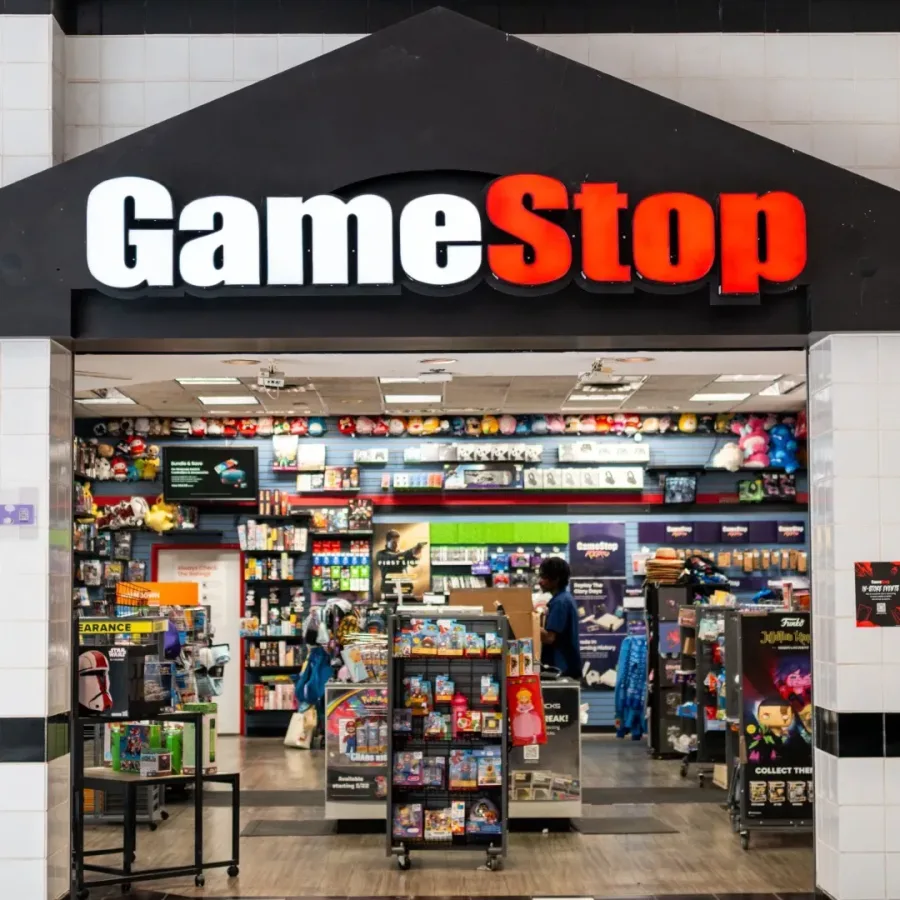
GameStop is moving in an unexpected direction: reopening stores that it had previously closed. After years defined largely by retail contraction, cost cutting, and the accelerating shift toward downloadable games, the company has said it will begin bringing back former locations, starting with a store in Brooklyn, Ohio.
The first reopening is set to begin on September 11 at 4756 Ridge Rd., Suite P22, Brooklyn, OH 44144. GameStop announced the plan through social media, but has offered very limited detail on the scope of what could become a broader return for shuttered locations.
When asked how many stores are expected to reopen, a GameStop spokesperson said the current number is "at least one" as of the following day, adding that customers should stay tuned for information on the rest. That carefully narrow response means the Ohio shop is the only confirmed reopening for now. It also leaves open several possibilities: the initiative may be a small local test, a gradual series of selected returns, or the first sign of a more substantial reconsideration of specific markets.
Embedded X/Twitter post
For a chain that has closed well over a thousand stores since 2020, even a single reopened location carries symbolic weight. The retailer's brick-and-mortar footprint has steadily shrunk during a period in which players have become increasingly comfortable purchasing console and PC games digitally, often without ever entering a physical store. A reopening campaign, however modest its opening stage may be, suggests GameStop sees enough potential in certain communities to revisit space it once left behind.
For useful background on this topic, read Valor Mortis Director Says AA Games Need More Breakout Hits to Win Publisher Confidence.
A small announcement with larger questions
The initial announcement is notable precisely because of how little GameStop has confirmed. Retail reopenings can mean very different things depending on the company's strategy. A store may be restored because a particular shopping center regained traffic, because a lease situation changed, because local demand remained stronger than expected, or because the company wants a physical presence in an area that has become underserved.
GameStop has not explained why the Brooklyn, Ohio store was selected, whether it will operate differently from a typical current location, or whether other reopened shops will follow the same format. There is also no confirmed list of cities, timetable, or target number of stores. As a result, it would be premature to treat the move as a sweeping reversal of the company's long-running closure trend.
Still, the distinction between opening a brand-new shop and restoring a previously closed one is meaningful. Reopening a former GameStop location may allow the retailer to return to an established neighborhood where customers already recognize the brand and may remember the prior store. It may also provide an opportunity to test whether local interest in trade-ins, used games, hardware, collectibles, and in-person browsing remains strong enough to support another attempt.
Physical stores still offer something digital storefronts cannot fully reproduce: immediate trade-in transactions, the ability to inspect used products in person, spontaneous purchases, face-to-face assistance, and a local gathering point for people interested in games and pop-culture merchandise. Whether those advantages are sufficient to sustain a reopened location is another matter, but they remain part of GameStop's distinctive position in the retail market.
The backdrop: years of contraction
GameStop's announcement arrives after a difficult half-decade for traditional game retail. The company has closed more than 1,000 stores since 2020, reflecting a business environment that has become harsher for chains built around boxed games, pre-owned inventory, and mall or strip-center traffic.
Digital distribution is a central factor. Console manufacturers, PC storefronts, and publishers have spent years making digital purchases quicker and more prominent, while download-only hardware and subscription libraries have changed the way many players build their collections. The convenience is obvious: a game can be bought and installed without traveling to a store, and digital libraries can be accessed across compatible hardware without managing a shelf of cases.
That change has put pressure on the older retail model, particularly the used-game business that historically helped distinguish GameStop from general merchandise stores and online marketplaces. Physical discs and cartridges can be traded, resold, collected, lent to friends, or purchased at lower prices after launch. Digital licenses generally do not offer the same resale cycle, making every move away from physical media especially consequential for retailers focused on pre-owned games.
GameStop has pursued other cost-saving measures during this period as well. One highly visible move involved Game Informer, the long-running gaming magazine that was owned by GameStop and sold through its stores. The publication was briefly shut down before later finding a new owner and returning, though it took close to a year for the magazine to come back.
The episode illustrated how GameStop's business pressures have extended beyond store locations. For many customers, the retailer was once connected not only to game purchases but also to gaming culture, print coverage, preorder promotions, launch-night events, and the ritual of browsing racks for unfamiliar releases. Maintaining that kind of ecosystem is more difficult when both games and game coverage are increasingly delivered digitally.
Physical games face another uncertain transition
The reopening news also comes as the wider industry debates the future of physical media. PlayStation has announced that it will end support for physical games in 2028, a move that appears to point toward a future PlayStation generation without disc support. Xbox's plans for its next console remain unclear, but physical game media is increasingly being phased down across the industry.
For consumers, the issue involves more than whether a plastic case occupies space on a shelf. Physical releases can matter for collecting, game preservation, ownership preferences, resale value, gifting, and access in areas with slower or more expensive internet connections. Some players also prefer the ability to buy a used copy long after a title's launch, rather than relying entirely on a platform holder's digital storefront and licensing rules.
For GameStop, the stakes are direct. A major reduction in physical releases would challenge the trade-in ecosystem that has been a foundation of the company's identity. It would also make it harder for stores to differentiate themselves through the circulation of used games, special editions, and hardware bundles.
At the same time, physical games have not disappeared. Nintendo continues to rely heavily on cartridge releases, collectors remain enthusiastic about boxed editions, and many players still value the tangible format even as digital sales grow. The market may be narrowing, but it is not uniform across every platform, genre, or customer group. A local store's prospects could therefore depend greatly on its mix of console players, collectors, families, and trade-in customers.
Collectibles and diversification may be key
GameStop has already spent years expanding its shelves beyond games. Collectibles, figures, apparel, trading cards, and other pop-culture products have become a prominent part of the company's in-store offering. Funko Pops are among the most recognizable examples, but the broader strategy is about serving customers whose interests overlap with games, films, television, comics, anime, and fandom merchandise.
That diversification could be especially important if reopened locations are meant to operate in a retail environment where new boxed games are no longer the sole attraction. Collectibles can bring customers into a store for reasons unrelated to a major game launch, while used hardware and retro products can appeal to shoppers looking for inventory that is difficult to find through a first-party digital marketplace.
The company is also attempting to acquire eBay, a move that could further diversify its business if it proceeds. Such an acquisition would represent a far larger strategic shift than reopening one former retail site, potentially connecting GameStop to a broad marketplace for secondhand goods and collectibles. No outcome has been confirmed, but the attempt underscores the search for business models that are less dependent on the old cycle of selling new physical releases.
What to watch next
For now, the Brooklyn reopening is the concrete development. The location will provide an early indication of what GameStop may have in mind for any future revived stores: whether they look like conventional GameStop branches, lean more heavily into collectibles, emphasize trade-ins and used inventory, or test a different blend of products and services.
The most important unanswered question is scale. "At least one" is not yet a chain-wide expansion plan. Customers hoping to see a former local GameStop return will need to wait for the company to identify additional locations. Until then, the Ohio store stands as a small but intriguing counterpoint to the closures that have shaped GameStop's recent history.
In an era when gaming commerce continues to move online, reopening even one previously shuttered store is a reminder that physical retail has not been written off entirely. GameStop's next announcements will show whether this is simply a single-store experiment or the beginning of a selective effort to rebuild parts of its retail presence.
Community
Discussion
Start the conversation.
No comments have been posted yet.