

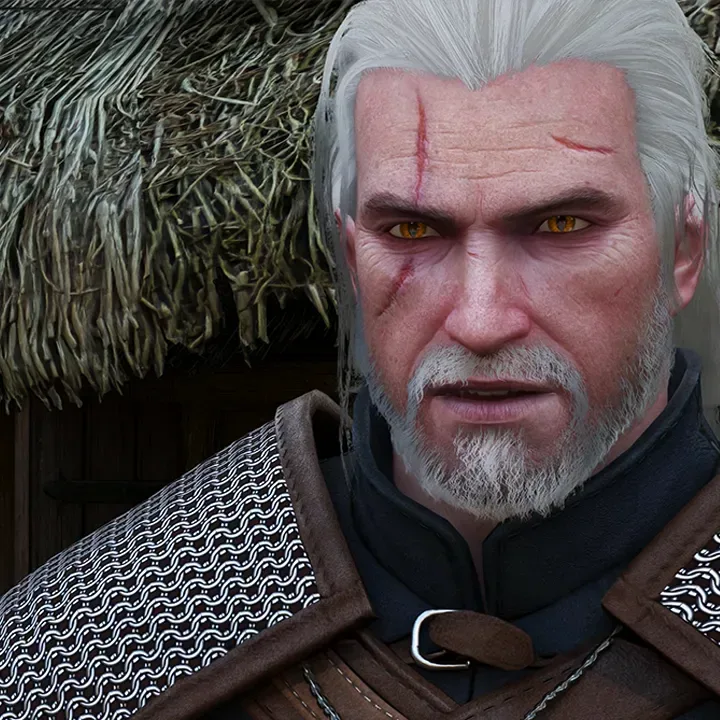
The Witcher 3: Wild Hunt - Remastered arrives as a free update on September 29, bringing another substantial visual refresh to CD Projekt Red's enormous open-world RPG. The upgraded edition is designed for current-generation hardware and introduces a long list of enhancements, but new performance testing makes one thing clear: turning on every available PC setting, particularly path tracing, demands far more than the game's 2015 origins might suggest.
At 4K resolution with path tracing, HairWorks, and the rest of the visual options enabled, an Nvidia GeForce RTX 5080 reportedly averaged just 30 frames per second while using DLSS in Performance mode. That is a striking result for a card positioned near the top of Nvidia's consumer graphics stack, and it illustrates the steep cost of fully path-traced lighting in a sprawling game such as The Witcher 3.
The figure came from a trip through Novigrad, the dense city that has long been one of the game's most taxing locations. Even so, the result highlights the gap between checking every quality-setting box and reaching the smooth 60 FPS target many PC players expect from premium hardware.
Frame generation nearly doubles the displayed frame rate, with important caveats
Enabling frame generation raised the RTX 5080 result from a 30 FPS average to 59 FPS in the same all-out 4K configuration. On paper, that puts the game close to 60 FPS. In practice, frame generation works best when the base frame rate is already reasonably high. Starting from 30 FPS can leave visual problems more noticeable, and artifacts were seen in ground textures during testing.
For useful background on this topic, read The Witcher 3 Remaster Details Skill Tree Changes, Accessibility Mode and New Quest Markers.
That distinction matters when interpreting performance numbers for modern games. DLSS upscaling and frame generation are separate tools. DLSS Performance renders the game internally at a lower resolution before reconstructing the image for a 4K display, reducing the normal rendering workload. Frame generation then creates additional frames between traditionally rendered frames. The latter can make motion look smoother, but it does not remove all of the responsiveness or image-quality limitations associated with a lower native render rate.
For players evaluating their own settings, a reported 59 FPS with generated frames should not be treated as identical to a stable 59 FPS produced without them. The technology can still be very useful, especially in cinematic single-player experiences, but the underlying frame rate remains an important part of the experience.
HairWorks remains an expensive option
HairWorks has been known as a demanding setting since the original PC release, and the Remastered update does not change that reputation. Disabling HairWorks while leaving path tracing on improved the RTX 5080's 4K result to an average of 44 FPS with DLSS set to Performance. That is a significant gain of 14 FPS compared with the fully enabled configuration.
With frame generation activated after HairWorks was disabled, the average reportedly reached 80 FPS. That result makes a much stronger case for using frame generation, because the base performance is closer to a level where the technique is generally more convincing. It also reinforces a familiar PC-gaming lesson: selectively reducing one particularly punishing feature can have a much larger effect than moving a broad preset from Ultra to High.
HairWorks is visually distinctive, particularly on creatures and characters with fur or hair, but it is also optional. Players who want a stronger blend of image quality and performance may find it one of the easiest settings to switch off first. The difference between 30 FPS and 44 FPS before frame generation is substantial, especially in a game that mixes exploration, combat, and densely populated urban areas.
Path tracing is the real dividing line for maximum settings
The biggest recommendation for anyone chasing higher performance is simpler: disable path tracing. On the RTX 5080, switching path tracing off raised performance to 55 FPS in the Novigrad test. The game still had its other settings enabled, and the result was described as more reasonable for 4K play.
Path tracing is a more comprehensive lighting technique than conventional ray-traced effects. It can improve the way light bounces through environments, contributes to indirect illumination, and interacts with surfaces. In the right scenes, it can create a notably more natural look. However, it is also among the most computationally costly features available in PC graphics, especially at 4K.
Importantly, disabling path tracing does not mean abandoning every modern lighting feature. The Remastered edition includes other ray-traced effects, and players can adjust those individually as well. Someone trying to optimize the game may choose to keep selected ray-tracing options while leaving path tracing disabled, rather than treating visuals as an all-or-nothing decision.
That flexibility will be particularly valuable because Novigrad is not representative of every part of the adventure. The city's crowds, buildings, geometry, and general density have made it a difficult area for hardware since the original release. A setting combination that struggles there may perform better in quieter wilderness areas, though players should expect fluctuations as they move through the world.
Even flagship-tier hardware has limits at 4K
The updated PC requirements make the target for the highest setting tier unusually clear. For 4K path tracing, the listed recommendation calls for an RTX 5080 and still expects the use of both DLSS upscaling and frame generation to reach 60 FPS. That means the game's most demanding presentation is not positioned as a straightforward native 4K, 60-FPS experience even on Nvidia's penultimate GPU.
For some players, that may feel surprising given that The Witcher 3 is now 11 years old. But the Remastered edition's technical demands are driven by the newly added rendering features rather than the age of the underlying game alone. Path tracing effectively changes the workload in ways that old release dates do not capture. A heavily upgraded game can become much more demanding than its original system requirements would imply.
The RTX 5080's position also puts the result in perspective. The card is an exceptionally powerful option, with the RTX 5090 sitting above it in Nvidia's lineup. The testing suggests that users determined to combine 4K, path tracing, high-quality extras such as HairWorks, and consistently high frame rates may need either the very fastest available hardware or a willingness to lean heavily on frame generation.
Settings trade-offs will matter more than a single preset
The encouraging news is that the lower end of the updated requirements suggests the game should remain scalable across a much broader range of PCs. The practical question is not whether every system can run every setting at 4K with path tracing. It is which visual features each player values most, and which compromises produce the best result for their machine.
A sensible starting point for high-resolution PC play is to test a demanding area such as Novigrad, then work through the largest performance levers one at a time. Path tracing is likely to be the first setting to consider disabling for users below the very top end. HairWorks is another clear candidate. From there, players can assess individual ray-tracing effects, DLSS mode, resolution, and whether frame generation provides an acceptable balance of smoothness and visual stability.
- For maximum image quality: 4K path tracing may require DLSS and frame generation, even on an RTX 5080.
- For a better balance: Disabling HairWorks significantly improves the path-traced result, reaching a reported 44 FPS before frame generation.
- For stronger conventional performance: Turning off path tracing raised the tested RTX 5080 configuration to 55 FPS in Novigrad.
- For lower-spec PCs: Reducing ray-tracing features and adjusting other settings should provide considerably more room to scale performance.
A free update across current platforms
The Witcher 3: Wild Hunt - Remastered is available as a free update from September 29 for PC, PlayStation 5, Xbox Series X|S, and Nintendo Switch 2. The PC version is where the most expansive graphics menu and the new high-end rendering options will be most relevant, but the update broadly revisits Geralt's journey for current hardware.
For PC players, the early numbers are less a verdict on whether the update is worth installing than a reminder to approach its most ambitious setting with realistic expectations. An RTX 5080 can still produce a highly attractive version of The Witcher 3, but maxing out every option at 4K is not the same as guaranteeing a smooth 60 FPS experience. In Novigrad, path tracing and HairWorks can turn one of gaming's best-known RPGs into a genuine stress test for modern hardware.
Community
Discussion
Start the conversation.
No comments have been posted yet.