

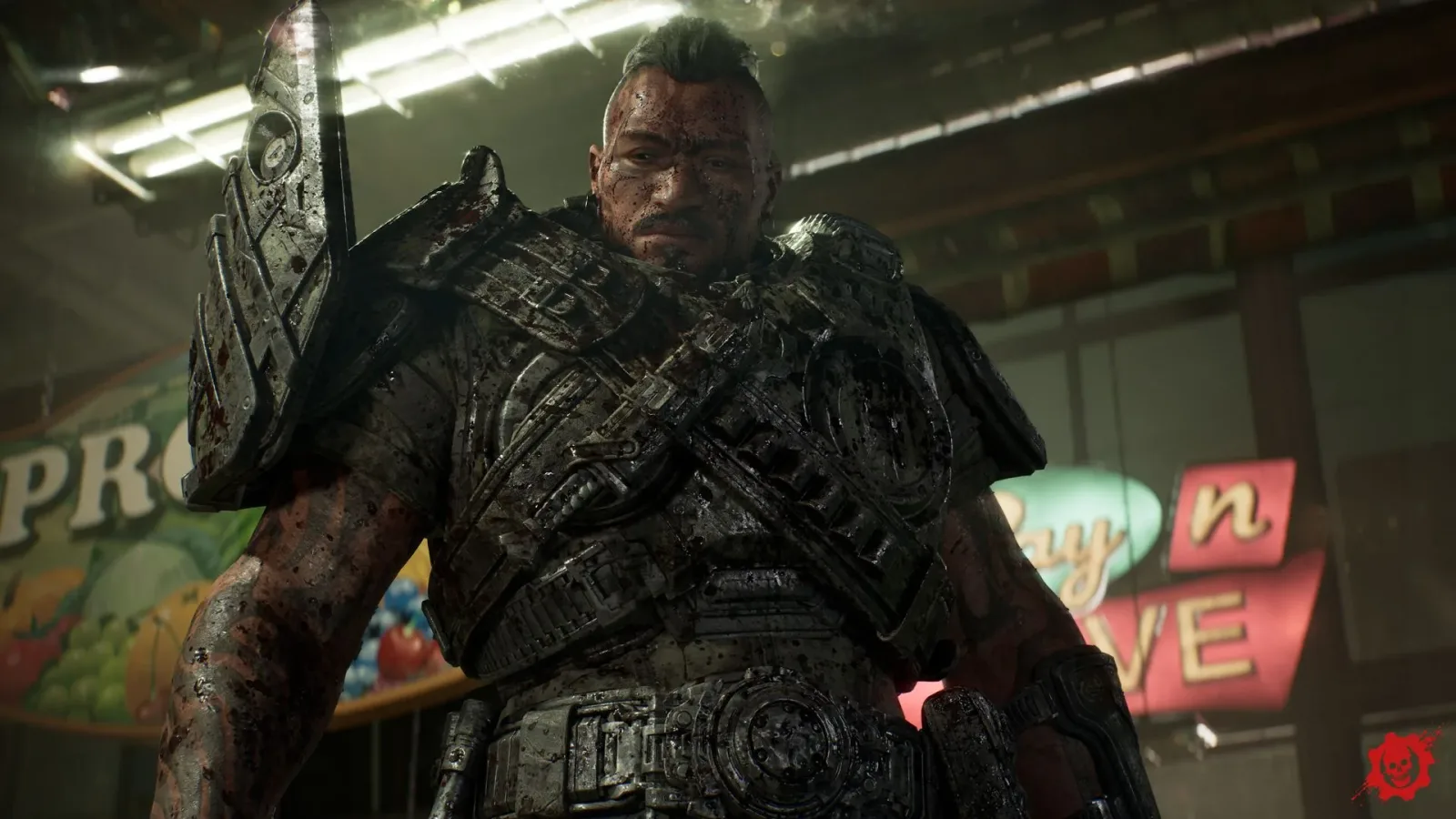
Gears of War: E-Day was positioned as a major statement of intent for Xbox: a high-profile first-party release that would remain exclusive to Xbox consoles, despite indications that a PlayStation 5 version had been well into development. But the decision has not translated into a measurable boost for Xbox Series X|S hardware sales, according to Circana executive director and games industry analyst Mat Piscatella.
Discussing the current console market with The Game Business, Piscatella contrasted Xbox's results with PlayStation's performance during September 2026. He said that PlayStation 5 sales were up compared with September 2025, with Marvel's Wolverine serving as an important driver alongside a console bundle and a new DualSense controller. In his view, the Wolverine campaign represented a strong example of the traditional console-exclusive model still working when the game, marketing, hardware, and accessories all align.
Xbox, however, did not see an equivalent response from Gears of War: E-Day. Piscatella said Circana's US tracking showed no hardware uplift following the game's release. UK figures from Nielsen IQ also pointed in the wrong direction, with Xbox sales down 22% in October.
That does not necessarily mean Gears of War: E-Day failed to find an audience. It does mean that the game's status as an Xbox console exclusive has not, at least so far, reversed a broader hardware trend that has been difficult for Microsoft to change.
For useful background on this topic, read The Elder Scrolls 6 May Finally Get Its Full Name, With Sentinel Rumored.
A Tale of Two Exclusive Strategies
Piscatella's comparison centers on a familiar idea in the games business: major exclusives have historically been used to encourage players to buy a console, subscribe to a service, and invest further in an ecosystem through controllers, bundles, and software. The approach is not guaranteed to work for every release, but a blockbuster launch can still create a visible commercial moment.
For PlayStation, Marvel's Wolverine appears to have done that in September. Piscatella described the results as close to the best outcome that could reasonably be expected from an intellectual property below the scale of Spider-Man. The game benefited from a recognizable superhero brand, but its impact was not limited to software. The associated PS5 bundle and controller reportedly performed well too, creating the sort of full-platform sales event console manufacturers have long pursued.
The situation surrounding Gears of War: E-Day looks markedly different. Xbox CEO Asha Sharma had strongly emphasized that the new Gears entry would be exclusive to Xbox consoles. The decision attracted attention because of reports that a PS5 edition had been far along in development. Keeping E-Day off PlayStation therefore carried a clear strategic implication: Xbox was choosing to reserve a prominent franchise for its own console environment rather than maximizing immediate software reach across rival hardware.
Yet Piscatella said the available numbers do not show that exclusivity moving the needle for Xbox hardware. The lack of a US increase, combined with the October decline reported in the UK, suggests that the game has not generated the kind of system-selling momentum the platform needed.
"No Positive Impact" in the Data
Piscatella's assessment was especially blunt because it extended beyond one release. He said that the new programs Xbox has been introducing are not showing a positive impact in the sales and engagement data he monitors.
"Saying Gears is going to be exclusive hasn't made any difference in terms of the hardware trend," Piscatella said. "In fact, it keeps getting worse."
That statement speaks to the challenge Xbox faces in 2026. Console hardware does not operate in a vacuum; price, retail visibility, consumer confidence, subscription offers, game release timing, the strength of competing platforms, and the installed base of existing machines can all influence demand. A single exclusive can help, but it may not overcome a long-running decline if consumers do not see a compelling reason to enter or remain within a particular ecosystem.
Gears of War is also not a new name in the market. It is one of Xbox's most important legacy series and has been associated with the brand for decades. That brings advantages in awareness and loyalty, but it can also make it harder to turn a new entry into a fresh hardware catalyst, particularly if many interested players already own Xbox consoles or can access the game through Game Pass.
In other words, making E-Day exclusive may have reinforced Xbox's identity for committed fans without substantially expanding the number of people buying Xbox hardware. That distinction matters. Enthusiasm among a dedicated community can be real, while the broader retail outcome remains limited.
Game Pass Remains Central to the Question
Subscription access adds another layer to the discussion. An analyst estimate cited alongside the sales conversation placed Gears of War: E-Day at roughly 62,000 Xbox copies sold, compared with approximately 1.7 million Game Pass players. Those figures underline how different the commercial profile of an Xbox release can be when a large share of its audience is playing through a subscription rather than purchasing a $70 premium edition.
Game Pass has been a defining part of Xbox's strategy for years. For consumers, the value proposition is straightforward: access to a library of games, including major releases, can make a monthly subscription more attractive than buying every title separately. For Microsoft, it can create recurring revenue and encourage continued engagement across console, PC, cloud, and other parts of its business.
But Piscatella's comments highlight the complications of judging success in that model. High player counts do not automatically correspond to higher full-price unit sales. Nor do they necessarily lead to new console purchases, particularly if existing subscribers can play the release immediately on hardware they already own.
The analyst said the $70 premium SKU is effectively "dead" on Xbox in functional terms, a conclusion shaped by the gap between E-Day's estimated paid sales and Game Pass audience. That is not a claim that no one buys games outright on Xbox. Rather, it illustrates how difficult it may be for a day-one subscription environment to produce the same premium retail results seen on platforms where a major first-party release is mainly sold as a standalone purchase.
Call of Duty Changes Add More Pressure
Piscatella also pointed to a separate Game Pass change involving Call of Duty. He said that after Call of Duty was removed as a day-one Game Pass release, Xbox lost significant engagement without gaining an obvious benefit in return.
That observation matters because it puts Xbox in an awkward strategic position. Day-one additions can help make Game Pass feel essential, but they may reduce premium software sales. Removing those additions could potentially protect traditional sales, yet the analyst's view is that the change also reduced engagement and did not create a compensating upside.
For Xbox, the larger question is whether its current approach can deliver clear results across more than one metric. Hardware sales, game purchases, subscription growth, monthly activity, accessory sales, and multi-platform publishing revenue can each tell a different story. The difficulty comes when improvements in one area do not visibly offset weakness in another.
Gears of War: E-Day sits at the center of that debate because it represents a comparatively traditional move: retain a recognizable game for the console, market it as exclusive, and hope it helps sell machines. Piscatella's analysis suggests that, in this instance, the old formula has not produced the old outcome.
Fan Approval Is Not the Same as Market Growth
One of Piscatella's sharpest observations concerned the difference between online reaction and broader consumer behavior. He said Xbox's initiatives appear to be earning "Twitter likes" from the most passionate portion of the brand's audience, but that he cannot see corresponding results in the data.
That does not diminish the importance of Xbox's core community. Dedicated players often sustain multiplayer populations, buy accessories, participate in discussions, and support first-party games over long periods. However, platform growth requires reaching beyond that committed base. It requires persuading people who have not already chosen an ecosystem, or who may be considering a competitor, that a particular console offers enough value to justify the purchase.
For now, Piscatella said it is difficult to identify signs of "positivity or hope" for the Xbox console platform. His conclusion is based on sales and engagement trends rather than on an assessment of Gears of War: E-Day's quality or the loyalty of its audience. It is a market reading, and one that may shift as new data, future releases, pricing decisions, and broader Microsoft plans emerge.
Still, the early takeaway is clear: Gears of War: E-Day's Xbox-only console status has not delivered a visible hardware boost in either the US tracking cited by Circana or the UK sales data reported by Nielsen IQ. For Microsoft, that leaves an important question heading into its next moves: if one of Xbox's biggest established franchises cannot materially improve the hardware trajectory through exclusivity, what strategy can?
Community
Discussion
Start the conversation.
No comments have been posted yet.