

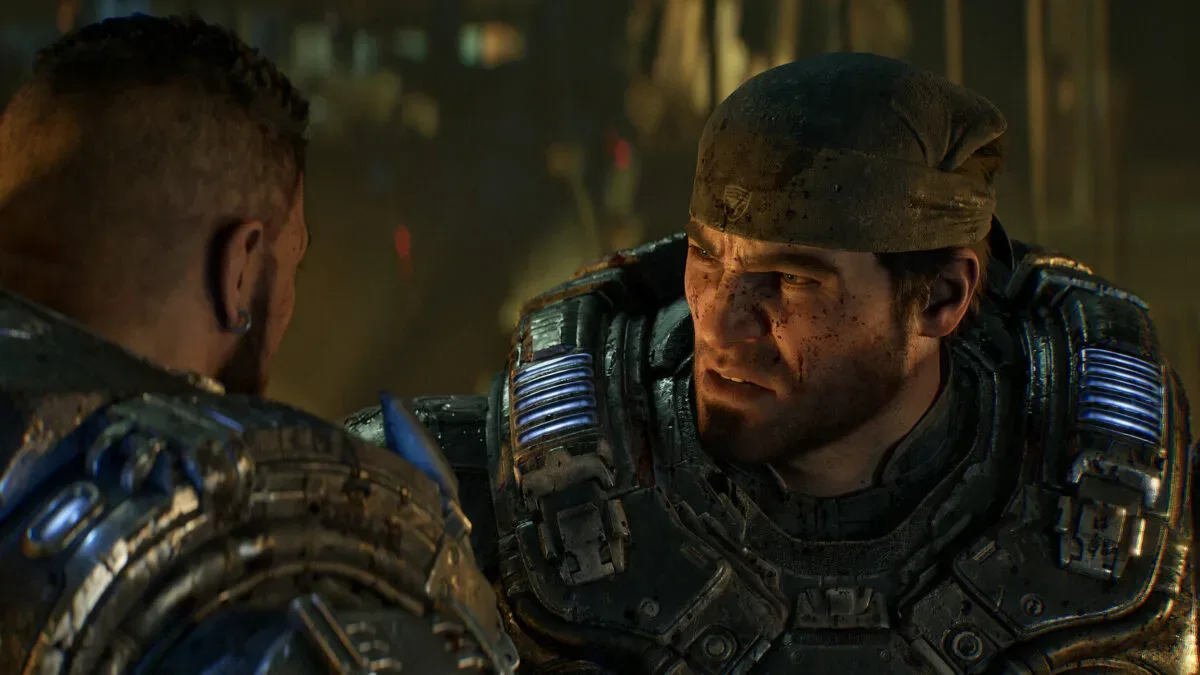
Gears of War: E-Day has arrived with strong critical momentum, reportedly earning the best Metacritic result for the series since the original Xbox 360-era trilogy. That is an important win for The Coalition and Xbox Game Studios. Yet the conversation around the shooter has quickly moved beyond reviews and into a much thornier question: what does success look like for a game that may have cost more than $500 million to produce before marketing?
That reported figure, supplied by a person said to be familiar with Xbox's business, has not been confirmed by Microsoft. The company did not comment when asked about the claim. If accurate, however, it would place E-Day in an unusually difficult commercial position. Even a major premium release with a recognizable name, solid reception, PC availability, and Game Pass reach would need extraordinary revenue to recover an investment of that scale.
The situation also makes E-Day an intriguing test of Xbox's renewed interest in console exclusivity. Microsoft has spent years pushing a strategy built around subscriptions, PC releases, cloud access, and games on rival hardware. More recently, its messaging has suggested that signature first-party exclusives may again become a yearly part of the Xbox console proposition. E-Day's performance could help clarify why that change may be happening.
A blockbuster budget with a difficult road to recovery
Rumors surrounding E-Day's development costs began circulating after Xbox's summer showcase in June. One early claim put the cost of shipping the game above $400 million. That number was disputed at the time, with questions raised about how expenses should be assigned to The Coalition, a studio that also contributes support work across Xbox Game Studios.
For useful background on this topic, read Secretlab Launches K/DA Firestarter Gaming Chair and Desk Collection.
The newer estimate is considerably higher: more than $500 million before advertising and promotion. Budget reporting around video games is always complicated. Companies generally do not disclose full development spending, internal staffing costs can be spread across projects, and the definition of a "budget" can vary dramatically. Still, the estimate illustrates the challenge facing top-end game development. A modern cinematic shooter can involve years of work, sophisticated technology, extensive art production, performance capture, multiplayer infrastructure, quality assurance, and ongoing post-launch support.
At that level of spending, conventional unit sales alone can become an unforgiving measure. A $70 game does not return $70 directly to its publisher. Platform holders take their share on digital storefronts, retailers and distributors can affect physical revenue, regional pricing changes the average selling price, and marketing adds another substantial layer of cost. Game Pass further complicates the picture because many players can access E-Day without purchasing a standard standalone copy.
That does not mean Game Pass access is worthless. Subscriber retention, new subscriptions, engagement, downloadable content, and broader ecosystem spending can all matter. But those benefits are tougher for outside observers to calculate than straightforward copies sold. For a game reportedly built at a cost exceeding half a billion dollars, the gap between player enthusiasm and direct revenue becomes especially important.
Early estimates point to a subdued start
Microsoft has not released official launch metrics for E-Day. That silence contrasts with the company's approach to Gears 5 in 2019, when it announced that more than 3 million players had joined during launch. Microsoft said then that the game had doubled the first-week debut of Gears of War 4 and become Xbox Game Studios' most-played first-week release since Halo 4 in 2012.
For E-Day, third-party estimates have painted a more restrained picture on premium sales. Alinea Analytics estimated roughly 230,000 copies sold in the game's first week, producing about $37 million in revenue. A notable portion of that activity was believed to come from Game Pass subscribers purchasing the $30 Premium Edition Upgrade in order to play early.
Those figures are estimates rather than official results, and they will not include every way the game may contribute value to Xbox. Sales also continue after the opening week, particularly for an established series with a holiday presence. Nevertheless, the initial numbers reinforce the scale of the problem posed by the reported budget. Even a meaningful increase in sales over subsequent weeks would leave a vast amount of ground to cover.
On Steam, E-Day is estimated to have sold fewer than 100,000 copies so far. That figure needs its own context: the game is available through PC Game Pass, so Steam sales do not represent the complete PC audience. Even so, it suggests that neither PC nor early premium sales are likely to transform the recovery equation by themselves.
Would a PS5 release have changed the math?
The most obvious alternative would have been a simultaneous PlayStation 5 launch. Xbox has already brought selected first-party games to competing systems, and Gears of War: Reloaded marked the franchise's first arrival on PlayStation. Alinea Analytics estimated that remaster sold approximately 684,000 copies on PS5.
If E-Day had sold a similar number of copies on Sony's console, the extra proceeds could have been meaningful in ordinary circumstances. After accounting for the standard platform fee, that scale of sales could amount to roughly $33 million in additional revenue. A brand-new, well-reviewed entry might conceivably have exceeded the performance of a remaster, although E-Day's $70 price is notably higher than Reloaded's $40 price.
But even a very successful PlayStation debut would not make a reported $500 million development bill disappear. The distinction matters. Releasing E-Day on PS5 could potentially improve the game's individual revenue, but it may not be enough to turn it into a straightforward profit story. If the financial hole is that large, Xbox has reason to weigh another form of return: whether exclusivity helps strengthen the Xbox platform itself.
The less visible value of a console exclusive
A high-profile exclusive can do things that a multiplatform release cannot do as effectively. It can give inactive owners a reason to turn on an Xbox Series X or Series S again. It can encourage Game Pass subscriptions, bring players into multiplayer communities, boost store spending, and make the platform more appealing during the crowded autumn buying season. It can also give Microsoft a clear marketing message at a moment when consumers are deciding where to play the year's biggest games.
Those effects are difficult to isolate on a balance sheet. A player returning for E-Day might buy another game, maintain a subscription for longer, purchase accessories, or simply form a stronger habit around Xbox. The value may emerge across the ecosystem rather than from one $70 transaction. In that sense, an expensive first-party release can be treated not only as a product but also as a platform investment.
This may help explain why Microsoft could be more cautious about the timing of certain multiplatform releases. Forza Horizon 6, which had been expected on PS5 during 2026, has reportedly shifted its PlayStation release to January 2027. Holding a major game closer to Xbox's own holiday window could preserve its ability to drive attention and activity on Microsoft's hardware while consumers are also considering games such as Madden, EA Sports FC, NBA 2K27, Call of Duty: Modern Warfare 4, and Grand Theft Auto 6.
Survey questions suggest Xbox is still weighing its options
A leaked Xbox Insider survey has added to the sense that Microsoft is examining a stronger exclusivity strategy. The questionnaire reportedly targeted people who use multiple devices and asked how their habits might change if future releases from Xbox-developed franchises, apart from Call of Duty, became console-exclusive to Xbox.
The scenario reportedly included an especially aggressive hypothetical for Minecraft: existing games would no longer be sold on PlayStation or Nintendo systems and would no longer receive new content updates there, while previously owned content would remain unaffected. PC would not change under that scenario. Participants were asked whether they would use an Xbox they already owned, purchase a new one, move to PC, or skip the games.
Surveys do not constitute policy, and hypothetical questions can cover options that never become real plans. Still, they show Microsoft is gathering data on the central trade-off: whether withholding games from rival consoles can move enough people toward Xbox hardware and services to outweigh lost third-party storefront revenue.
The same uncertainty extends to future games from the company's enormous portfolio. The eventual platform plans for The Elder Scrolls 6 and a potential Diablo 5 remain unknown. For now, Xbox has told players to expect signature exclusives every year, a statement that carries more weight as the company attempts to define the purpose of its console in a business increasingly built around publishing everywhere.
A decision Xbox cannot defer forever
Former PlayStation executive Shawn Layden recently described Xbox's current crossroads as a "Dreamcast moment." His point was not that Xbox is destined to leave the hardware business, but that Microsoft faces a strategic choice. It can make a stronger push to compete as a console platform through exclusives and third-party support, or it can more fully embrace its position as one of the industry's biggest publishers across every possible device.
E-Day demonstrates why trying to do both can be complicated. A game with a reported $500 million-plus cost seems unlikely to earn back that spending quickly through sales on Xbox, PC, and even a hypothetical additional console platform. Yet as an Xbox-only console attraction, it may deliver value that is not immediately visible in unit-sales charts.
That is not an easy defense of blockbuster spending. It is a reminder that Xbox needs a consistent answer about what its enormous first-party games are meant to accomplish. Are they primarily premium products designed to sell everywhere? Are they subscription anchors? Or are they essential reasons to own an Xbox console? The commercial story around Gears of War: E-Day may not provide a final answer, but it has made the question impossible to ignore.
Community
Discussion
Start the conversation.
No comments have been posted yet.