

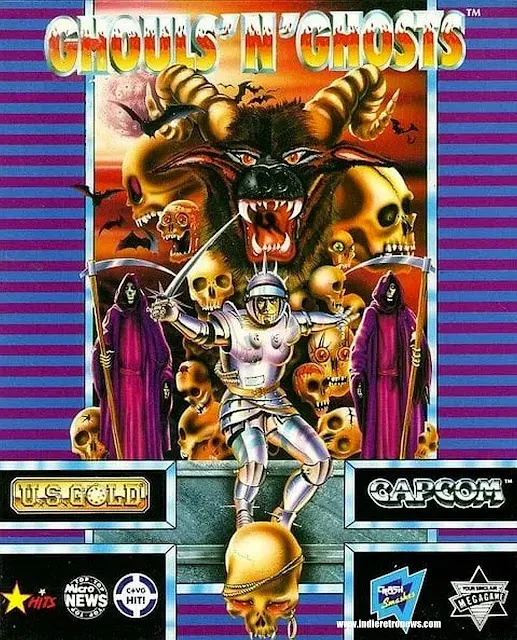
The Commodore Amiga conversion of Ghouls 'n Ghosts is receiving an ambitious technical overhaul designed to make far fuller use of the machine it originally shipped on. Modern Vintage Gamer has begun work on an enhancement for the 1989 release, targeting visual smoothness, colour, sprite handling and rendering performance while deliberately leaving the game's original logic intact.
For retro players, that distinction is important. This is not a remake that replaces the underlying game, redraws every stage from scratch or alters the punishing design that made Capcom's arcade sequel so memorable. Instead, it is an effort to revisit the original Amiga code and improve the way it presents itself on Commodore's 16-bit computer. The intended result is a version that remains recognisably the same port, but feels much closer to what Amiga hardware could have delivered with a more platform-specific approach.
The original conversion was developed by Software Creations and published by U.S. Gold. It was a respectable release for its era, bringing Arthur's grim quest through haunted battlefields, ruined settlements and demon-filled stages to home computers. Yet it also carried a limitation common to many multi-format games of the period: it did not meaningfully take advantage of the Amiga's distinctive custom hardware.
That is the central issue the enhancement addresses. Rather than treating the Amiga as a generic destination for an existing game engine, the project uses capabilities associated with the platform to improve how the action moves and how the game's screen is composed.
For useful background on this topic, read Need for Speed: Underground 2 Browser Port Adds Optional Multiplayer Mayhem.
A port with untapped Amiga potential
Ghouls 'n Ghosts was already a demanding game concept to bring home in the late 1980s. The arcade original is packed with animated enemies, projectiles, scrolling scenery and large threatening bosses, all while maintaining a brisk pace. Arthur is famously vulnerable: a single hit strips his armour, another can end a life, and progression requires learning layouts, enemy patterns and the awkward consequences of every jump. Any slowdown or visual roughness can make that challenge feel even more severe.
On the Amiga, the game arrived at a time when home-computer conversions regularly faced compromises. Memory budgets, disk formats, development schedules and the need to share technology across several machines could limit how closely a port matched its arcade inspiration. A game could be functional and enjoyable while still failing to showcase the strengths that enthusiasts associated with the Amiga.
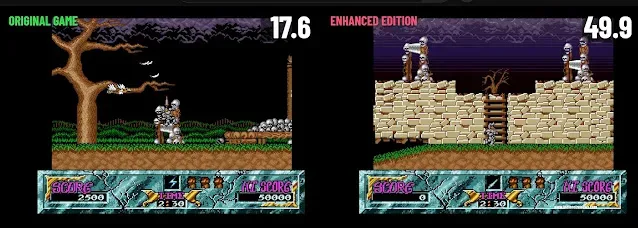
The new work focuses on precisely that gap. Its revised presentation adds vibrant copper skies, greater use of colour and an optimised renderer intended to run faster than the one in the original release. Copper effects are especially fitting for the platform because they can be used to vary display settings during screen drawing, helping create more elaborate colour treatments than a static image might suggest. In this case, the enhanced skies give the stages a considerably livelier backdrop.
The impact is not limited to scenery. The project also introduces silky 50 Hz scrolling and more fluid object movement. For a side-scrolling action game, those improvements can substantially change the feel of play even when the rules underneath have not changed. Smooth movement makes the screen easier to read, keeps the world flowing during Arthur's advance and gives enemy motion a more polished appearance.
Hardware sprites put Arthur in the spotlight
One of the most notable changes is the use of a hardware-sprite-based Arthur. The Amiga's custom chipset includes dedicated display features that can handle sprites separately from the main playfield under the right circumstances. Applying those tools to the protagonist is a meaningful technical choice: Arthur is constantly moving, jumping, firing and changing state as he loses his armour and fights through each area.
Using a hardware sprite for the hero can reduce the amount of work required from the game's general rendering path, freeing resources for other on-screen elements. It also helps the project pursue smoother character motion while preserving the original game's structure. The goal is not to reinvent Arthur's animation or make him behave differently. It is to give the existing character a presentation method better aligned with the Amiga's capabilities.
This approach reflects a broader appeal of enhancement projects for older software. Historical ports are often judged both as games and as products of their production circumstances. A conversion may have been impressive under its original deadlines and constraints, yet later analysis can reveal features that were available but unused. Revisiting that code decades later allows developers to explore a different answer to the old question of what the platform could do.
In Ghouls 'n Ghosts, the benefits are visible in the combined effect of the faster renderer, richer palette work, improved scrolling and hardware-driven player sprite. The game is not merely given a brighter coat of paint. Its individual systems are being adjusted so the image can move with greater confidence and consistency.
Faithful game logic remains the priority
Despite the sizeable visual and technical changes, the enhancement retains the original game logic at its exact native speed. That decision should reassure players who value the existing Amiga version as a period artifact, including its movement timing, enemy behaviour and overall challenge.
Keeping game logic separate from rendering work is crucial in a project of this kind. A faster or more elaborate display system can easily create the temptation to alter gameplay timing along with it. But changing timing in a game as exacting as Ghouls 'n Ghosts could have unintended consequences. Enemy attacks, jump arcs, weapon use and stage hazards are all tied to a rhythm players learn through repeated attempts. Preserving the original logic means the enhancement aims to make the game look and scroll better without turning it into a different version mechanically.
That balance also makes the work particularly interesting for enthusiasts who appreciate both preservation and improvement. The original release remains the foundation. Its code, design and native operating pace are not being discarded in favour of a modern reinterpretation. The new technology sits around that foundation, improving the route from game data to the Amiga's display.
There is still an important caveat. The project does not promise flawless performance in every possible situation. When the screen becomes busy with multiple large enemies, players should still expect some dips. Such moments are exactly where the limits of an older machine and an older game engine can become most apparent. However, the enhancement's hardware-assisted fluidity should provide a major improvement across the wider experience, even if especially crowded scenes remain challenging.
Old code reveals new discoveries
Work on the enhancement has also uncovered long-hidden details within the original game code. That is one of the most compelling side effects of restoring or modifying software from this era. Commercial releases were often shipped with little public documentation of their internal methods, and decades can pass before anyone has reason to closely examine every system, routine and unused corner of the program.
Digging into a classic port can therefore become part technical investigation, part preservation exercise. Secrets buried in the code may reveal how developers organised their renderer, managed resources or planned features during production. Even without changing those discoveries into new gameplay content, finding them adds to the historical record surrounding a release that many players have known only from its finished disk version.
The project's availability in BPS patch form is also significant. A patch-based distribution method focuses on modifying an existing game image rather than repackaging the original commercial software as a new standalone release. For the community, that provides a practical route to experience the enhancement while keeping attention on the original Amiga version that forms its base.
A love letter to Amiga enthusiasts
There is a special satisfaction in seeing a technically ambitious revision applied to a game with such a clear place in arcade and home-computer history. Ghouls 'n Ghosts has never been a forgiving game, and that identity remains untouched here. Arthur will still be thrown into hostile territory with limited protection, unreliable-looking odds and a relentless parade of monsters. What changes is the visual journey through that ordeal.
The enhanced Amiga project makes a persuasive case that faithful preservation does not have to mean accepting every technical compromise forever. By maintaining the original logic and native speed while improving display work, it respects the 1989 conversion's identity without ignoring the capabilities it left on the table.
For fans of the Amiga, classic arcade conversions and the painstaking craft of retro code enhancement, this is more than a cosmetic refresh. It is a focused attempt to let a familiar version of Ghouls 'n Ghosts finally move, scroll and shine in a way that better suits the machine it calls home.
Community
Discussion
Start the conversation.
No comments have been posted yet.