

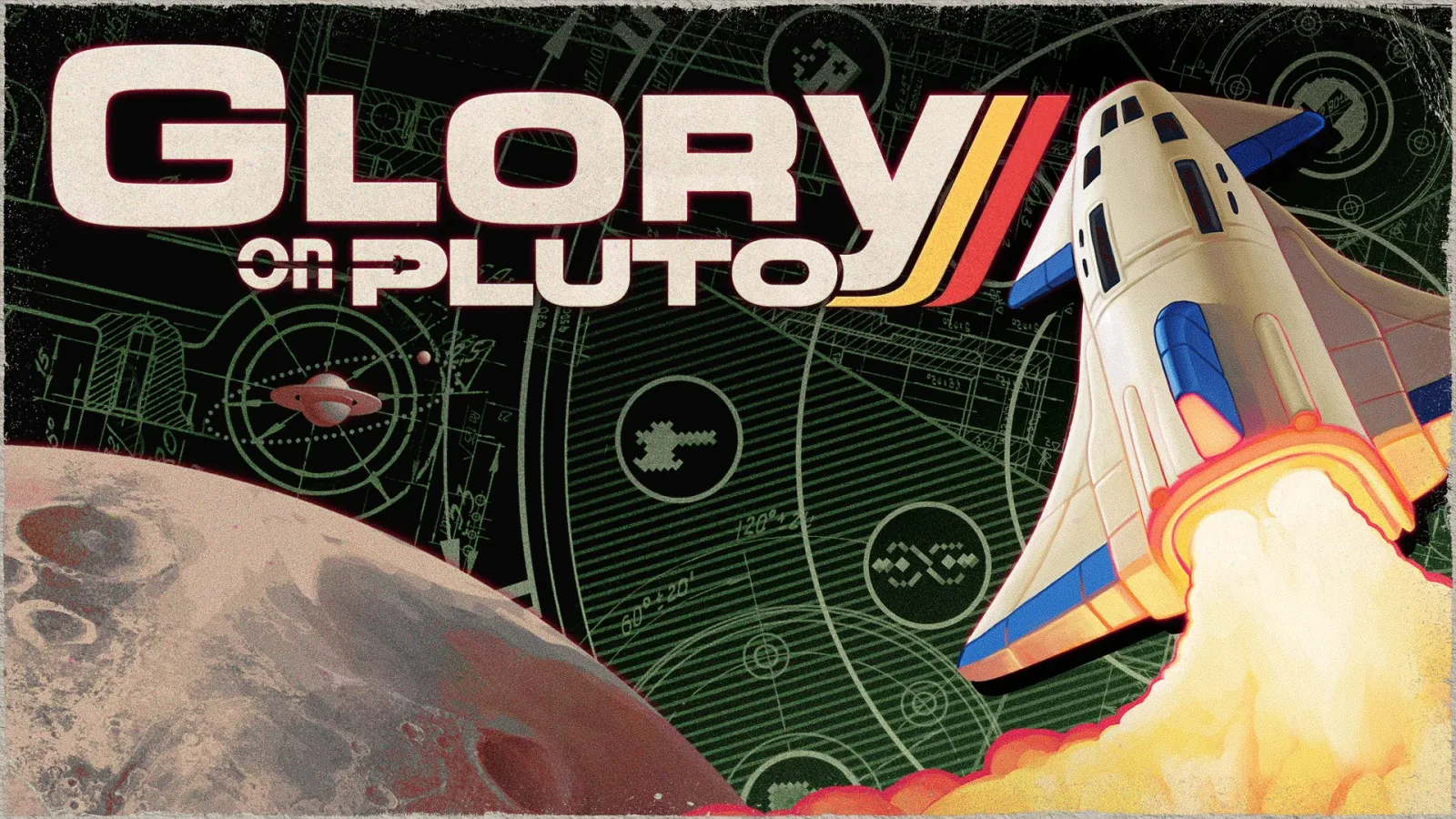
Glory on Pluto, the upcoming incremental rocket-management roguelite from developer Little Big Ears and publisher Yogscast Games, has launched a substantial new demo on Steam. The updated trial arrives alongside a new trailer and gives prospective captains a broader look at the game's unusual blend of engine construction, item synergies, crew management, and run-based risk.
The full game is currently planned to launch on November 12, 2026. Until then, the Steam demo offers a chance to see whether players can assemble an efficient enough fuel system to send their craft out of orbit and on an increasingly ambitious voyage toward Pluto -- with the promise of travelling even farther if their build holds together.
At its core, Glory on Pluto asks players to turn a rocket into a carefully tuned machine. Rather than simply selecting a ship and pushing onward, players build and manage cells, position fuel items, and seek combinations that can produce the engine power needed for the next boost. That central arrangement puzzle is designed around interactions between components: a fuel item can be useful by itself, but the more important question is how it changes the value of everything around it.
The result is a roguelite built around experimentation. A run can turn on a smart combination of fuel categories, a well-timed modifier, an unexpected crew benefit, or a risky decision that pays off at the exact moment the engines need one more burst of power. Just as importantly, a configuration that seems strong early on may become awkward when later segments introduce new restrictions, opportunities, or demands.
For useful background on this topic, read Five Steam Next Fest Demos to Watch, From Mining Horror to Neon Prison Escapes.
A Bigger Demo for an Engine-Building Roguelite
The newly released Glory on Pluto demo includes a number of presentation and usability changes intended to make the rocket-building process easier to read and quicker to control. One major addition is a redesigned interface that can be customised by players. Community-shareable themes are part of that update, letting players alter the look of the game's interface while they manage increasingly complicated boards of fuel cells and engine requirements.
Fuel placement has also received improved drag-and-drop functionality. That matters in a game where positioning and sequencing are central to decision-making. A smoother way to move and organise pieces should make it easier to test an idea, adjust a layout, or recover when a new item changes the plan for an entire engine section.
The demo's structure has been reworked as well, with the stated goal of producing faster runs while raising the stakes. In particular, boost tokens now carry greater risk. That should give players more reason to consider whether using a limited advantage immediately is worth the potential cost later in a journey. Roguelites often derive their tension from such trade-offs, and Glory on Pluto appears to place that tension directly inside the act of getting a rocket off the ground.
New animations and pulsing visual prompts have been added to guide players through the action. The tutorial has also been streamlined, including clearer explanations of engine clearance and RPM fuel instructions. Those details are likely to be especially important for newcomers, as Glory on Pluto combines an incremental-game sense of growth with a dense build-crafting vocabulary that can become more demanding as a run develops.
Fuel Synergies Are the Heart of the Journey
Glory on Pluto describes itself as an engine-builder roguelite, and its fuel catalogue is the foundation of that identity. The game will feature more than 250 distinct fuel items, spread across multiple categories and archetypes. Such a large pool suggests that a run will not be about finding one universal best item, but about discovering which pieces cooperate under the current conditions.
Players are not merely collecting resources to meet a static power target. They are trying to create interactions. Some fuel items may be more valuable when placed beside particular partners, while others may gain strength through a specific engine layout or from the bonuses granted by a run's wider build. The appeal lies in finding a combination that changes the output of the whole rocket rather than making a single number incrementally larger.
That emphasis leaves room for emergent optimisation as well as spectacular breakdowns. A carefully prepared arrangement can snowball into a powerful engine, but a misplaced cell, incompatible pickup, or poorly judged commitment can leave a rocket short of the power it needs. In that sense, failure is not separate from the system: it is one of the ways the game teaches players what a more successful build might require next time.
Every trip is built around the question of whether a collection of individual fuel choices can become a working engine powerful enough for the next leap.
The rocket's route is not a straight line of upgrades. Breaking orbit opens the way to planets and intervening waypoints, where players can encounter events, traders, and other challenges. These stops give the journey a larger adventure-game rhythm around the core engine board. A trader might offer a solution to a weak build, an event might create a tempting new path, and an encounter might demand that a player reconsider how safely they have been playing.
Crew, Modifiers and Pirates Add More Layers
Fuel is only part of the equation. Glory on Pluto also includes more than 50 crew members that players can hire and promote. The crew system adds another potential direction for each run, allowing captains to develop a team alongside the rocket itself. Since the game is designed around synergies, the most interesting crew choices may be the ones that reinforce a build's existing strengths -- or compensate for its obvious weaknesses.
Segment modifiers further shape the options available. These modifiers can influence how a build develops from one portion of a journey to another, giving players reasons to adapt instead of relying entirely on a preferred fuel strategy. A powerful setup that excels in one segment may need a rethink when a new modifier alters the value of placement, power generation, or resource management.
There is danger beyond the machinery, too. Pirate encounters are part of the trip between worlds, bringing pressure to a voyage that already needs precise engine performance. The announcement does not detail exactly how these encounters play out, but their presence reinforces the idea that reaching Pluto will involve more than solving a single static puzzle. Players will need to navigate a changing series of decisions and setbacks on the way.
Bonuses collected across the route can help create momentum, while the waypoint system offers a place for unexpected decisions to interrupt a carefully laid plan. This should make the game's incremental progression feel less automatic than the genre label might initially suggest. The numbers may rise, but they rise because players have built a machine capable of making them rise -- and because they have survived the complications encountered in transit.
New Stickers and Wider Language Support
Alongside its mechanical updates, the demo adds more unlockable stickers. The selection includes collaboration stickers featuring The Subminer and Yogscast. These cosmetic additions provide another collectible thread for players working through multiple demo runs, with the sticker system offering a lighter form of progression next to the demands of propulsion planning.
The update also expands localisation support. Players can access Japanese, Thai, Korean, Traditional Chinese, and Simplified Chinese language options. Adding this group of languages to the demo is a meaningful step for a systems-heavy game, where clearly communicating the function of fuels, modifiers, crew, and tutorial guidance can make a major difference to the experience.
The interface redesign, clearer onboarding, and expanded localisation all point toward a demo intended not only to show more content, but to make the game's central concepts more approachable. Glory on Pluto has plenty of moving parts: fuel items must work together, engines must meet their requirements, boosts carry consequences, and events can alter a run's direction. A strong tutorial and readable interface will be crucial for letting players understand why a build succeeds or fails.
Preparing for the Trip to Pluto
With its Steam demo now available, Glory on Pluto is inviting players to begin experimenting with its rocket boards ahead of the planned full release. The game's pitch is distinctive: take the compulsive experimentation of an incremental game, place it inside a roguelite run, then turn the entire process into a voyage through space powered by eccentric fuel combinations.
For players who enjoy refining a build one adjustment at a time, the appeal is easy to see. There are hundreds of fuel items to discover, crew members to recruit and promote, modifiers to account for, and waypoint decisions that can reshape the trip. For players who enjoy risk, the revised structure and increased pressure around boost tokens could make each attempt feel more consequential.
Whether a rocket reaches the next planet through a clever chain reaction or sputters just short of the required power, Glory on Pluto is built to make the engine room the centre of the story. The new demo is available now on Steam, while the complete journey remains planned for November 12, 2026.


Community
Discussion
Start the conversation.
No comments have been posted yet.