

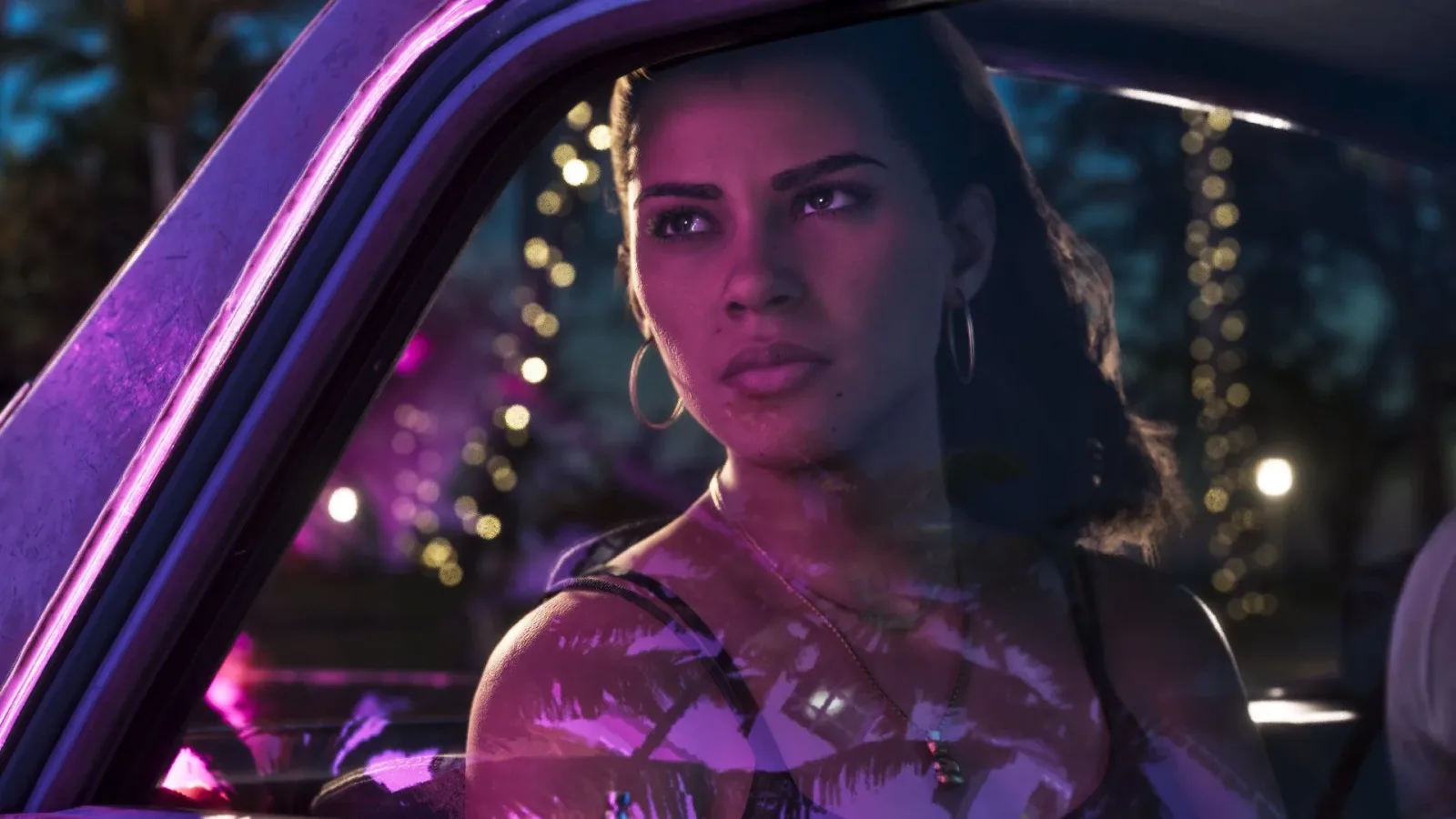
Sam Houser remains closely involved in the creative development of Grand Theft Auto 6, according to Rockstar North co-studio head and head of development Rob Nelson. The comments offer a clearer picture of the Rockstar president and co-founder's role on the long-awaited game, pushing back on speculation that Houser has moved away from the hands-on creative influence associated with earlier entries in the series.
Speaking for a major GTA 6 cover feature in Edge, Nelson said Houser was involved from the project's earliest conception and continues to be connected to every part of its creative direction. The description is notable because Houser, one of the most private figures in modern games, rarely discusses the studio's work publicly. That silence has naturally created room for assumptions about how much he contributes to Rockstar's largest current production.
Nelson's account suggests that Houser's role is not limited to broad approval, company leadership, or setting an overall sensibility for the project. Instead, he described a recurring development process in which he and Houser identify issues, develop feedback alongside the appropriate teams, and revisit the game as it progresses through major milestones.
A Creative Role Beyond Broad Oversight
Rockstar games are often discussed as the result of enormous, multidisciplinary teams, and GTA 6 appears to be no exception. Nelson indicated that the game's scale makes it impossible for a single person to personally inspect every small element of its world. Even so, the studio's leadership structure still puts Houser at the center of decisions that shape how the project feels, plays, and tells its story.
For useful background on this topic, read A Millionaire's GTA 6 Math Says Staying In Could 'Save' $5,000.
Nelson explained that he spends a couple of weeks with Houser whenever GTA 6 reaches a new development milestone. Those sessions are used to assess the state of the game and create detailed feedback for the teams building it. The subjects under discussion can be highly specific, including lighting and audio, but they can also reach into the foundational areas of game design: mechanics, tone, and narrative.
That distinction matters. Feedback on a lighting pass or a particular sound cue is different from a conversation about the tone of a mission, the behavior of a game system, or the arc of a story. Nelson's description presents Houser as someone participating across those layers rather than entering only at the very end to sign off on a finished product.
"Sam and I will identify problems or issues that we then solve with and across the teams," Nelson said.
The process Nelson outlined is also collaborative rather than individualistic. Houser and Nelson identify concerns, the feedback is passed to the relevant development groups, and those teams work through the points raised before the next stage of review begins. On a project of GTA 6's apparent size, that kind of loop is a practical way for creative leadership to maintain consistency without attempting to personally construct every component of the game.
Milestones, Feedback, and the Scale of GTA 6
The scale described for GTA 6 makes the need for this structure easy to understand. Nelson characterized its map as rivaling the combined size of the worlds in Grand Theft Auto 4, Grand Theft Auto 5, and Red Dead Redemption 2. He also emphasized the density of consideration behind its locations, describing a world where players can travel to random places and find that developers have thought about those spaces.
That does not mean every street corner, interior, encounter, or visual detail passes directly in front of Houser. Nelson was clear that no individual can realistically have eyes on every tiny part of such an expansive production. The important point is that the game's larger creative priorities are apparently being reviewed repeatedly as its individual teams turn them into playable content.
For a Rockstar open world, the relationship between large-scale direction and local detail is especially important. A city can be huge on a map while still feeling empty or inconsistent if its districts, systems, ambient details, and stories do not support one another. Conversely, a game can have many carefully made locations but lack a strong identity if the work does not share a common tone. Nelson's comments indicate that Rockstar is treating both ends of that equation as part of its ongoing review process.
Lighting and audio can influence atmosphere immediately, whether a scene is meant to feel glamorous, threatening, absurd, intimate, or tense. Mechanical feedback can determine whether the player's actions reinforce the intended fantasy. Narrative and tonal feedback can ensure that character moments and missions belong to the same larger world. By discussing all of these areas together, Nelson framed the creative process as one that connects technical craft to the game's wider identity.
Why Houser's Involvement Draws Attention
Houser's position makes these details significant even before GTA 6 arrives. As a Rockstar co-founder and president, he has long been closely associated with the creative character of Grand Theft Auto. The series has changed dramatically over the years in production scale, visual ambition, and the sophistication of its open worlds, but it has retained a recognizable approach to setting, satire, storytelling, and player freedom.
Because Houser has not said much publicly about GTA 6, speculation had suggested that he might now be acting more as a high-level taste-setter than as an active participant in ongoing creative work. Nelson directly rejected that impression. Rather than presenting Houser as someone who merely preserves a brand's general feel, he described him as being tied to the project's initial direction and to its continued evolution through development.
There is still an important limit to what Nelson's comments establish. They do not provide a complete breakdown of who owns every decision at Rockstar, nor do they suggest that a single executive is responsible for the work of a massive studio. GTA 6 is being made by teams with specialized responsibilities, and Nelson's explanation specifically recognizes the role of those teams in solving the problems raised during reviews.
What the comments do clarify is the level at which Houser is engaged. The work is described as active, recurring, and connected to concrete feedback. It concerns not only the game's broad premise but also the decisions that can shape moment-to-moment experience and the consistency of its story.
Player Choice and the Jason and Lucia Dynamic
The report also points to one example of the kind of player-facing choice GTA 6 is set to include. Players will be able to break up Jason and Lucia if they choose. That option places the relationship between the game's two central characters among the elements that may be shaped by player decisions, rather than being entirely fixed from beginning to end.
The idea has been linked to lessons from Red Dead Redemption 2 and its protagonist Arthur Morgan. Rockstar's previous western demonstrated how a central character can support both authored storytelling and variations influenced by player behavior. GTA 6's reported relationship choice does not reveal the full scope of its narrative structure, and it should not be treated as proof of every possible consequence or branching outcome. Still, it suggests that the connection between Jason and Lucia may have room for player agency.
That possibility fits the broader picture painted by Nelson's comments. If mechanics, tone, narrative, environmental detail, lighting, and audio are all being considered in the same milestone-driven review cycle, relationship choices may be one part of a larger effort to make GTA 6's world feel reactive while preserving a deliberate authorial direction.
A Clearer Picture of Rockstar's Process
For now, the most revealing detail is not a new mission, location, or system. It is the account of how Rockstar evaluates a game on this scale. Nelson's description portrays GTA 6 as a project built through repeated scrutiny: leadership reviews its current state, identifies issues, works with specialist teams on solutions, and returns to assess the next milestone.
It also answers a lingering question about Sam Houser's place within that process. By Nelson's account, Houser remains a foundational creative voice for Grand Theft Auto, involved from the game's conception through the ongoing decisions that define its mechanics, atmosphere, and narrative. Given GTA 6's enormous stated world scale, that does not mean direct involvement in every asset or location. It does mean Rockstar's president is still helping steer the creative framework that connects all of those pieces.
As more of GTA 6 is shown, players will be looking for the results of that framework: how its world rewards curiosity, how its systems support freedom, how Jason and Lucia's story develops, and how the game balances the detail of a huge open world with a cohesive point of view. Nelson's comments do not answer all of those questions, but they make one thing considerably clearer: Houser has not simply stepped back from the creative work behind Rockstar's next Grand Theft Auto.
Community
Discussion
Start the conversation.
No comments have been posted yet.