

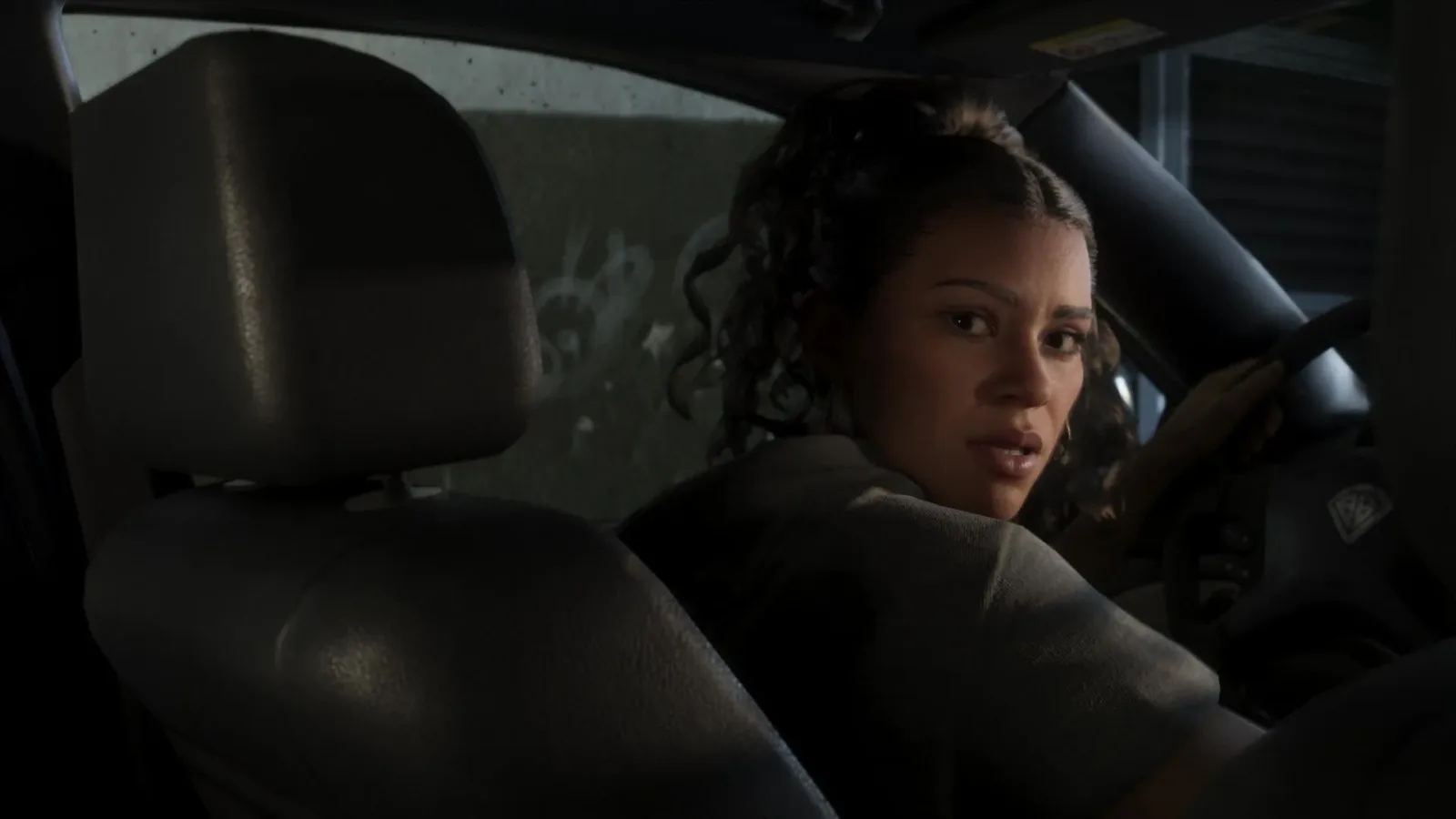
Grand Theft Auto 6 driving is being positioned as a balance between two very different eras of Rockstar vehicle handling. In comments attributed to Rockstar co-studio head Rob Nelson, the developer says the new game is intended to retain the strongest elements of the heavier, more grounded feel associated with Grand Theft Auto 4 while preserving the immediate accessibility that helped make Grand Theft Auto 5 such an easy game to pick up and play.
It is a notable claim because driving is not merely one activity among many in a Grand Theft Auto game. Cars, motorcycles, traffic, police pursuits, escapes, sightseeing, races, and the simple act of moving from one mission to the next all depend on how a vehicle responds in the player's hands. Every adjustment to steering, braking, traction, suspension, or collision physics can change the rhythm of the entire open world.
In an interview with TGG, Nelson was asked whether GTA 6's vehicles carry the same sort of "weight" players associate with GTA 4. His answer suggested Rockstar is not trying to duplicate the older game's handling wholesale. Instead, the studio has sought a middle ground: preserving select aspects of GTA 4's heft and feel without sacrificing the more approachable controls of GTA 5.
"Only in the best way possible," Nelson said when asked about the weightiness comparison. "The team has worked hard to maintain some of the best parts of the weightiness and feel of GTA 4, but have the accessibility of GTA 5."
Nelson also said the vehicle systems were built from scratch for the new hardware, and that the development team has greater room to tune drivetrain behavior, tires, suspension, steering, and related components within the physics model. That does not yet tell players exactly how individual cars will handle, but it does establish the areas Rockstar considers central to the game's driving experience.
Why the GTA 4 and GTA 5 comparison matters
The comparison is significant because Grand Theft Auto 4 and Grand Theft Auto 5 are regularly held up as contrasting approaches to vehicle physics. GTA 4's cars are often remembered as having pronounced momentum. Vehicles could feel large and planted, but also less eager to turn sharply or recover quickly from an aggressive maneuver. For some players, that created a more believable sense of mass. For others, it made ordinary city driving feel awkward or cumbersome, especially when missions demanded speed and precision.
GTA 5 shifted toward a more responsive and broadly accessible style. Its cars generally react more quickly to player input, making them easier to control in high-speed chases, around tight corners, and during the chaotic action sequences that define much of the game. That approach suited a title designed around a huge audience and an especially wide variety of activities, from story missions to online races and stunt-focused challenges.
Neither approach has lacked supporters. Some fans prefer the sensation that a car has meaningful weight, limited grip, and a suspension that reacts to the road. Others value a system that lets them make fast corrections, drive confidently at high speed, and enjoy the city without fighting the controls. Nelson's description suggests GTA 6 is attempting to satisfy both camps, though it remains to be seen where the eventual handling model will land on that spectrum.
The important distinction in his comments is that Rockstar appears to be looking for the "best parts" of GTA 4's character rather than simply restoring its entire model. In practical terms, that could mean cars feel more substantial and differentiated than they did in GTA 5 while remaining intuitive enough that players can still navigate traffic, evade police, and take on missions without a steep adjustment period. Until people outside Rockstar and publisher Take-Two can play the game, however, that remains an ambition rather than a confirmed hands-on result.
Built from scratch for current hardware
Nelson's remarks point to a more technical foundation beneath that design goal. He said GTA 6's driving systems have been built from scratch on the current hardware, with developers able to make more detailed adjustments to elements including drivetrain, tires, suspension, and steering. Those are not cosmetic variables; together, they shape how a vehicle accelerates, corners, loses traction, absorbs bumps, and responds when the player changes direction.
A drivetrain can influence how power is delivered through a vehicle. Tire tuning can affect grip and sliding behavior. Suspension changes can alter how much a car leans, bounces, or settles over uneven roads. Steering settings determine much of the direct relationship between controller input and the front wheels. Applied within a broader physics model, those systems can help make different vehicle classes feel distinct rather than like visual variations of the same basic car.
That potential variety matters in a series where players can move between compact cars, sports vehicles, muscle cars, trucks, motorcycles, boats, and more. Rockstar has not detailed the full range of vehicles or handling options for GTA 6 in these comments, so it would be premature to draw firm conclusions about how deep the simulation will be. Still, Nelson's list of tuning areas indicates the studio is emphasizing individual mechanical building blocks rather than treating driving as a single, fixed feature.
It may also support the kind of emergent moments that have long been central to Grand Theft Auto. A close escape can be shaped by a car's acceleration and grip. A sudden crash can depend on steering response, the road surface, and the way suspension handles an impact. Even casual travel through the game world can feel different if a vehicle communicates its size, power, and limits in a convincing way.
Driving remains at the heart of Grand Theft Auto
Grand Theft Auto games are known for much more than cars. The series combines crime stories, character-driven missions, exploration, satire, combat, side activities, and dense open environments. Yet driving ties those components together. A stolen vehicle can begin a mission, provide the means of escape, become an improvised weapon, or simply serve as the player's temporary home while traveling across the map with music on the radio.
That is why handling discussions become so prominent before a new entry arrives. Players may spend dozens or hundreds of hours behind the wheel, including time outside major story missions. A small difference in vehicle feel can therefore have an outsized effect on how players remember an entire game. GTA 4's heavier cars and GTA 5's more forgiving control model have each become part of their respective identities.
For GTA 6, Rockstar appears aware of those expectations. Nelson's comments acknowledge the long-running conversation directly instead of presenting the new driving model as a complete break from the past. The stated aim is evolutionary: retain a sense of physicality and weight where it benefits the experience, while ensuring the controls remain inviting and functional across the game's broad range of pursuits.
There is also an understandable degree of caution around the claim. No independent hands-on impressions of GTA 6's mechanics are available from people outside Rockstar and Take-Two. Nelson is speaking from within the studio leading development, so his enthusiasm reflects Rockstar's own assessment of its work. Players will need to wait for direct gameplay impressions and, ultimately, release to judge whether the promised blend works in practice.
What players can and cannot conclude yet
Based on Nelson's statement, players can reasonably expect Rockstar to place major focus on the tangible feel of GTA 6's vehicles. The studio is explicitly talking about physics-level tuning, and it is drawing from feedback and perceptions surrounding both GTA 4 and GTA 5. That makes it unlikely that driving is being treated as a minor legacy system carried forward unchanged.
What cannot be concluded is exactly how realistic, difficult, or customizable the final model will be. The comments do not confirm specific handling assists, simulation settings, vehicle damage behavior, weather effects on traction, or the performance differences between any particular cars. They also do not establish whether every vehicle type will receive the same level of complexity. Those details have not been announced in the material discussed here.
For now, the clearest takeaway is that GTA 6 is chasing a familiar but demanding target: vehicles that feel substantial enough to have personality, yet responsive enough to keep the player in control when a routine trip turns into a frantic chase. If Rockstar achieves that blend, driving could once again be one of the game's defining strengths rather than merely the route between its larger set pieces.
Grand Theft Auto 6 is scheduled to launch on November 19 for PlayStation 5 and Xbox Series X. Until then, Nelson's comments offer one of the more specific indications of how Rockstar is approaching the everyday mechanic players will likely use more than almost any other: getting behind the wheel and seeing where the road leads.
Community
Discussion
Start the conversation.
No comments have been posted yet.