

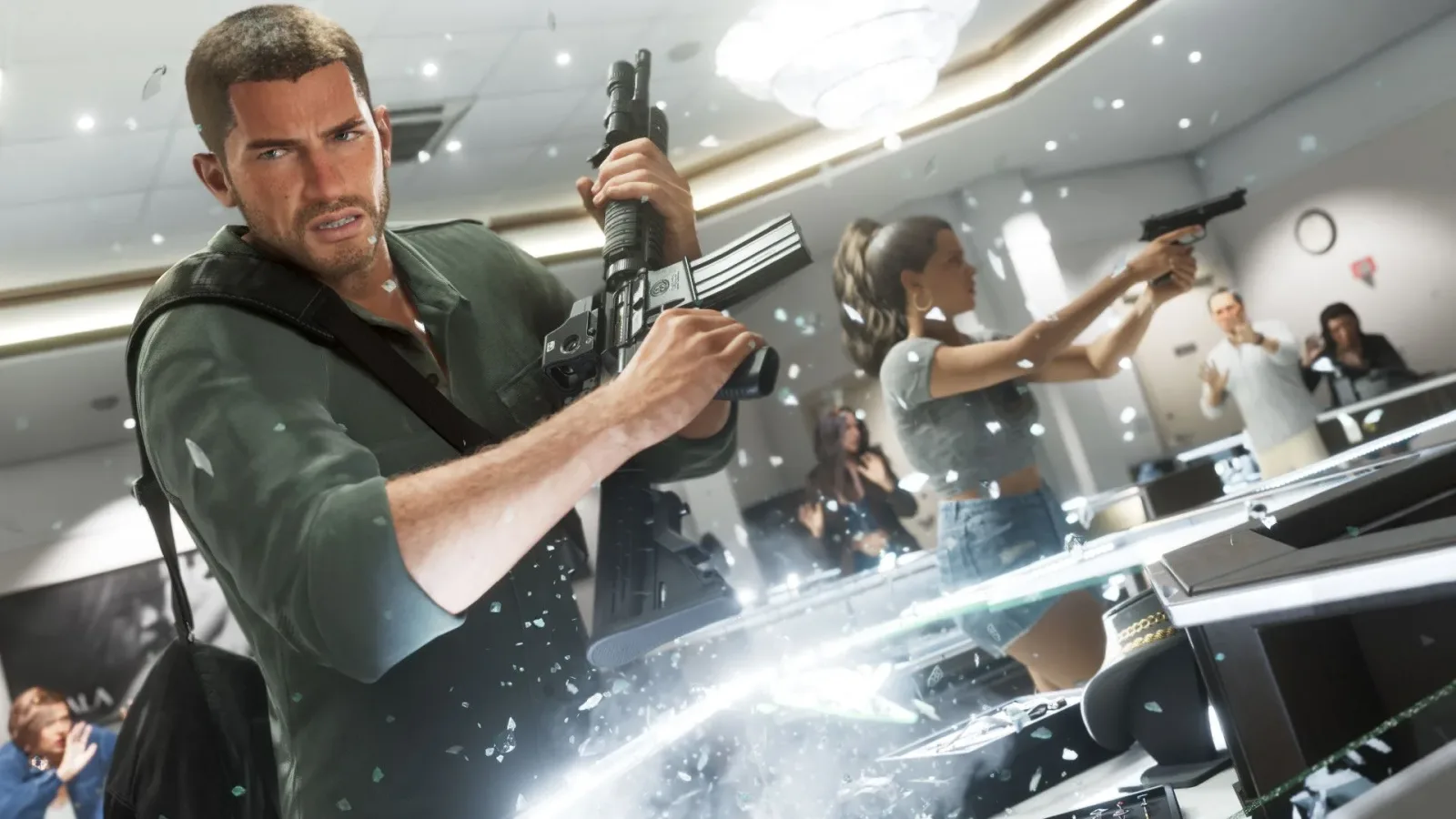
Grand Theft Auto 6 is aiming to give players more flexibility during missions without abandoning the carefully authored storytelling Rockstar is known for. Rockstar North co-studio lead Rob Nelson has described a deliberate effort to make mission design more open wherever it can be, allowing players to approach escapes, chases, robberies, and wanted-level situations in different ways.
That does not mean every objective will become completely unrestricted. Nelson stressed that there are moments when a story needs the player to reach a particular beat in order for the narrative to continue in a believable fashion. The challenge, as he frames it, is finding the right balance: provide agency when the game's systems can support it, but retain direction when a mission needs to deliver a specific dramatic sequence.
It is a familiar tension for open-world games, and an especially significant one for Grand Theft Auto. Players expect the series to offer sprawling spaces full of cars, weapons, pedestrians, police responses, and unpredictable opportunities for chaos. At the same time, GTA's campaigns have traditionally relied on bespoke scenes, set pieces, character exchanges, and tightly timed story developments. GTA 6 appears set to push harder toward making those two sides feel less separate.
A conscious push toward open mission structure
Nelson said Rockstar has made a "very conscious effort" to open up missions where possible while ensuring that the overall experience does not suffer as a result. The wording matters because it suggests the team is not treating openness as a simple box to tick. More options are useful only if they remain understandable, satisfying, and compatible with the mission's tone and story purpose.
For useful background on this topic, read Travis Willingham Takes Over as Sephiroth in Final Fantasy VII Revelation.
In a game as large and system-heavy as GTA 6, freedom can easily create problems. A player might take a vehicle that was not anticipated, head in an unexpected direction, trigger a police response, or use the surrounding city in a way that disrupts a scripted event. Designing around those possibilities is difficult, but it can make missions feel more convincing when they successfully account for the player's choices.
Nelson's comments point to an approach where Rockstar is trying to avoid the feeling that players suddenly enter a different, more restrictive game whenever a mission begins. Instead, objectives that involve familiar open-world mechanics may be designed to operate more like natural extensions of the wider world.
That could be particularly important in Leonida, the state that serves as GTA 6's setting. If the open world teaches players how police pursuits, robberies, driving, and escape routes work, missions can become more engaging when they ask players to use that knowledge rather than discard it in favor of a single prescribed solution.
Multiple routes in the tower-block escape
One of Nelson's examples comes from the first mission shown in the GTA 6 Extended Look presentation, which premiered on Netflix. In that sequence, the characters are attempting to get out of a tower block. Rather than presenting one mandatory path through the building, Nelson said there are multiple routes out.
That may sound like a relatively focused example, but it represents a meaningful shift in how players can experience a story mission. An escape from a building is a situation that naturally invites improvisation. Players may want to move quickly, seek a safer route, look for an exit that avoids enemies or law enforcement, or simply follow their instincts in the moment. Providing alternate paths can make the environment feel like a place rather than a corridor.
It also creates room for replay value. A player returning to the mission may discover that a route they missed creates a different rhythm, produces a more efficient escape, or simply feels more fitting for the way they want to play. The destination may remain the same, but the journey can still feel personal.
Rockstar has used occasional branching approaches before, whether through choices of vehicles, tactics, or preparation. The apparent aim for GTA 6 is not necessarily to turn every mission into a radically branching narrative, but to make more of the moment-to-moment play flexible enough that alternate solutions are genuinely supported.
Chases that do not collapse when players leave the suggested route
Another example concerns a mission in which Jason and Lucia meet Raul. At the beginning of the sequence, Jason is shooting while Lucia drives, leaving that initial portion more tightly controlled. The situation then changes when the player switches roles and takes over the driving.
Nelson explained that the mission provides an optimal route to escape, but players are not required to follow it exactly. They can still get away if they choose another path, because the core of the objective is effectively a police chase rather than a rigid trip from point A to point B.
This distinction could make a substantial difference to the feel of GTA 6's missions. In many open-world games, a chase begins with the promise of freedom but quickly fails the player for missing a turn, taking an unscripted road, or moving too far from a highlighted route. A pursuit that recognizes the broader city as usable space can better capitalize on what makes Grand Theft Auto driving memorable in the first place.
Players could potentially cut through alleys, take highways, make risky turns through dense traffic, change direction to shake pursuing officers, or rely on their own familiarity with the map. None of that guarantees that every route will be equally easy. An optimal route can still offer the clearest or safest path. But allowing alternatives means the game can acknowledge a basic expectation of the genre: during a desperate getaway, people do not always drive exactly where a navigation marker tells them to go.
Making missions match Leonida's systems
Nelson's broader point is that missions using GTA 6's systems should not feel inconsistent with the way those systems behave during free exploration. He specifically discussed activities connected to wanted levels and robberies, areas where players are likely to expect the rules of the open world to continue applying.
Consistency is one of the most valuable qualities an open-world game can have. If law enforcement behaves one way while roaming the map but follows entirely different, unexplained rules during a mission, the illusion of a living place can weaken. Likewise, if a robbery mission ignores the game's usual responses to crime, it can feel detached from the sandbox that surrounds it.
By trying to make systemic missions operate in line with open-world behavior, Rockstar may be reducing that disconnect. A robbery should feel like it belongs in the same Leonida where players can otherwise commit crimes, attract police attention, flee across the region, and deal with the consequences. A wanted sequence should feel like an escalation of the game's normal law-enforcement systems rather than a separate scripted minigame.
There will still be boundaries. Narrative missions often require characters to survive, locations to remain available, or plot information to be delivered in a particular order. Nelson acknowledged that storytelling sometimes has to take precedence. The notable part is Rockstar's stated effort to reserve that guidance for moments where it is necessary instead of applying it automatically to every activity.
Freedom does not mean abandoning authored drama
There is a risk that discussions of player freedom can create unrealistic expectations. Multiple routes through a building or a police chase that permits detours does not necessarily mean every mission will support every imaginable action. GTA 6's story still needs to establish Jason and Lucia, develop their relationships, introduce major characters, and move through key events.
Nelson's explanation presents a more measured goal. Rockstar wants the player to have meaningful room to act within missions, while preserving the crafted scenes and narrative momentum that define a major Grand Theft Auto campaign. Some scenes may begin in a controlled way before opening up. Other objectives may ask players to reach a fixed result but let them decide how to get there.
That balance could also improve pacing. Highly scripted moments can provide dramatic clarity, while open segments can let players create stories of their own. A mission that starts with a tense character-driven exchange, develops into a chaotic player-led escape, and then returns to an authored conclusion could combine both strengths without forcing one approach to replace the other.
Replayability is part of the plan
Nelson has also said that, like Red Dead Redemption 2, he believes GTA 6 is built for players who return for multiple playthroughs. More flexible mission design would naturally support that idea.
Replayability is not only about seeing a different ending or making a major story choice. It can come from discovering a safer route, handling a pursuit with a different vehicle, taking a new tactical approach, or realizing that a mission's systems allow for more experimentation than first expected. Even when the broad narrative remains unchanged, varied player behavior can make a second run feel less like repetition.
For GTA 6, that potential may be especially appealing. Leonida's open world is expected to be central to the experience, and missions that better respect its rules could encourage players to engage with the city as a functional space rather than a backdrop they temporarily leave behind for story content.
Rockstar has not presented every detail of how this philosophy will apply across the full campaign. Still, the tower-block escape and the Raul chase offer a useful indication of the direction: major missions can retain structure and cinematic intent while giving players room to make decisions that matter in the moment. If that design holds across the game, GTA 6 could make its story missions feel more connected to the unpredictable freedom that has always been at the heart of Grand Theft Auto.
Community
Discussion
Start the conversation.
No comments have been posted yet.