

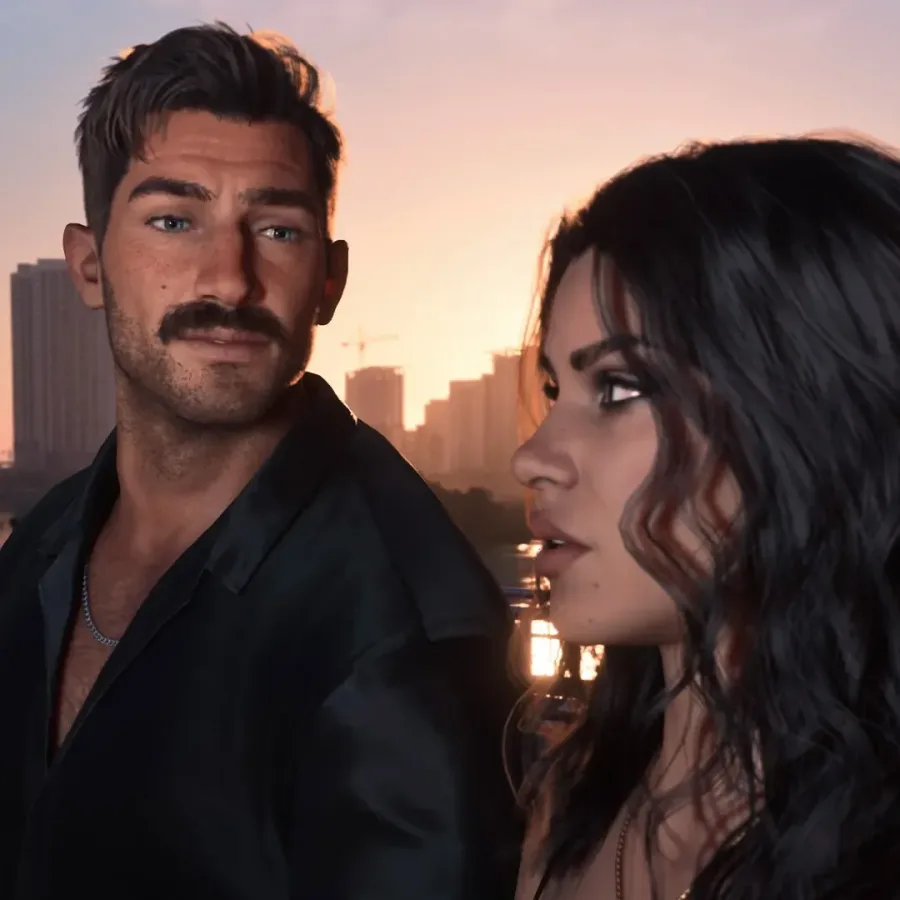
Grand Theft Auto 6 has barely begun its life on PlayStation 5 and Xbox Series X/S, yet one of its most visible premium-edition bonuses has already prompted a fierce player debate. Owners of the game's Standard Edition have discovered that several businesses in Leonida are not merely missing exclusive items or services: their doors are completely closed.
The businesses in question--One-Eyed Willie's, Sara's Unisex Salon, Stock 305, and Electric Fang Tattoo Parlor--are reserved for players who purchased GTA 6's $99.99 Ultimate Edition. Standard Edition players, who paid $79.99, can locate the establishments in the game world but cannot enter their fully decorated interiors. That implementation has led to frustration from some players who expected the exclusivity to apply to purchases and cosmetics rather than physical access to parts of the open world.
The distinction matters in a series built around exploration. GTA 6's take on Vice City and the wider state of Leonida is intended to be a dense, explorable environment, where stores, streets, interiors, and incidental discoveries contribute to the fantasy of inhabiting a living place. For players who encounter a marked business and find a locked door because they selected the lower-priced edition, the restriction feels more direct than a typical bonus-content menu or an unavailable outfit.
Embedded X/Twitter post
Embedded X/Twitter post
Four doors at the center of the debate
Rockstar had outlined that the Ultimate Edition would include cosmetics, weapons, vehicles, and access to unique shops before launch. In that sense, the presence of edition-exclusive businesses was not a surprise. What appears to have caught part of the community off guard is the literal way the limitation works.
For useful background on this topic, read GTA 6 Tenebrae Lux Guide: How to Solve Every Main Puzzle.
Rather than allowing every player inside and limiting which products can be bought, GTA 6 blocks Standard Edition owners at the entrance. The locations have interiors, but those interiors are inaccessible without the Ultimate Edition entitlement. Players who paid for the higher tier can use the shops as normal, while everyone else is met with a closed building.
That has created a difference in expectations. Premium versions of games routinely include early access, cosmetic packs, digital currency, extra missions, and special gear. Locked shops, however, are an environmental restriction players repeatedly encounter while navigating the map. A player can see the business, travel to it, and attempt to interact with it, only to be denied entry.
For critics, the issue is less about whether premium bonuses exist and more about seeing finished, location-based content visibly withheld inside a world they have already paid to explore.
Online reactions have ranged from disappointment to anger. Some players have characterized the choice as overly aggressive monetization, especially given the scale of GTA 6's launch. Others have focused on the awkwardness of being turned away from a shop in a single-player open-world game. Jokes about paying full price only to be "bounced" from a store have circulated alongside more serious complaints about the precedent.
Why locked interiors feel different from ordinary DLC
The disagreement reflects a broader tension surrounding deluxe and Ultimate Editions. Extra content has long been used to encourage purchases of more expensive launch packages, but the form that content takes can change how players perceive it. A vehicle or outfit delivered through a garage or wardrobe is one thing. A building that exists in a city but is inaccessible to a portion of its residents is another.
Open-world games ask players to treat their environments as places worth investigating. Shops, salons, tattoo parlors, bars, and similar locations generally signal optional role-playing opportunities, customization, or small discoveries. Even if a business is not essential to the main story, a locked entrance can make the restriction feel more prominent because it is integrated into everyday exploration.
Some GTA 6 players had apparently anticipated a softer version of the system. One possible interpretation was that Standard Edition owners might be able to enter the shops, look around, or access a reduced catalog, while Ultimate Edition buyers received the exclusive merchandise. Another expectation was that the locations could become available later in the campaign. Neither appears to be the case at launch: the shops are Ultimate Edition-only spaces.
That does not mean every player sees the situation as a major issue. The Ultimate Edition was marketed at a higher price and was explicitly positioned as containing more content. Buyers who chose that version may reasonably view the stores as part of the package they paid extra to receive. The debate instead turns on whether exclusive interiors are an acceptable premium bonus in a game whose appeal depends heavily on freedom, immersion, and map discovery.
The Standard Edition and Ultimate Edition split
GTA 6 launched with two principal price points: a $79.99 Standard Edition and a $99.99 Ultimate Edition. The $20 difference gives Ultimate Edition owners an assortment of additional cosmetic options, weapons, vehicles, and the unique shop access now under scrutiny.
On paper, that is a familiar premium-edition proposition. Players can decide whether the extras are worth the extra money, while those only interested in the core game can choose the Standard Edition. In practice, the locked doors have made the division more tangible than an inventory list might suggest.
For Standard Edition buyers, these locations are not abstract items that never appear during play. They are visible businesses in Leonida. Their existence invites curiosity, but the game's response is effectively that the player needs a different edition to cross the threshold. That moment is why critics have described the approach as harsher than they expected, even though the edition differences were disclosed ahead of release.
It also raises questions that may persist as the player base spends more time with the game. Will access to the shops ever be offered separately? Could it be added to another upgrade option? Will the exclusive locations remain limited to Ultimate Edition ownership permanently? No details establishing such plans have been announced, so players should not assume a future path to entry beyond purchasing the higher-tier edition.
A record-setting launch adds to the spotlight
The argument arrives as GTA 6 is enjoying an extraordinary commercial debut. Rockstar stated that the game generated $3.79 billion in its first 24 hours, describing the result as the biggest entertainment launch in history. The scale of that achievement has only amplified attention around how its premium content is handled.
GTA 6 released on November 19 for PlayStation 5 and Xbox Series X/S. Its enormous audience means that even relatively small design or monetization decisions can rapidly become community-wide talking points. A handful of restricted businesses might have been a minor footnote in a smaller release; in Grand Theft Auto, they become a test case for what players expect from a full-price open-world blockbuster.
The reaction also illustrates how launch messaging and lived experience can differ. Knowing that an Ultimate Edition has unique shops is not necessarily the same as arriving at one during a session and finding an inaccessible door. The latter creates an immediate, repeatable reminder of the edition gap. For some, that is a valid incentive to upgrade. For others, it interrupts the sense that Leonida is a world available to explore.
What this means for exploring Leonida
For now, Standard Edition owners should expect One-Eyed Willie's, Sara's Unisex Salon, Stock 305, and Electric Fang Tattoo Parlor to remain off limits. Ultimate Edition owners can access the locations and their associated offerings, while players on the lower-priced edition will have fewer customization and shopping options when playing as Jason and Lucia.
The controversy is unlikely to overshadow the game's wider launch on its own, particularly with GTA 6 receiving major critical attention and unprecedented sales. Still, it highlights an issue that can matter deeply to dedicated players: whether premium rewards should add optional value or visibly remove portions of a shared game world from everyone else.
Ultimately, GTA 6's locked-shop debate is about presentation as much as price. Many players accept that a more expensive edition comes with more items. They are less comfortable when the difference is represented by a locked door on a street they are otherwise free to explore. As players continue to learn the shape of Vice City and Leonida, those four businesses will remain a conspicuous reminder of the line Rockstar has drawn between the Standard and Ultimate editions.
Community
Discussion
Start the conversation.
No comments have been posted yet.