

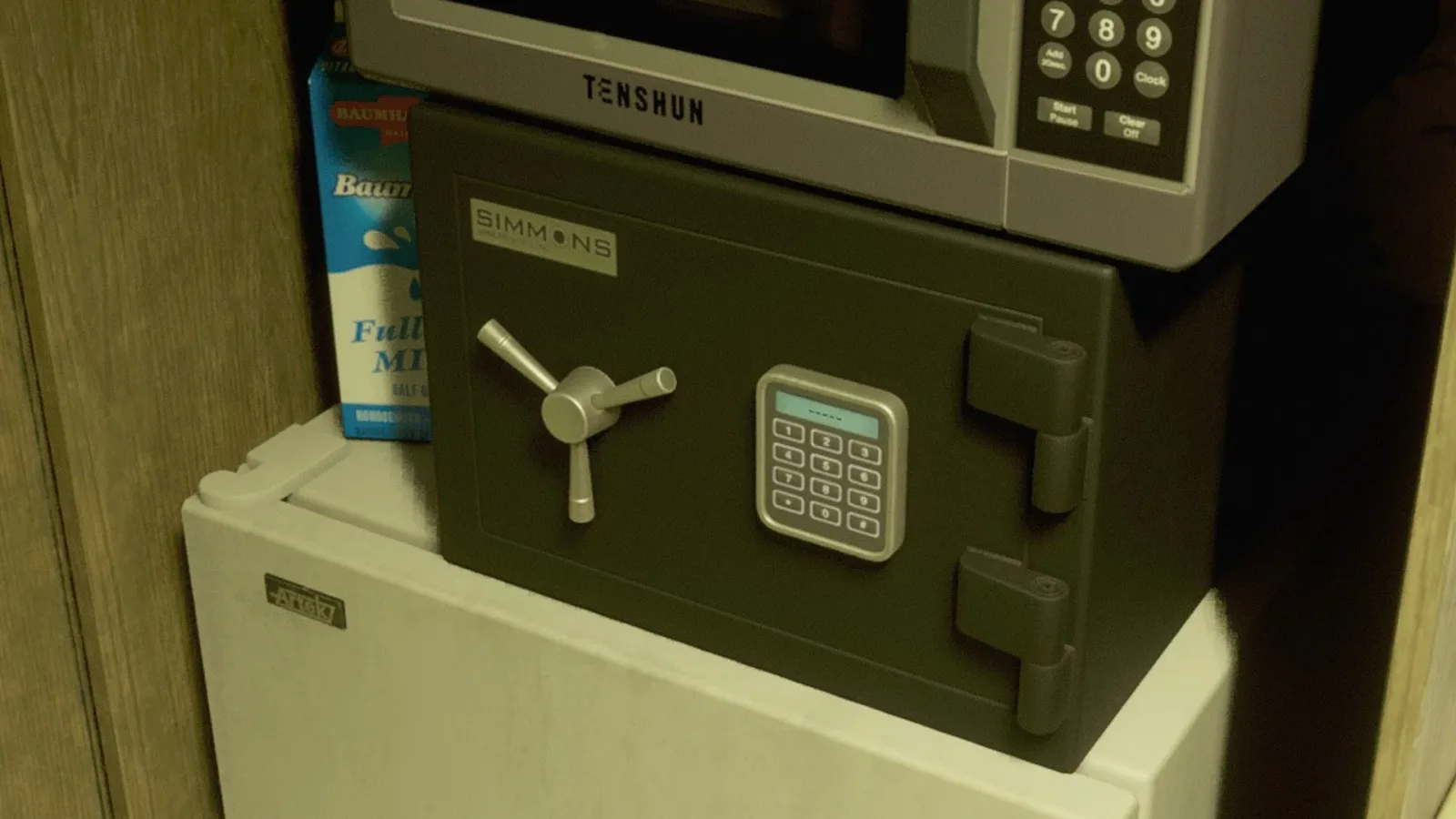
Knowing how to handle GTA 6 safe codes can turn an opportunistic robbery into a much faster payday. Safes are scattered across Leonida in story content, larger side activities, and ordinary locations worth exploring for extra cash. More than 50 can be found in total, although they do not all work the same way. Some can be forced open, while others demand a combination before they will yield their contents.
The important catch is that many combinations are not permanent. A code that works for one player may not work for another, which means there is no truly complete universal list for every safe in the game. However, a smaller group of safes uses fixed numbers, and those can be entered directly. For the randomized safes, players will instead need to investigate the immediate area or pressure someone nearby into handing over the information.
Below is a full breakdown of the currently known fixed codes, the two main ways to obtain changing combinations, and the explosive option for players who would rather avoid a prolonged search.
All currently known fixed GTA 6 safe codes
The following combinations are set rather than randomized. They should remain the same across playthroughs, making them especially useful for repeat visits or for anyone who wants to get through a robbery with minimal delay.
For useful background on this topic, read GTA 6 Aims to Make Jason and Lucia Feel Human Amid Leonida's Chaos.
- Brooks Boatworks: 6823
- Kingpin Bowling Alley: 0330
- La Cascera Motel: 6969
- Trailer south of Grassrivers: 44017
There is also a 0420 code provided during Chapter 1. Because it is handed to the player as part of the campaign, it is best treated as story-specific information rather than a general exploration code to memorize for every situation.
Brooks Boatworks is particularly notable. It is tied to several cash-gathering objectives connected to the Kolt gang in Port Gellhorn. Although the code itself does not change, entering 6823 is only part of the job: players still need to contend with gang resistance at the relevant locations. In other words, the fixed combination removes the detective work, not necessarily the danger.
How to find randomized safe codes
When a safe does not use one of the fixed combinations above, there are two primary ways to uncover its code. The right approach depends on the building and the people present, so it is worth checking both before assuming a safe can only be opened with explosives.
Use Focus to search the area
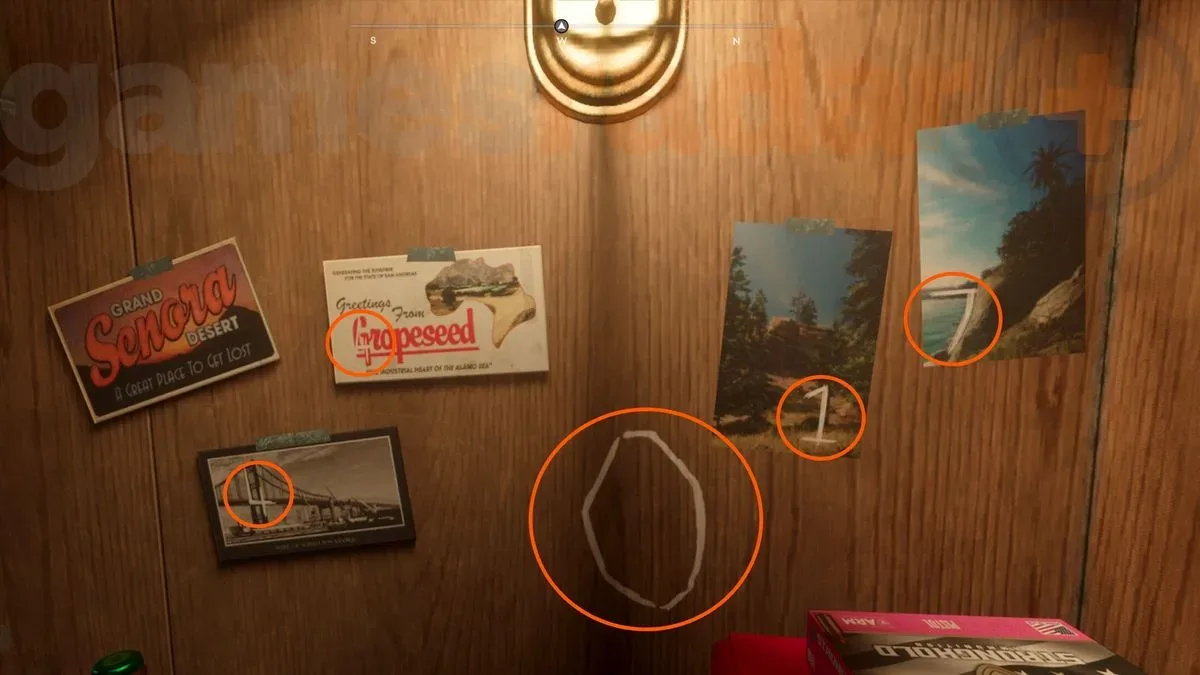
The less confrontational solution is to look for a written code nearby. Notes and other clues can be found in the vicinity of a code-locked safe, and the game's Focus feature is designed to make this process more manageable.
Activate Focus by pressing down both analog sticks: L3 and R3 on PlayStation controllers, or LS and RS on Xbox controllers. With Focus active, the relevant clue can be highlighted if there is one available in the location. This is a useful first step because it can prevent an unnecessary confrontation and may be quicker than trying to intimidate every employee in sight.
Do not limit the search to the safe itself. Check counters, offices, back rooms, nearby work surfaces, and other spaces that logically might contain a written combination. The code is meant to be somewhere within the local area, not necessarily placed beside the lock.
Threaten staff for the combination
If Focus does not reveal a code, the answer may be standing right in front of the player. Certain businesses and interiors require direct intimidation of staff before the combination becomes available.
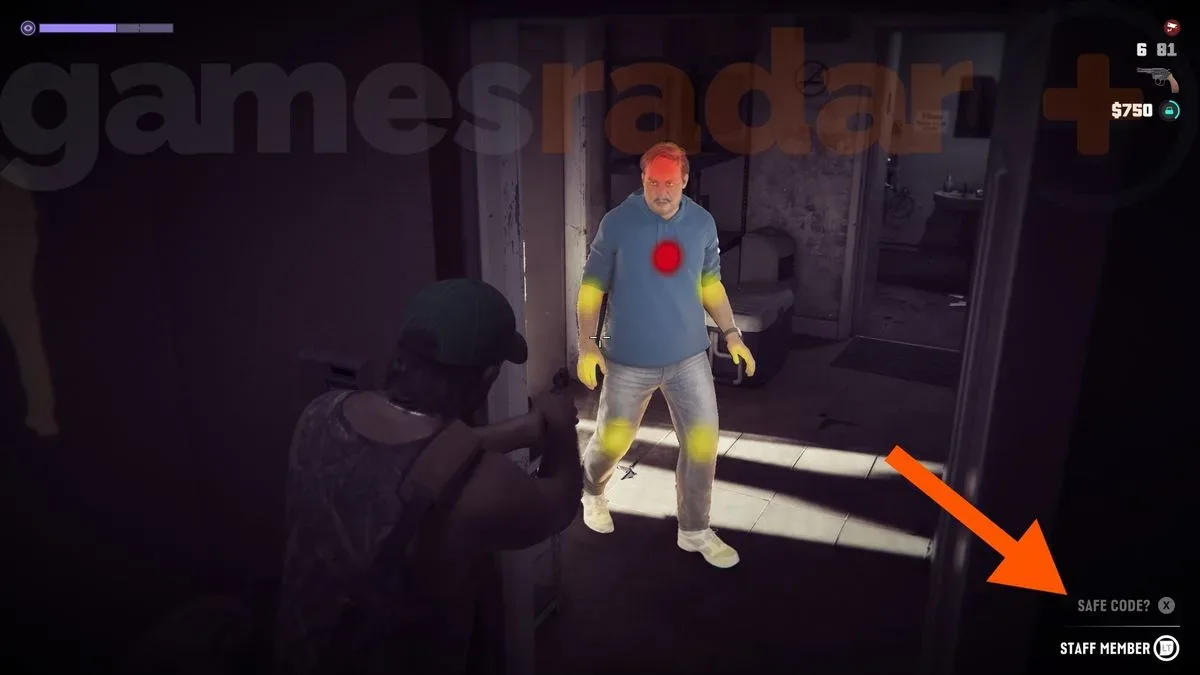
Start by holding LT on Xbox or L2 on PlayStation to threaten the employee, then press X on Xbox or Square on PlayStation to continue the intimidation. After enough pressure, the regular threat interaction changes into a "Safe code?" prompt. Select it to make the person give up the number.
The Avery Pawn Shop is an early example of a safe that demonstrates this process. It is a practical place to learn the system because it makes clear that not every combination is intended to be discovered through environmental clues. If scanning with Focus turns up nothing, intimidation is the logical next move.
When to use Focus and when to threaten
The safest routine is simple: scan first, threaten second. Focus can immediately point out a written clue when one exists, and it does so without escalating the situation. If the scan provides no highlighted code, move on to the people working at the location and see whether the dialogue can be pushed toward the specific safe-code demand.
This order matters for efficiency as much as it does for role-playing. Safes are often an optional source of money during a larger activity, and spending too long on one can turn a quick detour into a messy distraction. A short Focus check followed by targeted pressure on staff is generally more reliable than wandering around at random.
It is also worth remembering that a missing clue does not mean the safe is bugged or inaccessible. It may simply be one of the safes whose code is individualized for that playthrough and tied to an NPC interaction. Conversely, a staff member may not have anything useful to say if the game expects players to locate a nearby written note instead.
Sticky bombs offer a direct way in
For players who do not want to hunt for numbers at all, code-required safes can also be opened with sticky bombs. This is the bluntest method, but it can be valuable when speed matters more than keeping a low profile.
Sticky bombs become officially available after reaching the Credit Checked mission in Chapter 3. At that point, they can be obtained through Ammu-Nation. There are also opportunities to pick up explosives before that unlock in at least some circumstances. The Kingpin Bowling Alley contains a few sticky bombs that can be collected on-site, giving players a potential way to breach its safe even before they can routinely buy the explosives.
That detail is useful because the Kingpin Bowling Alley combination, 0330, is fixed, but players are not strictly forced to use it. The safe can be treated as a test case for the game's multiple solutions: enter the code for a clean opening, or use explosives if the situation calls for a more immediate approach.
Expect similar opportunities elsewhere around the map, though specific early explosive pickups beyond the bowling alley are not confirmed. The broader takeaway is that codes are usually the quiet and economical answer, while sticky bombs are a flexible fallback once players have access to them.
Why fixed codes are useful even in a game with randomized safes
Because so many safe combinations can vary, it may be tempting to think memorizing any code is pointless. The fixed list still has clear value. It removes one layer of uncertainty at locations that may be revisited, helps during activities where time is limited, and lets players focus on security, hostiles, escape routes, and loot rather than on a scavenger hunt.
This is especially true around Port Gellhorn and the Kolt gang-related objectives. Brooks Boatworks uses the same 6823 combination for three major fund-gathering safes. Entering the number will not clear the path through the area, but it ensures that reaching the safe is the final obstacle rather than the beginning of another search.
For every other location, it is better to understand the systems than to rely on a supposed master list. Use Focus. Look for environmental notes. Threaten employees when no clue appears. Keep sticky bombs in mind after Chapter 3, or collect them from a location when they are available. That approach will remain useful even as more fixed-code locations are identified.
Quick GTA 6 safe checklist
- Approach the safe and determine whether it requests a code.
- Activate Focus with L3/R3 or LS/RS to search for a highlighted written combination.
- If no clue appears, hold L2/LT and use Square/X to threaten nearby staff.
- Continue until the interaction changes to the "Safe code?" option.
- Use a known permanent number when visiting Brooks Boatworks, Kingpin Bowling Alley, La Cascera Motel, or the trailer south of Grassrivers.
- If a fast breach is preferable and sticky bombs are available, use explosives instead of locating the combination.
Safes are not all designed as identical lock-and-key puzzles. GTA 6 mixes permanent combinations, local clue hunts, NPC intimidation, and explosive entry to keep robberies from feeling too routine. Learning which method applies is ultimately more important than memorizing a long list of numbers--and it should make every detour for quick cash considerably smoother.
Community
Discussion
Start the conversation.
No comments have been posted yet.