

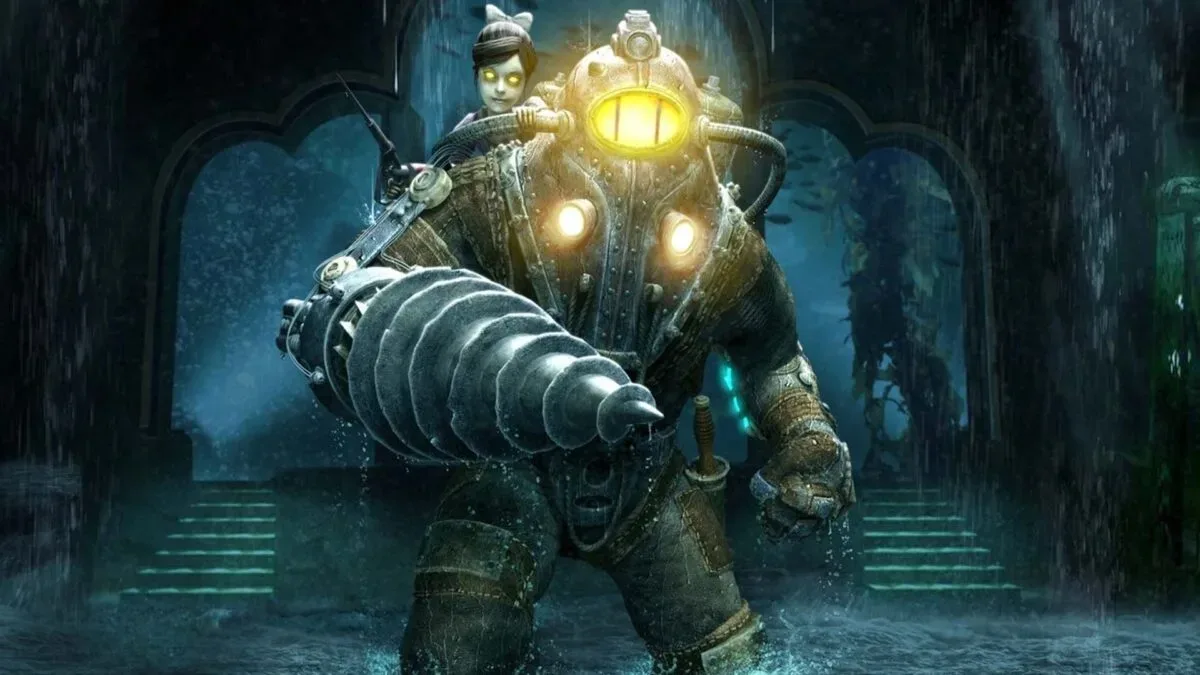
Guillermo del Toro has spoken candidly about an earlier attempt to bring BioShock to the screen, describing conversations around the proposed adaptation as among the worst calls he has experienced. The acclaimed filmmaker said he explored adapting games to film in the past, including discussions involving the underwater dystopia of BioShock, but ultimately came away convinced that he was finished pursuing the idea.
His remarks arrive while a separate BioShock movie remains in development at Netflix. That project has existed in one form or another for many years, and its path has included major changes in scale. Del Toro did not identify when his own talks took place, who participated in them, or precisely what creative disagreements made the calls so difficult. Still, his comments offer an unusually blunt glimpse at how challenging the adaptation process can be before a script, cast, or production plan has even been locked in.
A filmmaker drawn to strange worlds
Del Toro is no stranger to elaborate fantasy, horror, and science-fiction settings. Across films including Hellboy and Frankenstein, his work has repeatedly embraced unusual creatures, dense visual environments, moral ambiguity, and the tension between beauty and decay. Those interests make BioShock look like an obvious fit on paper. The game's fallen city of Rapture is one of gaming's most recognizable settings: an Art Deco metropolis beneath the sea, built around radical ideology and transformed into a nightmare.
But being visually compatible with a filmmaker is not the same thing as being straightforward to adapt. Del Toro stressed that games and movies can resemble each other in superficial cinematic ways while operating through very different forms of storytelling. A game camera may frame a scene dramatically, and an environment may communicate character or history with the same kind of detail found in a film set. Yet players are also asked to navigate spaces, make decisions, solve problems, and discover events at their own pace.
For useful background on this topic, read The Witcher 3 Remastered Hotfixes Tackle Lighting, DLSS and Save Problems.
That interactive layer is a central issue for any game adaptation. A film has to establish a fixed perspective and guide viewers through a predetermined sequence. A game can suggest freedom even when it is quietly directing players toward particular paths or objectives. Translating that sensation into a two-hour feature is difficult, especially for a game such as BioShock, where exploration, atmosphere, combat, and the player's growing understanding of Rapture all contribute to its impact.
Why games do not map neatly onto movies
Del Toro framed the divide in terms of structure. In games, players participate in the work of moving through the world. They assemble clues, react to obstacles, and, in many cases, feel as though their choices are determining the journey. Even a highly controlled game must create an impression that the player is actively navigating its space rather than merely watching someone else act.
He compared that design challenge to work on Insane, the game project he once pursued but never completed. For that project, he said the team designed a structure he calls a "mandala": a way to make a game feel like an endless sandbox while still steering players through deliberate routes. In practice, a game designer can give people room to roam, then use level design, systems, incentives, and barriers to gradually lead them where the narrative needs them to go.
For another perspective on this story, read Guillermo del Toro Says BioShock Movie Talks Were 'Disastrous'.
Movies have no equivalent relationship with their audience. Viewers can interpret a film, emotionally invest in its characters, or revisit scenes for new meaning, but they do not solve its environmental puzzles or select a route through its world. That difference does not make game adaptations impossible. It does mean an adaptation needs to identify what belongs specifically to the game and what can survive after player agency is removed.
For BioShock, that question is particularly significant. The original game is remembered not only for Rapture's visual identity but also for the way its narrative engages with control, choice, ideology, and the player's role. A movie could use its setting, themes, characters, and core conflict, but it would need to find a film language for ideas that were initially delivered through interaction. Trying to simply recreate the game's progression beat by beat could miss what made that progression effective.
Del Toro's difficult BioShock conversations
When asked whether he would be interested in making a movie based on a game, del Toro said he had tried before and referred to contentious conversations involving more than one game. He then singled out BioShock, saying there had been multiple calls about the property. His assessment of those exchanges was unambiguous: he called them probably among the most disastrous calls of his life.
The director did not offer more detail, which leaves the cause of the breakdown uncertain. There is no confirmation of whether the conflict centered on creative control, budget, narrative direction, rights issues, or another matter entirely. What is clear is that the experience was serious enough for him to say he is done with trying to adapt games into films.
That does not mean del Toro lacks enthusiasm for games themselves. On the contrary, he discussed several titles he admires, including Left 4 Dead, Death Stranding, Shadow of the Colossus, and Dead Cells. His choices cover cooperative survival action, contemplative science fiction, sparse mythic adventure, and demanding roguelike combat, illustrating an interest in games that create distinctive worlds and evoke feelings that are not always easily reduced to plot.
He said Shadow of the Colossus made him think deeply about many intangible qualities. That response gets at another hurdle facing adaptations: games can leave an impression through silence, repetition, scale, rhythm, or the physical act of play. These are qualities that may not correspond to a single line of dialogue or a conventional screenplay beat. They are often felt rather than explained.
BioShock remains a world he loves
Despite the bad experience connected to the movie conversations, del Toro expressed admiration for BioShock itself. He praised its world as one in which he could become lost for ages. That distinction matters. His criticism was not aimed at the game's setting or creative potential; it was aimed at the difficult process of turning interactive material into a movie and at the particular discussions he had about doing so.
It also reinforces why the property continues to attract film interest. Rapture has the kind of immediate visual hook Hollywood often seeks: a spectacular location with a clear historical aesthetic, a built-in sense of danger, and an expansive mythology. The world can support horror, action, political allegory, tragedy, and mystery. Yet those strengths also raise expectations. A successful screen version would have to feel like more than a collection of recognizable imagery from the games.
For now, Netflix's BioShock film is still said to be moving forward. In 2022, 2K announced that an adaptation was being developed for Netflix. In 2024, producer Roy Lee said the project remained in the works but that its budget had been reduced. He characterized the revised approach as a smaller-scale production with a more personal point of view rather than a massive, sweeping project.
That change could prove important. A more intimate perspective may be a practical response to budget realities, but it could also offer a useful creative route into Rapture. Rather than attempting to explain every part of the city and its history at once, a film could concentrate on one character's experience within it. Whether that approach can preserve the scope and menace players associate with BioShock remains an open question.
From Rapture to Angry Birds
Del Toro's current gaming habits also reveal a more playful side. While he spoke warmly about acclaimed and often demanding games, he said the title he plays most is Angry Birds. He described playing it every day whenever he has spare time and said, with a laugh, that he is very good at it.
The contrast is fitting for a conversation about games: one person can be captivated by the haunting isolation of Shadow of the Colossus, absorbed in the layered world of BioShock, frustrated by repeated respawns in Dead Cells, and still return daily to a mobile physics puzzler. Games are not one storytelling format or one type of experience, and that variety is part of what makes adapting them so complicated.
Del Toro's experience is a reminder that a celebrated director and a beloved game world do not automatically produce an easy partnership. The creative overlap between his sensibilities and BioShock may be obvious, but the work of converting a player-driven experience into a film remains its own challenge. As Netflix's adaptation continues its long development journey, the question is not merely whether Rapture can look convincing on screen. It is whether a film can capture the unsettling ideas and sense of discovery that made players want to descend into it in the first place.
Community
Discussion
Start the conversation.
No comments have been posted yet.