

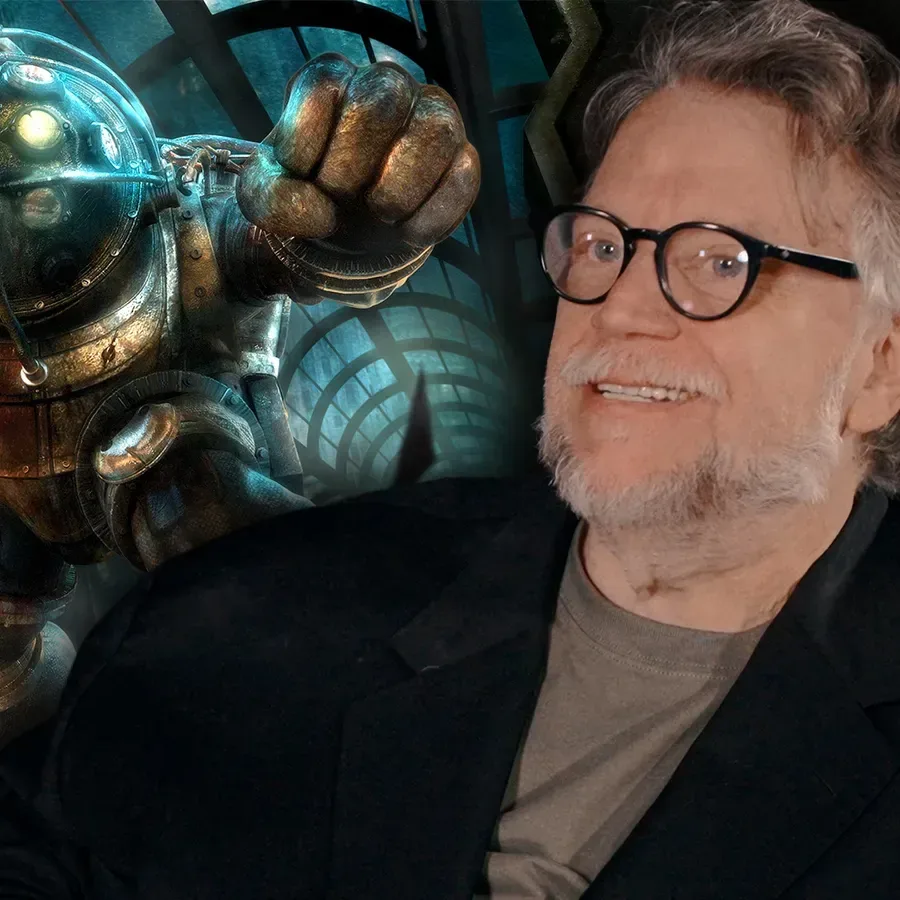
Guillermo del Toro has confirmed that he once explored the possibility of bringing BioShock to the big screen, adding new detail to a long-running piece of adaptation speculation. The filmmaker says the project never advanced beyond early discussions, however, after what he described as a pair of exceptionally difficult calls involving the game.
Speaking in a recent interview about his history with games and game-related projects, del Toro said he had attempted to adapt existing video games in the past. When BioShock came up, his response made clear that the experience did not leave him eager to repeat it. He said there had been conversations around "a couple of games," but characterized the talks surrounding BioShock as among the most disastrous calls he has ever had.
Del Toro did not identify the people involved in those discussions, nor did he explain what issues caused the negotiations to break down. There is also no indication that the effort reached casting, production, a completed screenplay, or a formal greenlight stage. What is now clear is that the director's connection to a potential BioShock movie was more than a fan's public interest in the series: he says he was actively involved in early adaptation conversations.
A dream pairing that never made it past the starting line
The news will likely sting for fans who have long viewed del Toro as a natural creative fit for BioShock. The franchise is known for blending alternate-history fiction, decaying art deco environments, body horror, political ideology, and deeply unsettling science-fiction imagery. Those ingredients overlap with many of the traits audiences associate with del Toro's film work, including his fascination with monsters, ornate visual worlds, moral ambiguity, and fantastical stories that remain grounded in human emotion.
For useful background on this topic, read The Blood of Dawnwalker's Vampire Path Can Still Lead to a Bittersweet Hopeful Ending.
At the same time, del Toro has stressed that sharing cinematic qualities does not mean games can simply be transferred to film without major challenges. He argued that the storytelling mechanics of a game and those of a movie are fundamentally different. A game gives players the sense that they are exploring, solving, and making decisions, even when designers are carefully guiding progress through a defined structure. Film, by contrast, has to deliver a directed narrative without that same layer of player participation.
To illustrate his point, del Toro discussed the work done on Insane, the ambitious game project he had planned as a trilogy. He described developing a structure that he called a "mandala," built to create the impression of a vast, open experience while still steering players through intended paths. In his view, that balance between apparent freedom and deliberate design is central to interactive storytelling, and it creates a major obstacle for anyone trying to remake a game's experience as a conventional film.
That distinction is especially important for BioShock. The original game's impact comes not only from its plot and imagery, but from the act of moving through Rapture, gathering resources, choosing how to approach threats, and gradually uncovering the ruins of its supposedly perfect society. A movie could depict the city and tell a story within it, but it could not reproduce the player's own discovery of its corridors, secrets, and consequences.
BioShock's complicated screen history
BioShock has been connected to film adaptation efforts for many years. An earlier attempt had director Gore Verbinski attached, but that version did not reach theaters. Del Toro had previously spoken positively about the prospect of seeing the series adapted, and his newly confirmed involvement adds another unrealized chapter to the property's long screen-development history.
The interest is understandable. First released in 2007, BioShock established Rapture as one of gaming's most memorable locations: a grand underwater city founded on radical ideals of individual freedom and unchecked ambition. The society's collapse, accelerated by genetic enhancements and conflict among its residents, turns the setting into a flooded nightmare populated by Splicers, Little Sisters, and the imposing Big Daddies that protect them.
Its recognizable visual language has always made it seem tailor-made for a live-action interpretation. Rapture's art deco towers, damaged neon signs, leaking tunnels, vintage propaganda, and surreal genetic horrors could support spectacular production design. Yet the series is not merely a collection of striking images. It asks players to engage with its ideas about power, exploitation, consumerism, scientific ethics, and the limits of personal choice. Any successful film would need to preserve that thematic bite rather than treating the setting as simple monster-movie scenery.
That is also why a filmmaker with del Toro's background has remained such an appealing hypothetical choice. His work frequently treats fantastical creatures and heightened genre imagery as vehicles for empathy, trauma, politics, and personal identity. A del Toro-led BioShock might have been expected to embrace both the grandeur and the tragedy of Rapture. But the filmmaker's comments underline that creative compatibility alone cannot solve the practical and collaborative complications behind a major game adaptation.
Why del Toro is wary of another game project
The failed BioShock discussions are part of a broader frustration del Toro expressed about game development. When asked whether he would want to make a video game himself again, he gave an emphatic negative answer. His experience with Insane appears to remain a significant reason for that reluctance.
Insane was conceived as a dark, cinematic game trilogy, but it was never released. Del Toro said the team had been aiming high with its concepts. He later noticed ideas resembling some of their ambitions appearing in other games, though he said he was happy to see that those ideas ultimately found expression somewhere. Even so, the collapse of the project appears to have convinced him that he does not want to return to the process of leading game development.
His caution should not be mistaken for a lack of affection for the medium. Del Toro has been involved in high-profile gaming projects over the years, including P.T. and Death Stranding, and he remains an outspoken admirer of Hideo Kojima. He described Kojima as a "pure artist" focused above all on stories, while emphasizing that the overwhelming majority of what became P.T. came from Kojima's own vision.
Del Toro's comments suggest that he values games enormously as an art form, while recognizing the particular production realities that come with making them. He appears more comfortable collaborating in limited or supporting capacities than taking responsibility for a full game or navigating a complex attempt to convert a game into a film.
BioShock remains a powerful adaptation prospect
For now, the previously discussed del Toro version of BioShock belongs to the long list of compelling projects that never made it beyond development. The director's remarks do not reveal whether the calls failed over creative control, budget, rights, scheduling, expectations for the material, or another factor entirely. Without those details, it would be premature to draw conclusions about why the proposed adaptation ended.
They do, however, offer a reminder of how difficult a BioShock movie is to get right. The franchise carries a passionate fanbase, an iconic setting, and a premise with obvious cinematic potential. It also carries a complicated narrative identity that cannot be reduced to a generic underwater horror story. Rapture has to feel beautiful and diseased, seductive and oppressive, while its themes need enough room to breathe.
The games remain available across modern PC and console ecosystems, including releases on Nintendo, PlayStation, and Xbox platforms, ensuring that new players can continue to discover the series. Meanwhile, the idea of a screen adaptation remains attractive precisely because BioShock has endured as more than a visual showcase. Its world still invites audiences to ask what might happen when a promised utopia gives absolute freedom to wealth, ego, and unchecked experimentation.
Del Toro's abandoned involvement may make fans wonder what his version could have looked like, but his account offers no reason to expect that specific project to be revived. Instead, it stands as another example of the difficult journey from game concept to feature film--and of how even a seemingly ideal director-property combination can end before the cameras ever roll.
Community
Discussion
Start the conversation.
No comments have been posted yet.