


Halo has always been larger than a shooter for the people who grew up with it. Since Halo: Combat Evolved arrived in November 2001, the series has been a launchpad for LAN parties, late-night campaigns, competitive grudges, couch co-op traditions, and friendships that survived moves, careers, marriages, and the general erosion of free time. Now, with Halo: Campaign Evolved revisiting that formative campaign, one longtime co-op partnership offers a reminder of why the original game remains so potent--and why returning to it can feel surprisingly emotional.
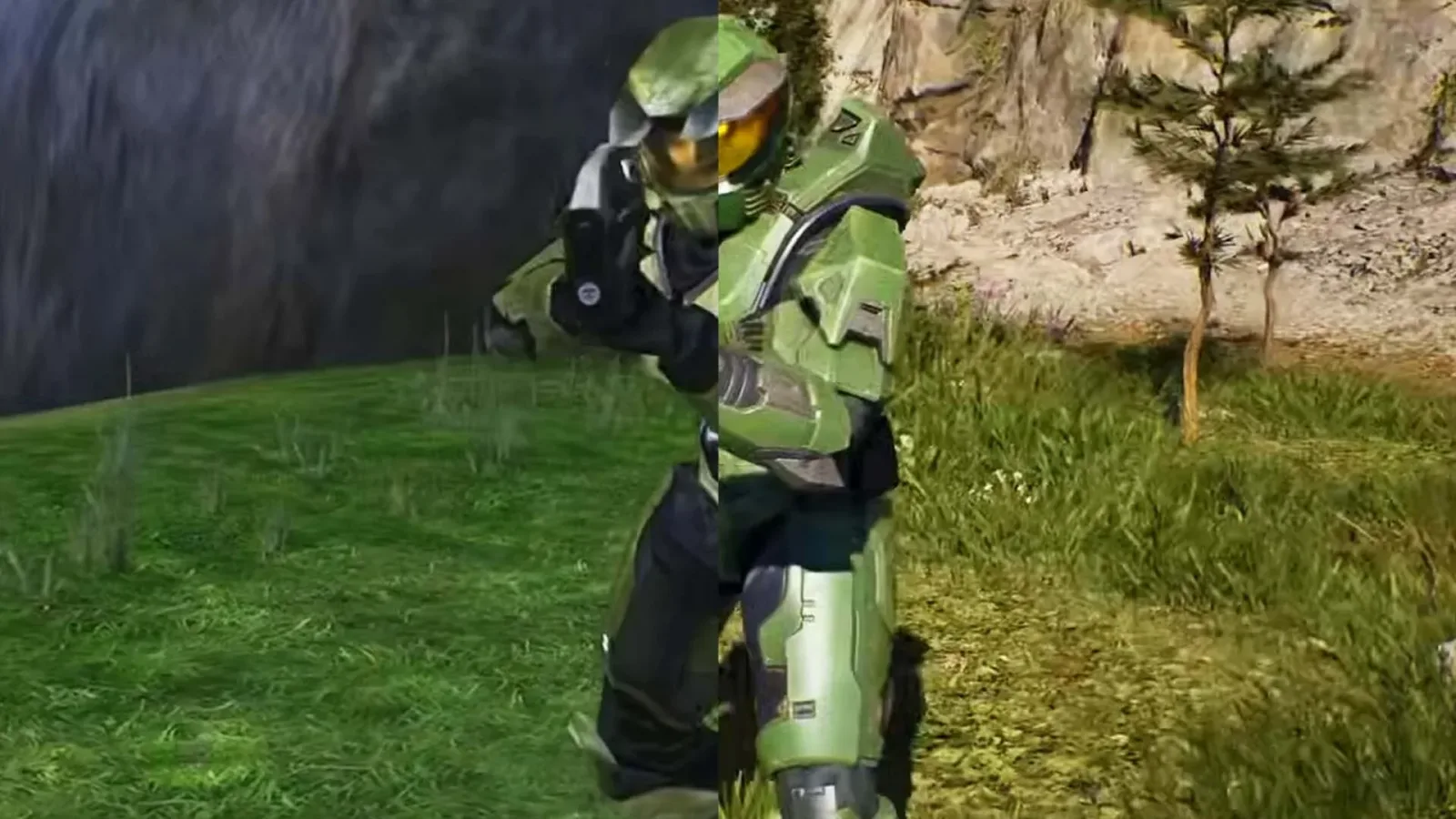
The timing adds another layer to the exercise. Microsoft has announced plans to reduce Halo Studios and place stewardship of the Halo franchise with Activision. The change comes only months after Halo marked its 25th anniversary, making Campaign Evolved feel like more than another remake or remaster for players who associate Master Chief's earliest mission with a specific period of their own lives.
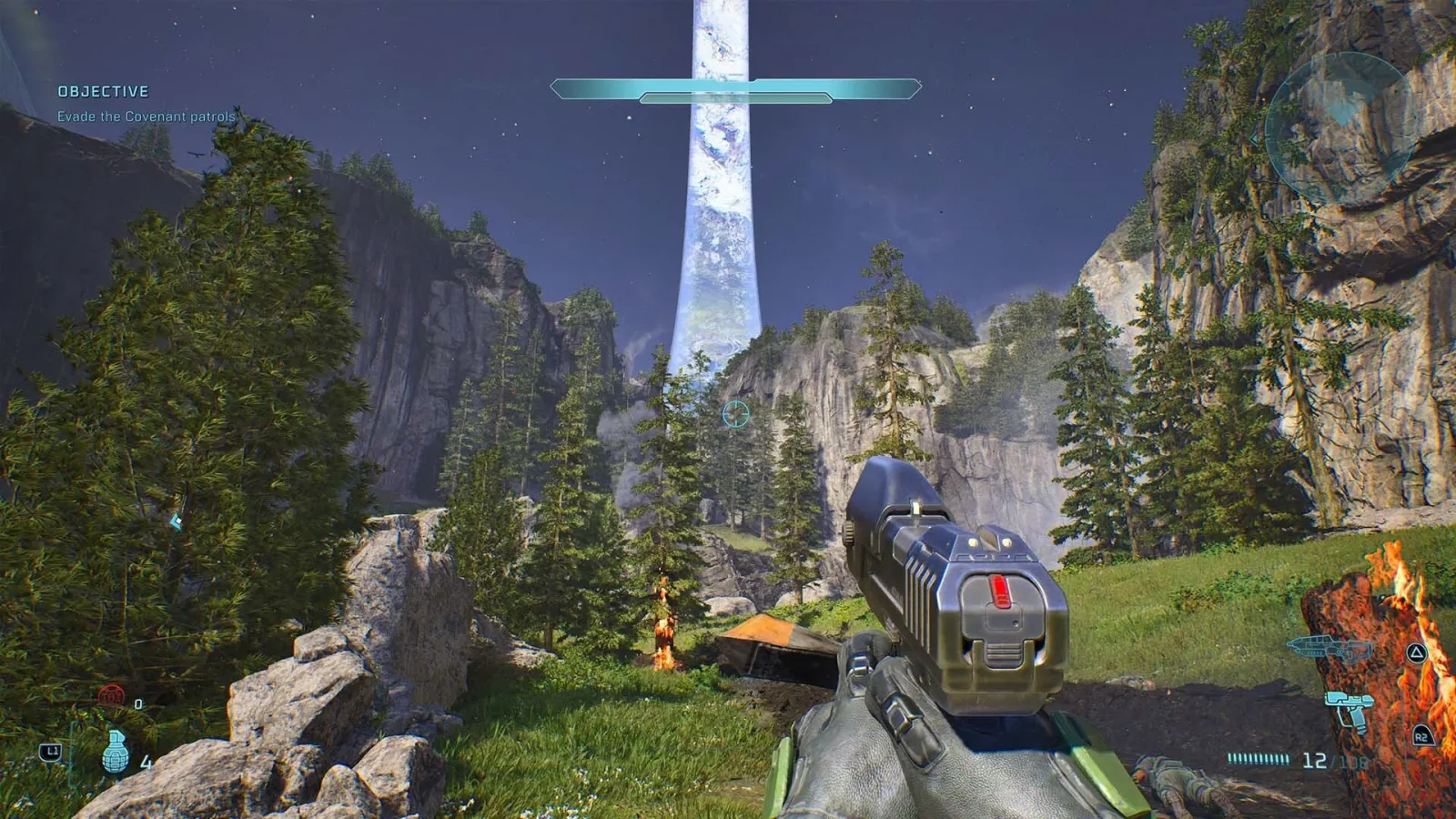
For two friends, Clay Purdom and Eric Sams, Halo has served as a constant through that entire span. They have played every Halo game together, but their attachment has always returned to the first campaign: the escape from the Pillar of Autumn, the long drive across Halo's open spaces, the creeping dread of the Flood, and the final sprint away from a collapsing ringworld. Their new run through Campaign Evolved is partly a review of the game and partly an examination of what happens when the people who once had endless hours to replay a campaign now have to schedule a session around children, work, travel, exhaustion, and occasionally dysfunctional voice-chat settings.
Halo's Co-Op Formula Still Creates the Unexpected
The strongest argument for the original Halo is not merely that it was influential. It is that its central systems remain unusually good at producing spontaneous stories. The game's weapons, enemy behavior, vehicle handling, physics, and arena layouts can combine into events that feel directed even when they are clearly accidental. A Grunt rushing forward with plasma grenades, a Banshee briefly lining itself up for a rocket, or a piece of exploding debris suddenly killing the player are all examples of the volatile little incidents Halo encourages.
For useful background on this topic, read Cyberpunk: Edgerunners 2 Could Be the Perfect Reason to Return to Night City.
Purdom and Sams call these events "Halo moments," a phrase that captures the series' particular balance of precision and chaos. The player can approach an encounter with a plan, but the game rarely stays perfectly orderly. Enemies react dynamically, grenades alter the shape of a fight, vehicles make battles feel larger, and co-op introduces another source of unpredictability. A carefully aimed rocket can save a run--or send debris across the map and end it.
That quality is especially notable on higher difficulties. Halo rewards players who understand weapon matchups, flanking routes, enemy weak points, and the rhythm of its encounters. But it does not completely demand mechanical perfection. A player can improvise, make bad decisions, rush headlong into danger, and still emerge with a memorable sequence rather than simply a failed attempt. In that sense, Halo's difficulty is less about forcing a single "correct" strategy than it is about increasing the chances for interesting things to happen.
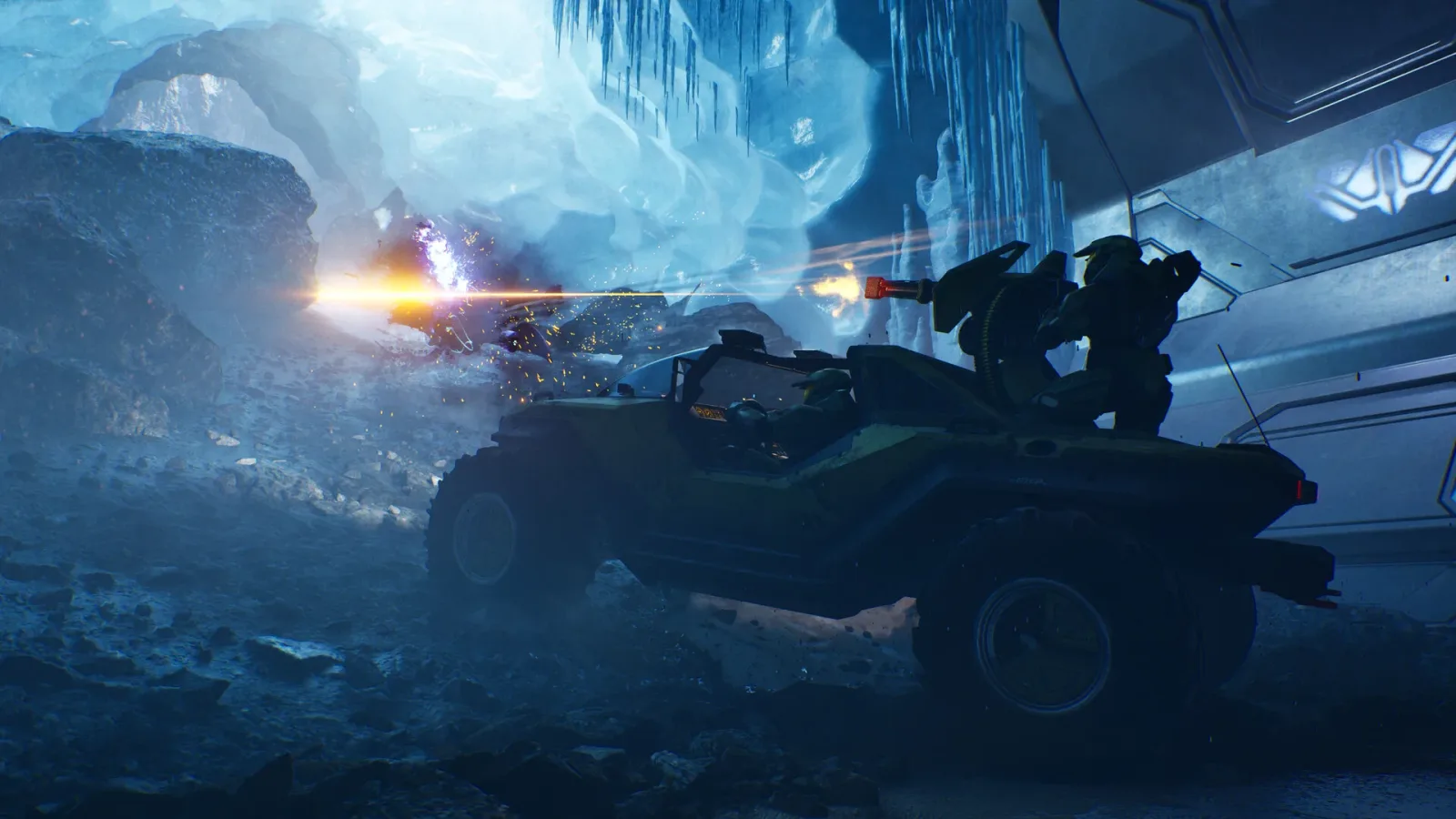
Campaign Evolved's revisiting of the original structure underscores how carefully the campaign was assembled. Its levels steadily introduce new spaces, tools, and enemy combinations before changing the entire equation with the Flood. Familiar rooms and battlefields acquire a new purpose when a different kind of opponent begins pouring through them. Later, the game gives players access to vehicles without making earlier weapons or tactics irrelevant. Driving a Warthog is powerful, but it does not erase the need to maneuver around Hunters, manage enemies at close range, or respond to Flood forms that can quickly turn a clear path into a disaster zone.
Legendary Aspirations, Heroic Reality
For Purdom, Halo is at its best on Legendary difficulty. The harder setting extends encounters and makes the game's spaces matter more, creating room for strange recoveries, desperate retreats, and improvised plans. He sees the original campaign as a game that benefits from being difficult because the added pressure exposes more of its design.
Sams takes a different position. He argues that Halo's strength lies in how it accommodates less disciplined play. In his view, players do not need to treat every encounter like a spreadsheet of optimal tactics to experience what makes the game special. Halo can support tactical mastery, but it also lets players be loose, impulsive, and occasionally incompetent. The important thing is that the game continues to create memorable action in either case.
The debate is inseparable from their personalities. One wants to make the most of limited leisure time, while the other sees the drive to optimize games as a threat to play itself. The divide is funny, but it also reflects a familiar change that comes with adulthood. When free time becomes scarce, even recreation can start to resemble work: planned, measured, streamlined, and evaluated for efficiency.
In the end, their Legendary run was not quite what it seemed. Purdom later admits that he quietly reduced the difficulty to Heroic early in the campaign because he could not tolerate watching his co-op partner repeatedly die. The revelation turns their grand discussion of hard-mode Halo into a joke at each other's expense, but it also makes the broader point clearer. The challenge setting mattered less than the fact that they played through the campaign together again.
Horseplay Is Part of Halo's Design Legacy
There is another kind of Halo moment that has little to do with flawless gunplay. Halo has always been a remarkably effective game for messing around. Friendly fire, quick respawns, explosive weapons, and the simple presence of another Master Chief turn quiet downtime between firefights into an invitation for nonsense. Players can stick plasma grenades to a Warthog, pistol-whip each other, race vehicles where they were never meant to go, or derail a mission simply because the opportunity is funny.
Campaign Evolved defaults friendly fire to off, unlike the original game, but the underlying co-op energy remains. The friends find themselves riffing on the absurdity of cutscenes treating Master Chief as a singular figure while a second armored supersoldier stands in plain sight. The joke eventually turns into more fighting between teammates, as it often does in Halo.
That freewheeling social quality separates Halo from many contemporary games built around ongoing engagement. Modern multiplayer and live-service design often encourages a cycle of rewards, ranks, loot, performance metrics, and endless progression. Halo's campaign can simply be completed. There is no need to stay for a battle pass, chase a rare drop, or continually prove oneself against an escalating competitive ladder. Players can clear the story, revisit a favorite level, create a few ridiculous memories, and leave satisfied.
That does not make Halo immune to repetition, but it does make its repetitions feel different. Replaying a mission is not necessarily a grind toward a number. It can be a way to revisit a space with someone who knows exactly why a certain hallway, vehicle jump, or disastrous grenade throw is funny.
Bonus Missions and a Familiar Combat Language
Campaign Evolved also includes prequel missions presented as bonus content. They may not reach the heights of the original campaign, but one particular encounter demonstrates how effectively Halo's combat language still works. The mission drops players into a large Covenant battle space filled with weapons, power-ups, and overlapping waves of enemies. The concept is direct: it is essentially a Horde-style arena that throws every available tool and threat into the same room.
What follows is an accelerated display of ideas Halo made feel natural long before such encounters became common. Plasma weaponry is used to tear through Elites. A battle rifle handles distant enemies. An overshield and rocket launcher become essential responses to Hunters. Turrets offer power but expose the player to explosive attacks from afar. Deaths teach the players what not to do, and the next attempt becomes more informed without becoming sterile.
The encounter does not need a complicated twist because Halo's core combat remains expressive enough on its own. Every weapon has a purpose, every enemy asks a different question, and every movement across the arena changes the player's risk. It is a straightforward reminder that Halo did not need to chase every later trend in the shooter genre to retain its identity.
Master Chief Does Not Age, Players Do
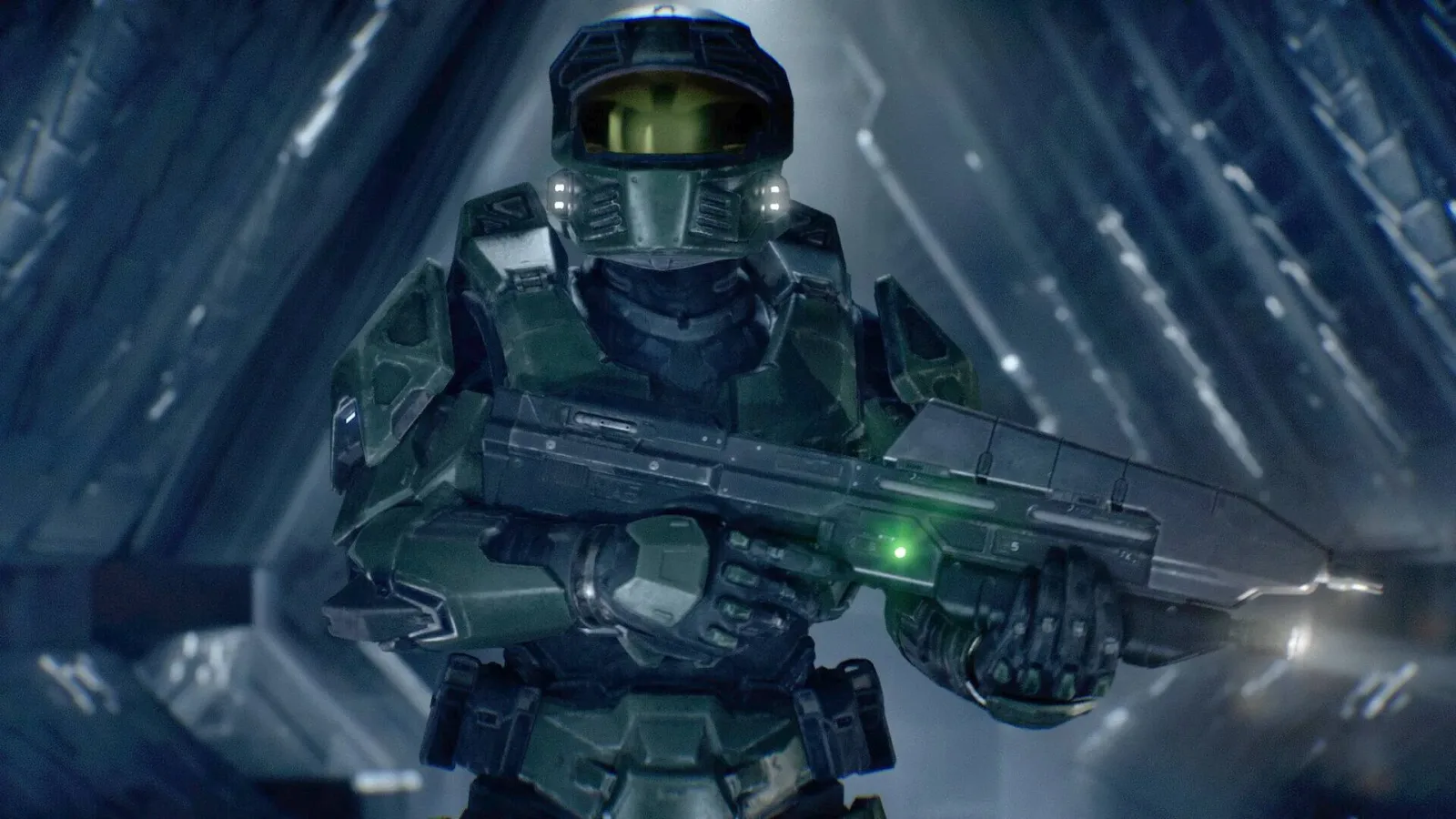
The more affecting part of this return is not any individual remaster feature. It is the contrast between an unchanging fictional hero and the players who have spent a quarter-century returning to him. Master Chief is still ready to step out of cryo, pick up a pistol, and fight the Covenant. His body, voice, and purpose remain fixed. The people holding the controllers have changed far more.
For Purdom and Sams, Halo has become a way to measure that change. They first encountered the series as young people facing uncertain futures. They later played through college years, shared houses, changing jobs, relationships, and adulthood. They now live far apart, with less time and more obligations, but the familiar act of entering a Halo mission can still restore a rhythm they recognize immediately.
That does not mean the past returns intact. Nostalgia cannot restore old reflexes, old schedules, or old versions of a friendship. But it can reveal what endured. By the end of their Campaign Evolved run, after the Warthog escape and the destruction of Halo, the two friends are left with the familiar menu music and the feeling that they had briefly found something worth preserving.
The final note is appropriately childish: after learning the difficulty had been lowered, Sams turns friendly fire back on and attacks his co-op partner. A grenade follows. Both screens go black. For Halo players, that may be as fitting a conclusion as any. The mission is over, the ring is destroyed, and the argument continues.


Community
Discussion
Start the conversation.
No comments have been posted yet.