


Hearth and Hamlet, the cozy incremental citybuilder from developer Phorust Studios and publisher Runic Forge, has received its first post-launch update. Version 1.1 is now available on Steam, arriving alongside a 20% discount during the Steam Autumn Sale that runs from October 1 through October 8.
The update follows a notably strong start for the pixel-art kingdom-building game. Hearth and Hamlet launched on August 19, 2026, and the developers say it reached 100,000 units sold within its first seven days. Nearly 50,000 of those sales came during the first 24 hours. With the game now settling into its first full month after release, V1.1 is aimed less at transforming the core experience and more at smoothing it out for the growing player base.
That focus matters for a game built around gradual expansion, repeatable progression, and long-running settlements. Incremental games depend on a flow that feels clear and rewarding over many sessions, whether players are actively planning their next construction project or allowing parts of their economy to progress at a more relaxed pace. Quality-of-life changes and bug fixes can have an outsized effect in that kind of design, especially when they address friction identified by players after launch.
V1.1 Focuses on Player Feedback and Everyday Improvements
Phorust Studios describes Version 1.1 as a collection of quality-of-life improvements and bug fixes requested by the community. Specific patch-note details were not outlined in the announcement, but the stated direction suggests an update centered on the practical parts of maintaining a settlement: making systems easier to use, resolving issues encountered in normal play, and refining the overall experience without moving away from the game's core premise.
For useful background on this topic, read Main Sequence Sets November 12 Steam Early Access Launch for Its Interstellar Factory Sim.
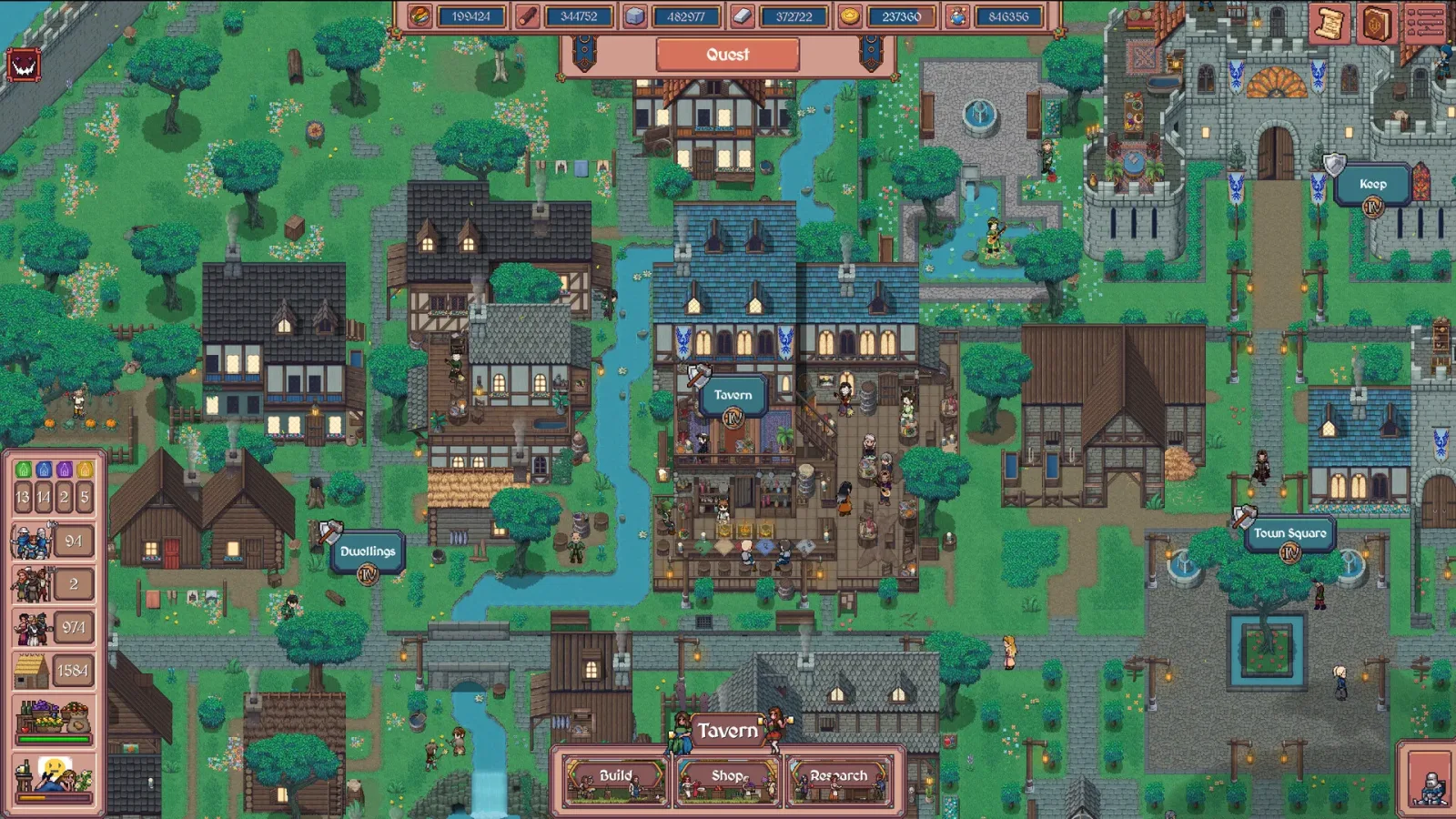
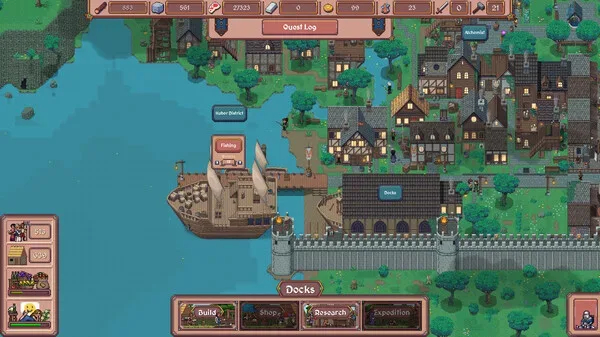
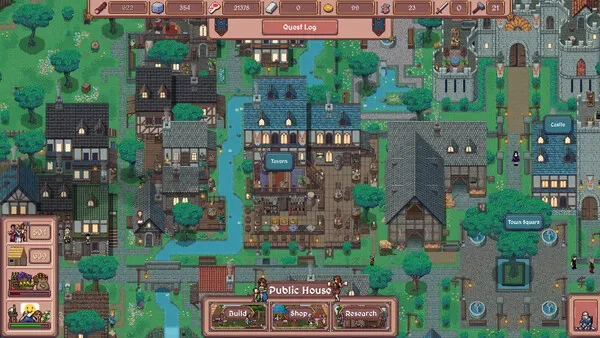
Hearth and Hamlet combines citybuilding with idle and incremental mechanics in a medieval fantasy setting. Players are responsible for developing a civilization from its foundational economy through more specialized infrastructure and long-term upgrades. The game encourages gradual growth rather than constant high-pressure decision-making, pairing management systems with a deliberately warm pixel-art presentation.
Its central loop involves assigning workers, managing resources, and deciding which parts of a settlement deserve attention as it grows. Buildings include practical civic and economic structures such as markets, town halls, and banks, along with barracks for military development and magic academies for more fantastical advancement. Those projects are tied to a broader web of choices involving technology, policies, trade, citizen happiness, and defense.
Because these systems intersect, an improvement to usability can be especially valuable. A player building a productive settlement is not simply placing structures; they are balancing the people who operate those structures, the resources flowing into them, and the bonuses or limitations created by policy decisions. The V1.1 update's emphasis on player-requested adjustments indicates that the team is using early feedback to improve how those layers work together in practice.
For another perspective on this story, read Hearth and Hamlet V1.1 Arrives Alongside 20% Steam Autumn Sale Discount.
A Relaxed Take on Kingdom Management
The appeal of Hearth and Hamlet lies in its blend of familiar management-game goals and an intentionally less stressful rhythm. Instead of presenting citybuilding entirely as a test of rapid optimization, it frames the growth of a kingdom as an ongoing incremental process. Players can expand their settlement, make strategic choices, unlock lasting upgrades, and watch the results unfold without abandoning the satisfying sense of progress that drives the genre.
Workers are at the heart of that process. Assigning citizens to the right tasks helps establish the resource base needed for construction and research. A growing town also demands more than raw materials, however. Citizens have happiness to consider, and keeping them satisfied can provide production benefits. This gives settlement planning a social dimension in addition to its economic one.
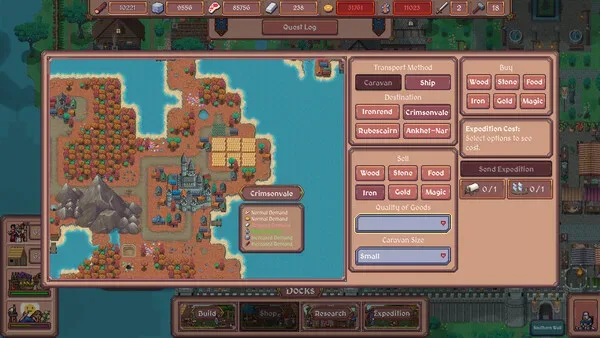
Trade and diplomacy introduce another layer. Players can establish relationships and exchanges with distant lands, allowing the kingdom's development to extend beyond its own borders. Policies can shape how the civilization operates, while research provides permanent unlocks that continue to matter as a settlement advances. Together, these features position Hearth and Hamlet as a game about building momentum over time rather than racing toward a single fixed endpoint.
Defense is also part of the equation. Players can recruit soldiers and guardsmen to protect their civilization, while barracks support the military side of a settlement. That element helps distinguish the game from a purely pastoral village builder: economic growth and civic planning take place alongside the need to maintain security for the realm.
Key Elements of the Settlement Loop
- Construct a developing medieval settlement using a range of civic, economic, military, and magical buildings.
- Assign workers and manage resources to support continued expansion.
- Use research to unlock permanent advancements for future development.
- Set trade and diplomatic policies that influence the kingdom's wider relationships.
- Maintain citizen happiness to earn production-related advantages.
- Recruit guardsmen and soldiers to defend the civilization.
- Progress through an idle-friendly structure designed to remain relaxing while still rewarding planning.
Early Sales Suggest a Strong Audience for Cozy Incremental Builders
The reported sales milestone gives Hearth and Hamlet a promising early foundation. Reaching 100,000 units in one week, with almost half that total arriving in the first day, is a substantial opening for a new release in the cozy citybuilder space. It also provides Phorust Studios with an immediate and sizable audience capable of identifying bugs, friction points, and opportunities for improvement across a wide range of playstyles.
That context makes the timing of V1.1 understandable. First updates are often where a management game begins to respond directly to the realities of live player behavior. Development teams can test systems extensively before launch, but broad release reveals how users approach interfaces, where their priorities differ from expectations, and which small obstacles become noticeable only after many hours of settlement-building.
For Hearth and Hamlet, the stated commitment to community-requested fixes suggests that the initial update is intended as an early step in that relationship. The announcement does not lay out a broader roadmap or detail future additions, so players should not assume particular features are planned beyond the improvements in V1.1. Still, delivering an update soon after launch establishes a useful precedent for a game whose long-term appeal may depend on polish, clarity, and a satisfying progression curve.
Steam Sale Discount Runs Through October 8
The Steam Autumn Sale promotion offers a 20% reduction on Hearth and Hamlet through October 8. It gives prospective players a chance to begin with the game after its first post-launch update has arrived, rather than during the initial launch window.
For newcomers, the game's pitch is straightforward: start with a modest settlement and build it into a functioning kingdom through construction, worker allocation, research, commerce, civic management, and defense. The visual approach leans into a comforting pixel-art medieval world, while the incremental structure is intended to keep progress moving at a comfortable pace.
For existing players, V1.1 is primarily a refinement-focused release. While no major new mode or feature set was announced alongside it, quality-of-life updates are a meaningful part of supporting a systems-heavy citybuilder. Better usability and fixes can make the difference between a management loop that feels demanding in the right ways and one that creates avoidable interruptions.
Hearth and Hamlet is available now on Steam for PC. The 20% Steam Autumn Sale discount is scheduled to remain active until October 8, while Version 1.1 is available as the game's first update following its August 19 launch.

Community
Discussion
Start the conversation.
No comments have been posted yet.