

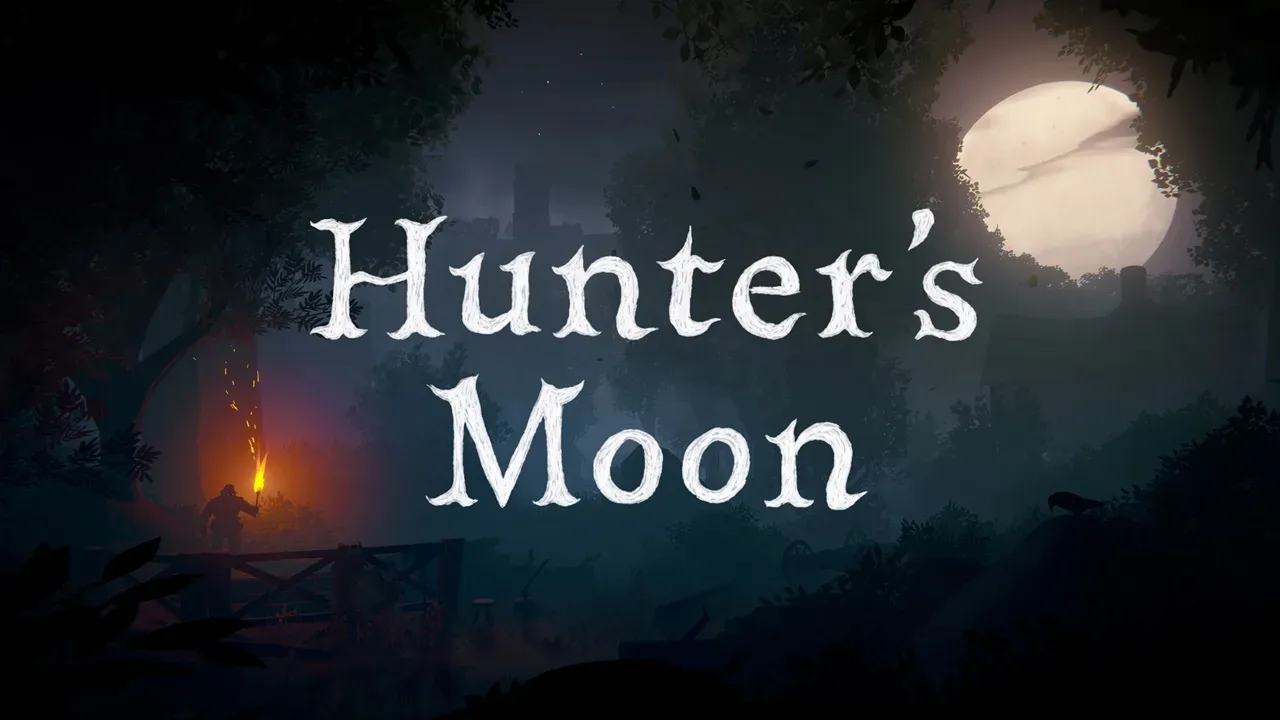
Hunter's Moon, a first-person historical folk-horror narrative from independent studio Twin Swans, is now available exclusively for PlayStation 5. Set against the grim reality of 17th-century English witch hunts, the game follows Lillith Thorne, a woman accused of witchcraft who has only one night to escape a village consumed by fear, suspicion and religious conviction.
Rather than positioning supernatural monsters as the central threat, Hunter's Moon looks to the people behind the persecution. Lillith must move through a rural settlement, its nearby forests and the surrounding moors while avoiding the Witchfinder General and the villagers who may be willing to turn on her. Stealth, observation and careful choices are at the heart of her bid for safety, with eavesdropping used to uncover useful information, potential assistance and the hidden tensions affecting the community.
The premise places the player in an especially vulnerable role. Lillith is not presented as a powerful hunter arriving to solve a mystery; she is the target of an accusation in a place where rumor can become evidence and fear can become a death sentence. That framing gives Hunter's Moon a distinct approach to horror, rooted in a historical period whose real-world violence did not require actual magic to be devastating.
A horror story shaped by history
English witch hunts of the 17th century provide the foundation for Hunter's Moon. The game draws inspiration from that history while telling its own fictional story, using a village on the brink as the setting for a tense, intimate escape. Its horror comes from belief, social pressure and the systems that allow ordinary people to treat neighbors as enemies.
For useful background on this topic, read Dragon Ball Xenoverse 2 Marks 10 Years With Free Updates and Final Festival.
Writer-director Alicia Contestabile has emphasized that the project aims to treat this material with authenticity and to consider the human choices behind witch trials. The game's Witchfinder General is an immediate danger, but the broader threat lies in the attitudes that make a hunt possible in the first place. Every conversation overheard and every resident encountered has the potential to reveal another piece of the village's distress.
"We wanted to present this history in a way that felt authentic and reflected what might have happened in villages during these witch trials," Contestabile said. "The hunters are just men. And the truth is that those who accused others, put them on trial, and sent them to their deaths were also just people. They just deeply, deeply believed that witchcraft was real."
That perspective makes Hunter's Moon a folk-horror game concerned less with spectacle than with complicity. The question is not simply whether Lillith can evade capture, but what has driven the village to this point and whether its people can still be reached. The game asks players to confront the way conviction can transform suspicion into cruelty.
Stealth, listening and survival
Hunter's Moon is played from a first-person viewpoint, reinforcing Lillith's precarious position as she navigates spaces that are familiar to their inhabitants but increasingly hostile to her. Players are expected to use stealth and cunning to stay beyond the reach of those searching for her. The village, woodland and moorland environments are not merely scenery; they form the routes and hiding places that define the struggle to survive the night.
Eavesdropping is a major part of the experience. By listening to villagers, players can learn more about the people around them, uncover useful knowledge and identify possible sources of aid. This also supports the narrative investigation at the center of the game, as the village's secrets and fractures emerge through what residents say, fear and conceal.
The approach suggests that information is as important as movement. A player who understands a person's loyalties, anxieties or grievances may be better equipped to decide where to go next. In a story about accusation and hysteria, listening becomes more than a passive activity: it is a survival tool, and potentially a way to see past the simplified stories that the village tells itself.
The game's one-night structure should give that tension a natural sense of urgency. Lillith is trying to find safety before the forces pursuing her close in, while the settlement's internal problems continue to surface. As the night progresses, players will be piecing together the circumstances surrounding the accusation as well as navigating the immediate dangers in their path.
An immersive-theatre influence
Twin Swans describes Hunter's Moon as being inspired by immersive theatre, an influence that fits the game's emphasis on presence, proximity and discovery. Instead of distancing players from its setting, the first-person structure and focus on overheard conversations are designed to make them feel embedded in the village's unfolding crisis.
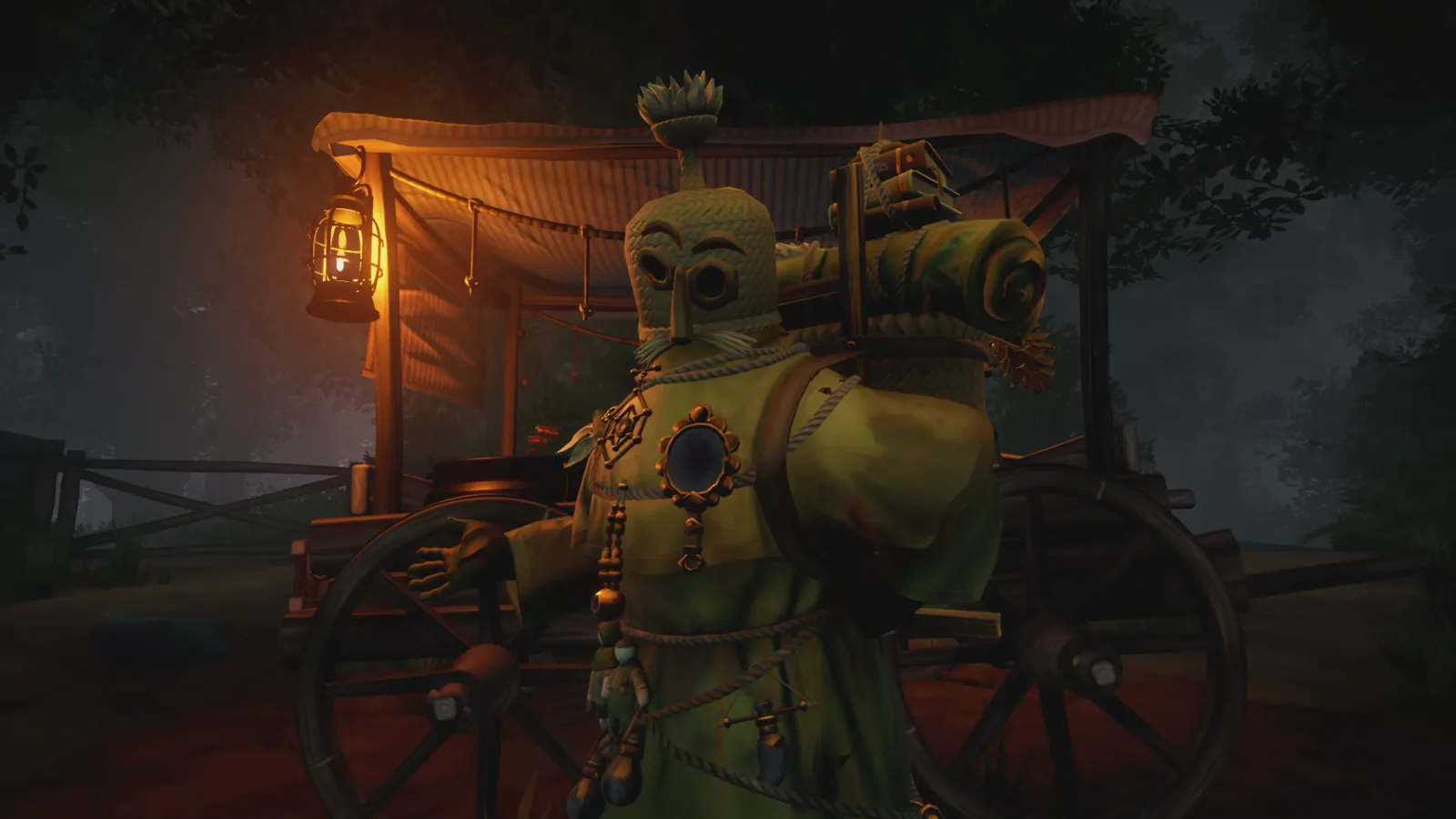
That theatrical influence also aligns with the large number of characters involved. Hunter's Moon includes more than 100 fully voice-acted characters, giving the village a wide range of voices and perspectives. Some may offer insight or help, while others may reinforce the danger surrounding Lillith. The scale of the cast gives the setting room to feel like a community with histories and conflicts of its own, rather than a simple collection of obstacles.
Importantly, a large population does not mean the game is treating the villagers as an anonymous mob. Its central idea depends on the opposite: persecution is carried out by individuals, each capable of making choices and each influenced by the anxieties of the people around them. Hunter's Moon uses that human focus to explore how a community can become dysfunctional when fear overwhelms empathy and reason.
Stylised craft and an original score
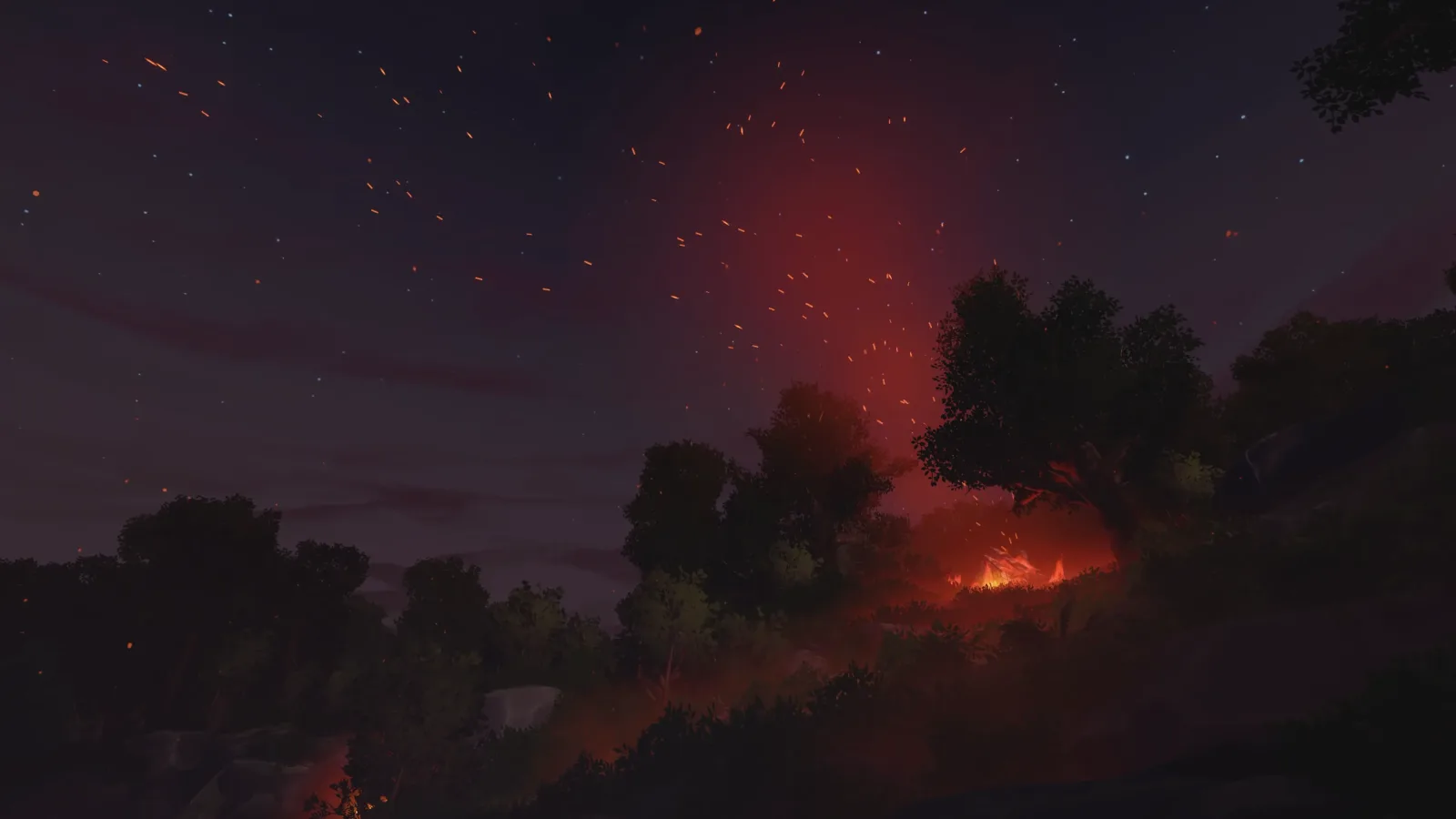
Although Hunter's Moon is grounded in historical realism, it is presented through hand-crafted stylised art. That visual direction can help distinguish the game from a conventional historical reconstruction while maintaining its period setting and folk-horror atmosphere. The contrast between a crafted visual style and a deeply unsettling subject matter may be especially well suited to a tale where reality, rumor and belief are constantly entangled.
The game also features an original score by Resina. Music is likely to be an important component of its atmosphere, particularly given the rural setting and its focus on mounting dread. Forests, moors and village lanes can be evocative locations in folk horror, but Hunter's Moon's scenario gives them an additional weight: they are places where Lillith may find concealment, discover crucial knowledge or be found by the people seeking her.
Contestabile wrote and directed Hunter's Moon, while Twin Swans handled development. The team includes artists and developers with credits spanning several notable games, including The Stanley Parable, The Dark Pictures Anthology: Little Hope, The Witcher 3: Wild Hunt and Signalis. Those backgrounds encompass narrative experimentation, atmospheric horror, expansive fantasy worlds and distinctive visual design, all areas that resonate with Hunter's Moon's ambitions.
A different kind of witch-hunt game
Games have often used witches, curses and occult imagery as excuses for combat, fantasy power or monster hunting. Hunter's Moon takes a more uncomfortable route by placing the player on the other side of the hunt. Lillith is an accused woman trying to make it through a community that has accepted a frightening premise about her, and the game's historical framing puts emphasis on the consequences of that acceptance.
Its folk horror is therefore not dependent on proving whether anything supernatural exists. The terror can emerge from the possibility that no supernatural explanation is needed at all. A village can be dangerous because people are scared, convinced and eager to assign blame. By focusing on those conditions, the game aims to make its history feel immediate rather than distant.
For PlayStation 5 players interested in story-led horror with stealth and investigation at its core, Hunter's Moon offers a contained but potentially intense premise: survive a single night, learn who can be trusted, and escape a place where belief has become lethal. The game is available now on PS5.
Community
Discussion
Start the conversation.
No comments have been posted yet.