

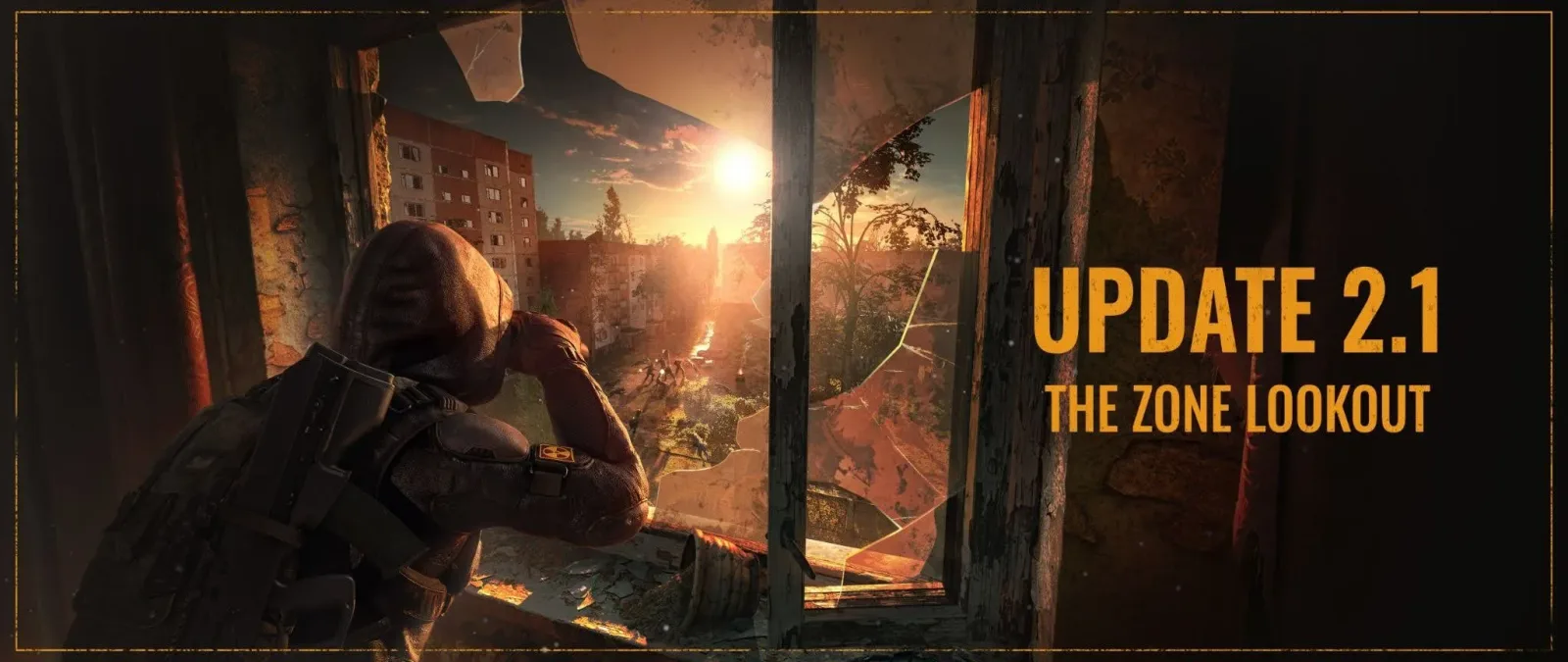
S.T.A.L.K.E.R. 2: Heart of Chornobyl has received Update 2.1, bringing several community-requested systems changes to the Zone. The patch introduces manual controls for A-Life NPC visualisation distance, makes further-reaching firefights more convincing through audio and ballistic refinements, and lets players pay squad leaders to guide them to certain locations they have already discovered.
Update 2.1 is available now on PC and consoles. Its headline changes are aimed less at adding entirely new areas or story content and more at making the existing open-world experience easier to tailor. That approach is particularly apparent in the new visualisation-distance settings, which offer players a direct choice between performance considerations and a broader view of the living simulation around them.
For a game built around unpredictable encounters, roaming groups, and the uneasy sense that danger can emerge from beyond the player's immediate path, those adjustments could have a meaningful effect on how journeys across the Zone feel.
Players can now adjust A-Life visualisation distance
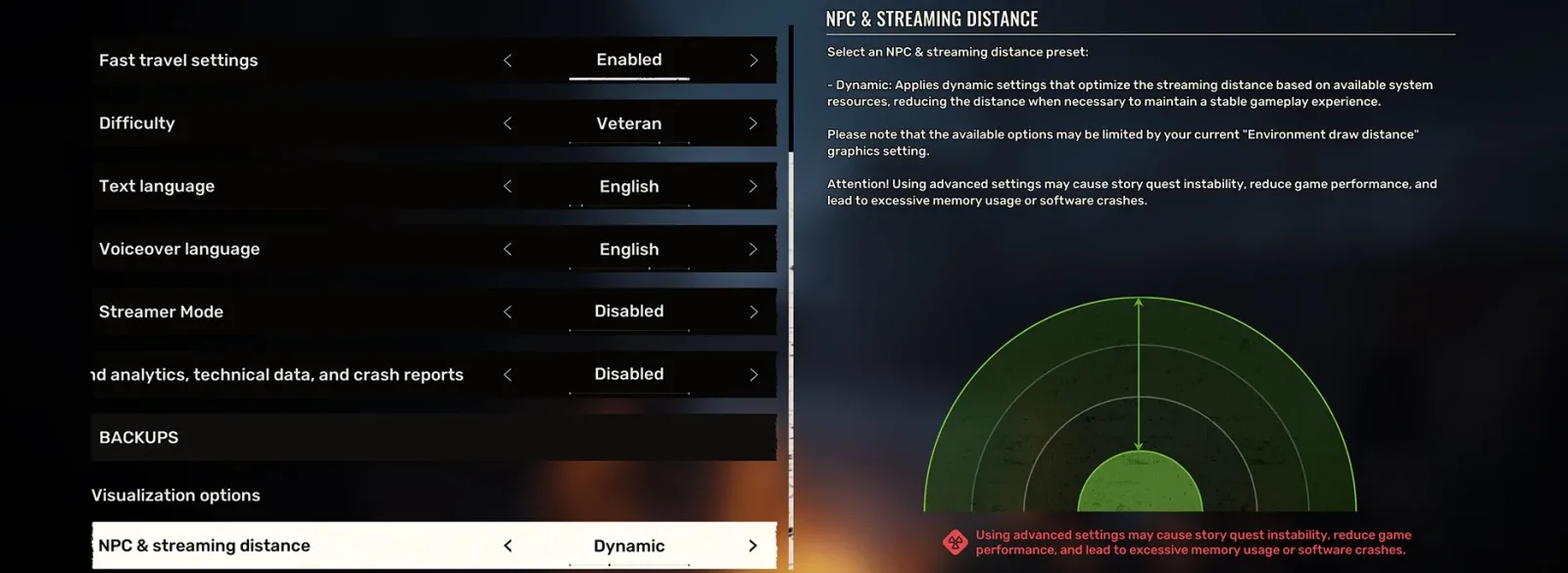
The largest new option in Update 2.1 is adjustable A-Life NPC visualisation distance. It can be found through Settings, then Game, then Visualisation, where players can select from multiple presets.
For useful background on this topic, read Encryption demo Brings Wildfire-Scarred Psychological Horror to Steam Scream V Fest.
In practical terms, the setting governs how far away A-Life NPCs can be visualised. A-Life is central to the game's dynamic population: it is the system associated with NPC activity and encounters that can make the world feel active beyond the player's immediate vicinity. Raising the visualisation distance may allow players to experience that activity across a larger area, potentially making the wider Zone seem busier and more reactive as they move through it.
There is an important trade-off, however. Increasing the range can affect both performance and stability. The default preset is recommended as the best overall balance between technical reliability, smooth performance, and immersion. Players who would prefer the game to make that judgement automatically can instead use the Dynamic preset, which adjusts the range to suit their hardware.
That makes the new control useful for several different types of player. Those prioritising consistency can remain on the default option, while players with capable systems may choose to experiment with a higher range. Dynamic mode offers a middle ground for anyone who wants the game to respond to their machine rather than committing to a single fixed setting.
For another perspective on this story, read S.T.A.L.K.E.R. 2 Update 2.1 Adds A-Life Distance Controls and Squad-Leader Travel.
Available presets may differ depending on platform. Players should therefore expect the exact choices to reflect the hardware they are playing on rather than assuming every preset will be offered everywhere.
A-Life NPCs are distinct from quest and scripted characters
The expanded visualisation setting is specifically focused on A-Life NPCs. It does not mean that every character, encounter, or story sequence in the game suddenly operates at a vastly increased range.
Update 2.1 draws a distinction between A-Life NPCs and the NPCs used for quests or other scripted events. The new range options primarily apply to the former. That clarification matters because quest characters and scripted scenes often have their own requirements, triggers, and placement rules. The patch is therefore not a blanket change to all character rendering or mission logic.
For players hoping to better understand what the option changes, the simplest expectation is that it affects the ambient, systemic side of the world more than the carefully authored parts of individual missions. It is a targeted simulation adjustment rather than a promise that every named character or story event will appear from a greater distance.
The choice to expose this setting also acknowledges that players can have very different priorities in an open-world shooter. Some may value the strongest possible sense of activity at the edge of the world, while others may prefer steadier performance during exploration and combat. Update 2.1 gives users room to make that decision themselves.
Long-range fights receive audio and ballistic refinements
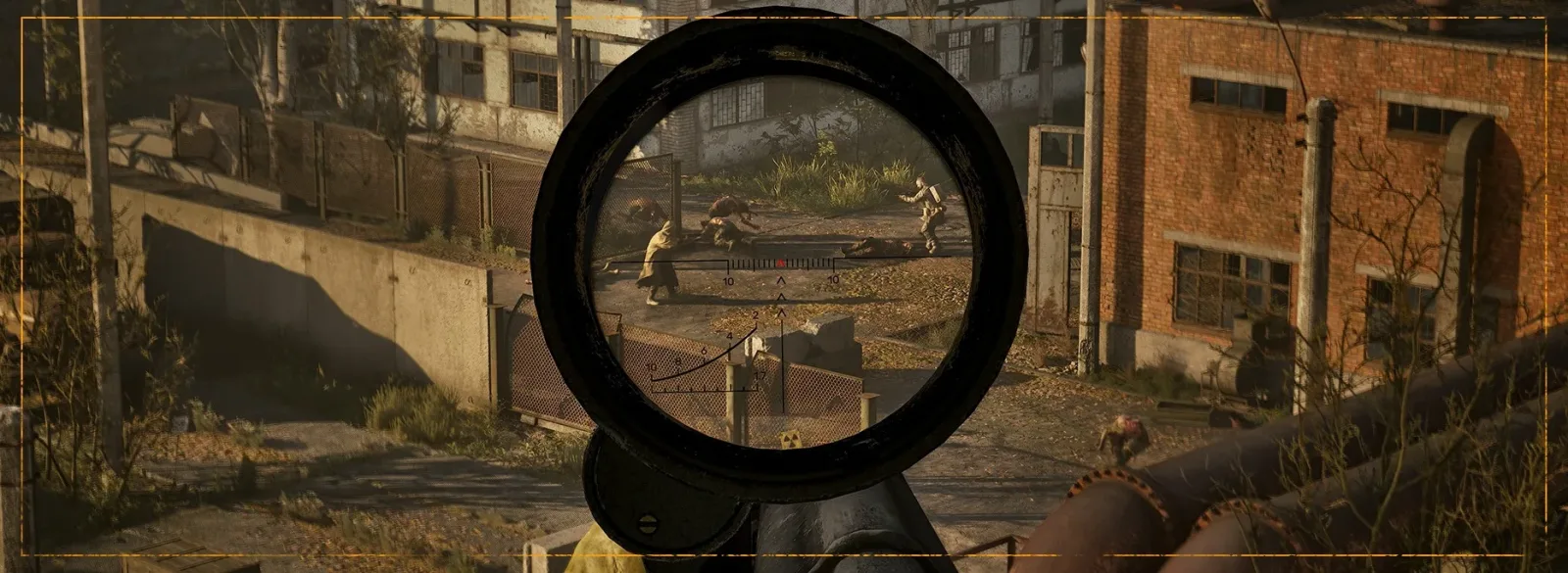
Combat at distance has also been adjusted. Update 2.1 includes behind-the-scenes improvements and balance work intended to make long-range firefights feel more natural.
One key change is that gunfights can now be heard from farther away. In a setting as hostile and unpredictable as the Zone, hearing distant gunfire can be as important as seeing an enemy. It may signal an opportunity, a threat, a clash between other groups, or simply a reason to change course. Extending that audible reach should make the landscape feel less isolated while giving players more environmental information during travel.
Weapon ballistics have been modified in tandem with the longer-distance audio changes. The two refinements are designed to support each other: if combat can be perceived at greater range, the behaviour of shots at those ranges also needs to fit the experience. The goal is not presented as a wholesale redesign of gunplay, but as an effort to make far-off engagements behave and sound in a more convincing way.
These changes could be most noticeable during open exploration, where terrain, weather, ruins, and vegetation can obscure the source of a conflict. Hearing shots in the distance and deciding whether to investigate has long been part of the broader fantasy of moving through an active, dangerous world. Better support for those moments may add texture even when the player chooses not to take part in the fight.
Squad leaders can guide players to explored destinations
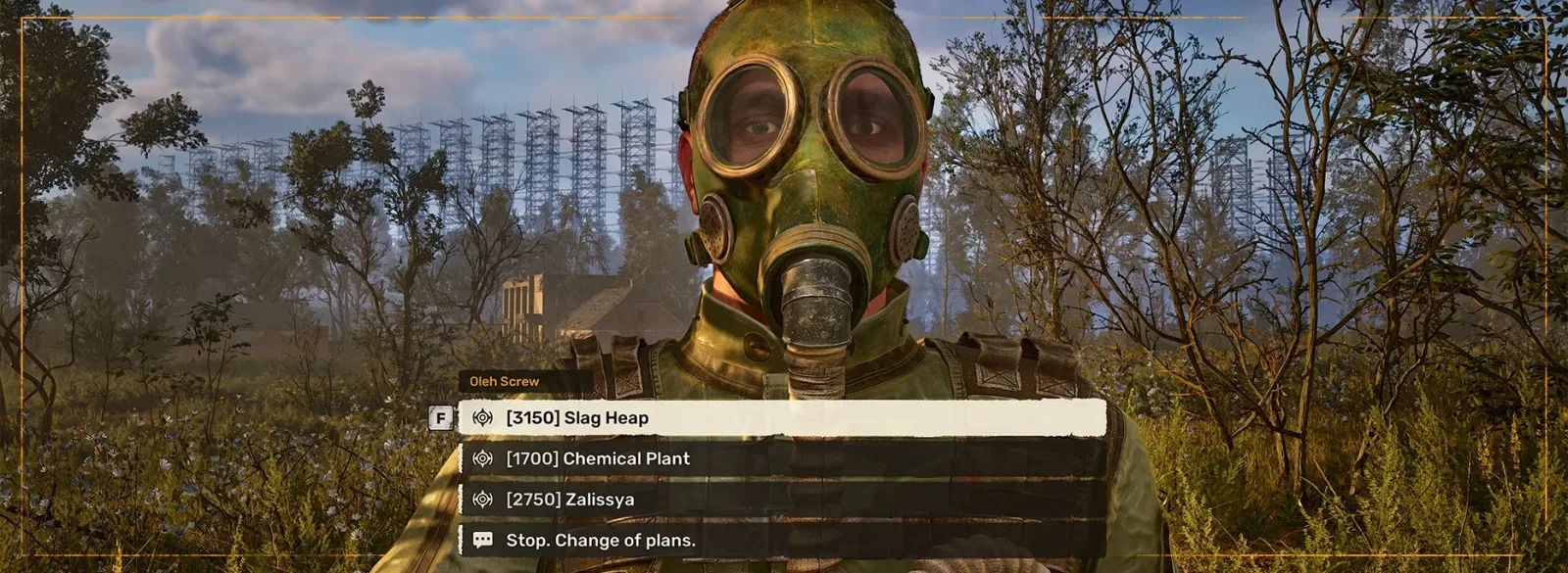
Update 2.1 also adds a new way to move around familiar territory. Squad leaders are now marked on the compass, and players can ask them to guide them to nearby destinations along their route.
This is not unrestricted fast travel. The service has several limitations intended to keep it tied to the world and to progression. First, the destination must already have been explored. Players cannot use a squad leader to skip ahead to an unknown location. Second, the destination needs to be nearby and situated along the squad leader's own route. Finally, the service requires an in-game payment.
There is another practical restriction: guides will not transport the player's backpack. Anyone considering the service should account for that before paying for a trip, particularly when carrying equipment or loot that they do not want to leave behind.
The feature appears designed to reduce repeat travel friction without removing the importance of exploration. Requiring prior discovery preserves the value of personally reaching a place for the first time. Limiting guidance to nearby destinations and existing routes means the mechanic remains connected to the movement of NPC squads rather than functioning as a universal map shortcut. The fee, meanwhile, gives the choice an in-world cost.
Marking squad leaders on the compass should also make the option easier to use organically. Rather than searching blindly for a suitable guide, players can identify leaders while moving through the world and decide whether the convenience is worth the price and backpack limitation.
Bug fixes and visual adjustments round out the patch
Alongside its systems additions, Update 2.1 contains a selection of bug fixes and visual tweaks. Specific fixes were not detailed in the available patch overview, but the inclusion of these changes means the update is not solely focused on the new A-Life and travel features.
The broader release is described as being heavily shaped by player feedback. That is reflected in the emphasis on configurability and quality-of-life improvements: a manual setting for NPC visualisation, an adaptive option for different hardware, refinements for distant encounters, and a constrained travel tool for revisiting known places.
For returning stalkers, the most immediately useful step after installing the patch may be to visit the Visualisation menu and compare the available A-Life presets. The default is positioned as the recommended choice, but the new options make experimentation possible for players who understand the potential effect on performance and stability. After that, squad leaders are worth watching for on the compass when revisiting nearby, already explored locations.
Update 2.1 does not change the fact that travel through the Zone remains risky, resource-conscious, and shaped by its own rules. Instead, it gives players more say in how much of the surrounding simulation they want to see, improves the atmosphere of conflicts unfolding at a distance, and offers a carefully limited alternative to retracing every familiar road on foot.
Community
Discussion
Start the conversation.
No comments have been posted yet.