

I Want to Play the Villain!, the theatre-themed logic puzzle game from Triomatica Games, is set to take the stage across a notably broad range of platforms in the first quarter of 2027. The game is planned for PC, PlayStation, Xbox, Nintendo Switch, iOS, and Android, while PlayStation and Xbox storefront pages are now available for players who want to add the title to their wishlists ahead of launch.
The cross-platform release includes PlayStation 5 and PlayStation 4, Xbox Series X|S and Xbox One, Nintendo Switch and Nintendo Switch 2, plus PC storefronts Steam, Epic Games Store, and GOG. On mobile, the full game is planned for iOS, Android, and the Samsung Galaxy Store. A final price has not yet been announced.
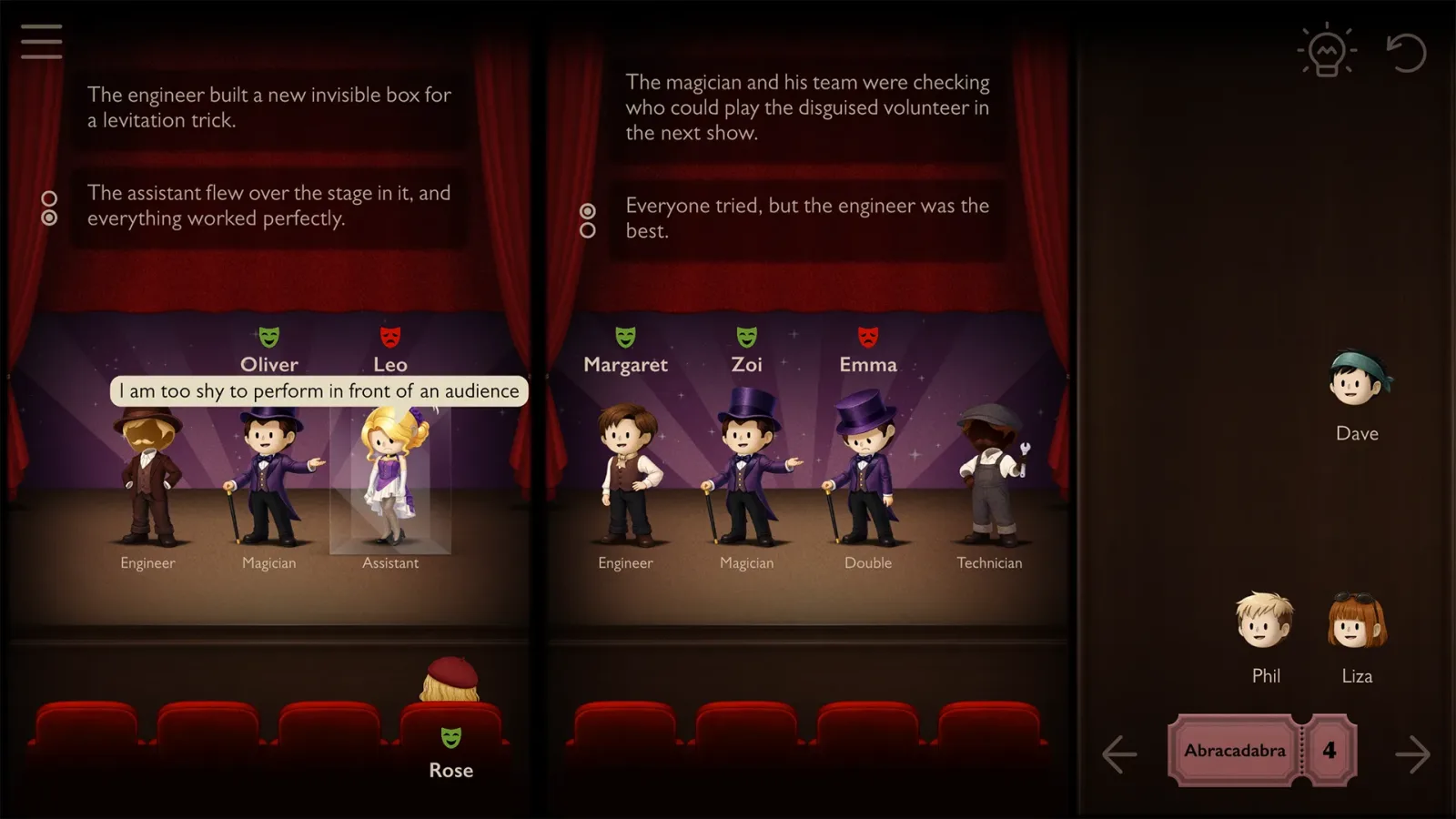
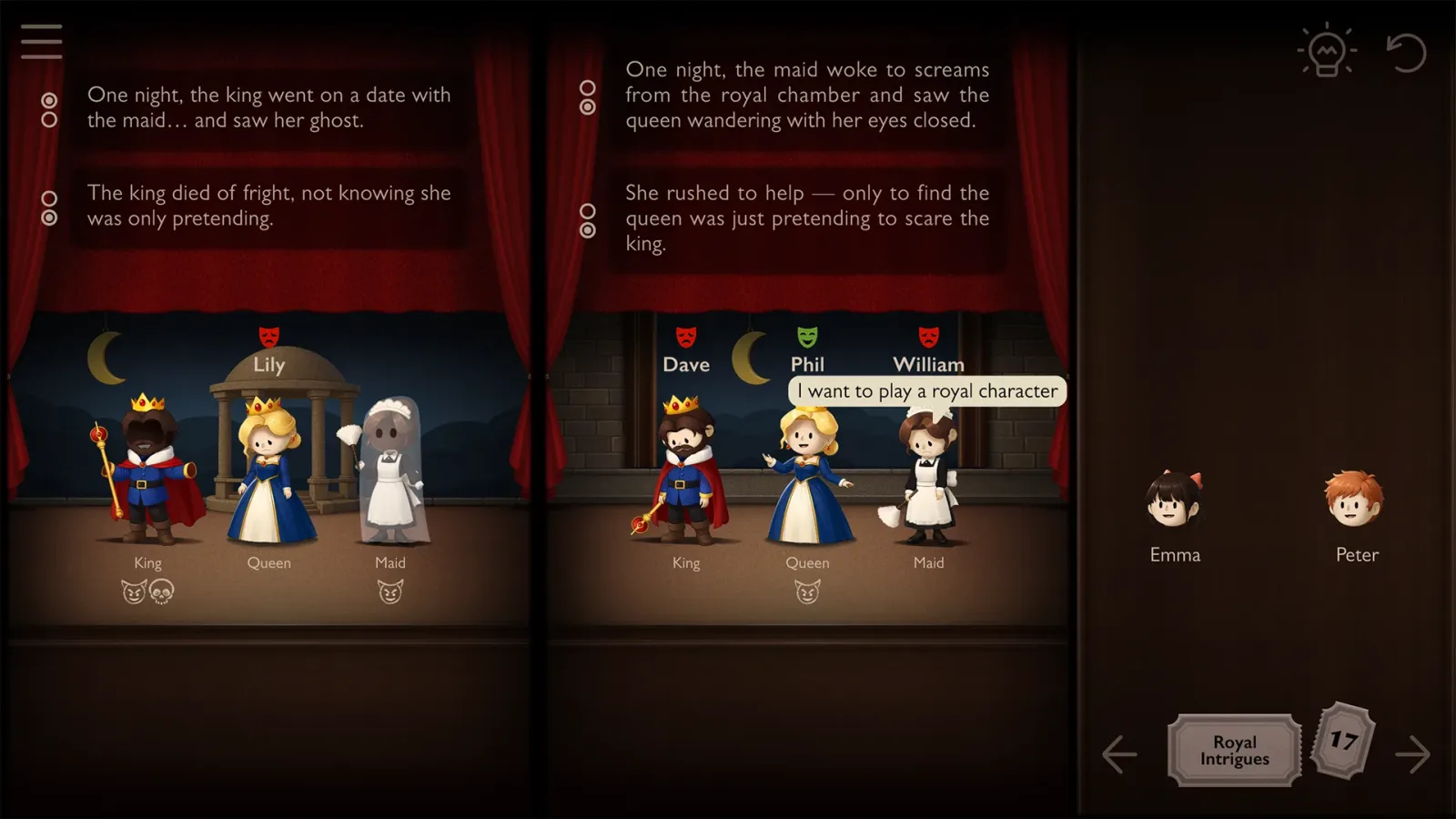
Triomatica Games describes I Want to Play the Villain! as a puzzle game built around the practical and emotional complications of putting on a successful performance. Rather than simply placing characters into obvious positions, players are asked to understand the cast: every actor has personal wishes, fears, ambitions, and preferences that can influence whether a production comes together.
A puzzle game about making the show work
The central objective is to assemble the right production by matching actors to roles. That foundation sounds straightforward, but the game's theatrical framing gives Triomatica room to turn casting into a more involved logic problem. Players will need to rearrange performers, alter costumes, and change the story itself in pursuit of an outcome where the people on stage are satisfied.
For useful background on this topic, read Samsung 9100 PRO 2TB PCIe 5.0 SSD Listed at $350 During Prime Big Deal Days.
That means the correct solution is not necessarily just the most obvious actor-to-role match. An actor's individual outlook may make one assignment desirable and another unacceptable, while costume choices and story changes can shift the conditions of a performance. The task is therefore about reading the needs of an ensemble and identifying the combination that allows the production to proceed.
In a genre often focused on fixed rules, grids, switches, and isolated objects, I Want to Play the Villain! is using personalities as part of its puzzle language. The cast's concerns are not only narrative flavor; they are meant to be factors players must account for while working toward the right staging.
Players will be able to change modular stories, shuffle the cast, switch costumes, and work around each actor's ambitions, fears, and wishes to create a successful show.
For another perspective on this story, read I Want to Play the Villain! Sets Q1 2027 Release for PC, Consoles and Mobile.
Modular stories and changing outcomes
Each chapter will introduce a new setting, a new group of characters, new mechanics, and a new story. This chapter-by-chapter structure suggests that the game will steadily expand its rule set rather than relying on a single theatre scenario from beginning to end. As players move through the campaign, they can expect new variables to reshape how they approach the casting and staging challenges.
The stories are described as modular, allowing players to alter them and produce different performances and outcomes. That is an important part of the game's premise: players are not merely solving a backstage organizational puzzle, but actively changing the production that the audience ultimately sees. A revised narrative may call for different roles, different costume decisions, or a different balance of personalities in the cast.
Triomatica Games has also emphasized that every performance can be different. While the exact scope of those variations has not been detailed, the focus on multiple outcomes and adjustable story elements points toward puzzles that invite experimentation. If one arrangement leaves an actor unhappy or blocks a desired result, players may have another route through the scene by changing more than one part of the production.
The rising challenge is expected to come from that growing interaction between systems. Learning what an individual performer wants is only the start; the more difficult problems should require players to consider how several performers, their roles, their costumes, and the evolving story affect one another at once.
PlayStation and Xbox wishlists are open
The newly available PlayStation and Xbox store pages give console players a way to track the game before its Q1 2027 release window. That timing covers the period from January through March 2027, though Triomatica Games has not announced a specific launch date within the quarter.
For PlayStation users, the game is planned for both PS5 and PS4. Xbox players will be able to look forward to versions for Xbox Series X|S and Xbox One. Supporting the current and previous console generations should make the game accessible to a wide audience, particularly for a puzzle title whose appeal is likely to rest on careful thinking and repeatable scenarios rather than demanding hardware.
Nintendo players are also included in the launch plan, with versions listed for Nintendo Switch and Nintendo Switch 2. The announcement does not provide details on differences between the two Nintendo editions, nor does it outline any platform-specific features for the console releases.
PC demo and a free mobile introduction are available now
Players who would prefer to try the concept before the full release have two current options, depending on platform. A demo of I Want to Play the Villain! is available on Steam, offering PC users an early opportunity to see how its theatrical logic puzzles operate.
Mobile players can access Villain!, a free standalone release containing the game's Chapter 1 material, on iOS and Android. It provides a separate entry point into the opening content rather than requiring players to wait for the full Q1 2027 launch. The available information identifies it specifically as a standalone version of Chapter 1.
Those two pre-release options are useful for a game whose ideas are easier to understand in motion than in a short description. The essential questions are likely to be how clearly the game communicates each actor's needs, how flexible the story changes are, and how the difficulty develops as a production gains more moving parts. The Steam demo and the free mobile chapter give prospective players a chance to judge that puzzle structure directly.
A broad launch for a focused puzzle premise
I Want to Play the Villain! is heading to an unusually wide spread of systems for an independent logic puzzler: three PC stores, two PlayStation consoles, two Xbox consoles, two Nintendo systems, and several mobile storefronts. The multi-platform plan puts the same core theatrical premise in front of players whether they prefer a desktop puzzle session, a console experience, or a mobile-friendly format.
At launch, the game is expected to support English, Ukrainian, French, Spanish, German, Italian, Portuguese, Turkish, Polish, Japanese, Korean, Traditional Chinese, and Simplified Chinese. That language lineup further underlines the ambition of the release, giving the game support across a substantial set of regions from day one.
For now, the key dates and details remain clear: wishlisting is available on PlayStation and Xbox, a Steam demo can be played now, and the free Villain! Chapter 1 standalone is live on iOS and Android. The complete I Want to Play the Villain! experience is scheduled to arrive in Q1 2027 on PC, PlayStation, Xbox, Nintendo Switch, and mobile platforms.
As its title suggests, the game is interested in the drama of a production, but its main challenge is less about stealing the spotlight than ensuring that everyone involved can play their part. If Triomatica Games can make the relationships between roles, stories, costumes, and personalities as satisfying to untangle as the premise promises, this could offer puzzle fans a distinctive backstage puzzle box when the curtain rises in 2027.
Community
Discussion
Start the conversation.
No comments have been posted yet.