

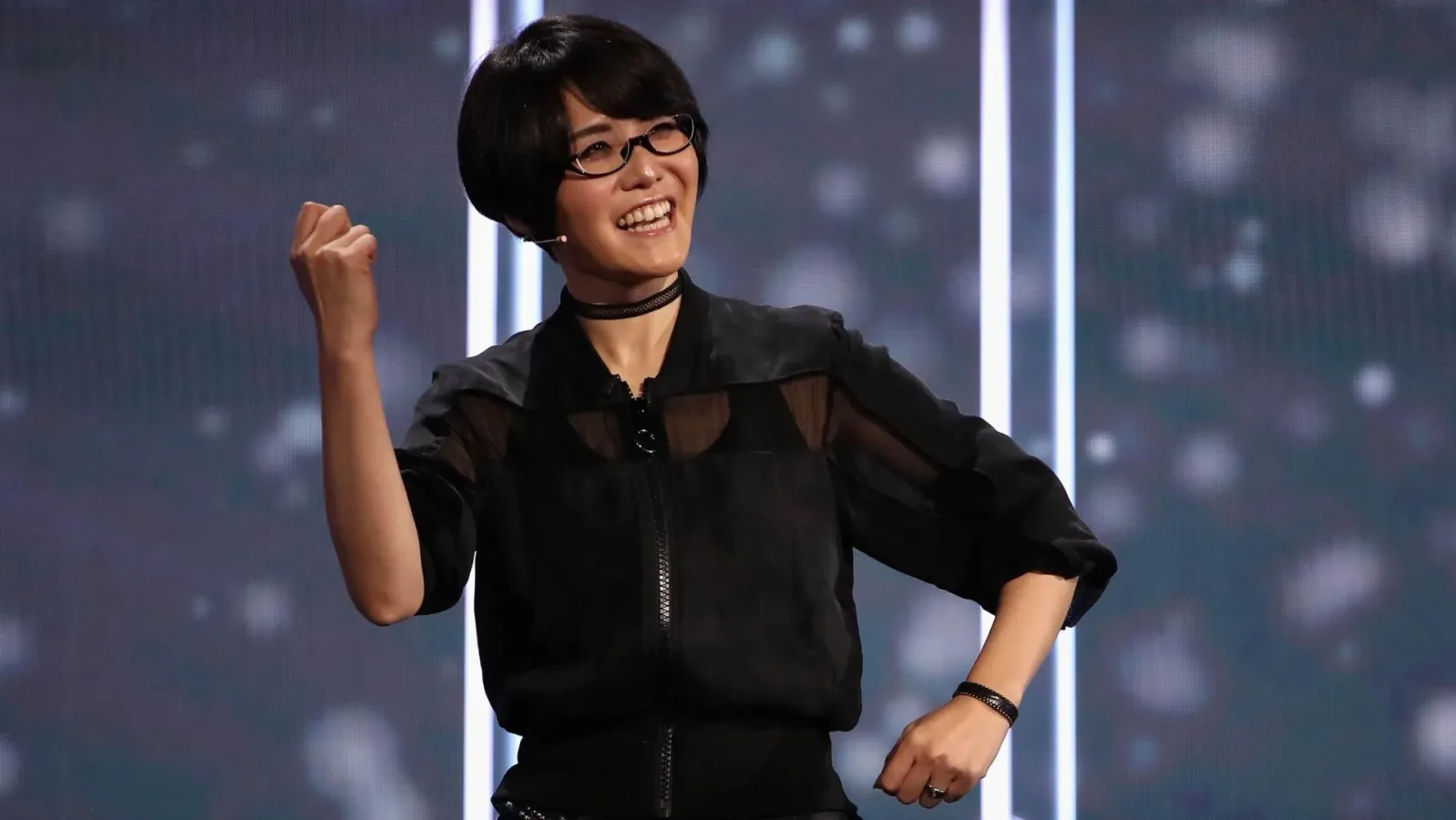
Unseen founder Ikumi Nakamura has sparked an intense reaction from fans after publicly inviting Elon Musk to try Kemuri, the studio's upcoming demon-hunting action game, during Tokyo Game Show. The invitation concerns a small experimental closed event being held at Unseen's Tokyo studio during the convention, rather than a general public demo on the show floor.
Nakamura made the request in a post on X, saying she was nervous to ask publicly but wanted to invite Musk if he happened to be in the area. She also asked whether the two could discuss Unseen through direct messages. The post was accompanied by a short four-panel comic recalling a moment from The Game Awards in 2019, where Nakamura and Musk were seated near one another in the audience.
The exchange immediately became a subject of concern and disappointment for a portion of Nakamura's audience. The designer has earned a devoted following over the years through her energetic public appearances, distinctive art direction, and enthusiasm for Japanese games and genre fiction. Many fans who have been following Unseen and Kemuri closely questioned why Musk was being singled out for an invitation tied to the studio's first project.
Embedded X/Twitter post
Embedded X/Twitter post
A private Kemuri session during Tokyo Game Show
The planned event is described as a small, experimental, closed gathering at Unseen's own Tokyo office. That distinction matters: there is no indication that the invitation represents a broad consumer showcase, a public Tokyo Game Show booth activity, or a new release announcement for Kemuri. It appears to be a limited opportunity for the studio to put the game in front of selected attendees and continue gathering impressions while development proceeds.
For useful background on this topic, read Aurzen E1R Roku TV Mini Projector Falls to $90, Bringing Big-Screen Streaming to a Smaller Budget.
Tokyo Game Show remains one of the largest annual gaming events in Japan, bringing publishers, developers, press, creators, and players into the city for several days of announcements, demonstrations, and business meetings. Small off-site studio events are a familiar part of that larger atmosphere. For a newer independent team such as Unseen, private testing can be particularly useful, offering more direct feedback than a packed convention-floor demo may allow.
Still, the nature of the guest at the center of this particular invitation has overshadowed the event itself. Musk is one of the most publicly scrutinized figures in technology and social media, and his conduct, political statements, and stewardship of X have made him a deeply polarizing name. Critics responding to Nakamura's post argued that associating Kemuri with him could affect how some potential players view the game and the studio behind it.
Some replies also raised concerns about Musk's history of making contested claims about his gaming credentials. His interest in games has been a recurring topic online, with public discussion often focusing on both his high-profile comments about games and doubts raised by players about the extent of his involvement in particular titles.
Nakamura says she wanted to learn if Musk shares an otaku interest
After commenters challenged the invitation, Nakamura offered some context for why she had reached out. She said she had been hoping to find out whether Musk was genuinely the same kind of "otaku" as the people around her studio and its creative community.
That explanation did little to calm the backlash. For critics, the question was not whether Musk has authentic enthusiasm for games, animation, science fiction, or other parts of Japanese pop culture. Instead, they argued that his broader public record makes the invitation difficult to separate from the reputation of the person being invited. The disagreement has therefore become less about a single private demo and more about the responsibilities that come with public outreach from recognizable game developers.
It is also worth placing the comic's 2019 setting in context. Nakamura's recollection predates Musk's purchase of Twitter, now called X, by several years. The image appears to reference an incidental moment at The Game Awards rather than an established public partnership between the two. There is no indication that Musk has accepted the Tokyo Game Show invitation, that he will attend the event, or that any business relationship has been formed between him and Unseen.
That uncertainty has not stopped the conversation from moving quickly. Social media reactions often compress a complicated situation into an immediate judgment, especially when a prominent creator and a divisive celebrity are involved. In this case, fans are trying to reconcile their appreciation for Nakamura's creative work with an outreach decision they feel may be at odds with the inclusive, playful image they associate with her public persona.
From Tango Gameworks to Unseen
Nakamura's standing in the industry is an important reason the reaction has been so strong. She became widely recognized for her work at Tango Gameworks and for a memorable appearance connected to Ghostwire: Tokyo. Her personality, visual sensibility, and visible excitement about making games turned her into a beloved figure for many players beyond the usual developer audience.
She left Tango Gameworks in 2019 and later founded Unseen in 2021. The independent studio is now focused on its debut game, Kemuri, which has become the central project for both Nakamura and the team she assembled. As with many studio founders whose personal identity is closely tied to a new company, her public actions tend to be read not only as individual choices but as signals about the studio's direction and values.
That dynamic can be difficult for independent creators. A founder may see an invitation as a chance to meet an influential person, assess their interests, broaden a conversation, or simply follow up on a past encounter. Audiences, meanwhile, may see that same invitation as an endorsement or a willingness to lend a project's goodwill to a controversial public figure. Neither interpretation changes the fact that Kemuri is a team project with many people contributing to it, but the visibility of a studio lead can make those distinctions harder to maintain online.
What Kemuri has shown so far
Kemuri was first revealed at The Game Awards in 2023. The project later received a more substantial look during a summer State of Play presentation, giving players a clearer sense of the action-oriented world Unseen is building.
The game is centered on hunting demons and taking in their powers. Those abilities are expressed through the player character's appearance, with demon powers manifesting as striking outfits. It is an idea that fits Nakamura's established strengths: bold silhouettes, supernatural imagery, fashion-forward design, and a playful approach to creature concepts.
Early material has made Kemuri stand out visually, but many practical details about the game remain to be clarified. The Tokyo Game Show closed event could potentially provide Unseen with valuable development feedback, although it is not yet known what will be shown there, who else may attend, or whether impressions from the session will be shared publicly. Players waiting for more concrete information will likely be looking for future updates from the studio rather than reading too much into this single invitation.
The challenge of keeping the focus on the game
For Unseen, the immediate challenge is that a conversation about a private demo has become a conversation about reputation. The studio's first game has already attracted attention because of its premise and Nakamura's creative leadership. But attention can shift away from gameplay very quickly when a developer's social-media post introduces a subject as politically and culturally charged as Musk.
The situation also illustrates how the boundaries between games, celebrity, technology, and online platforms have become increasingly blurred. Developers use social media to share work-in-progress material, talk directly with fans, recruit talent, and establish relationships. That openness can make a studio feel accessible. It can also mean that an impulsive or experimental public message is instantly interpreted at scale, without the buffer that traditionally existed between creators and audiences.
At present, the most concrete facts are straightforward: Unseen is holding a small closed Kemuri event in Tokyo during Tokyo Game Show, Nakamura invited Musk publicly, and the invitation has generated substantial criticism from fans. Whether Musk responds or appears is unknown. Whether the reaction causes Unseen to clarify its plans is also unknown.
What is clear is that interest in Kemuri remains high. Fans drawn to its demon-hunting action, power-absorbing outfits, and unusual visual identity will want to see the game itself return to the center of discussion. For now, however, Nakamura's invitation has ensured that the road to Unseen's debut release is being watched for more than its supernatural style.
Community
Discussion
Start the conversation.
No comments have been posted yet.