

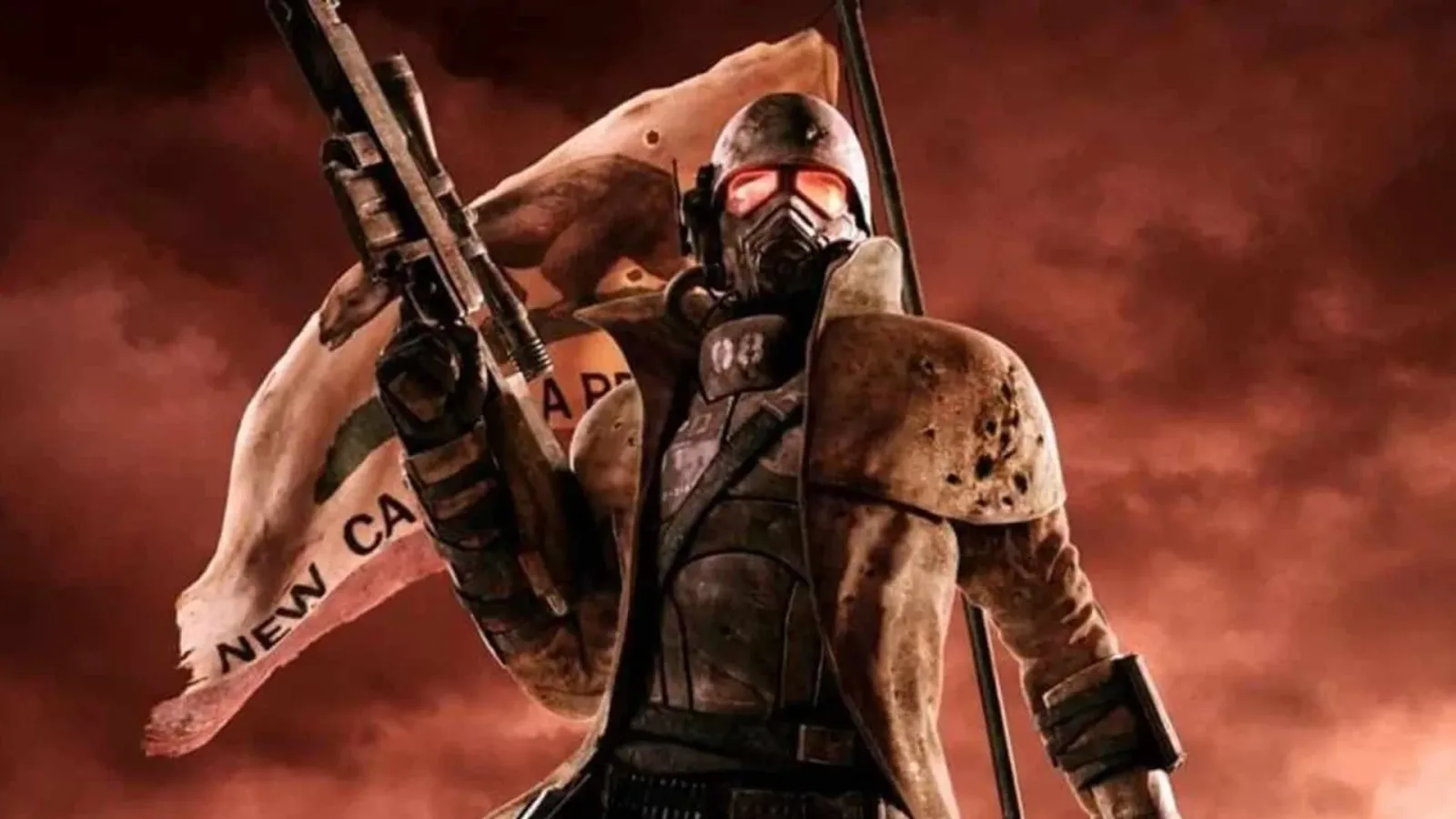
RPG players have been reloading saves for almost as long as RPGs have had save files. A missed attack, a failed lockpick, an unfavorable dialogue outcome or the loss of a valuable party member can all prompt the same response: load the previous save and try again. For some players, that is simply part of the genre's appeal. For designers, however, it creates a difficult question: how do you build meaningful systems when a portion of the audience will erase any result it dislikes?
Josh Sawyer, the veteran RPG director associated with Fallout: New Vegas and Pillars of Eternity, has offered an extensive look at that challenge through the lens of probability, resource management and player expectations. His central point is not that players are wrong to use saves, but that developers need to be realistic about the behavior their mechanics encourage.
That includes a willingness to recognize an uncomfortable reality: people often say they want tense decisions and risky outcomes, but may choose time-consuming or repetitive tactics to avoid accepting either one. In Sawyer's view, a game designer has to consider that response before a system reaches players, rather than assuming everyone will engage with a choice in the most elegant or intended way.
Why a 95% chance still feels unfair
Probability is at the heart of the issue. Anyone who has played a tactical game has likely experienced the familiar frustration of taking a shot with a 95% hit chance and watching it miss. Mathematically, there is no contradiction: a 95% chance still includes a 5% chance of failure. Emotionally, though, many players interpret the miss as evidence that something is broken, rigged or misleading.
For useful background on this topic, read Masters of Albion New Beginnings Update Reworks Progression, Combat and Performance.
Sawyer argued that many people do not have a strong intuitive understanding of probability and can resist explanations that conflict with their instincts. That disconnect can lead designers to build systems around what players feel probability should be, instead of how it actually works. The result may make outcomes feel smoother in the short term, but it can also make players less able to understand the systems beneath the surface.
This is a major issue in games built around percentages, including turn-based RPGs, strategy games and tabletop-inspired adventures. A displayed chance is a promise about likelihood, not a guarantee about an individual result. Yet human memory is selective. Players may forget a string of successful 60% attacks, but a single 95% miss can become a defining grievance because it clashes so sharply with expectation.
Presentation can significantly change that perception. Baldur's Gate 3, for example, makes the process feel more tangible by showing dice rolls in a manner familiar to tabletop Dungeons & Dragons. Watching a die land on a 1 gives failure a visible cause, even if the underlying odds are no more comforting than a percentage-based miss. The outcome may be exactly as unlikely as before, but it is easier to accept when it is framed as a recognizable roll of the dice.
Game history offers other examples of perception mattering as much as raw balance. In Wolfenstein: Enemy Territory, players became convinced that a particular gun was excessively powerful. The eventual response reportedly focused not on reducing the weapon's numerical effectiveness, but on making it sound less imposing. Complaints faded. The weapon's audio had shaped the audience's judgment of its strength.
For RPG developers, that is an important lesson. Players do not experience systems as spreadsheets. They experience them through visuals, sound, repetition, lost time and the emotional sting of failure. A mechanic can be statistically sound while still producing a reaction that tells designers something meaningful about its presentation or incentives.
Designing around the urge to reload
Sawyer says he does almost everything he can to avoid encouraging save scumming. That does not necessarily mean eliminating saving or punishing players for using it. Instead, it means avoiding mechanics that practically invite players to reload until they get the result they want.
His example from Fallout: New Vegas is locked containers. In many games of that era, players could attempt to open a lock with brute force, such as shooting it, while risking the destruction of whatever was inside. On paper, this creates a trade-off: invest in lockpicking for a reliable reward, or take a shortcut and risk losing the loot.
But that is not always how players approach it. If someone can save before firing, the apparent risk becomes much less meaningful. They can repeatedly reload until the container opens without destroying its contents. In that scenario, a player who invested character points in Lockpick may feel as though they paid a cost to avoid a hassle that another player can bypass with patience.
New Vegas does not let players solve locks by shooting them open. Sawyer acknowledged that specializing in Lockpick can function as a kind of skill tax, since it asks players to devote points to accessing certain rewards. But his reasoning is that allowing an easily reloadable alternative would push many players toward it even if they could not fully explain why. Given the choice between an investment made earlier and a reload-based workaround in the moment, the workaround is likely to win.
That is what Sawyer means by being cynical about player psychology. The word is not necessarily an insult to players. It is an admission that players are responsive to friction. If an option saves resources, preserves a perfect outcome or avoids an uncomfortable loss, many will take it--even when doing so costs far more real-world time.
Pillars of Eternity and the cost of caution
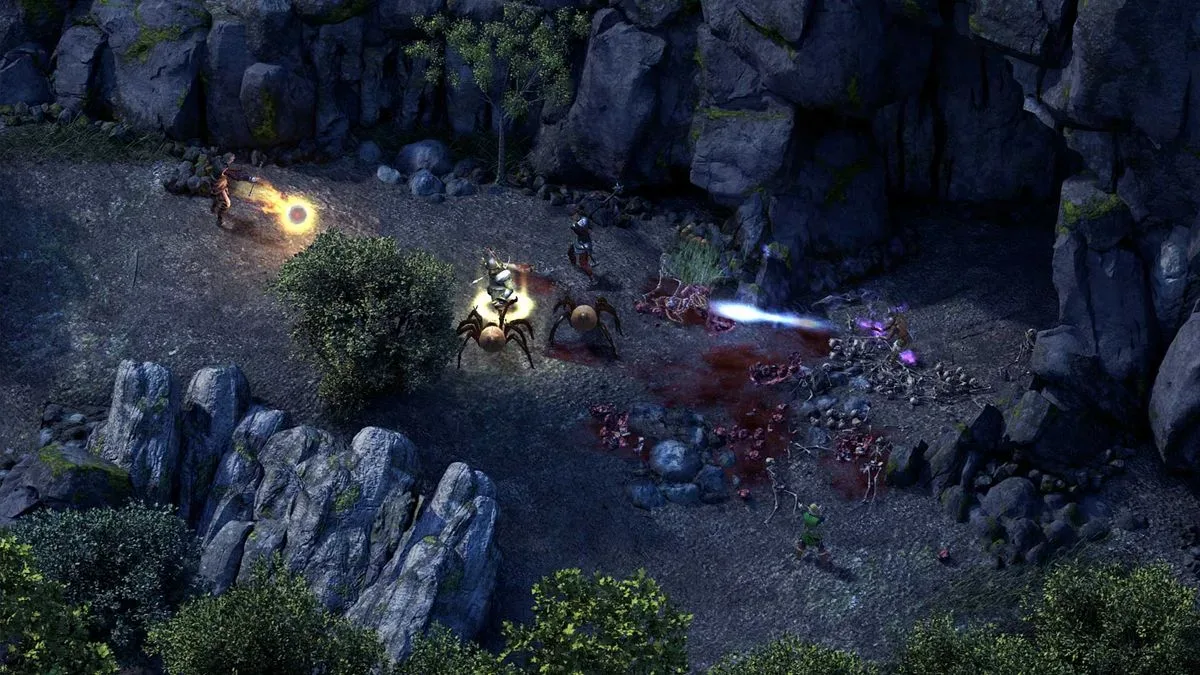
Sawyer specifically reflected on Pillars of Eternity as a game where he wishes he had been more cynical about that behavior. The party-based RPG uses a rest system to restore health and refresh per-rest abilities. Players can rest at camp by spending camping supplies, or they can return to town and use an inn for a small gold cost.
The intended tension is clear. Camping supplies limit how freely the party can recover while exploring dangerous territory, while a return trip to civilization trades convenience in the dungeon for time spent traveling. Per-rest abilities are meant to be powerful tools that require some judgment about when to use them.
In practice, Sawyer observed that many players dislike the possibility of losing a battle so much that they will expend their strongest abilities in every encounter, rest immediately afterward, then make a lengthy journey out of the dungeon to replenish supplies. After choosing that pattern, they may blame the game for forcing repetitive trips back to town.
From the player's perspective, that response makes sense. Losing a fight can mean replaying several minutes, confronting uncertainty or accepting that their tactical plan was flawed. A ten-minute walk may be tedious, but it is predictable. The player is choosing certainty over efficiency.
From a design perspective, though, it reveals how a mechanic's theoretical trade-off can break down. If retreating and refilling is cheap enough, players who want absolute safety may repeatedly choose it. The resource system then ceases to create the desired pressure, while the journey itself becomes a chore. The player may feel compelled to do something they do not enjoy because it appears optimal.
This does not mean every player used Pillars of Eternity that way. Some will accept failed battles, push deeper into an area with dwindling resources, or role-play a more adventurous approach. The important point is that designers cannot assume players will voluntarily accept tension when a safer route is available. The option's existence can reshape behavior, even if no one is explicitly forced to take it.
Choices need reasons, not just branches
Sawyer's thinking extends beyond combat and resource management into narrative design. When a quest gives players options such as A, B or C, developers should ask why anyone would select each one. An option may occasionally exist simply because its absence would feel unnatural; a role-playing game should sometimes let players say or do something because it fits their character, not because it is the optimal route.
Most of the time, though, the goal is to produce reflection. A good choice asks players to weigh values, priorities and consequences. It does not have to be agonizing, but it should involve more than spotting the obvious best answer.
If one dialogue path consistently delivers the greatest rewards, avoids every negative consequence and requires no sacrifice, it is not much of a decision. Likewise, if a supposedly difficult choice can be undone with a quick reload and no meaningful loss of time or momentum, some players will treat it as a puzzle with a single correct solution rather than an expression of character.
The challenge is to preserve player freedom without turning every uncertain result into a reason to restart. Visible dice, carefully designed costs, consequences that remain interesting even when unfavorable, and choices with genuinely distinct motivations can all help. No system will stop every player from reloading, nor should it necessarily try. But systems can avoid making constant reloading feel like the clearest path to success.
What it could mean for Fallout's future
The discussion has gained extra attention because Sawyer has been linked to a new Fallout project at Obsidian. Earlier reports suggested he was leading such a game, and Bethesda later announced that Obsidian is developing a new entry in the series. It has not been officially confirmed whether Sawyer is leading the project.
Until more details emerge, it is too early to draw conclusions about its mechanics. Still, Sawyer's long-running views offer a useful indication of the questions that may shape any RPG he directs: What will players do with an option, rather than what do they say they want? Does a risk create drama, or merely encourage reloading? Is a difficult decision asking for reflection, or just asking players to find the least punishing outcome?
Those questions matter because RPGs are built on agency. Players want the freedom to build characters, take risks and live with outcomes. Yet they also want to feel respected by the systems governing those outcomes. Sawyer's comments underline that striking that balance is not only about making numbers fair. It is about understanding how people react when fairness still leaves room for failure.
Community
Discussion
Start the conversation.
No comments have been posted yet.