


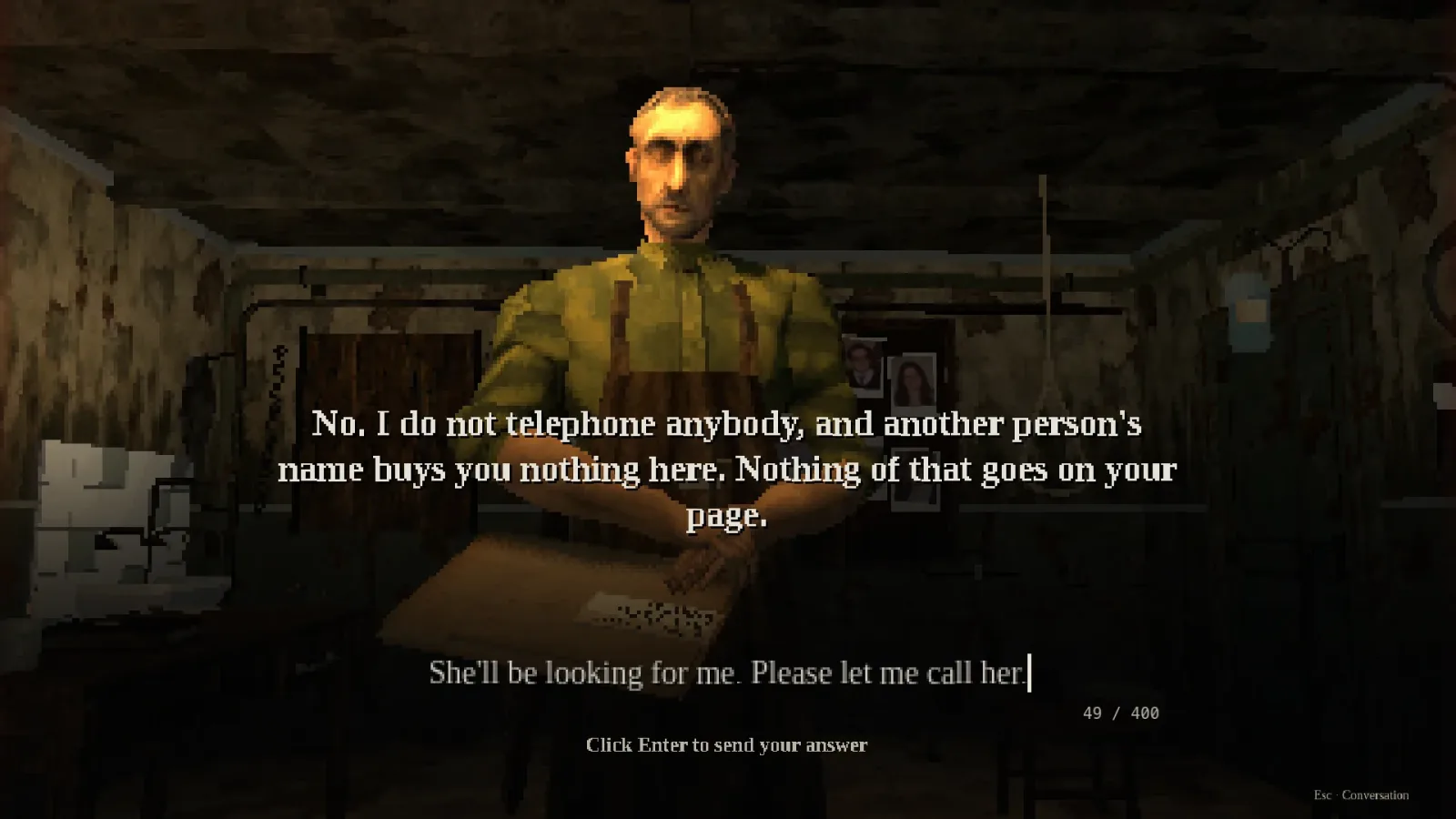
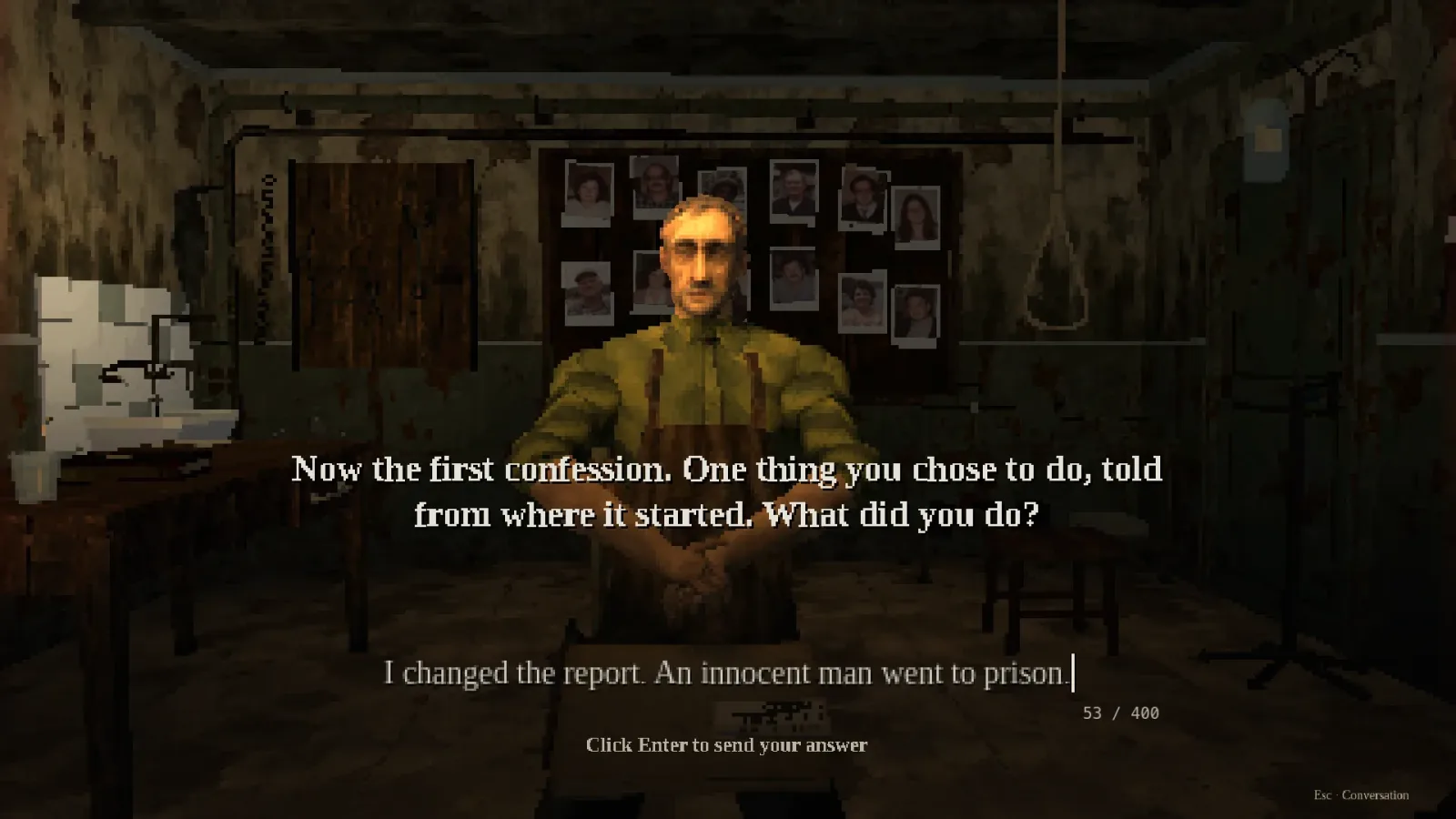
Kidnapped Simulator, the newly revealed psychological horror game from CRUNCHFEST and GROLAF, is built around an unusually personal kind of pressure: a captor asks questions, and players must answer in their own words. Rather than selecting from a short list of prewritten dialogue choices, the game has players type direct responses while trapped in a room with Abel Marsh, a composed and threatening kidnapper who believes he has the authority to decide what happens next.
Announced on September 29, 2026, the game is in development for PC through Steam. Its central scenario is immediately grim. The player wakes restrained in a chair, facing Marsh across a confined space. He wants a confession, but what that confession contains, how truthful it is, and whether the player even chooses to comply are all intended to be part of the experience.
The premise gives Kidnapped Simulator a conversational structure that differs from the branching dialogue systems common in narrative games. Players can plead, invent details, refuse to answer, turn questions back on Marsh, or attempt to understand what he wants. The practical goal is survival, but the game frames the exchange as a psychological contest in which learning about the captor may be as important as revealing anything about the person in the chair.
A horror game where the response box is part of the threat
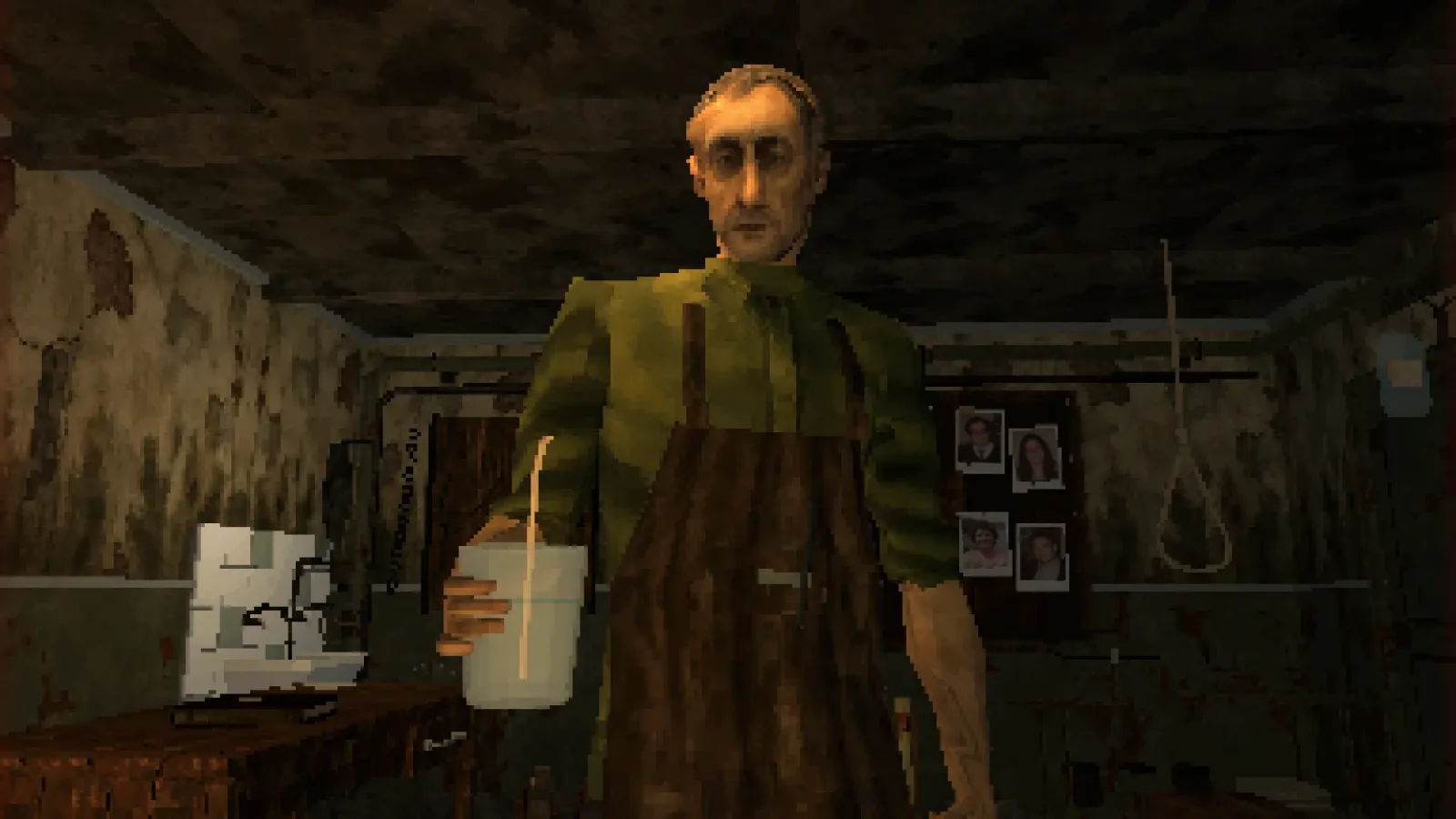
Conversations in horror games often work as a break between exploration, combat, or puzzle-solving. Kidnapped Simulator instead makes the act of responding the main source of tension. Marsh is presented as patient, methodical, and unsettlingly calm. He asks what the player has done, who they have hurt, and what they are trying to hide. There is no indication that a single correct sentence will cleanly resolve the situation.
For useful background on this topic, read Remothered Remasters Will Offer Free Upgrades to Existing Owners During Launch Week.
That uncertainty is the point. A player may decide that honesty is safest, only to wonder whether an admission gives Marsh more leverage. A lie could create useful distance, but it may also lead to contradictions later. Defiance might expose a weakness in the kidnapper's calm facade, or it could provoke him. Even asking the wrong question may reveal more about the player's intentions than they expect.
By asking players to generate their own language, the game can potentially create a more uncomfortable sense of responsibility than a standard dialogue wheel. Choosing between two marked options can feel like steering a character through an authored scene. Typing a plea, accusation, or false story is meant to feel more immediate. The player is not simply selecting a tone; they are deciding what they are willing to say to a person holding them captive.
Abel Marsh's interrogation is designed to be shaped by what players actually type, making each conversation a private exchange rather than a fixed sequence of dialogue prompts.
For another perspective on this story, read Kidnapped Simulator Brings Typed Confessions to PC Horror.
The newly released trailer focuses on that waiting game. Marsh listens while a confession is offered, makes notes in a ledger, and calmly cleans his hands. The trailer then escalates toward a revolver and the question, "Any last words?" The reply field remains blank. It is a small but effective image for the game's premise: the player has control over the words, but no certainty over the consequences.
A custom conversation system that runs locally
The developers say Abel's reactions are handled through a custom-built conversation engine based on a proprietary AI model created specifically for Kidnapped Simulator. The stated aim is for Marsh to respond to player-written input rather than relying only on preset lines and keyword-triggered answers.
Importantly, CRUNCHFEST and GROLAF say the system runs entirely on the player's own PC. The game is not intended to require an internet connection, cloud-based processing, or external services for its conversations. That approach means the words entered by players and the responses generated by Marsh remain on the local machine.
For a game centered on a simulated interrogation, privacy is not merely a technical footnote. Players may test the system with personal admissions, role-played stories, jokes, threats, or deliberately absurd attempts to break the atmosphere. Keeping those exchanges local should matter to anyone hesitant to put freeform text into an online service. It also means the experience is designed to remain functional without a persistent connection, though PC hardware requirements and the precise technical implementation have not been detailed.
Locally processed AI interactions are becoming an increasingly notable design choice as developers experiment with more reactive characters. Kidnapped Simulator uses that technology for a narrow, focused scenario rather than an open-world population of conversational NPCs. The whole game appears to be concentrated on one room, one hostile relationship, and one escalating exchange. That limitation could be a strength if the writing, performance, and underlying system make Abel feel observant without becoming predictable.
Eight endings and a close-quarters survival puzzle
Kidnapped Simulator is planned to include eight endings, with outcomes shaped by the encounter with Abel Marsh. The announcement does not identify the specific conditions for those endings, nor does it explain whether they are determined by broad behavior, key revelations, particular conversational paths, or actions outside the interrogation itself.
Still, the number suggests that the game's replay value will be tied to trying different approaches. One playthrough may focus on cooperation. Another might involve constructing an elaborate false identity, undermining Marsh's assumptions, or trying to push him into discussing his own motives. Because the game is about an unstable balance of information, players may need to consider not only what they say but what they can persuade Marsh to disclose.
There is also a potentially intriguing distinction between escaping a room and surviving a conversation. Traditional escape-room horror often asks players to collect items, interpret clues, and physically unlock a route out. Kidnapped Simulator's announcement emphasizes the interpersonal puzzle instead. The room is a prison, but Abel himself may be the lock. Understanding his temperament, his beliefs, and the limits of his control could be the route to one of the game's outcomes.
That framing leaves substantial room for uncertainty. The game has not yet outlined its full gameplay loop, the length of a typical session, or how much environmental interaction accompanies the typed conversations. It has also not specified whether every response can materially change Marsh's behavior. Those details will be important, particularly for a concept whose appeal depends on players feeling that their input has meaningful weight.
Early 3D horror influences shape the presentation
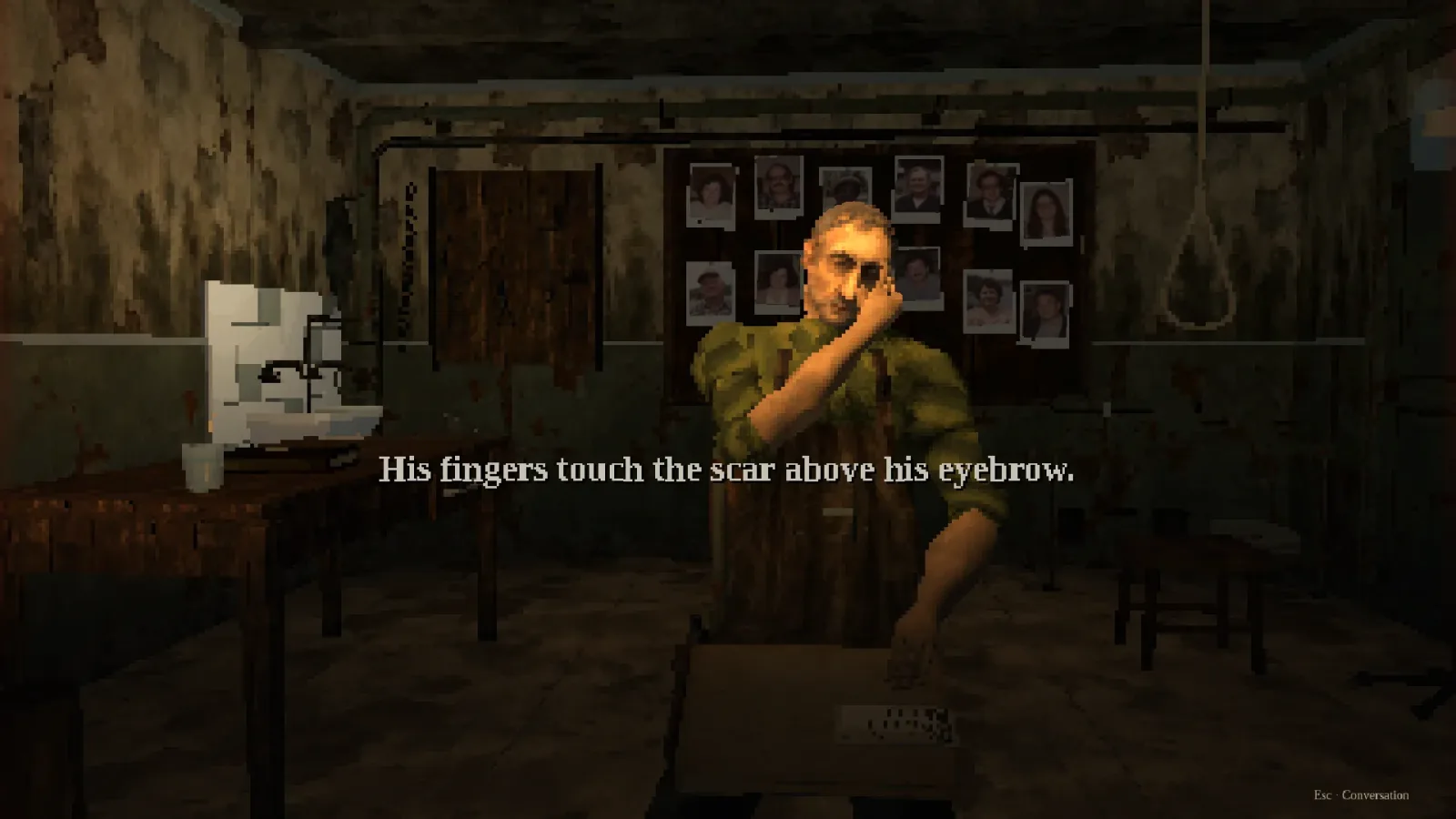
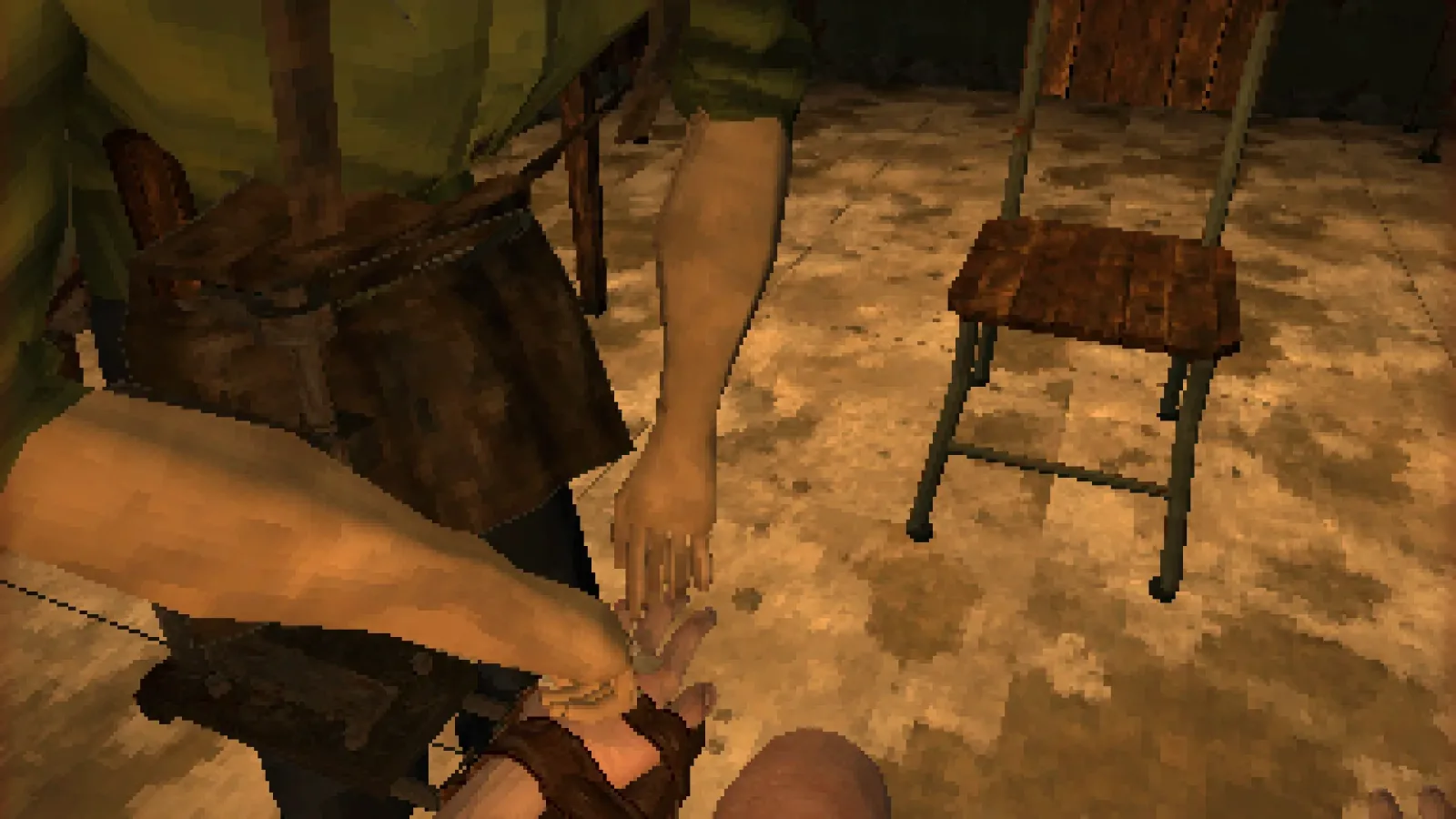
Visually, Kidnapped Simulator draws from the language of early 3D horror games. The developers describe grainy textures, severe shadows, and a deliberately restricted perspective intended to keep the player uncomfortably close to Marsh. The result is positioned closer to the rough, oppressive atmosphere associated with the original PlayStation era than to polished modern photorealism.
That style is a natural fit for the premise. Low-detail visuals can make an enclosed room feel less safe rather than more abstract, especially when shadows hide small movements and expressions are difficult to read. The limited perspective also reinforces the player's lack of freedom. There is nowhere to look except around the same confined space, and no easy way to escape the attention of the person across from them.
The announcement highlights pauses, gestures, and changes in Abel's expression as key parts of the tension. A game based on dialogue cannot depend only on text; the body language surrounding each answer may be what makes a response feel accepted, doubted, or dangerous. Marsh writing in his ledger or taking an extra second before replying could be as unnerving as an overt threat.
Kidnapped Simulator remains in development for PC
Kidnapped Simulator is currently confirmed for PC via Steam, where it can be wishlisted. No release date, price, console version, or full system requirements have been announced. The new trailer offers the clearest look yet at the game's interrogative structure and its unsettling central figure, but many questions remain about the depth of its branching paths and the practical limits of its conversation engine.
Even so, the concept stands apart from more familiar horror setups. Rather than handing players a weapon, a flashlight, or a collection of puzzle pieces, Kidnapped Simulator puts a text field in front of them and asks what they would say when someone dangerous demands an answer. For players interested in psychological horror that turns dialogue into the primary survival tool, Abel Marsh's room may be one to watch.

Community
Discussion
Start the conversation.
No comments have been posted yet.