

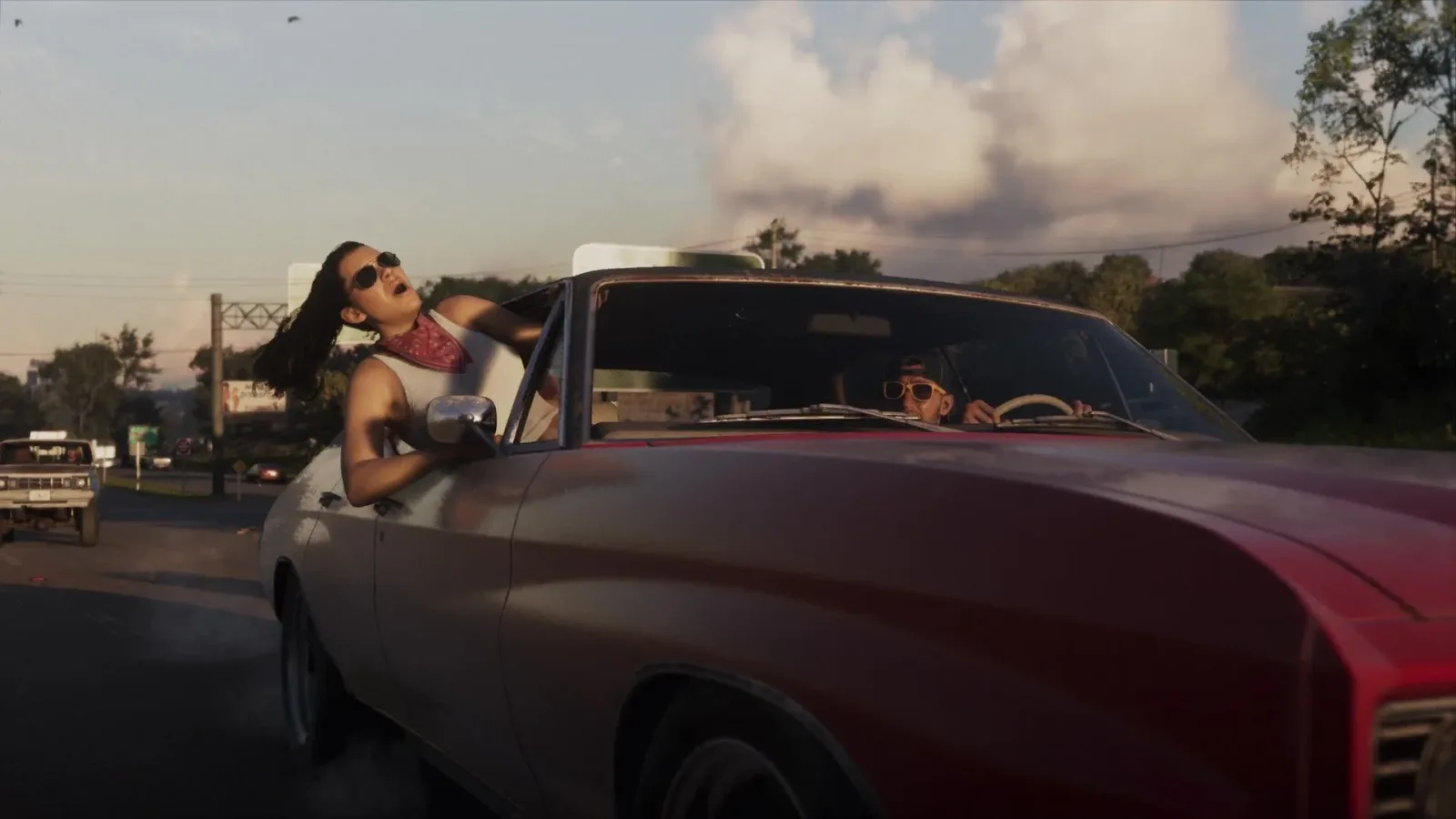
As the industry continues to debate whether blockbuster games should cost more at launch, Kingdom Come: Deliverance 2 executive producer and Warhorse Studios co-founder Martin Klíma has identified one company he believes can meaningfully change the conversation: Rockstar Games.
Klíma has argued that the arrival of Grand Theft Auto 6 could help establish a higher price point for major releases across the business. His reasoning is not that every publisher can make the leap successfully, but that Rockstar has the scale, audience, and cultural pull to attempt it where others may be reluctant to take the risk.
"GTA will blaze the trail, and it will allow us to increase the cost," Klíma said in an interview with PC Gamer. He went further, suggesting Rockstar may be the only developer with sufficient confidence and commercial power to raise the price of games without putting off a substantial part of its audience.
It is a notable position from the producer of one of the recent generation's most substantial single-player RPGs. Kingdom Come: Deliverance 2 represents the kind of ambitious, content-heavy project frequently brought up in arguments about growing development budgets, extended production schedules, and the challenge of sustaining premium games without relying excessively on post-launch monetization.
For useful background on this topic, read Signal Veil Brings 90s Anime Horror to a Haunted High School.
Rockstar's pricing power remains the central question
For years, Grand Theft Auto 6 has been viewed as the most obvious potential test case for a new top-end price standard. The anticipation around the game, the lengthy gap since Grand Theft Auto 5, and the extraordinary commercial history of Rockstar's series led many players and analysts to speculate that its launch price could go far beyond the usual premium release.
Some predictions put a possible base price as high as $100. Instead, Rockstar chose an $80 price point, matching the level Nintendo introduced with Mario Kart World alongside the launch of Switch 2. That remains above the long-established $70 standard for many major new games, but it is no longer an entirely unprecedented move.
Klíma sees that distinction as important. In his view, a company with Rockstar's influence can make a higher price feel less like an isolated experiment and more like a viable option for the rest of the market. He described a price increase as both overdue and necessary if the games business is to remain sustainable.
"Rockstar is the only [developer] who can afford, or who can dare, to increase the price of games," Klíma said.
The argument echoes comments from other developers who believe the base price of games has not risen in line with the expense of making them. Modern AAA projects can involve hundreds or thousands of contributors, years of full production, expensive technology, performance capture, localization, extensive quality assurance, marketing campaigns, and long-term support plans. Even games that sell strongly can be caught in a difficult financial environment when their budgets expand faster than their potential revenue.
From that perspective, an $80 launch price might look like a direct way to support bigger productions. It is simpler, at least in principle, than building revenue expectations around deluxe editions, cosmetic shops, season passes, early-access windows, or other additions that can frustrate players who just want to buy a complete game once.
A higher price is not automatically a solution
However, Rockstar's ability to charge more does not mean every studio would benefit from following it. The company occupies a rare position. Grand Theft Auto is one of entertainment's largest brands, and a new numbered entry is a global event rather than merely another major release on a crowded calendar.
Nintendo occupies a similarly unusual place. Its first-party games are supported by an audience accustomed to paying premium prices for recognizable series and hardware ecosystems. Mario Kart World's $80 price helped demonstrate that a higher suggested retail price can reach the market, but it did not settle whether consumers will accept that cost as the new normal for every kind of game.
For publishers without the same level of brand loyalty, a higher entry price could make an already difficult purchasing decision harder. Players have more alternatives than ever, including enormous back catalogs, free-to-play games, subscription libraries, frequent sales, independent releases, and live-service titles designed to demand time as well as money. A game priced above its competitors needs to persuade consumers that its experience, scale, polish, or replay value justifies the difference.
There is also a major difference between a company being able to charge more and an industry being healthier because it does so. If higher retail prices simply increase returns for executives and shareholders while teams continue to face layoffs, studio closures, cancelled projects, and unstable working conditions, players and developers may reasonably question where the additional money is going.
The recent industry conversation around sustainability has often focused on that tension. Development teams can be cut even after successful launches, while senior leadership compensation and large bonuses can remain a point of controversy. Raising prices alone does not guarantee a better outcome for the people making games. Any argument for higher costs also invites a broader discussion about budget discipline, staffing, project planning, profit-sharing, and the way success is rewarded inside major publishers.
Klíma is not a Grand Theft Auto fan
What makes Klíma's comments especially striking is that his optimism about GTA 6's market impact does not come from personal enthusiasm for the series. He said Grand Theft Auto does not appeal to him and admitted that its immense popularity is something he does not fully understand.
"The reason why it is so popular--it beats me. It's something which I just fail to understand," Klíma said.
He added that he does not expect to play GTA 6 unless he is somehow compelled to do so. Even so, he was clear that he respects the scale of Rockstar's work and the technical achievement represented by its games. He characterized them as technological marvels, an acknowledgement that does not require sharing the series' tone, structure, or particular style of open-world design.
That separation is useful in the pricing debate. Klíma is not presenting GTA 6 as a model because he personally enjoys it. He is looking at it as a business landmark: a release with enough attention behind it to influence how publishers, developers, and audiences think about premium pricing.
Grand Theft Auto's popularity has long been built on an unusual combination of open-ended worlds, detailed cities, blockbuster-style presentation, satire, emergent systems, and a reputation for releases that become cultural touchstones. Those strengths do not need to appeal to every player to have enormous commercial consequences. For Klíma, the important point is that Rockstar's next release may possess the rare leverage to test where the market's ceiling currently sits.
What GTA 6 could actually change
If GTA 6 succeeds at $80, it will offer evidence that at least one of the world's biggest games can sustain that figure. It will not, by itself, prove that every premium release should cost the same. The response to a new Grand Theft Auto will be shaped by decades of anticipation and a fanbase that few franchises can match.
Still, the game could influence the wider industry in subtler ways. Publishers may feel more comfortable testing $80 for their own largest projects, particularly long-running series with established audiences. Special editions may become more expensive, while companies could further distinguish between smaller releases and massive productions instead of treating all premium games as if they belong to one price bracket.
Players, meanwhile, will likely continue to judge pricing on a game-by-game basis. An $80 title that feels finished, polished, generously sized, and free of aggressive extra spending may be received very differently from one that asks for additional purchases immediately after launch. Perceived value, not only the number on the box, will remain central.
Klíma's comments do not resolve the dispute over what games should cost. They do, however, underline why GTA 6 is being watched as more than a major entertainment release. Rockstar's next game may become a test of consumer tolerance, publisher ambition, and the limits of the traditional premium model. Whether that ultimately benefits developers, players, or only the companies at the top will depend on far more than the price Rockstar chooses.
Community
Discussion
Start the conversation.
No comments have been posted yet.