

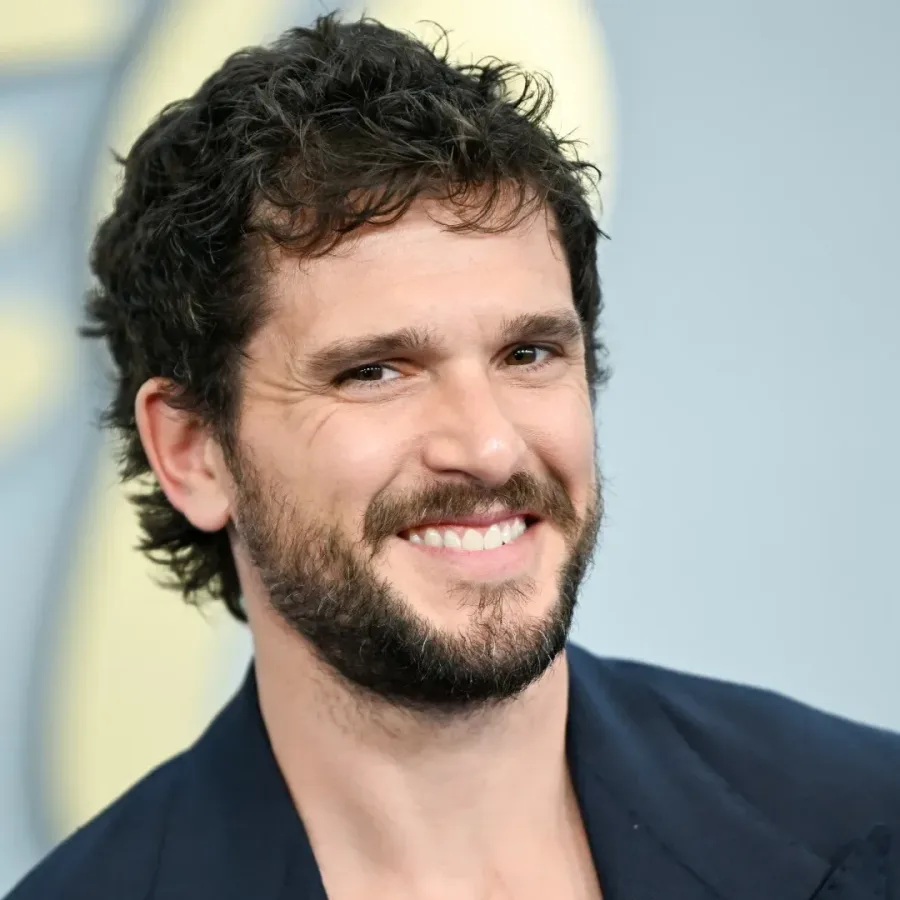
Kit Harington may not describe himself as a dedicated gamer, but Grand Theft Auto 6 has managed to break through. The actor, widely known for portraying Jon Snow in Game of Thrones, recently reflected on his limited but varied relationship with video games and said Rockstar's next open-world crime epic is one he wants to try.
Harington discussed games while speaking with Josh Horowitz, revisiting his involvement in Silent Hill: Revelation, the 2012 live-action horror film connected to Konami's long-running game series. When asked whether he personally plays games, Harington made clear that gaming has not been a major hobby for him. Still, he has spent time with several notable titles and franchises over the years, ranging from classic kart racers and fighting games to a recent blockbuster adaptation of the Wizarding World.
His list included Tekken, Mario Kart, and Diddy Kong Racing, along with Hogwarts Legacy as a more recent game. But it was the conversation turning toward Grand Theft Auto that produced the most interesting response. Harington said he wants to play Grand Theft Auto 6 after seeing its advertising, even though he did not indicate whether he had spent much time with previous GTA entries.
Grand Theft Auto 6's reach is extending beyond regular players
That reaction underlines the unusual scale of anticipation around Grand Theft Auto 6. Major games often attract attention outside their most committed communities, particularly when they belong to globally recognizable franchises. Grand Theft Auto, however, has long existed at a different level of mainstream visibility. Its trailers, setting, characters, music, controversies, and satire routinely become broader entertainment conversation rather than remaining limited to video game spaces.
For useful background on this topic, read Analogue 3D Update 1.5.1 Adds In-Game Overclocking Controls.
For someone with only occasional experience of games, the name Grand Theft Auto alone carries considerable cultural weight. The series is recognized even by people who have never completed a mission, driven through a fictional city, or encountered its fictional radio stations. That recognition is likely to be particularly valuable for Rockstar as it prepares audiences for a new entry after an exceptionally long wait.
Harington's interest seems driven in part by the promotional material he has encountered. Advertising is doing more than informing existing fans that the game is coming; it is placing Vice City and the broader GTA identity before people who may not normally follow game announcements. The result is a growing sense that Grand Theft Auto 6 is being treated as a large-scale entertainment event, not simply another sequel for players already invested in the franchise.
The actor also expressed appreciation for videos that recreate or imitate Grand Theft Auto-style situations in real life. Those clips have become a recognizable online format, usually built around the idea that mundane, chaotic, or absurd events resemble something that could happen in Rockstar's exaggerated sandbox worlds. The trend speaks to the series' distinctive visual language and reputation: GTA has become shorthand for public disorder, bizarre street encounters, reckless driving, and the collision of everyday life with heightened satire.
A casual gaming background with some famous names
Although Harington said he is not much of a gamer, the titles he named paint a familiar picture for many people whose gaming has been intermittent rather than constant. Tekken represents one of the most enduring fighting game series, a franchise that has remained visible across multiple generations of consoles. Mario Kart, meanwhile, has long been among Nintendo's most accessible social games, equally at home in competitive households and casual group play.
Diddy Kong Racing is another notable part of that history. The Nintendo 64-era racer distinguished itself from many contemporaries with an adventure structure and multiple vehicle types, making it a fondly remembered title for players who grew up in that period. Mentioning it alongside Mario Kart suggests Harington's experiences with games stretch back beyond recent releases, even if he has never made gaming a central pastime.
His more recent time with Hogwarts Legacy also makes sense given his next major television role. Harington is set to play Gildroy Lockhart in HBO's Harry Potter television series. While he did not explicitly connect that role to playing the Wizarding World game, the timing makes the title an understandable point of entry into contemporary gaming.
Hogwarts Legacy offered a large fantasy setting built around exploration, spellcasting, classes, creatures, and the familiar iconography of Hogwarts. For someone who does not routinely play games, it is the kind of release that can serve as an accessible bridge between established screen-world interests and interactive entertainment. It also illustrates how licensed games can reach audiences whose relationship with games begins with the underlying fictional universe.
Harington has already been part of game adaptations and game performances
Harington's personal gaming habits may be modest, but his professional connection to the medium is more substantial. He appeared in Silent Hill: Revelation, a film adaptation associated with one of gaming's defining psychological horror series. He acknowledged that he did not have much experience with the Silent Hill games themselves, but the project still placed him within a franchise whose influence reaches far beyond its original medium.
He also played a major role in Call of Duty: Infinite Warfare. In that 2016 release, Harington portrayed the central antagonist, Admiral Salen Kotch. His involvement was part of a period when the Call of Duty series leaned heavily into cinematic presentation and prominent performance capture work, bringing recognizable actors into its blockbuster campaigns.
In a very different kind of project, Harington voiced Jon Snow in Telltale's Game of Thrones. That episodic adventure was designed around player choice and narrative consequence, allowing participants to inhabit a story set in the same larger world as the television series. His role there placed him in an adaptation that did not merely borrow a recognizable name, but used the format of interactive storytelling to explore another perspective within Westeros.
These credits matter because they show the many ways actors can intersect with games without necessarily identifying as gamers themselves. Some enter through voice work, performance capture, or adaptation roles. Others encounter games through a franchise connected to their own work. And some, like Harington with Grand Theft Auto 6, can simply be drawn in by the momentum around a release that feels too large to ignore.
Rockstar's Vice City campaign is building a major-event atmosphere
Rockstar is clearly pushing Grand Theft Auto 6 with an expansive promotional effort. The campaign has included reports of a substantial investment in music, with an ensemble of musicians assembled to create an original soundtrack. Music has always been a major component of Grand Theft Auto's identity, whether through radio stations, licensed tracks, original score, or the way songs become linked to trailers and memorable in-game moments.
The company has also reportedly spent nearly $1 million on a "Welcome to Vice City" sign in Miami. That kind of real-world promotional installation emphasizes the connection between GTA's fictional setting and the Florida-inspired atmosphere that has been central to the game's marketing. Vice City is not a new name for the series, but its return has naturally become one of the biggest points of fascination around the sequel.
Marketing of that scale aims to make an upcoming launch visible in places well beyond gaming storefronts and specialist events. It can put a game in front of tourists, local residents, social-media users, music fans, and entertainment audiences who may otherwise not actively seek out game trailers. Harington's comments offer a small but telling example of how that strategy can work: a person who says he is not much of a gamer has seen enough to become curious about playing.
A November release will have enormous attention
The expectation surrounding the game has also inspired jokes about how much everyday life could be affected when it arrives. NBA player Steven Adams recently joked that league performance could drop when Grand Theft Auto 6 releases in November. It is an exaggerated observation, but it reflects a common expectation that the game could dominate conversations, social feeds, streaming platforms, and players' free time when launch approaches.
At the moment, Harington has not said whether his interest will turn into an actual playthrough. Wanting to try a game and finding the time to devote to a massive open-world release are, of course, different things. Still, his comments show the power of a franchise that can attract attention from a performer with ties to film, television, game voice work, and major adaptations, despite gaming not being a defining personal interest.
For Rockstar, that sort of crossover appeal is likely exactly the point. Grand Theft Auto 6 is not relying solely on longtime fans who remember prior trips to Vice City or Los Santos. Its campaign is also reaching people who recognize GTA as a cultural idea, are intrigued by its spectacle, or simply want to see why the next release is generating so much noise. If Harington ultimately does pick it up, he will be joining an audience that appears set to include committed series veterans and plenty of newcomers alike.
Community
Discussion
Start the conversation.
No comments have been posted yet.