

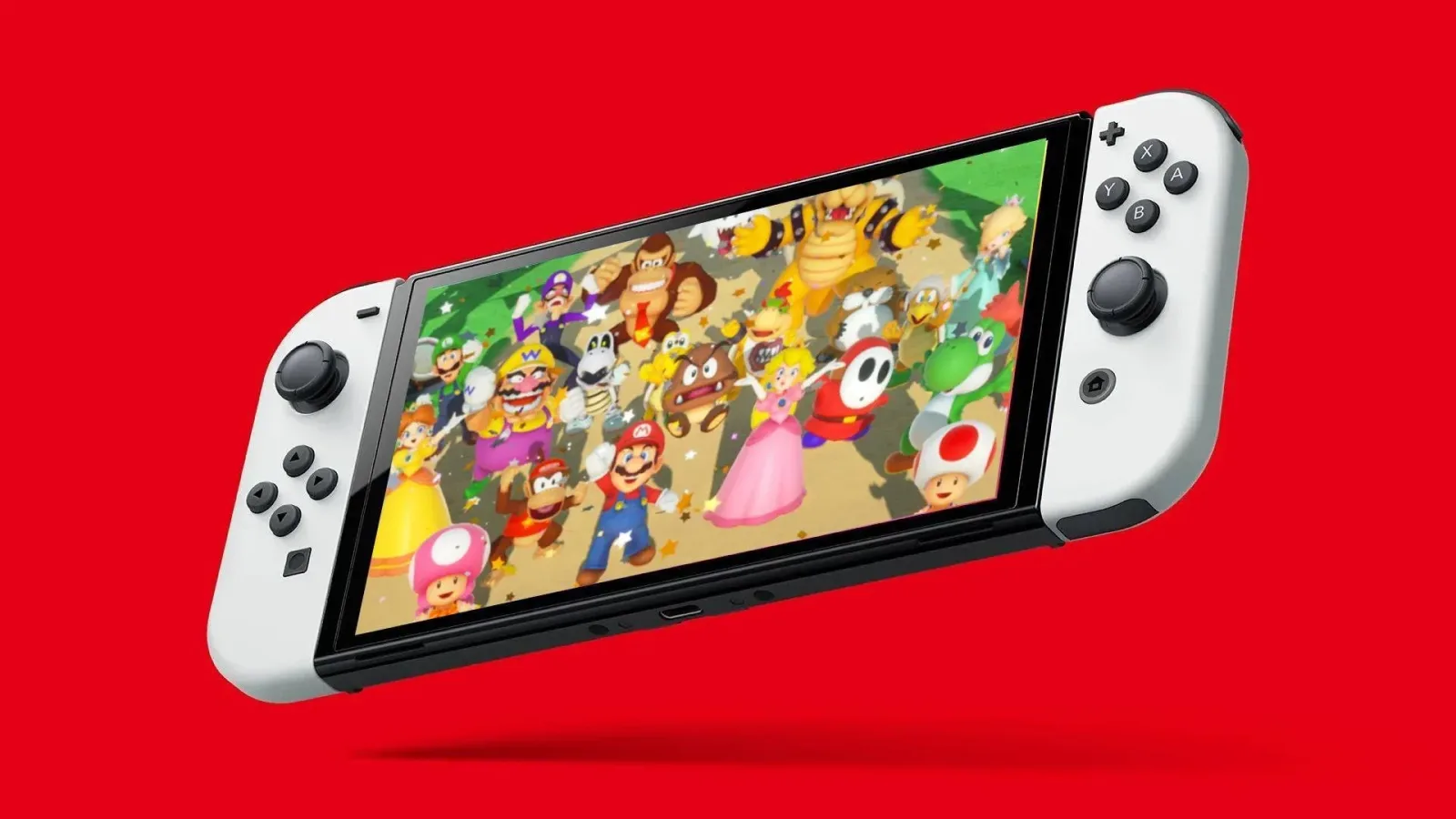
Nintendo Switch cartridge collectors have another reason to watch the hardware supply chain closely. Macronix, the Taiwanese semiconductor and non-volatile memory company widely known as Nintendo's main supplier of ROM chips for Switch game cards, is gradually moving away from ROM production. The company's leadership has indicated that future capacity will be directed more heavily toward NOR flash products for data centers and NAND memory, two areas it sees as stronger long-term opportunities.
The shift does not mean Nintendo Switch cartridges are suddenly disappearing from store shelves, nor does it mean every future physical Switch release is in immediate danger. Macronix is not the sole company capable of supplying the necessary technology, and Nintendo's newer Switch 2 cartridges appear to use NAND flash supplied by ROHM Semiconductor. Still, a major supplier stepping back from a component central to the original Switch's physical format is a notable development for game preservation advocates, collectors, retailers, and anyone who prefers buying games on cartridges rather than as downloads.
ROM becomes a smaller part of Macronix's business
Macronix chairman and CEO Miin Wu discussed the company's changing priorities during its third-quarter 2026 results presentation, shared on October 27. The company reported a record-high net profit of roughly $337 million for the period, with demand for NOR memory used in data-center applications identified as a principal driver of that performance.
Embedded X/Twitter post
At the same time, the company's ROM segment has been shrinking sharply. Macronix said ROM sales declined 39 percent year over year. By the third quarter of 2026, ROM represented only 5 percent of its memory sales, a steep fall from the 26 percent share reported in the second quarter of 2025. With that part of the business becoming comparatively small, the company has begun a gradual phase-out of ROM manufacturing.
For useful background on this topic, read Dragon's Dogma 2 Adds Delicious in Dungeon Gear and Pawns in Free Update.
That capacity is expected to be redirected to products that Macronix believes have more room to grow. The stated focus is on supplying additional NOR flash solutions for data centers while dedicating resources to NAND, which the company views as an important long-term expansion segment. From a business perspective, the logic is straightforward: data infrastructure has become an increasingly lucrative market, and chipmakers naturally want to prioritize technologies where demand and margins appear strongest.
For the game industry, however, the decision illustrates an awkward reality of physical media. A cartridge may look like a simple consumer product, but it depends on specialized manufacturing relationships and components that can be difficult to replace at scale. When a supplier reallocates its factories toward higher-growth sectors, gaming can become a smaller consideration within a much larger memory market.
Why Macronix matters to the original Switch
Nintendo Switch games use proprietary game cards rather than optical discs. Those cards contain ROM-based storage that holds the game data, and Macronix has long been regarded as Nintendo's primary ROM supplier for that format. Its role made the company an important, if largely invisible, part of the Switch ecosystem.
The physical card format has helped the Switch remain one of the most prominent homes for boxed games in modern console gaming. Major releases routinely arrive at retail in cartridge form, and independent publishers have also used physical editions to reach customers who want a shelf copy, a resale option, or a game that can be installed without relying solely on a digital storefront.
Macronix reducing ROM production therefore matters even if it does not create an overnight shortage. A supplier transition can involve questions about available capacity, manufacturing costs, qualification of replacement components, and the sizes of cartridges that publishers are willing to order. None of those issues has been publicly confirmed as a direct consequence of Macronix's plans, but they are the kinds of variables that shape how viable physical releases remain over time.
It is also worth separating a potential supply-chain concern from a confirmed consumer-facing change. There has been no announcement that Nintendo is ending original Switch cartridge production, cancelling physical releases, or removing boxed games from retail. The available information instead points to a supplier adjusting its own production mix. The practical consequences for game cards will depend on how Nintendo and its partners handle alternative sourcing and future manufacturing needs.
Switch 2 appears to be in a different position
The immediate picture is less worrying for Nintendo Switch 2. Its cartridges reportedly use NAND flash memory supplied by ROHM Semiconductor, rather than the ROM arrangement associated with the original Switch. Because Macronix is specifically pulling back from ROM, that distinction is significant.
NAND flash is also part of the category Macronix itself has identified as a future growth focus, underlining how the broader memory industry is moving toward flash technologies and data-oriented products. Switch 2's use of NAND does not guarantee that its physical software format will never face pricing, supply, or capacity pressures. Semiconductor supply chains are complex, and the needs of consumer electronics can change rapidly. But Macronix's ROM transition does not appear to place Switch 2 cards under the same direct pressure as the original Switch format.
For Nintendo, the generational divide could prove important. The original Switch remains a huge installed platform with an extensive library, continued software support, and a retail ecosystem built around game cards. Meanwhile, Switch 2 has begun with a cartridge technology that seems more aligned with the memory types manufacturers are actively investing in. That may make the new format more adaptable, even as the older one becomes more dependent on how Nintendo manages its remaining supply arrangements.
Digital sales continue to gain ground
The timing also reflects Nintendo's wider software sales trends. From April through June 2026, digital purchases accounted for 61.5 percent of Nintendo's software sales. That was 2.2 percentage points higher than the company's year-on-year digital share at the end of 2025.
Digital's growing share does not make physical sales irrelevant. Millions of players still buy cartridges, whether for convenience, collecting, lending, gifting, resale value, or the comfort of owning a tangible copy. Retail stores also remain an important part of how many families discover and purchase Nintendo games. Yet the financial direction is clear: a majority of Nintendo software sales now comes through digital channels.
That trend can affect the economics of cartridge production. As more customers choose downloads, publishers may become more cautious about expensive physical print runs, especially for lower-volume releases. Smaller production runs can increase per-unit costs, which in turn can make publishers more likely to use limited editions, smaller-capacity cards, download requirements, or digital-only launches. These are not automatic outcomes of Macronix's announcement, but they are familiar pressures in a market where the digital option keeps expanding.
What this means for collectors and preservation
For collectors, the news is mainly a warning sign rather than a call to panic. Existing Switch cartridges are not being invalidated by Macronix's business plans. Games already manufactured will continue to function as they always have, and Nintendo has not indicated that it will stop producing physical original Switch titles. There is no need to assume that current collections have suddenly become unusable or that every remaining cartridge will become scarce.
Even so, physical editions matter for more than display value. A cartridge can be borrowed, resold, shared, and played without requiring a customer to maintain access to an account or wait for a potentially large download. Although patches, downloadable content, and server-dependent features complicate the preservation picture, a physical release can still provide a more durable starting point than a game that exists only as a license attached to a digital storefront.
That is why supplier changes attract attention beyond hardware circles. The long-term health of physical games is shaped not only by player demand, but also by platform-holder strategy, publisher priorities, retail support, manufacturing capacity, and the willingness of chip companies to keep making the relevant components. A decline in any one area does not end physical media on its own. Together, though, these pressures can gradually narrow the options available to buyers.
No immediate cartridge crisis, but a meaningful signal
Macronix's decision should be viewed as a meaningful signal about the direction of the memory business and the increasingly specialized position of legacy ROM-based physical formats. The company's numbers show why it is making the move: ROM has become a small fraction of sales, while data-center demand and NAND growth offer more attractive prospects.
Nintendo still has time and options. Macronix is not the only possible supplier, and the Switch 2 cartridge format is apparently insulated from this specific ROM phase-out. The original Switch, however, may face a more complicated supply picture as its main ROM partner moves on to other priorities.
For now, players can continue to buy and enjoy physical Switch games without evidence of an imminent disruption. The larger takeaway is that cartridges are not guaranteed simply because a console supports them. Maintaining physical media requires an entire industrial chain to keep finding value in it. Macronix's pivot does not break that chain today, but it is another reminder that the chain is changing.
Community
Discussion
Start the conversation.
No comments have been posted yet.