

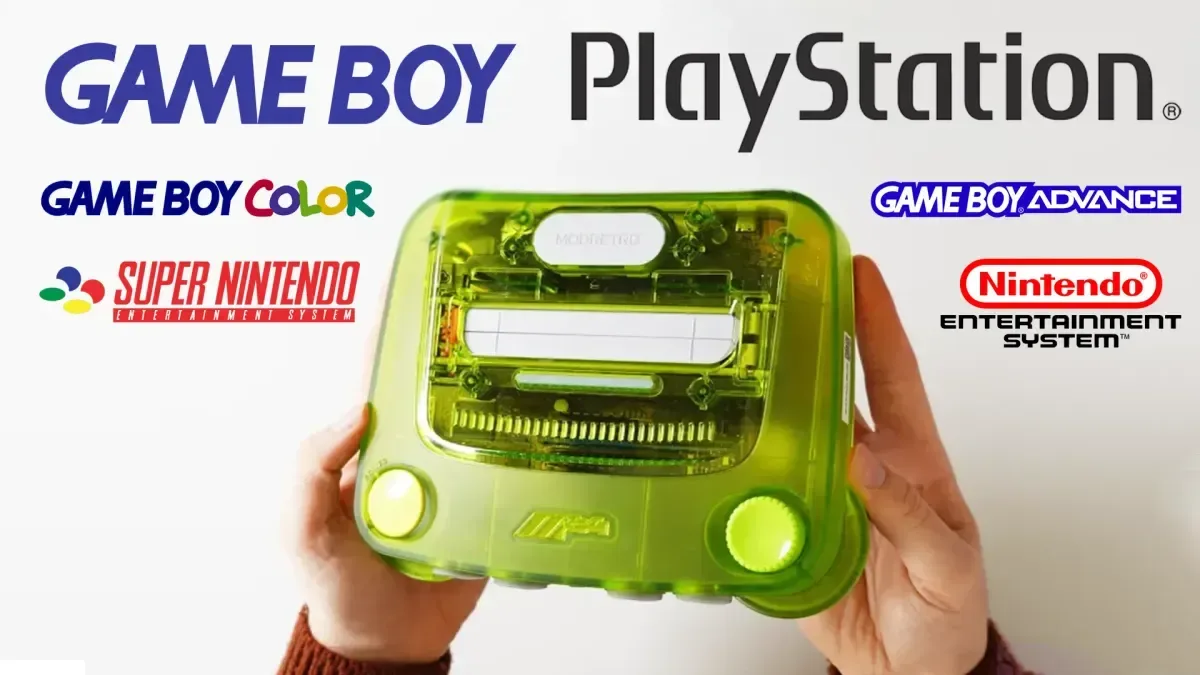
Magic64, an in-development custom firmware project for ModRetro's M64, is aiming to considerably expand what the FPGA-based Nintendo 64-focused machine can do. Rather than serving as a minor modification to the stock software, Magic64 is being built as a full replacement for the M64's existing firmware. Its creator, Nate, has rewritten both the FPGA images and the console's microcontroller software from scratch.
The initial goal is ambitious: one M64 installation capable of operating as six distinct retro systems. The currently listed lineup covers Game Boy, Game Boy Color, NES, SNES, Game Boy Advance, Nintendo 64, and PlayStation, with Game Boy and Game Boy Color grouped together as one platform family. Each system is intended to run as its own FPGA image loaded from the M64's built-in SD-card reader.
Magic64 remains under active development, and its eventual feature set should still be treated as provisional until a public build arrives. Nate has said a release was planned for sometime in October if development proceeds as expected, while a first beta has been described as coming very soon. The project is presently in a polish-focused stage, with attention being paid to usability and bugs before the broader launch.
A from-scratch alternative for the M64
ModRetro's M64 has only been available for a relatively short time, but the system's openness has already encouraged firmware experimentation. Magic64 follows the earlier announcement of another fan-made M64 software effort, OM64, but it is taking a particularly broad approach by targeting multiple classic hardware platforms rather than focusing solely on the Nintendo 64 experience.
For useful background on this topic, read Watch Dogs 2 Found Its Voice When It Stopped Taking Itself So Seriously.
That distinction matters because Magic64 is not described as a patch applied over ModRetro's own code. The replacement scope includes the FPGA images--the configurations that define how the programmable hardware behaves--as well as the microcontroller side of the console. In practical terms, the aim is a separate firmware environment with its own interface, functions and platform support.
The selected systems are based on open-source MiSTer cores. MiSTer is a well-known FPGA project within the retro-gaming community, where hardware logic is recreated on programmable chips instead of relying on conventional software emulation alone. Magic64's stated plan is to start with a smaller, tested collection of cores and consider further expansion later.
The development philosophy is to prioritize a limited launch lineup that has been tested thoroughly rather than trying to ship a much larger selection of unstable cores immediately, particularly while targeting 4K60 HDMI output.
That measured rollout could be important for a project with this many moving parts. A multi-platform FPGA device needs more than basic game loading: controller behavior, video output, storage handling, saves, menus, compatibility and system-specific oddities all have to work together. A restrained initial list may make the beta more useful than a release built around a lengthy but inconsistent compatibility checklist.
PlayStation support is planned from the SD card
Among the headline additions, PlayStation support may be the most notable departure from the M64's original identity. Magic64 is planned to load PlayStation game images directly from the SD card, with support stated for both CUE/BIN and CHD formats. CHD is particularly useful for users looking to reduce storage requirements, while CUE/BIN remains a common format for disc-based archival and playback setups.
The planned PlayStation implementation also includes memory card support and multi-disc support from the start. Those are essential conveniences for a library that includes lengthy role-playing games and other releases that save significant progress or span multiple discs. The project is intended to use hardware emulation through FPGA logic rather than ordinary software emulation, with games running at real hardware speed.
A PlayStation BIOS will still be required, at least under the current plan. Users would need to supply their own BIOS, though the possibility of open-source BIOS options being included in a future firmware version has been raised. No final packaging or implementation details have been confirmed, so prospective users should wait for the beta's documentation before preparing an SD card.
Nintendo 64 cartridges remain part of the experience
Magic64 is not positioned as an SD-only replacement for the M64's cartridge functionality. Nintendo 64 games are still expected to use the console's cartridge slot normally. The firmware also plans to let users back up an inserted cartridge and its save data to the SD card, offering a potentially useful preservation and convenience feature for physical N64 collections.
That combination is one of the project's more appealing ideas. A player could retain the tactile experience of using original Nintendo 64 cartridges while also keeping local backups of game data and saves. It gives the M64 a role beyond simply being a machine for one format, without requiring owners to abandon the hardware and games that attracted them to it in the first place.
Longer term, Nate hopes to broaden cartridge support beyond Nintendo 64. The future ambition is for Magic64 to work with carts for NES, SNES, Game Boy, Game Boy Color and Game Boy Advance as well. That would be a major technical undertaking and is not part of the announced initial release. Still, if achieved, it could turn the M64 into an unusually flexible FPGA hub for both ROM loading and original cartridge use across several Nintendo generations.
ChroMagic connection could enable Transfer Pak-style play
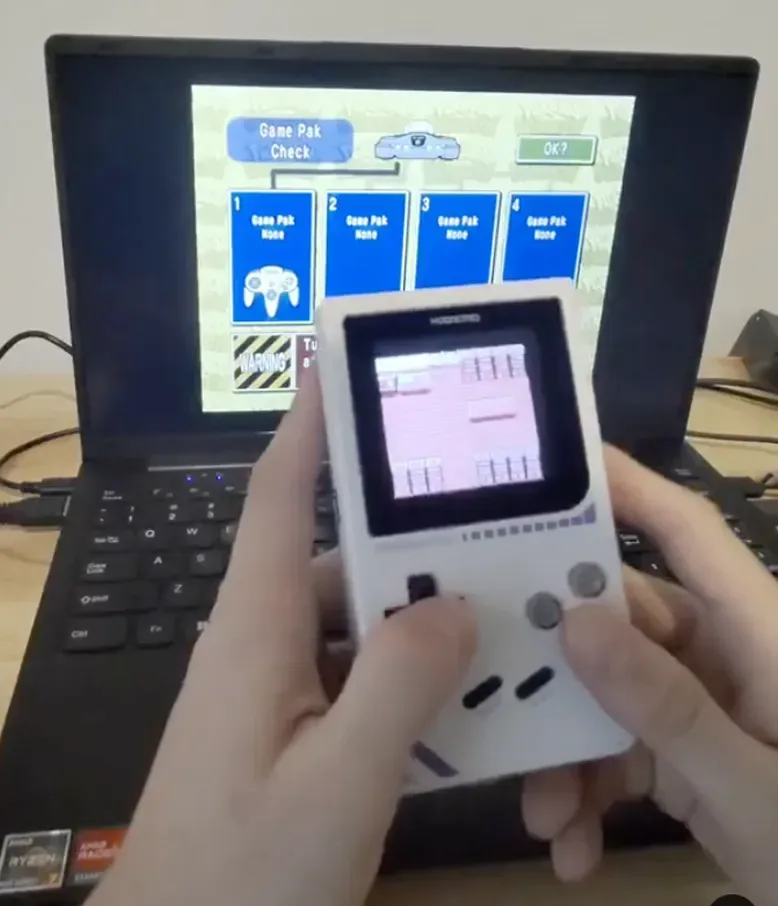
Magic64's creator is also behind ChroMagic, custom firmware for the Chromatic handheld. That connection is expected to produce one of Magic64's most unusual features. A Chromatic running ChroMagic could connect to the M64 over USB and serve in two ways: as a Transfer Pak for compatible Nintendo 64 games, and as a cartridge reader for Game Boy and Game Boy Color titles.
For games such as Pokémon Stadium, a Transfer Pak-style function could allow the handheld-cartridge relationship that helped define the original N64 releases. The cartridge-reader angle is equally interesting, as it would allow Game Boy and Game Boy Color cartridges inserted into the connected Chromatic to be played through the M64 setup.
This remains a niche feature compared with simple SD-card loading, but it demonstrates the type of hardware interaction Magic64 is pursuing. Instead of treating every system as a detached digital library, the project is also looking for ways to connect original devices and cartridges to the larger setup.
Controllers, achievements and what comes next
At launch, normal Nintendo 64 controllers are expected to work, alongside the wireless M64 Pro controller. Customizable button mapping is planned for the M64 Pro controller. Wider USB controller support is intended for the future, including the ability to use wireless USB dongles for third-party wireless controllers. Those additions are not yet confirmed for the first beta, so players with a preferred modern pad should not assume immediate compatibility.
Another proposed feature is RetroAchievements support across all six initial system categories. RetroAchievements adds community-created achievement sets to classic games, providing goals, tracking and challenge structures that were not part of many original releases. The stock M64 firmware does not offer that functionality, making it a meaningful differentiator if it arrives as planned.
For now, the important qualifier is that Magic64 is still being refined. Its first beta will be the real test of how smoothly the various FPGA cores, controller options, storage features and video targets work on the M64 hardware. The project has a clear direction, however: preserve the M64's Nintendo 64 strengths, add a carefully tested set of additional systems, and build toward deeper cartridge and peripheral support over time.
For retro hardware fans, Magic64 is worth watching not simply because it adds more platforms, but because it represents the kind of community-led development that can extend a device's purpose well beyond its original remit. If the initial release meets its goals, the M64 could become a much more versatile living-room FPGA machine while remaining useful for the Nintendo 64 cartridges it was designed around.
Community
Discussion
Start the conversation.
No comments have been posted yet.