

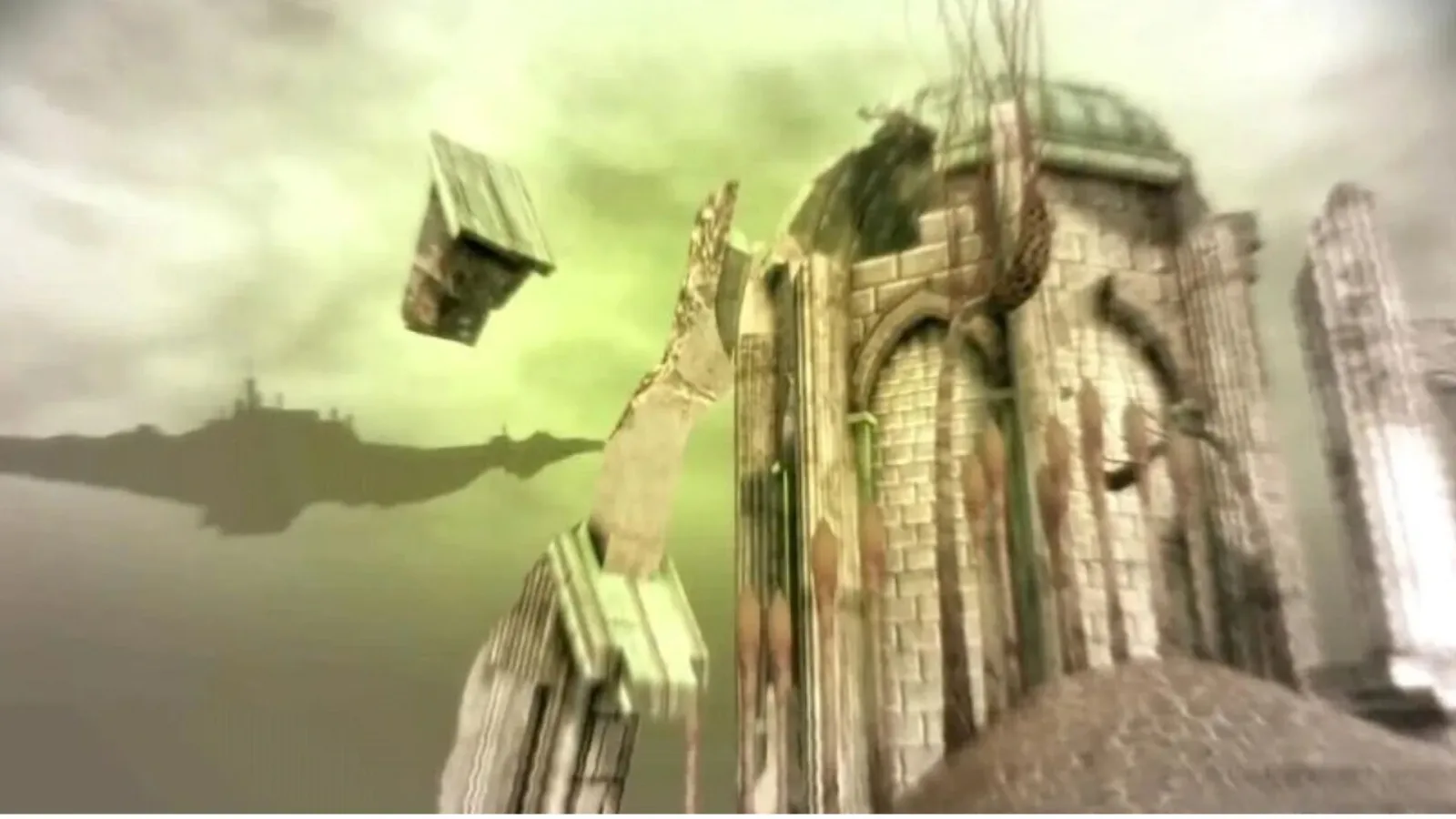
Few RPG sequences have inspired such a persistent split among fans as Dragon Age: Origins' journey through the Fade. For some players, it is an inventive detour into a surreal dream realm that expands the game's lore and tests the Warden without their usual party. For others, it is an overlong, isolated maze full of backtracking, temporary forms, and a sharp interruption to one of BioWare's most beloved role-playing campaigns.
Mark Darrah, a former BioWare developer who worked as a producer or director across the first three Dragon Age games, lands firmly closer to the second camp. In a video discussing the alterations he would make if he could revisit each entry, Darrah said he would either remove the Fade segment in Origins completely or break it into much smaller, easier-to-digest sections.
His blunt assessment was that the sequence is not especially good material and feels like filler. That may sound severe coming from someone so closely associated with the franchise's formative years, but it gives voice to a criticism that has circulated among players for well over a decade.
Why the Fade remains such a controversial Dragon Age: Origins chapter
The Fade appears during the Broken Circle storyline, when the Warden and their companions travel to the Circle Tower to deal with a mage uprising. Before the conflict can be resolved, the player character is put to sleep by a demon and drawn into the Fade, the dreamlike realm shaped by spirits, demons, thought, and magic.
For useful background on this topic, read Madison Beer Is Joining Fortnite With Fashion Show Style and New Music Tracks.
Instead of advancing through the tower with the party that players have spent hours assembling, the Warden must initially proceed alone. The quest asks players to move through disconnected dream spaces, acquire different shapeshifting abilities, and use those forms to access paths and doors that were previously unavailable. The intended effect is strange and disorienting: the familiar party-based RPG suddenly becomes a solitary puzzle adventure with its own rules.
There is a real creative idea at the heart of it. The Fade is crucial to the larger mythology of Thedas, and seeing it directly gives players a better sense of why demons, possession, mages, and the Veil matter so much throughout the series. The location also delivers unusual imagery and a memorable departure from the ruins, roads, castles, and caves that dominate much of Origins.
But the structure has long been the sticking point. The quest can take considerable time, combat can be demanding, and its progression hinges on repeatedly moving between zones while unlocking the correct powers. Once the player is pulled into the sequence, there is also no simple way to step away from it and pursue other goals. The absence of companions for much of the trip compounds the issue, removing the banter and party tactics that are central to the game's appeal.
That combination has made the Fade a familiar flashpoint in discussions of the series. Players who enjoy its oddity see a bold experiment in role-playing-game storytelling. Players who dislike it often view it as a pacing sink that arrives in the middle of a major questline and overstays its welcome. Darrah's preferred solution would preserve the basic opportunity to visit the realm only if it could be delivered more efficiently.
An Avvar origin was another idea Darrah wished Origins had explored
Darrah did not only talk about cuts. Asked what he would add and remove from the games, he also identified an additional human origin story as something he would have liked to include in Dragon Age: Origins: an Avvar origin.
The Avvar are a mountain people in the world of Thedas, known for their hunting culture and imposing physical presence. They recur across the franchise, with one of their largest roles arriving in Dragon Age: Inquisition's Jaws of Hakkon expansion. Their culture, beliefs, and relationship with spirits offer a markedly different perspective from the Ferelden noble, Circle mage, City Elf, Dalish Elf, Dwarf Commoner, Dwarf Noble, and Human Noble starting points available in the original game.
An Avvar opening could therefore have fit naturally with Origins' ambition to establish the setting through multiple social viewpoints. However, Darrah noted that adding another human origin would have been too expensive. That practical reality is important: origin stories were one of the game's defining features, but they also required bespoke areas, characters, writing, quests, and branching references throughout the adventure.
The idea remains an intriguing what-if for the series. An Avvar protagonist would have introduced players to a community that became more visible later, while also giving Origins another interpretation of spirituality and the supernatural. It is a reminder that even a sprawling RPG full of distinct openings had concepts left behind because of production limits.
Dragon Age II's ending could have avoided undermining the mage choice
Darrah's proposed revision to Dragon Age II is more consequential than a pacing adjustment. He focused on the final confrontation between Hawke, the mages represented by First Enchanter Orsino, and the templars led by Knight-Commander Meredith.
The game spends much of its story escalating tensions around Kirkwall's mages. The central question is not merely political; it is about whether people born with dangerous magical potential can retain their dignity and freedom, or whether fear of demonic possession and blood magic justifies imprisoning and controlling them for life. Meredith's rule is shaped by paranoia, cruelty, and an ever-growing certainty that every mage is a potential threat.
Yet the resolution complicates that conflict in a particularly frustrating way for many players. Even if Hawke sides with the mages, Orsino ultimately resorts to blood magic, turning into an abomination-like monster that must be fought. The moment can make Meredith's wider fear of mages appear partially validated, despite the game spending so much time depicting the abuses of the Circle and the templar order.
Darrah would change that outcome by removing the Orsino battle when the player supports the mages. In his view, the game's existing structure leaves Meredith effectively correct regardless of Hawke's decision. A version where Orsino does not become a boss encounter on the mage route would allow the choice to retain more of its moral and narrative meaning.
That would not make the conflict simple. Thedas has always presented magic as something capable of extraordinary good and catastrophic harm, especially when demons and blood magic are involved. But preserving Orsino on the mage path would stop the ending from forcing the same broad conclusion onto players who had chosen to oppose Meredith's campaign of control.
Inquisition's size and Power gates are also on Darrah's list
For Dragon Age: Inquisition, Darrah's suggestions center on rhythm rather than a major story rewrite. He would cut some areas to make the game smaller and substantially rethink its Power requirements.
Inquisition presents a vast version of Thedas, with large explorable regions, side quests, crafting, resource collection, war table operations, companion stories, and main missions spread across a long campaign. That scope can be rewarding, particularly for players who want to linger in each region. At the same time, its size has prompted years of debate about whether exploration and side activity sometimes slow the urgency of the central narrative.
The Power system is closely tied to that complaint. Major story missions require the Inquisition to reach certain Power thresholds, generally earned through quests, exploration, camps, and other regional activity. Darrah described the mechanic as being present for reasons that were not especially strong, and argued that lowering those requirements dramatically would improve the game's pace.
It is an assessment that connects all three of his proposed fixes. The Fade can feel too long because it keeps the player in a self-contained detour. Dragon Age II's mage ending can feel unsatisfying because it weakens the consequence of a major decision. Inquisition can lose momentum when a player is asked to accumulate enough Power before continuing an urgent story beat.
None of those observations erase what fans value in the games. The Fade still has defenders, Dragon Age II remains admired for its character-focused storytelling, and Inquisition has a large audience that appreciates its expansive world. But Darrah's retrospective offers a useful look at where a veteran developer believes the series could have been more focused, more responsive to choice, and more respectful of a player's time.
For a franchise built on heated arguments over mages, templars, companions, romances, regions, and endings, the Fade debate is unlikely to disappear. If anything, having one of the people who helped shape the early games call for it to be cut or greatly reduced ensures that the argument will continue all over again.
Community
Discussion
Start the conversation.
No comments have been posted yet.