

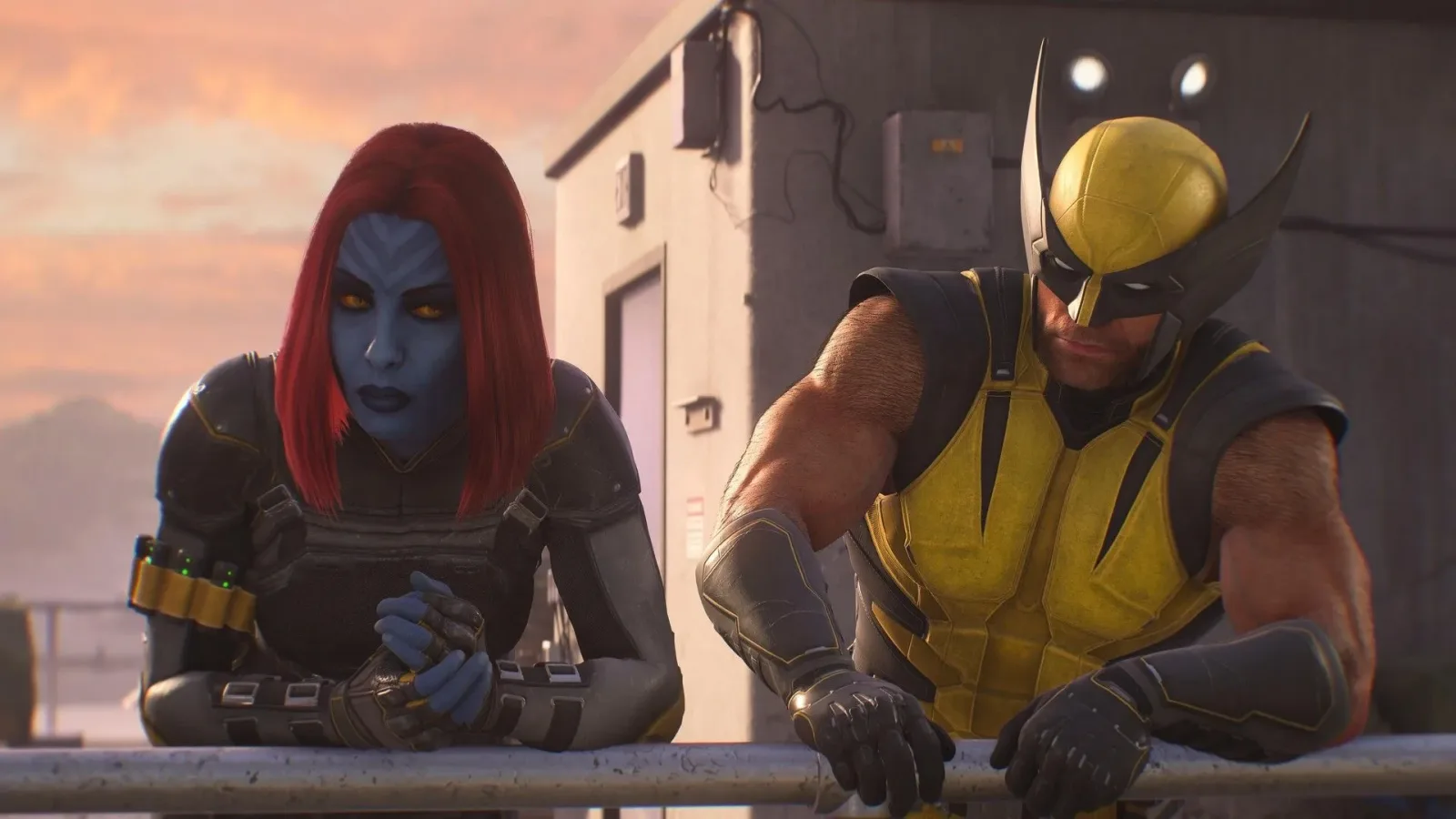
Marvel's Wolverine has received a new hotfix aimed at one of the action game's most widely discussed features: its highly visible Scent Trails. Insomniac Games has adjusted the presentation of both Scent Trails and Audio Sense indicators, reducing their opacity so that they are less visually dominant during play.
The change arrives after a lively response from players in the period surrounding the game's launch. While Logan's enhanced senses are an obvious fit for the character, some players felt the on-screen guidance was too persistent, too bright, and too eager to direct them toward the next objective. The glowing path has become a particular target of jokes online, with detractors giving it an unflattering nickname and using it as shorthand for a broader debate about how much direction modern action games should provide.
More significantly, Insomniac says it is considering additional changes. The team is evaluating ways to improve the game's Senses systems, including the possibility of toggleable options in a future update. There is no confirmation that such an option will be added, and the developer has not announced a timetable for a larger patch. Still, the acknowledgement suggests that player feedback is being actively considered rather than simply noted.
A smaller visual footprint for Logan's senses
The hotfix specifically changes the visual presentation of Scent Trails and Audio Sense indicators. By lowering their opacity, Insomniac intends for those elements to feel less intense while retaining their core purpose. Players who rely on the systems for navigation or situational awareness should still be able to use them, but the indicators should now command less attention on the screen.
For useful background on this topic, read What Will 'Physical Games' Mean in 2030? Ownership, Resale and the Future of the Box.
That is a measured response to a feature that serves a practical accessibility and pacing function. Scent Trails can help ensure players know where to go, particularly when environments are busy, objectives are separated by vertical routes, or the intended path is not immediately obvious. Audio Sense indicators likewise communicate useful information that might otherwise be missed amid combat, traversal, environmental noise, and cinematic presentation.
For critics, though, the issue has not necessarily been whether those tools exist. It has been how often they appear and how forcefully they can compete with the world itself. A guidance line that is too vivid can turn a detailed environment into background decoration, encouraging players to follow a route rather than observe spaces, inspect alternative paths, or use their own instincts.
Reducing opacity is therefore a compromise. It does not remove assistance, but it changes the balance between the game's authored navigation support and the player's ability to engage with the setting naturally. It also gives the hotfix an immediate, low-risk answer to the most visible complaint while the studio weighs more extensive settings changes.
Why the debate has resonated
The reaction to Marvel's Wolverine fits into a familiar conversation around visual signposting in big-budget games. Players often have sharply different expectations about navigation. Some want a clear route at all times, especially in a game built around momentum and fast-moving action. Others prefer to read the environment for themselves, accepting the occasional wrong turn as part of exploration.
That divide has previously surfaced around conspicuous environmental markers, including the use of brightly colored paint or other visual cues that highlight climbable surfaces and critical routes. Such systems can make games more readable, reduce frustration, and help a broad range of players progress. Yet their presentation matters. If cues are seen as artificial or overly obvious, they can break immersion and make a fictional location feel like a collection of instructions.
Marvel's Wolverine brings an extra wrinkle because its guidance system is tied directly to Logan's identity. Wolverine is famous for extraordinary senses, and a mechanic that conveys scents, sounds, and nearby points of interest has a clear narrative logic. In concept, it is not simply a generic quest trail placed into a superhero game. It is an interpretation of what it might feel like to perceive the world through Wolverine's heightened awareness.
Even so, a thematically appropriate mechanic can still be too strong in practice. The online criticism has largely focused on the perception that several forms of assistance can stack together: scent guidance, voiced reminders, and conventional on-screen objective markers. When every layer points to the same destination, players who want fewer prompts may feel they have little room to get lost, experiment, or discover something independently.
Toggleable settings could satisfy more players
A future toggle would potentially offer the cleanest solution because it would not force one preferred style of play on everyone. Players who value guidance could retain it. Those who want a more self-directed experience could reduce or remove it, depending on the eventual scope of the options.
Insomniac has only said it is exploring toggleable options, so it remains unclear what a future menu could include. A setting might apply to Scent Trails, Audio Sense indicators, or both. It could be a straightforward on-and-off choice, or it could allow multiple levels of visual intensity. At this stage, none of those details have been confirmed.
The distinction is important. A toggle can sound simple, but guidance systems often interact with level design, mission scripting, accessibility needs, combat readability, and narrative pacing. Developers need to make sure players who choose reduced assistance are still able to understand essential objectives, while also ensuring that players who need support are not disadvantaged by a less prominent default presentation.
For that reason, the current hotfix may be a useful first step. Lower opacity gives the team a live adjustment to the visual tone of the system without immediately redesigning how it works. Feedback after the change could help clarify whether players are satisfied with subtler indicators or whether demand remains strong for complete control over the features.
Crash fixes are also included
The hotfix is not limited to the senses debate. Insomniac says it has also addressed a pair of common crashes that had been affecting a small percentage of players since launch. The developer has not provided further technical detail on the crashes in the notes discussed so far, but resolving stability issues remains a priority for any newly released game.
Although the scent-trail discussion has dominated social chatter, crash fixes may have the more immediate impact for players encountering them. A navigation prompt can be divisive, but it is generally a matter of preference. A recurring crash can interrupt progress entirely. Grouping both types of work into the same hotfix shows the studio addressing player experience across both presentation and technical reliability.
Insomniac community director James Stevenson indicated earlier in the week that the team has been working hard in response to feedback. The new hotfix gives that statement a concrete result, and it may not be the last adjustment made in the near term. There is no announced roadmap for future patches, but the developer's comments point to further evaluation as the team monitors player response.
A positive sign for post-launch support
The early attention around Marvel's Wolverine has involved both enthusiasm and criticism, which is hardly unusual for a high-profile superhero release. The game has also generated warm reactions to its cast, including comments from Wolverine's star describing the part as the honor of a lifetime and expressing gratitude to Insomniac for the opportunity.
At the same time, the scent-trail response demonstrates how quickly a single interface decision can become part of a game's public identity. Players may remember a feature because it is useful, irritating, amusing, or simply easy to share in a clip. Once that happens, even a relatively small change can carry outsized symbolic importance.
For now, Marvel's Wolverine players can expect less assertive-looking Scent Trails and Audio Sense indicators, along with fixes for two common crashes. Whether the game eventually receives full toggles remains unresolved. But Insomniac has made clear that it is examining that possibility, and the hotfix suggests the studio is willing to refine the experience as feedback continues to arrive.
For players who thought Logan's senses were doing too much of the detective work, the latest update may make room for a little more observation, uncertainty, and exploration. For everyone else, the guidance remains in place--just with a lighter visual touch.
Community
Discussion
Start the conversation.
No comments have been posted yet.