

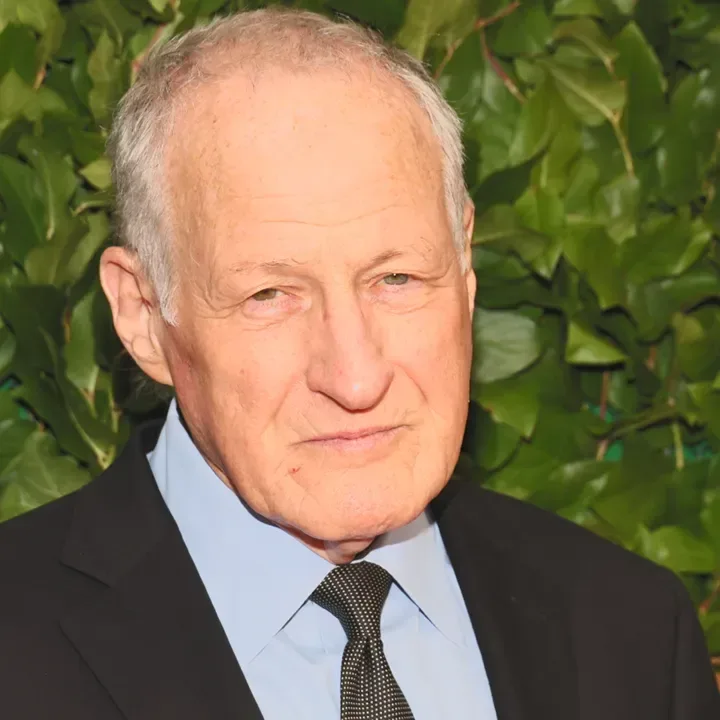
Filmmaker Michael Mann, whose work has had a lasting influence on crime games and cinematic action storytelling, was hospitalized after accidentally shooting himself in the leg at a Los Angeles gun range on Halloween. The injury has been described as superficial, and Mann's representative said he received treatment and is in the process of being released.
The incident occurred on Saturday during what was described as a gun-range training exercise. Details beyond that remain limited, but local authorities and Mann's representative confirmed that the discharge was accidental. There was no indication that Mann intended to harm himself.
"On Saturday, at a gun range, a weapon accidentally discharged while holstered resulting in a superficial injury to film director Michael Mann," Mann's representative said. "He was treated and is being released."
Mann, 83, is widely recognized as an experienced target shooter, making the accident an especially unfortunate interruption for a director whose projects have repeatedly explored the procedures, pressures, and consequences surrounding firearms, policing, crime, and violence. His condition is not believed to be serious based on the statement released following the incident.
For useful background on this topic, read Dune 2 re-release Remains Stuck in a Complex Web of Rights.
A Major Influence on Crime Fiction Across Media
For game players, Mann's name carries weight far beyond film history. His 1995 crime epic Heat remains one of the defining portrayals of professional criminals and law-enforcement officers operating in a grounded urban world. Its careful attention to planning, movement, weapon handling, city geography, and the relationship between cops and robbers has echoed through decades of games built around heists, open-world crime, tactical shooting, and cinematic missions.
That influence is felt in the broader language of the medium rather than in one direct adaptation. The tense setup-and-payoff structure of a major robbery, the sense of a city as a lived-in operational space, and the personal cost attached to criminal pursuits are all ideas that game developers have returned to repeatedly. Mann's characters are often defined by discipline and obsession, two traits that fit naturally within the systems-driven stories games tell about planning, stealth, pursuit, and confrontation.
Heat is particularly renowned for its Los Angeles setting and for action sequences that emphasize consequence over spectacle. The film's famous street shootout helped set a standard for a kind of intense, street-level action that games have pursued in their own ways: loud, chaotic, spatially readable, and rooted in the specific environment around the characters.
Its legacy also extends to the contrast at the center of the story. The criminal Neil McCauley and detective Vincent Hanna are not simple opposites, but driven professionals whose commitments consume their personal lives. That duality has become familiar in games that ask players to understand multiple sides of a conflict, whether through changing protagonists, parallel campaigns, or narratives that refuse to present crime and law enforcement as uncomplicated categories.
Heat 2 Remains in Development
The accident comes while Mann is assembling his long-discussed follow-up to Heat. The project, commonly referred to as Heat 2, has steadily taken shape over the course of the year, although many of its story details remain under wraps.
In February, Christian Bale confirmed that he was set to begin filming the movie in Chicago soon. Leonardo DiCaprio joined the project in July. Bale and DiCaprio were subsequently reported to be playing Vincent Hanna and Chris Shiherlis, respectively. Filming was expected to begin in November, though no fresh production update has been announced in connection with Mann's injury.
Stephen Graham, known for Adolescence, and Ebon Moss-Bachrach of The Bear are also expected to appear. The film has Mann's novel Heat 2 as a foundation, providing an established framework while leaving major questions about the adaptation unanswered. The novel expands the world of the original film across different periods, connecting material from before and after the events of Heat.
That approach makes the project more than a conventional sequel. Rather than simply returning to the aftermath of one story, the material offers a wider look at the lives and histories surrounding familiar figures. For audiences who value elaborate timelines, interconnected character arcs, and the sense of a fictional world extending beyond a single campaign or chapter, that structure may be part of what makes the project so intriguing.
Questions Still Surround the Next Film
There is still plenty that has not been confirmed. The exact plot of the film, the full cast, its release plans, and how closely it will follow every part of the novel have not been detailed. The expected November start of filming was reported before the Halloween incident, and it is not yet clear whether Mann's brief hospital stay will have any effect on that schedule.
Given the representative's description of the injury as superficial and the statement that Mann is being released, there is currently no public reason to assume a major disruption. Still, production schedules involve many moving pieces, and any firm update will need to come from the filmmakers or the studios involved.
Mann's Career Beyond Heat
While Heat is central to Mann's reputation, his body of work spans several decades and styles of crime storytelling. He directed Manhunter, an influential early adaptation centered on investigator Will Graham and serial killer Hannibal Lecktor. He also made Public Enemies, which follows John Dillinger during the Great Depression, and Ferrari, a drama about Enzo Ferrari set during a pivotal period for the carmaker and racing figure.
His 2006 film Miami Vice, adapted from the television series he helped bring to life as an executive producer, has also become a frequent point of discussion among viewers interested in Mann's visual and tonal approach. Last month, Mann premiered a director's cut of Miami Vice at Beyond Fest and discussed the latest changes during a Q&A session.
The director's work is often associated with a particular kind of atmosphere: nighttime cityscapes, glowing digital photography, electronic soundscapes, professional rituals, and characters who express themselves more clearly through preparation and action than lengthy explanation. Those qualities have proven highly compatible with game design, especially in genres focused on urban spaces, high-risk missions, racing, undercover work, and tactical decision-making.
- Heat established a benchmark for large-scale urban crime drama.
- Manhunter helped define a stylish, psychologically focused approach to investigative fiction.
- Miami Vice explored undercover work and international criminal networks through a distinctive visual style.
- Public Enemies applied Mann's interest in procedure and pursuit to a historical setting.
- Ferrari continued his interest in driven figures operating under immense professional pressure.
An Unwelcome but Apparently Limited Setback
For now, the most important update is that Mann's injury was minor and that he has been treated. The available account describes an accidental discharge involving a holstered weapon at a Los Angeles range, with no broader details released about the circumstances.
It is an alarming incident for any filmmaker, particularly one preparing a major return to one of modern crime cinema's most celebrated worlds. But the information currently available points to a limited physical setback rather than a severe medical emergency.
As Heat 2 continues to draw attention for its reported cast and its connection to Mann's novel, further official news about filming will be closely watched. Until then, Mann's immediate focus appears to be recovery following an accident that, fortunately, resulted in only a superficial injury.
Community
Discussion
Start the conversation.
No comments have been posted yet.