

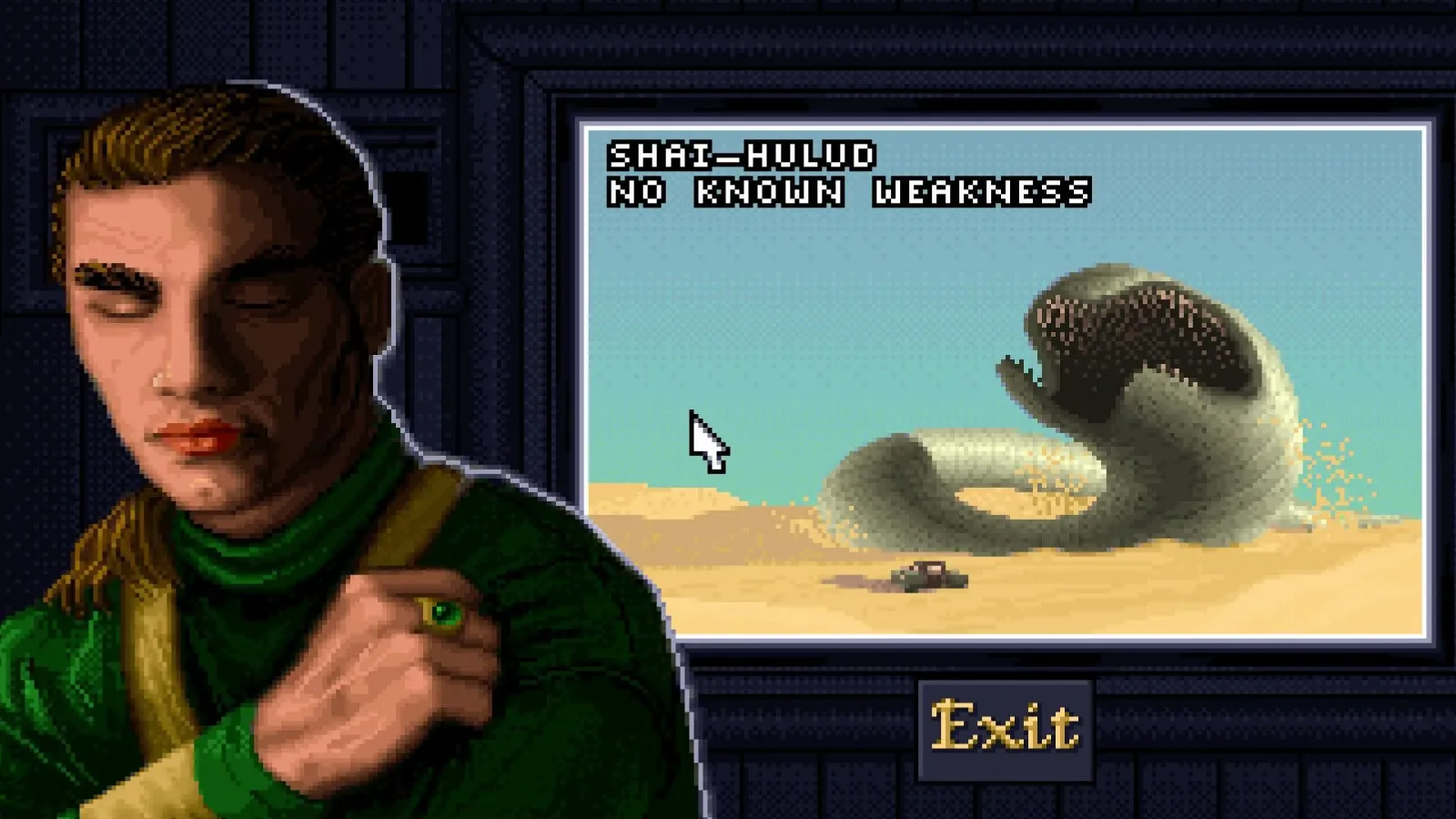
Dune 2: The Building of a Dynasty is one of those rare games whose influence is larger than its modern availability. Westwood Studios' 1992 strategy landmark helped establish the language of real-time strategy games: harvesting resources, constructing bases, training units, choosing factions and fighting for map control in real time. The ideas it popularized would echo through Warcraft, Command & Conquer, and decades of PC strategy games that followed.
Yet despite that enormous historical importance, Dune 2 has never received the kind of official modern re-release that would make it easy to buy and play on current PCs. The reason is not simply technical incompatibility, missing files, or a lack of interest. Instead, the game appears caught in an unusually tangled licensing situation involving its developer's successor, rights associated with the 1984 film, the wider Dune literary property, and agreements connected to the present-day Dune screen adaptations and Dune: Awakening.
Marcin Paczynski, GOG's senior business development and partnerships manager, has described bringing the game back as one of his personal "holy grails." It is also, he says, an especially stark example of how difficult rights clearance can become for an older title--even when the game is both beloved and historically significant.
A cornerstone of real-time strategy
Released by Westwood in 1992, Dune 2 put players in command of the Houses Atreides, Harkonnen and Ordos as they competed for control of Arrakis and its vital spice. Its presentation and individual mechanics were not created in a vacuum, but the game's complete package became a defining model for the RTS genre.
For useful background on this topic, read Petit Planet Is Headed to Nintendo Switch 2 in 2027.
Players gathered spice to fund their forces, erected structures with specific purposes, unlocked new options through technology and production buildings, and commanded units while the opposing side was building and attacking in real time. That framework became instantly recognizable to a generation of PC players. Westwood would refine similar concepts with the original Command & Conquer, while Blizzard's Warcraft series took the genre in its own hugely influential direction.
In some regions and releases, the game was known as Dune: Battle for Arrakis. Regardless of the box title, it remains a key piece of game history. Its absence from modern storefronts is therefore particularly notable at a time when many other foundational PC games have been restored through compatibility work, updated installers, bonus materials and digital preservation efforts.
EA has the game, but not every right needed to sell it
The first part of the puzzle stems from Westwood itself. Westwood Studios was eventually acquired by Electronic Arts, meaning EA now controls the game code, original assets and materials tied to the game. In a more straightforward situation, that could make an official release relatively achievable: a rights holder could supply the software, a digital distributor could prepare it for modern systems, and the game could return to sale.
But ownership of the game materials is not the same as ownership of every intellectual-property right that would be needed for a commercial re-release. Dune 2 was not licensed directly from Frank Herbert's novels. Instead, it was based on David Lynch's 1984 Dune film. That distinction has major consequences, because the chain of rights around the film does not map neatly onto control of the books or the game itself.
Universal Pictures was involved with the 1984 movie, while producer Dino De Laurentiis also held a portion of the relevant film license. De Laurentiis died around 15 years ago, leaving the question of who now controls his portion of those rights as another potential issue for anyone trying to make a deal. A re-release would need to account for EA's ownership of the software as well as the film-derived elements embedded in the title's license.
"The situation is a good example of how bad it can get with the licensing situation of a game," Paczynski said when discussing the challenge.
Several Dune stakeholders are part of the equation
The situation becomes more complicated because the 1984 film rights are only one layer. The Herbert Foundation retains rights to the Dune property as a whole. Meanwhile, Legendary Pictures controls rights associated with the newer Dune movies. Those modern film rights matter to games because Legendary licensed Funcom to create Dune: Awakening, the multiplayer survival game set in the universe.
That arrangement includes exclusivity, though it is currently unclear exactly how that exclusivity could affect an attempt to revive Westwood's older Dune titles. The uncertainty does not mean an official re-release is impossible. It does mean that a prospective publisher or distributor may have to investigate agreements that were negotiated for a very different era of Dune media and determine how each one interacts with a low-cost rerelease of a 1992 strategy game.
In practical terms, the parties potentially involved include Electronic Arts, Universal Pictures, the successor to rights connected with De Laurentiis, the Herbert Foundation, and Legendary Pictures. Funcom's existing game license adds another active business relationship to consider. Every participant may have separate interests, approvals, legal interpretations and financial expectations.
That is a formidable amount of work for a game expected to occupy a comparatively small niche. Paczynski estimated that a release might sell roughly 50,000 to 100,000 copies at a price around $5.99 or $9.99. Those are respectable figures for a retro PC release, but they may not be enough to justify protracted negotiations among companies and rights holders whose main businesses operate on a vastly larger scale.
Why preservation can be harder than compatibility
Old games are often discussed as if preservation were primarily a matter of getting legacy software to run. That work is crucial. A modern version may require updated installers, operating-system fixes, controller and display support, manuals, archival extras, and testing across contemporary hardware. But Dune 2 demonstrates that legal access can be an even taller barrier than technical access.
A game can survive physically and digitally while still remaining unavailable through legitimate storefronts. Code may exist. Art, audio and documentation may exist. Fans may remember exactly why a title matters. None of that automatically creates the authority to package and sell it again. When a game uses a licensed universe--especially one tied to multiple book, movie and production agreements--the rights can become distributed across organizations that did not originally collaborate on the game.
That has broader implications for the history of PC gaming. Many influential titles were built on movie licenses, sports licenses, celebrity agreements, vehicle brands, music catalogs or other third-party material. As years pass, contracts expire, companies merge, estates take over, and rights move between owners. The games themselves may be preserved by collectors and communities, but sanctioned commercial access can remain elusive.
Paczynski has also argued that DRM presents a separate threat to preservation, particularly when games depend on authentication services that may one day disappear. In the case of Dune 2, however, the obstacle begins earlier. Before questions about distribution methods, compatibility layers or long-term ownership can be addressed, someone must first establish a workable agreement among the relevant rights holders.
The broader Westwood Dune legacy
The licensing uncertainty does not concern only Dune 2. Westwood later returned to the setting with Dune 2000 and Emperor: Battle for Dune. Those games belong to different moments in the studio's history and have their own production details, but they share the larger challenge of being Dune games created under older licensing circumstances.
For fans, a re-release campaign covering Westwood's Dune catalog would be a compelling preservation project. It could provide an accessible route through an important branch of RTS history, from the genre's formative design through its later evolution. It could also reunite games that have long occupied an awkward position: celebrated by strategy enthusiasts, historically meaningful, yet not readily available through modern official channels.
For now, though, there is no announced re-release and no confirmed resolution to the rights questions. The very fact that the discussion involves so many distinct stakeholders illustrates why enthusiasm alone cannot guarantee a return. A digital storefront may want the game. A platform holder may possess the code. Players may be eager to revisit it. Still, every necessary approval has to align.
Dune 2's continuing absence is a reminder that preservation is not only about preserving data. It is also about preserving the legal ability to let new audiences experience that data. Until that unusually complicated chain of Dune rights can be navigated, one of the most consequential strategy games ever made will remain harder to access than its legacy deserves.
Community
Discussion
Start the conversation.
No comments have been posted yet.