

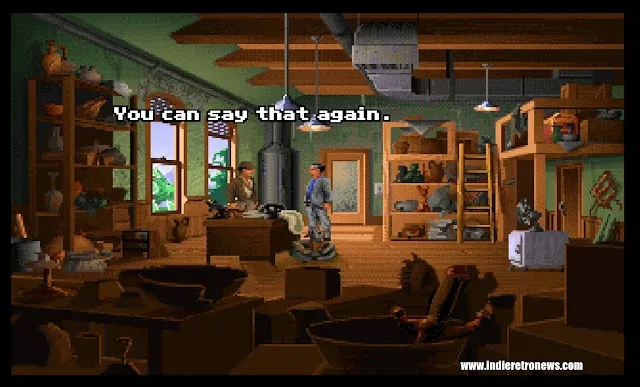
Two of LucasArts' most celebrated point-and-click adventures are receiving ambitious new life on classic Amiga hardware. Monkey Island 2: LeChuck's Revenge and Indiana Jones and the Fate of Atlantis have been enhanced for the Amiga 1200 with new 256-colour AGA presentation, rebuilt game-engine support and an audio overhaul designed to bring them closer to the fuller audiovisual experience associated with their PC editions.
The work comes from developer dlfrsilver, an adventure-game fan who used AI assistance to speed up aspects of the development process while adapting the games from PC foundations. Rather than being a simple palette adjustment or a superficial art replacement, the project is described as a re-engineering effort that changes how the engines handle the upgraded visual and sound assets.
For fans of the Amiga's adventure-game library, that distinction matters. The original Amiga OCS versions were built around the capabilities and limitations of their era. The new versions aim to push past those older constraints on Amiga 1200-class hardware while retaining a practical performance target for users running period-appropriate machines.
A Major Visual Step Up for the Amiga 1200
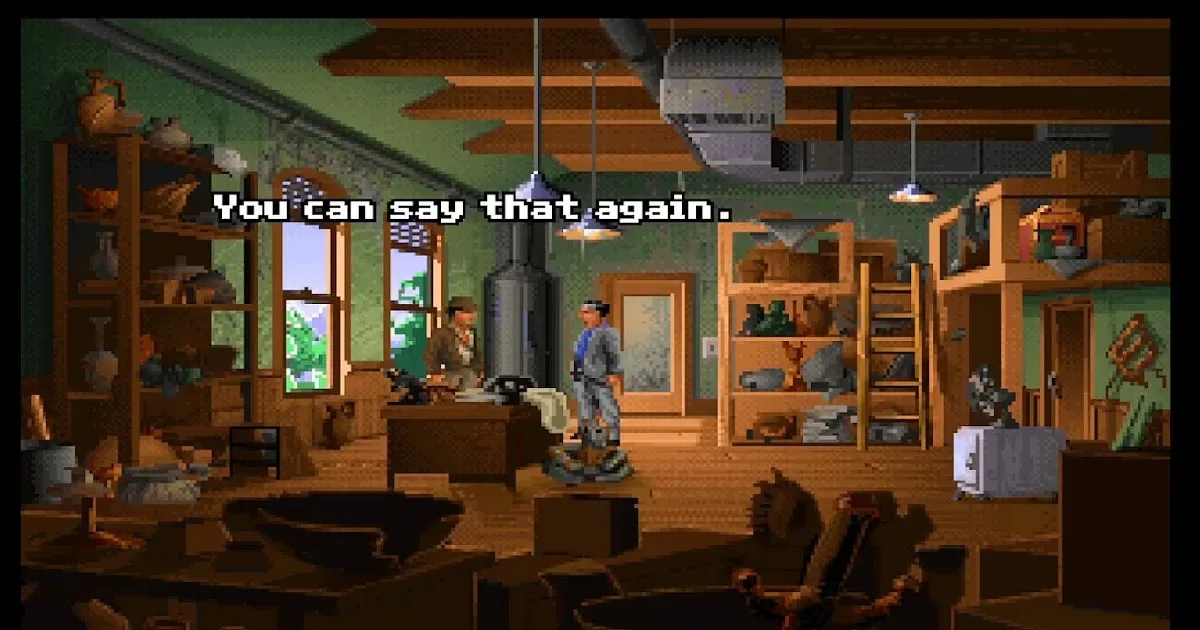
The headline feature is the move to an eight-bitplane, 256-colour display through the Amiga's AGA chipset. This gives both games a dramatically broader colour range than their original Amiga OCS releases, with the intent of making their visuals integrate more cleanly with the artwork and presentation of the PC versions.
For useful background on this topic, read The Eggcellent Dizzy Collection Brings Three Classics to Mega Drive.
Monkey Island 2 remains one of the defining comic adventures of its generation, following Guybrush Threepwood through another pirate-filled clash with the undead LeChuck. Fate of Atlantis, meanwhile, places Indiana Jones in a globe-trotting supernatural mystery built around puzzles, exploration and the search for the lost city named in its title. Both are remembered not just for their writing and puzzle design, but also for detailed scene art, expressive character animation and elaborate scripted moments.
Those qualities make colour reproduction especially meaningful. Adventure games spend much of their time asking players to inspect environments, pick out objects and absorb the visual mood of each location. More colours can improve the depth of backgrounds, reduce compromises in shading and make the transition between characters, scenery and interface elements feel more natural.
The enhanced releases are not being framed merely as the old Amiga versions running with a new display mode. The engine work reportedly enables the new visual approach directly, a key part of what makes the project notable. Updating games of this complexity for a different graphics configuration can involve far more than changing image files: the engine must account for memory use, drawing routines, animation, screen composition and the way assets are loaded during play.
PC-Style iMUSE Audio Rebuilt for Amiga Hardware
Visual upgrades are only one side of the project. The audio has also been substantially rebuilt, replacing music and sound material absent from the original Amiga releases with PC Sound Blaster iMUSE music and sound effects.
iMUSE, short for Interactive Music Streaming Engine, was central to the identity of many LucasArts adventures. Its purpose was not simply to play background tunes. The system allowed musical cues to respond to player actions, scene changes and events, helping the score transition in a more dynamic and cinematic fashion. For games with frequent location changes, dialogue scenes and puzzle sequences, that responsive approach contributed greatly to pacing and atmosphere.
Bringing complex PC arrangements to an Amiga is not a matter of dropping in the original tracks untouched. The new builds use a custom six-voice audio system, made up of two hardware voices and four software voices. This was created to accommodate the richer arrangements without clipping notes, while remaining suitable for standard Amiga hardware.
That limitation is an important technical challenge. Music written for more simultaneous parts has to be carefully adapted when the target playback system offers fewer available voices. A busy composition can contain melody lines, accompaniment, percussion, sustained notes and transition cues all competing for space. If an adaptation is too aggressive, notes can disappear, timing can feel wrong or an arrangement can lose the personality that made it memorable.
One example illustrates the amount of manual effort involved: dlfrsilver reportedly spent two full days condensing the complicated nine-voice Iceland track into the six-voice system. It is the sort of behind-the-scenes work that may not be obvious when a player is simply moving through an area, but it can be essential to preserving the shape and intent of a piece of interactive game music.
Performance Targets and Hardware Requirements
Despite the scale of the visual and audio changes, the enhanced versions are said to run well on a 14MHz Motorola 68020 processor. Performance improves further with a 68030 accelerator, offering a clear benefit for Amiga users with upgraded systems.
The stated baseline requirement is a 68020 processor, at least 8MB of fast RAM--though the developer indicates that it may work with less--and a hard drive. The hard drive is mandatory. That requirement fits the nature of the enhancements: expanded graphics, more elaborate audio and the larger body of data needed for these upgraded editions all make disk-based loading a much more practical proposition than relying on floppy media.
- Target machine: Amiga 1200 with AGA graphics
- Minimum CPU: 14MHz 68020
- Memory: 8MB fast RAM recommended or expected, with possible operation on less
- Storage: Hard drive required
- Audio design: Six voices total, using two hardware voices and four software voices
- Improved performance: 68030 accelerator systems
For retro-computing players, these details are more than a specification list. They establish the project's intended balance. It is not trying to target every original Amiga configuration, nor is it built exclusively around an extremely high-end accelerated setup. Instead, it aims for an Amiga 1200-era baseline while leaving room for better results on faster hardware.
AI Assistance, Fan Preservation and Technical Craft
The use of AI assistance will likely be one of the most discussed aspects of these enhancements. In this case, it is presented as a way to accelerate development from the PC source material, not as a replacement for the engineering decisions required to make the software function on Amiga hardware. The results still depend on adapting assets, rebuilding engine behaviour, managing memory and designing an audio solution around strict voice limits.
That combination of modern assistance and old hardware constraints is increasingly visible in the retro scene. Developers and enthusiasts have more tools available for examining, converting and preparing game resources than they did decades ago. Yet classic platforms still demand careful optimization. A contemporary workflow may speed up portions of a project, but it does not remove the need to understand a 68020, AGA display modes, audio channels or the practical limits of a machine from the early 1990s.
Monkey Island 2 and Fate of Atlantis are fitting candidates for this kind of work. Their original Amiga editions have long been part of the platform's adventure-game history, but their PC counterparts carried advantages in audiovisual presentation that enthusiasts have continued to study and compare. These new AGA enhancements attempt to narrow that gap in a way that is conscious of the Amiga's own strengths and constraints.
There is also an archival appeal to projects like this. They are not only about making old games look sharper on period hardware. They invite players to reconsider versions that may once have been viewed as technically compromised, and they demonstrate how much further familiar software can be taken when enthusiasts revisit the underlying technology with decades of accumulated knowledge.
What the Enhancements Mean for Adventure Fans
For players with the required Amiga setup, the appeal is straightforward: two landmark adventures can be experienced with substantially expanded colour, more complete music and sound, and an implementation tailored to an AGA-equipped machine. The promise is not a remake that discards the originals' identity, but a more lavish Amiga presentation that seeks to preserve their classic form.
The project also underlines why LucasArts adventures remain enduring technical and artistic touchstones. Their puzzles, humour and narrative reputation have kept them in the public conversation, but their engine technology and adaptive scores have proved equally influential. Revisiting them through a platform-specific enhancement highlights both sides of that legacy.
With 256-colour AGA visuals, PC-style Sound Blaster iMUSE material, a custom six-voice playback design and support aimed at 68020-era systems, these builds represent a substantial undertaking for Amiga adventure enthusiasts. For anyone interested in the intersection of retro hardware, game preservation and classic point-and-click design, Guybrush Threepwood's pirate exploits and Indy's Atlantean expedition now have another compelling form to explore.
Community
Discussion
Start the conversation.
No comments have been posted yet.