

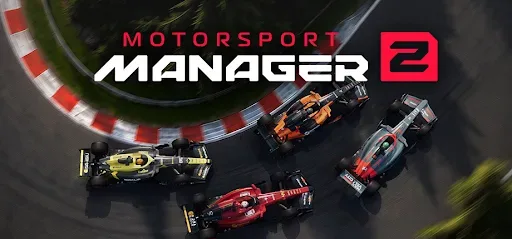
Motorsport Manager 2 has received its first substantial gameplay showing, with Playsport unveiling a Full Reveal Trailer alongside the opening episode of a developer diary series named From The Pit Wall. The newly revealed footage offers the clearest view yet of the racing-management sequel's presentation, circuits, interface changes and broader motorsport ecosystem ahead of its planned Steam launch in 2027.
Rather than concentrating solely on the familiar task of calling pit stops and selecting race strategies, Motorsport Manager 2 is aiming for a more interconnected simulation. Its central new feature is called Reactive Racing, a system intended to make rival outfits alter their plans during a race weekend in response to events unfolding around them. That means a player's decisions should not exist in isolation: tyre calls, fuel choices, traffic, safety-car periods, reliability concerns and the behaviour of opposing teams can all reshape a race.
The reveal also confirms that the series will expand beyond its returning single-seater, GT and endurance categories. Motorcycle racing is joining Motorsport Manager for the first time, while the management layer is being broadened with car-part development, headquarters growth, power-unit work, a driver academy, simulated junior series, evolving regulations and a livery editor. Playsport is also developing full mod support from the beginning.
Reactive Racing puts rival teams at the centre of the simulation
Motorsport management games live or die on whether decisions feel consequential. Choosing the right compound before a rain shower is satisfying, but it can become predictable when AI competitors behave as though they are working from a fixed script. Motorsport Manager 2's Reactive Racing concept is designed to address that problem by having competitors assess changing situations and adjust their own strategies dynamically.
For useful background on this topic, read NightRunner Playtest Sets October 3 Start for Co-op Rail Survival.
In practical terms, a race may develop very differently depending on factors such as congested traffic, tyre wear, fuel levels, damage or mechanical condition, and interruptions including safety cars. One team's early stop could influence another team to cover the move. A delayed call might create an opportunity for a rival to gain track position. A poorly timed gamble can potentially set off a wider sequence of decisions across the field.
This focus matters because the appeal of a management sim comes from reading incomplete information and committing to a course of action before the outcome is certain. An adaptive grid should make those calls feel less like solving a known puzzle. Players will need to consider not just the ideal plan for their own car, but how other teams may react once a strategy becomes visible.
There is still plenty to learn about the exact depth of the system, including how aggressively different teams will respond, how much their approach varies based on competitive position, and how this behaviour will develop across a season. Even so, the stated ambition points toward a more volatile and responsive race-day experience than a model based on predetermined opponent plans.
For another perspective on this story, read Motorsport Manager 2 Shows First Gameplay, Details Reactive Racing and 2027 Steam Plan.
Weather can change across different parts of a circuit
Weather is another major source of uncertainty in Motorsport Manager 2. The game is set to use a new simulation in which weather systems move over a circuit in real time. Conditions are not necessarily uniform from one corner to the next, so different sections of the same lap can experience different weather at once.
That should create the kind of mixed-condition dilemmas that define many memorable motorsport weekends. A track may be too damp for slick tyres in one sector while remaining comparatively dry elsewhere. Switching early to a wet-weather option could offer security but sacrifice pace on the dry portion. Staying out could preserve speed until rainfall intensifies, but carry obvious risks. The right answer will depend on how a weather front is moving, how quickly conditions are changing, the available tyres and the competitive situation on track.
Combined with Reactive Racing, changing weather has the potential to create more varied races. A call that looks conservative could suddenly become decisive if rain reaches a certain part of the circuit earlier than expected. Conversely, a bold decision may become costly if the weather clears or never arrives with the anticipated intensity. The feature is also an opportunity for player preparation to matter, since teams will need to interpret conditions rather than merely react after the fact.
Team building extends well beyond race weekends
The off-track side of Motorsport Manager 2 is being positioned as a larger part of the overall experience. Players will be able to design and manufacture components, influence the direction of future cars, expand their headquarters and develop power units. These systems point toward a longer-term management loop in which immediate results must be balanced against investment in future competitiveness.
Every team decision can carry an opportunity cost in this kind of structure. Spending resources on a current-season upgrade may help secure a short-term result, while shifting attention to next year's car could be more useful for a rebuilding operation. Facility expansion may improve future capabilities, but it requires money and time that could otherwise go toward performance work. Power-unit development adds another important competitive front, particularly if reliability, efficiency and raw pace must be weighed against one another.
The human side of an organisation is also receiving added attention. Drivers and staff are described as having individual personalities, ambitions and relationships shaped by player decisions. That could make recruitment and retention more than a simple comparison of visible ratings. A talented driver may have career goals that clash with a team's present position, while staff relationships and personal priorities could affect how a project develops over time.
These elements should give player-led teams more identity. Building around experienced veterans, gambling on emerging prospects or assembling a staff structure geared toward engineering gains may create different paths through a championship. The game has not yet detailed every possible consequence of those relationships, but the emphasis suggests that people management will be more closely tied to sporting management.
A larger motorsport ladder and new disciplines
Playsport is broadening the world surrounding the top-level teams as well. Motorsport Manager 2 will allow players to follow simulated junior categories and recruit promising talent through a driver academy. That approach can make scouting a more forward-looking activity, providing a route to spot and develop potential rather than relying entirely on established names in the market.
It also reinforces the idea of a connected motorsport landscape. A player may be tracking results in lower classes, watching a prospect's progress and deciding when that racer is ready for a promotion. That kind of longer horizon is particularly suited to a management game, where success is often built over several seasons rather than secured by a single race-winning strategy.
Championship regulations will evolve as well, creating another variable in long-running careers. Changing rules can alter the value of certain technical investments or force teams to rethink their development priorities. In a sport where regulation shifts can transform the competitive order, an evolving ruleset can make seasons feel less static and require managers to adapt their long-term plans.
Single-seater, GT and endurance racing are all returning, preserving the variety associated with the series. The introduction of motorcycle competition is the most significant expansion on this front. It opens the door to a new discipline with its own competitive context and gives the sequel a wider scope than a game limited to four-wheeled categories. Playsport has not yet outlined all the management differences between the disciplines, but their inclusion signals an effort to make Motorsport Manager 2 a broader motorsport simulation.
Interface updates, liveries and mod support
The Full Reveal Trailer also showcases updated user-interface work and new tracks. For a game built around information, a clear interface is especially important: managers need to interpret weather, stint pace, tyre condition, traffic, car status and rival behaviour quickly enough to make meaningful decisions. The early gameplay materials indicate that the sequel is refreshing how that information is presented, though the full range of interface options has not yet been detailed.
A new livery editor will give players a way to shape their team's visual identity. That feature fits naturally alongside the expanded headquarters, staff and driver systems, allowing a created or rebuilt organisation to feel more distinct over a multi-season save.
Full mod support is also being developed from day one. For a management game, modding can greatly extend a title's life by allowing players to customise teams, series structures, visual elements and other aspects of their careers. The precise tools and possibilities have not been specified, so it remains to be seen how extensive the support will be at launch. Still, building it into the project from the start is an encouraging sign for players who value customisation and community-made additions.
From The Pit Wall begins the road to 2027
The first episode of From The Pit Wall starts a planned developer diary series that will take viewers behind the scenes of Motorsport Manager 2's development. The series is set to explore different parts of the game, address community questions and include guests from both the creator and community sides of the racing-management audience.
That format should provide Playsport with opportunities to explain systems that may be difficult to communicate through trailer footage alone. Features such as adaptive rival strategies, moving weather patterns, academy scouting and staff relationships all benefit from a closer look at the rules driving them. Future episodes could be particularly valuable for clarifying how the returning disciplines and the new motorcycle racing category differ in play.
For now, Motorsport Manager 2 is confirmed for Steam on PC in 2027. No more specific launch date has been announced. The first gameplay reveal establishes an ambitious direction: races shaped by reacting competitors and uneven weather, careers influenced by technical and personnel choices, and a wider motorsport world that stretches from junior development to multiple racing disciplines. With further developer diaries planned, there should be much more to examine before the lights go out.
Community
Discussion
Start the conversation.
No comments have been posted yet.