

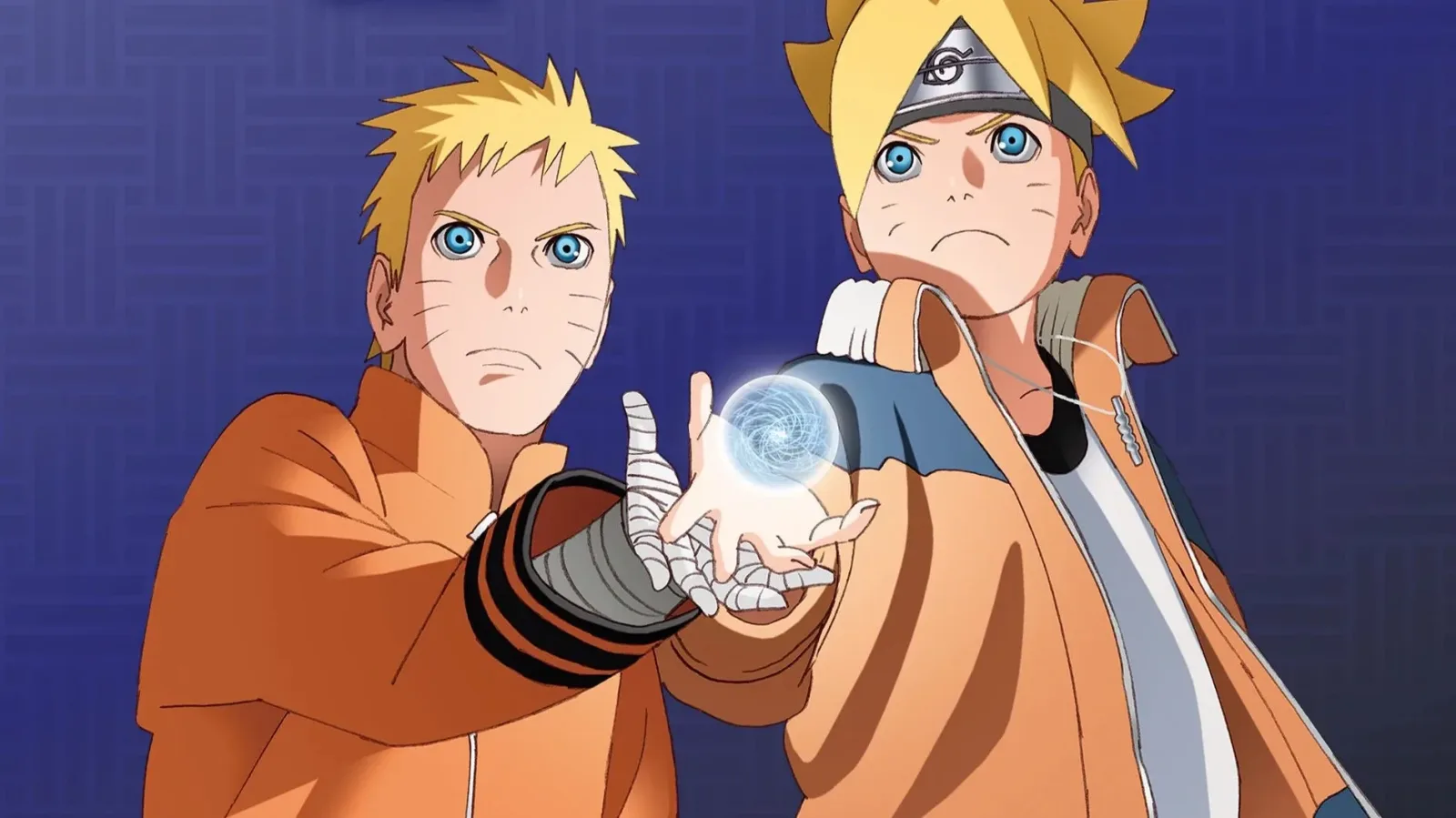
The announcement of Naruto: Shadow Rising, a new canon manga planned for release sometime in 2027, should have been uncomplicated good news for fans of Masashi Kishimoto's long-running ninja saga. Instead, the reveal has kicked off a familiar kind of fandom firestorm: a wave of social-media posts claiming that Boruto has officially been removed from Naruto continuity.
There is no confirmed statement establishing that Boruto is non-canon. The posts making that claim rely on old video, selectively framed comments, and quotations presented without the context needed to support such a major conclusion. But the rumor has spread widely across X, Reddit, Instagram, YouTube, and other communities, in part because it aligns with a sentiment that has existed for years among a portion of the Naruto fanbase.
For players and anime fans who have watched major franchises evolve across games, manga, animation, and spin-offs, the dispute is recognizable. Canon debates can become less about what has actually been announced and more about what different groups want a new project to mean. In this case, the existence of a story set before Boruto has been treated by some fans as proof that the sequel will be erased. That is a leap far beyond the information currently available.
Embedded Instagram post
What Naruto: Shadow Rising Has Actually Confirmed
On October 10, Naruto's original creator and illustrator announced Naruto: Shadow Rising. The manga is described as canon and is currently slated to arrive in 2027. Its reveal came during New York Comic Con and immediately attracted attention from fans eager for a new story connected directly to the original series.
For useful background on this topic, read DJI Mic Mini Bundle Drops to $79, Including Two Mics and a Charging Case.
The promotional art offers an important clue about its place in the timeline. Sarada Uchiha, who is 11 years old at the beginning of Boruto, appears as a baby in the new artwork. That strongly indicates Shadow Rising takes place in the period after the conclusion of Naruto but before the opening of Boruto.
A prequel-era setting, however, is not the same thing as a replacement timeline. Large fictional universes frequently explore gaps between established stories without invalidating what comes later. Naruto itself has long supported stories from multiple periods of its chronology, while games have often revisited famous arcs, alternate battles, and side stories without changing the manga's core continuity.
There is certainly a sizeable window between the end of Naruto's original story and the beginning of Boruto's. That gap gives Shadow Rising plenty of room to develop characters, political changes, family relationships, and threats that emerged during the transition into the next generation. Nothing about that premise alone confirms an intention to overwrite the sequel.
How the Boruto Rumor Took Hold
The current rumor cycle gained momentum after viral posts claimed Kishimoto had said in a 2024 interview that "Boruto is an alternate universe." One X post built around that allegation accumulated nearly 5 million views after being posted on October 14. A separate post asserted that Kishimoto had "officially" confirmed Boruto was non-canon, while circulating footage of him from 2017.
Those claims do not hold up as presented. The material being shared has been stripped of its original context, and at least one account involved in spreading the narrative acknowledged the out-of-context framing. Despite that, the claim moved quickly because short, decisive statements are especially easy to share online. "Boruto is decanonized" is a much more clickable message than "a new manga may explore an earlier point in the established timeline."
The resulting conversation has produced increasingly elaborate language around the idea that Shadow Rising will supersede Boruto. Some fans have begun calling the sequel "Boruto GT," invoking Dragon Ball GT, the anime continuation that sits outside the main Dragon Ball manga continuity. The comparison is rhetorically effective for people who dislike Boruto, but it is not evidence that Naruto's rights holders or creators have assigned Boruto a similar status.
Pushback has emerged as well. The r/Boruto community published a canonicity megathread aimed at collecting clarification and countering misleading posts. Naruto-focused creators have also been addressing the rumor directly, emphasizing that old interviews and speculative readings are not official continuity announcements.
Why Some Fans Want the Claim to Be True
The speed with which the rumor spread is not only about misinformation. It also reflects the divided reception of Boruto. The sequel has maintained an active audience, but it has faced sustained criticism from fans who preferred the tone, cast, and underdog energy of the original Naruto story. Some viewers object to the shift in focus away from Naruto and Sasuke, while others dislike specific plot developments or the broader power escalation associated with the sequel era.
That dissatisfaction creates fertile ground for a rumor promising a reset. For fans who want a continuation closer to the original series, the concept of Kishimoto returning to a previously unexplored period is exciting. The possibility that the story could focus on adult Naruto's early years as Hokage, younger versions of the next-generation cast, or a changing Hidden Leaf Village naturally invites speculation.
But wanting a different direction and receiving confirmation of one are two separate things. At present, Naruto: Shadow Rising is a new canon manga set in a known chronological gap. It may add context to Boruto, tell a largely self-contained story, or introduce developments that change how fans view later events. It has not been announced as a continuity reboot.
That distinction matters because declarations of canon are typically explicit. A publisher or creator can label a story an alternate universe, a reboot, a side story, or a replacement continuity. None of those terms have been confirmed for Boruto in connection with the Shadow Rising announcement.
Sales Context Has Added to the Speculation
Commercial comparisons have further fueled discussion. As of October 2025, publisher Shueisha confirmed that the Boruto manga had reached 10 million copies in total circulation in Japan. By comparison, the first 72 volumes of Naruto had sold more than 250 million copies worldwide by 2023, with roughly 150 million of those copies attributed to Japan.
Those figures understandably make for a stark comparison, particularly because Naruto is one of manga's defining global successes. Still, the numbers need to be read carefully. The 72-volume Naruto total refers to the original manga run and does not include Boruto: Naruto Next Generations, which began publication in 2016. It also comes from a different era of manga consumption.
Digital reading has become far more central to the industry over time, making direct print-circulation comparisons less complete than they may initially appear. Circulation is also not identical to the number of individual readers, nor does it capture every way modern audiences encounter a series through licensed digital services, animation, social media, games, and clips.
It is reasonable to note that Boruto's reported circulation does not approach Naruto's historic level. It is not reasonable to treat that gap as proof of an unannounced editorial decision to erase Boruto from canon. Publishers can pursue new projects for many reasons: to celebrate an anniversary, fill an appealing timeline gap, bring back established creative talent, attract lapsed readers, or expand a franchise with an accessible entry point.
What Fans Should Watch for Next
The key question is not whether fans can imagine Shadow Rising leading into a different future. Fictional franchises can always make major continuity changes if their creators choose to do so. The key question is whether any such change has actually been announced. So far, it has not.
Future official details about the manga's premise, creative team, serialization plans, and relationship to existing Naruto material will be far more useful than recycled clips or screenshots detached from their original discussions. Until then, the most accurate description is straightforward: Boruto remains an ongoing sequel within the Naruto franchise, while Naruto: Shadow Rising is an upcoming canon story set earlier in the timeline.
That may not satisfy every side of the fandom. Some readers will hope the new manga recaptures the atmosphere of the original series, and others will be eager to see how it enriches the world that Boruto inherited. Both reactions are understandable. What should not be confused with either reaction is the unsupported claim that Boruto has already been officially written out.
For now, Naruto: Shadow Rising represents a return to a compelling and largely unexplored era of the franchise. Its eventual story may generate plenty of real surprises. The supposed decanonization of Boruto is not one of the confirmed ones.
Community
Discussion
Start the conversation.
No comments have been posted yet.