

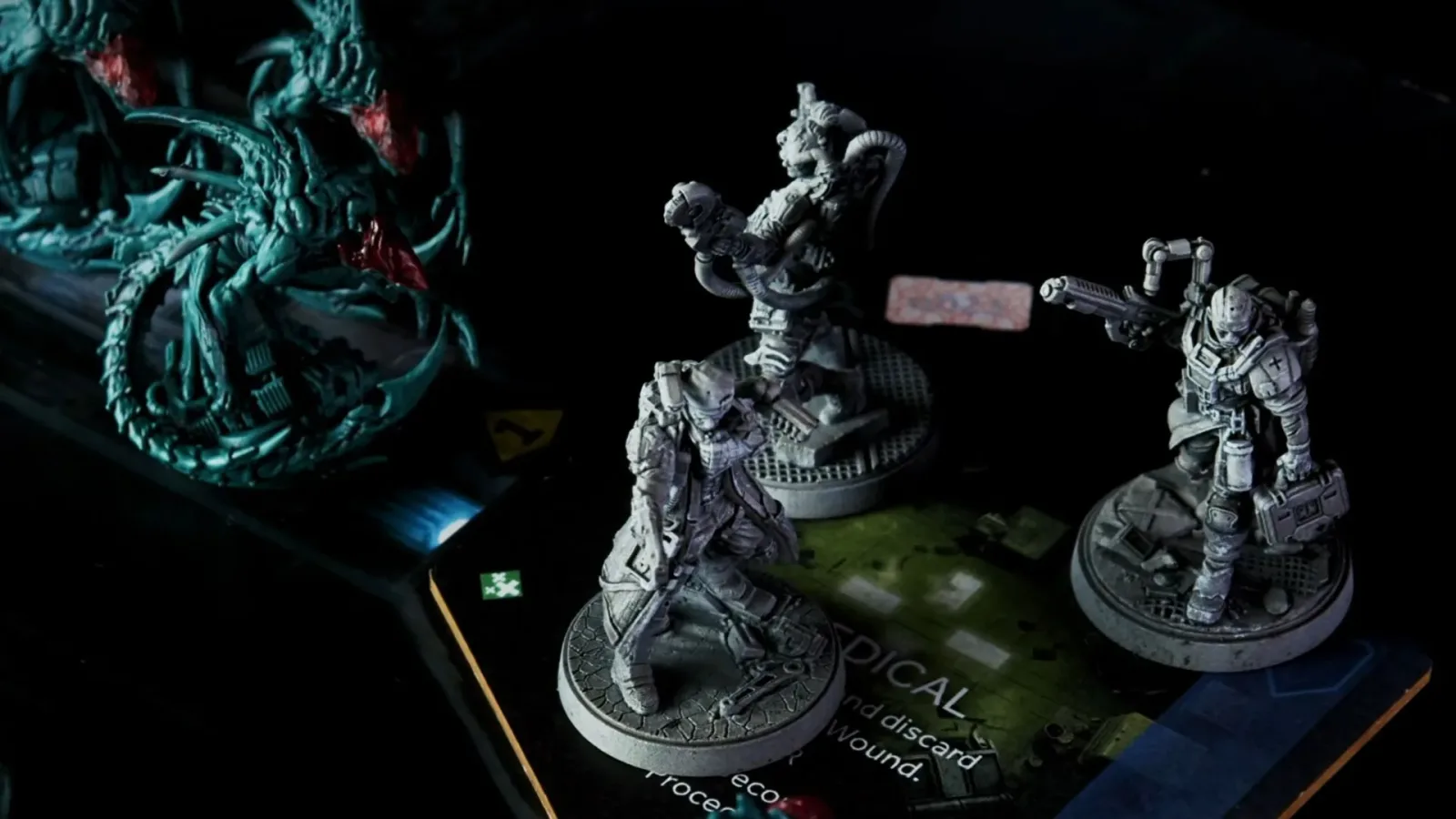
Nemesis Legacy, the newly revealed campaign-focused entry in the Nemesis tabletop horror series, has made an immediate impression on crowdfunding backers. The Gamefound campaign reached its funding target in just 54 seconds, an extraordinarily fast start for a project that aims to turn the series' tense survival scenarios into a lengthy, branching narrative.
By the time of the campaign update, Nemesis Legacy had passed 1,600% of its original funding goal. Pledges had reached roughly EUR818,000, equivalent to approximately $920,000 at the time. The campaign is scheduled to run for 21 days, leaving substantial time for additional funding and the unlocking of its announced stretch-goal plans.
The game's premise builds on the uneasy formula that has made Nemesis a standout name for fans of cinematic science-fiction horror. Players are trapped in a dangerous facility with lethal alien creatures, limited resources, and no guarantee that the people beside them can be trusted. Everyone may want to survive, but each player can also have a private objective that puts personal success ahead of the group's safety.
That combination of monsters, uncertainty, and competing priorities is the core of Nemesis. Cooperative play exists, but it is never completely comfortable. A helpful teammate might be genuinely trying to keep the group alive, or they may be positioning everyone else for a disastrous outcome that better serves their own secret goal. Nemesis Legacy is set to carry that suspicion into a larger story where decisions can continue to matter long after a single session ends.
For useful background on this topic, read Jordan Stephens Says He Turned Down Andor Return Over Dreadlocks Request.
A campaign built around lasting consequences
Nemesis Legacy promises a story running for more than 35 hours, divided across missions that branch based on what players do. Rather than treating each game as an isolated escape attempt, the Legacy format is designed to make the results of one chapter shape the situations encountered in later chapters.
Permanent changes are a major part of that structure. The campaign will ask players to make choices with consequences for the path ahead, giving the narrative a sense that events are accumulating rather than resetting after every session. In a horror game built on desperation and mistrust, that approach could make difficult decisions feel even more consequential. A short-term choice that seems necessary for survival may create complications that the same group has to live with much later.
Legacy-style tabletop games often appeal to groups that want an ongoing story with a consistent cast of players. Nemesis Legacy appears aimed squarely at that experience while retaining the series' familiar danger: players must navigate a hostile environment, assess threats, manage their own chances of survival, and decide how much faith to place in the other people at the table.
The idea of an extended Nemesis story is particularly notable because the original game's tension comes from uncertainty. Players can never safely assume that a plan will work, that an area is secure, or that every ally shares the same priorities. A branching campaign gives those elements room to develop over time, potentially allowing relationships, rivalries, failures, and hard-won victories to become part of a group's specific version of the story.
Replayability remains part of the plan
While permanent alterations are central to the campaign concept, Nemesis Legacy is not intended to be a one-and-done experience. The game is described as fully replayable through a recharge pack, which allows players to begin the campaign again after completing an earlier run.
That matters for a branching structure. If missions and choices can alter what follows, a second campaign offers the opportunity to explore different decisions and see how another sequence of outcomes changes the larger narrative. It also gives groups a way to revisit the game without abandoning the campaign-driven features that define the Legacy release.
Not every table wants to commit to a 35-plus-hour story, however, and the game is also expected to include standalone missions. These one-shot scenarios should provide an alternative for players seeking a self-contained session rather than a continuing campaign. That option could be useful for groups with changing schedules, players who want to sample the game's systems before starting a long arc, or established Nemesis fans looking for a more immediate session.
The dual approach suggests an effort to accommodate both major ways people enjoy modern board games. Campaign groups can invest in a long-running narrative with evolving stakes, while occasional players can focus on individual scenarios. The balance will be important, since Nemesis has traditionally been associated with high-pressure sessions where each decision can rapidly change the state of play.
Why the Nemesis formula has endured
The original Nemesis has earned a strong reputation among horror tabletop players for translating the feel of creature-feature survival fiction into a social game. Its basic setup is easy to understand: a group is stuck somewhere dangerous, terrifying creatures are loose, and getting out alive is far from assured. What makes it memorable is the distrust layered over that survival problem.
A player might need assistance to complete an objective, reach safety, or overcome a threat. Yet trusting another player can be risky when that person's hidden objective may push them in a completely different direction. The game's drama does not come only from the alien intruders. It also comes from watching a group negotiate, bargain, accuse, and make uneasy compromises while the situation deteriorates.
That social friction makes the series a natural fit for a campaign format. A single difficult choice can produce debate in a standalone game; across multiple missions, the same kind of choice can become part of a longer story. Players may remember who made a sacrifice, who withheld information, who took a selfish risk, and who saved the group when things went wrong. Nemesis Legacy's promise of permanent changes could give that memory a mechanical as well as narrative impact.
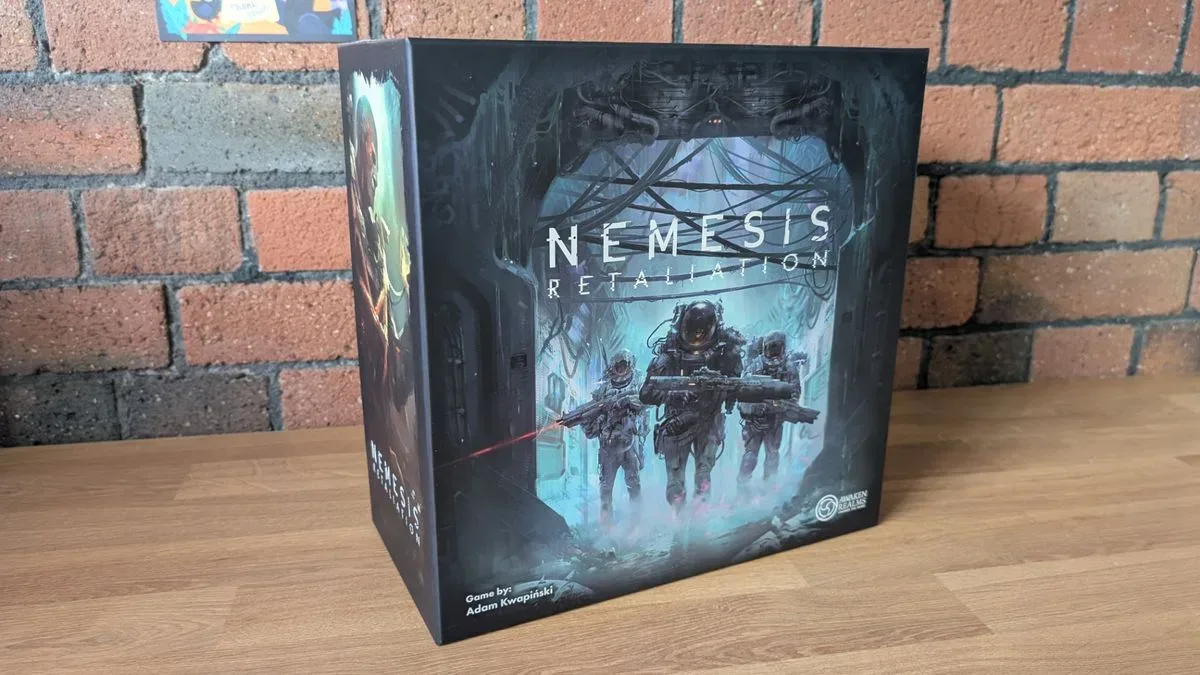
The series has continued to grow with releases including Nemesis Retaliation, but Legacy appears to be positioning itself as a distinct evolution rather than simply another isolated scenario. Its emphasis is not only on surviving the immediate threat. It is on building a campaign around the consequences of survival.
Stretch goals include more threats and miniatures
With the project already far above its initial target, attention will likely turn to the campaign's stretch goals. Planned additions include extra miniatures and a new race of alien intruders. More creature types could add another layer of unpredictability to a game already defined by uncertain encounters, while additional miniatures are a familiar draw for collectors and players who enjoy a more elaborate tabletop presentation.
No assumption should be made about which stretch goals will ultimately be unlocked until the campaign progresses, but its opening momentum puts it in a strong position. Funding in excess of 1,600% of the target so early in the 21-day campaign indicates substantial interest from the existing Nemesis audience and from tabletop players drawn to a large-scale horror narrative.
Crowdfunding success does not itself reveal how the final campaign will play, and many details will matter once the complete design is available. The key questions will include how meaningful the branches prove to be, how permanent changes affect later sessions, and how effectively the standalone missions capture the tension of the broader campaign. Still, the initial pitch is clear: Nemesis Legacy wants to bring a continuing story to a series known for making every escape attempt feel dangerous, personal, and uncertain.
For fans of sci-fi horror board games, the project's rapid funding result signals that there is considerable appetite for exactly that. Nemesis has always made survival feel precarious. Nemesis Legacy is now aiming to make the consequences of surviving last much longer.
Community
Discussion
Start the conversation.
No comments have been posted yet.