

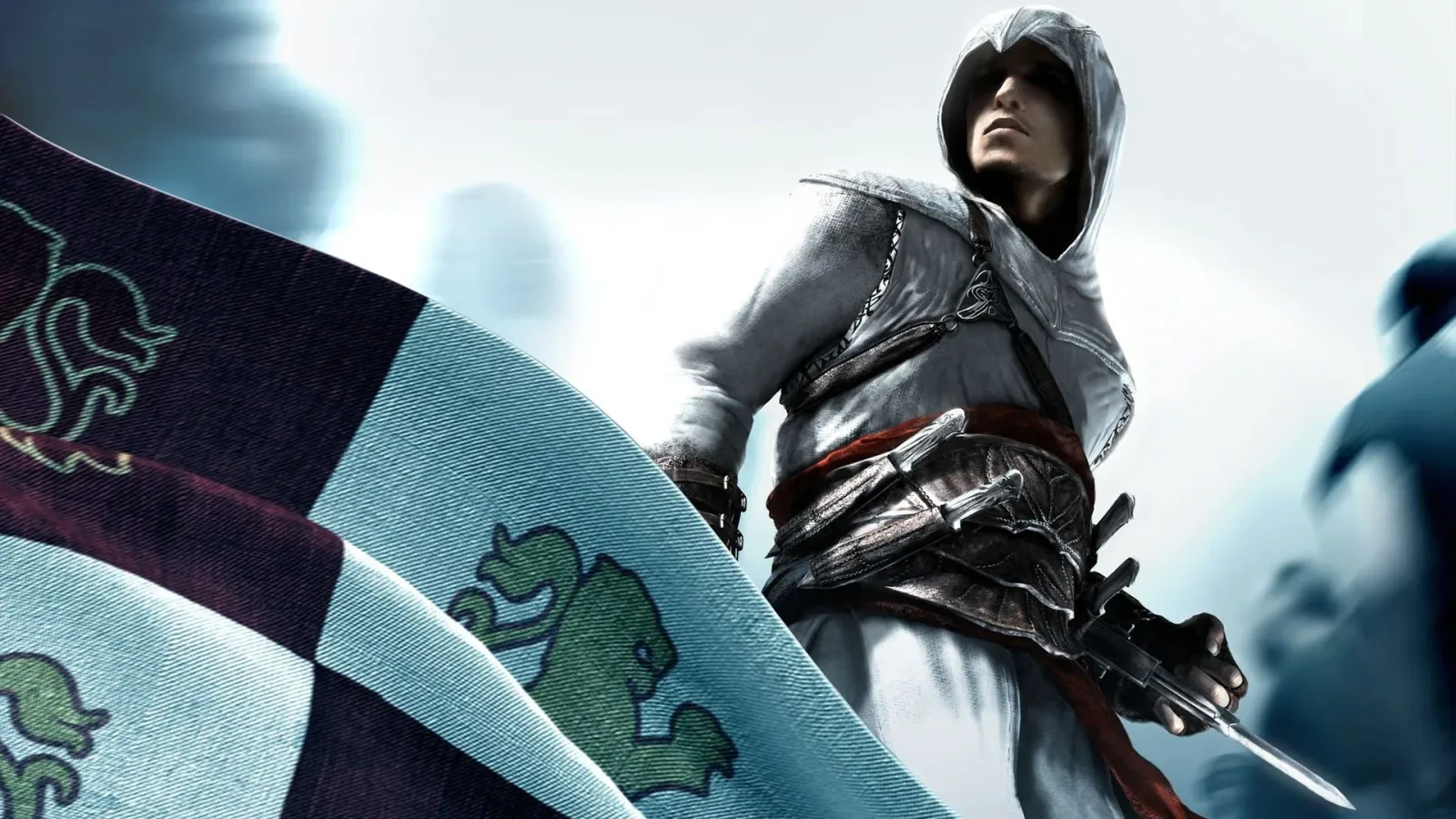
Netflix's live-action Assassin's Creed series may not be adapting one specific game, but director Stefan Schwartz has stressed that it is being made with the franchise's lore firmly in mind. The show is set to tell a new story within the universe rather than retell the events of an existing installment, yet its creative team appears determined to retain the ingredients that make Ubisoft's historical action series recognizable.
Schwartz, who directed several episodes of the forthcoming production, described the series as being deeply connected to the world fans know. He said it remains "very much in the lore" of Assassin's Creed, while also presenting a playful, large-scale take on that setting. His description specifically highlighted a familiar image for longtime players: plenty of rooftop movement.
That is an encouraging detail for a property whose identity has always depended on more than its period settings. Assassin's Creed is associated with sweeping historical environments, hidden conflicts, secretive orders, political upheaval, freerunning, stealth, and the constant tension between the Assassins and Templars. A series can use a different cast and an untouched historical era while still feeling authentic, provided those foundations remain visible in the story and action.
The Netflix show is set in 64 AD, placing it in the heart of the Roman Empire. That time period is especially notable because the games have visited ancient Rome before, most prominently through the Renaissance-era stories surrounding Ezio Auditore. However, the series is taking viewers much further back in the empire's history, which gives it room to explore a dramatically different Rome from the one familiar to players of Assassin's Creed Brotherhood.
For useful background on this topic, read Bandai, Square Enix and Capcom Join Anti-Counterfeit Push as Fake Gundam Goods Are Seized.
An Original Story in a Familiar Universe
Netflix has described the project as an original story set in the Roman Empire. Exact plot information remains under wraps, and there is no confirmation yet about which established characters, organizations, or historical events might appear. The choice to avoid a direct adaptation creates flexibility, but it also brings a challenge: the production must satisfy people who want meaningful connections to the games while remaining accessible to viewers with no prior knowledge of the series.
Schwartz's comments suggest that the answer will not be to simply borrow the Assassin's Creed name and place an unrelated adventure in ancient Rome. His emphasis on lore implies that the show is being built with the wider fictional framework in mind. The degree of that connection is still unknown. Fans do not yet know whether the plot will center on an established Assassin Brotherhood, introduce new figures connected to its early history, explore a Templar precursor, or bring the franchise's modern-day science-fiction elements into the narrative.
Those unanswered questions are important because Assassin's Creed has expanded greatly over the years. What began as a conflict viewed through genetic memories and the Animus evolved into a huge timeline spanning numerous civilizations and centuries. Egypt, Greece, Baghdad, Revolutionary America, Victorian London, feudal Japan, the Viking age, the Caribbean, and Renaissance Italy are only part of that history. A Roman story in 64 AD can potentially draw on a vast body of existing mythology without needing to recreate a particular game campaign scene by scene.
The setting also gives the show a potentially rich historical backdrop. Rome in the first century was an enormous imperial center marked by power struggles, social divisions, spectacle, religious change, and far-reaching military authority. The series has not revealed how closely it will follow individual historical events or figures. Still, that era naturally suits a franchise that often positions clandestine rivalries alongside major turning points in history.
Filming Has Wrapped in Rome and Bulgaria
Production on the series finished filming in November 2026. Schwartz confirmed that the shoot took place on location in Rome, with additional work done in Bulgaria. He described the Italian leg of filming warmly, while also confirming that he is now in the editing stage.
Rome is an obvious and valuable location for a story centered on the ancient empire, even though modern-day filming locations cannot simply stand in for every aspect of a city from nearly two millennia ago. Using the city itself can lend texture, architecture, atmosphere, and a sense of scale that are difficult to replicate entirely on a soundstage. Bulgaria, meanwhile, has become a frequent production destination for large film and television projects, offering landscapes, facilities, and settings that can support period storytelling.
The fact that Schwartz is editing indicates that the project has moved into a significant post-production phase, but it does not establish a release date. Netflix has only confirmed that the show is coming at some point, with no premiere window announced. Editing, visual effects, sound work, music, potential additional photography, and the broader streaming rollout can all take substantial time, particularly for a historical action series expected to feature large environments and ambitious set pieces.
For viewers, that means the most immediate development is not a launch date but a clearer sense of the show's direction. Filming is complete, the production has a period and location, and one of its directors has offered a direct assurance that its original premise is not intended to drift away from the games' mythology.
Cast Brings Together Rising and Established Talent
Lola Petticrew leads the cast alongside Toby Wallace, Zachary Hart, and Laura Marcus. Noomi Rapace, Ramzy Bedia, and Sean Harris are set to appear in recurring roles. Character names and specific roles have not been disclosed, leaving open substantial questions about who will occupy the series' central conflict.
That secrecy is in keeping with a franchise built around concealed identities, conspiracies, and gradual historical revelations. It also makes it difficult to tell whether the cast will be playing wholly new characters or figures with connections to previously established lore. Until Netflix shares a trailer, character breakdown, or fuller synopsis, viewers will have to rely on the broad promise of an original Roman Empire narrative.
The cast list does, however, point toward a series with room for multiple factions and perspectives. Assassin's Creed stories are rarely limited to a single protagonist acting alone. Allies, mentors, adversaries, political leaders, operatives, and civilians all tend to shape the larger struggle. A television format could offer more time than a feature film to develop that network, showing how a hidden war touches people across different levels of Roman society.
Why Rooftops Matter to Assassin's Creed
Schwartz's mention of running across roofs may sound like a small detail, but it speaks directly to the adaptation's biggest visual responsibility. Parkour has been part of Assassin's Creed since the beginning. The ability to climb towers, cross dense city skylines, escape guards through narrow alleys, and survey a district from above is central to how players experience its worlds.
Translating that feeling to live action requires more than staging a few leaps. The movement needs to communicate character, geography, danger, and momentum. It should make a city feel navigable in unusual ways while preserving the heightened fantasy of an Assassin moving through spaces unavailable to ordinary people. If the Netflix series can make its version of ancient Rome feel vertically alive, it will have captured an essential part of the games' appeal.
There is also a practical storytelling benefit. Rooftop chases and climbs can reveal the contrasts of an imperial capital: crowded streets below, monumental buildings in the distance, private villas, public arenas, markets, temples, and military spaces. In the games, traversal often serves as environmental storytelling. A live-action series can use the same principle to establish Rome's scale and the freedom--or danger--of living beyond the sightlines of the authorities.
A Different Path for a Video Game Adaptation
The decision to tell a new story rather than directly adapt a favorite game reflects a broader approach increasingly seen in screen adaptations of games. A strict retelling can appeal to fans seeking recognizable scenes, but it can also struggle under the weight of pre-existing expectations and the different pacing required by television. An original story allows creators to use the franchise's world, themes, and visual language while building a narrative around episodic structure.
For Assassin's Creed, this route is particularly logical. The series has always functioned as an anthology across eras and protagonists. New heroes and new historical settings are not departures from its identity; they are fundamental to it. The Netflix production therefore has an opportunity to feel like another chapter in the larger saga, rather than a condensed version of a game players already know.
Its success will likely depend on balance. The show needs enough lore and iconography for devoted fans to recognize a genuine Assassin's Creed story, while ensuring that newcomers understand the characters and stakes without homework. It must deliver historical spectacle without losing the personal motivations that give its conflict meaning. And it must make its original Roman setting feel distinct even within a franchise celebrated for transporting audiences through history.
For now, Netflix's Assassin's Creed series remains in post-production with its story details largely hidden. What is clear is that the production is not presenting itself as a disconnected use of the brand. With filming complete, a 64 AD setting established, and a director promising a lore-conscious world of scale and rooftop action, the show is positioning itself as a fresh entry that aims to belong within the long-running franchise.
Community
Discussion
Start the conversation.
No comments have been posted yet.