

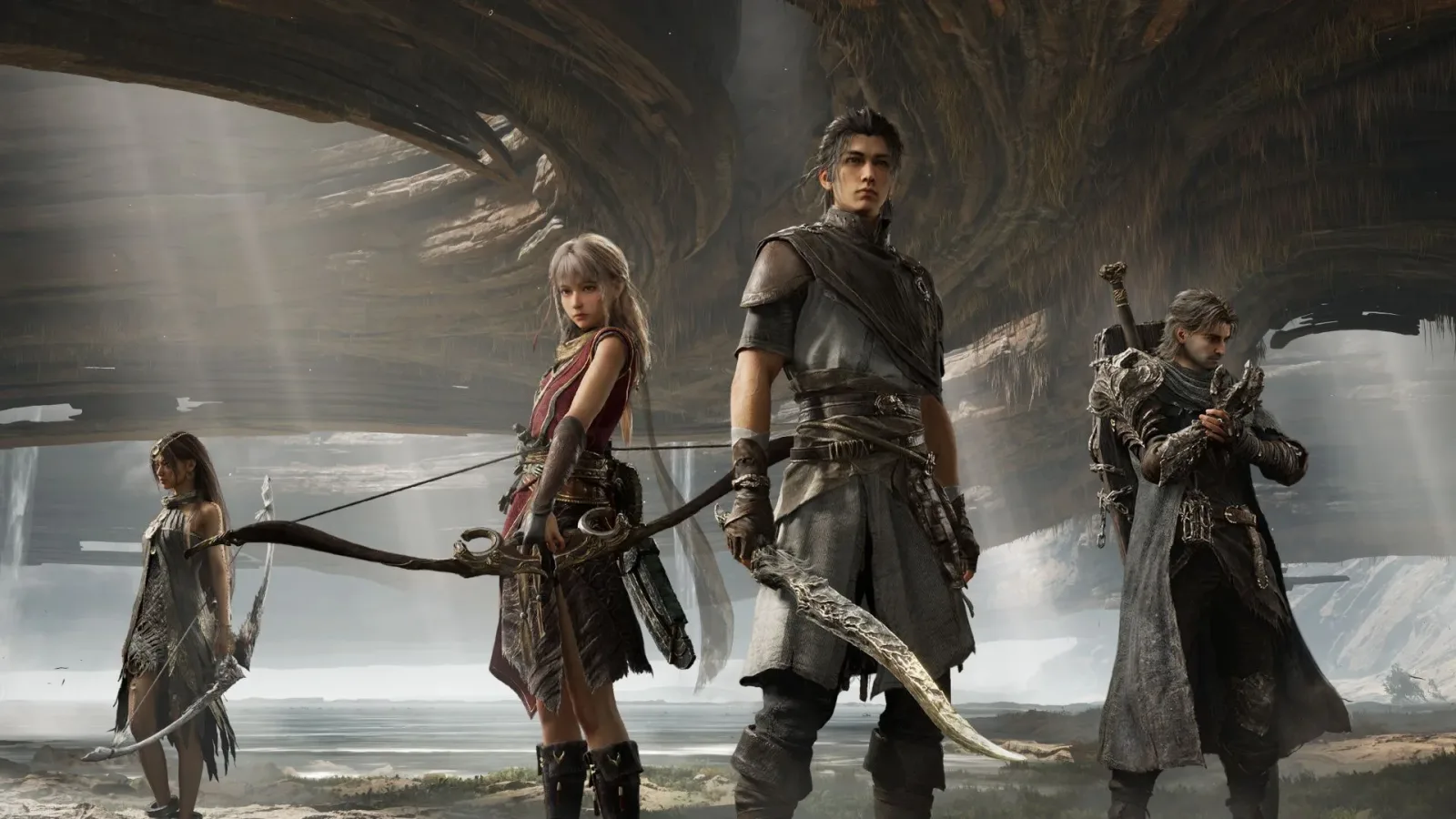
HoYoverse has offered an important early look at its design philosophy for Nodusfall, the studio's upcoming action game with a grim fantasy presentation and a focus on cooperative hunts against enormous creatures. Although its early aesthetic has prompted comparisons to darker, punishing action RPGs, the developer says it does not intend for raw difficulty to prevent players from getting started.
In a social-media FAQ addressing fan questions, HoYoverse said it wants the game to be approachable for people who are unfamiliar with this style of real-time action combat. At the same time, the team emphasized that accessibility is not meant to flatten the experience for players seeking a deeper mechanical test. Nodusfall is intended to offer room for mastery through its controls, team coordination, and character build choices.
That is a significant promise for a project that appears to sit in a potentially tricky space. Nodusfall has a weathered, ominous look that naturally calls to mind modern dark-fantasy action games. Yet its central premise is also cooperative, with players facing huge beasts roaming its world. That combination places its identity somewhere between solitary, high-stakes action-RPG exploration and the repeatable team hunts associated with monster-focused games.
Embedded X/Twitter post
For now, many specifics remain unannounced. HoYoverse has not detailed the exact systems that will help new players learn, nor has it laid out the full structure of missions, progression, equipment, or online play. Still, the studio's comments establish a clear target: players should be able to enter Nodusfall without being shut out by an intimidating opening hurdle, while dedicated groups and mechanically inclined players should have substantial depth to explore.
For useful background on this topic, read Xbox Restructuring Raises Fears of a 'Reverse Acquisition' as Studios Shift Under Activision and Bethesda.
Accessibility and challenge can serve the same game
The word accessible can mean many things in games, and HoYoverse's statement does not yet confirm a particular suite of options or difficulty settings. It does, however, make the broader intention unmistakable. The developer does not want difficulty to be the gate that decides who gets to experience Nodusfall.
That does not necessarily mean every battle will be easy, or that large monsters will stop being dangerous. A co-op game built around taking down giant enemies needs threats that demand attention, positioning, preparation, and adaptation. The more meaningful distinction is between a game that teaches its expectations clearly and a game that expects every player to arrive with years of genre knowledge.
For an action game, a welcoming foundation can take several forms without compromising depth. Early encounters can communicate attack timing and positioning in readable ways. Defensive tools can be reliable enough for beginners to understand, even if precise use produces better results. Build systems can offer straightforward starting paths before opening into more specialized decisions. Cooperative roles can also give players multiple ways to contribute besides simply producing the highest possible damage.
None of those possibilities have been confirmed for Nodusfall, but they illustrate why HoYoverse's emphasis matters. The company is not merely saying the game will be less demanding. It is saying the entry point should be manageable while the upper end of play remains ambitious. Those are different goals, and achieving both requires careful combat design rather than simply lowering enemy health or damage.
A high ceiling for players who want to learn more
HoYoverse specifically pointed to controls, coordination, and builds as areas with a high ceiling. Together, those three elements outline the sort of replayable co-op action experience Nodusfall may be aiming for.
Controls suggest that moment-to-moment execution will matter. Players may be able to improve not only through stronger gear, but through greater familiarity with movement, attacks, defensive actions, enemy openings, and the rhythm of individual encounters. A high ceiling in controls is often what lets an accessible game stay interesting after players understand the basics: the fundamental actions are clear, but using them efficiently and consistently takes practice.
Coordination is especially notable because Nodusfall is co-op focused. Team games can be welcoming when friends can share the learning process, revive one another, divide tasks, or compensate for differing levels of experience. They can also become deeply demanding when groups begin planning around complementary abilities, timing major attacks together, managing space around a boss, and reacting to changing situations as a unit.
Builds, meanwhile, point toward customization and experimentation. The exact nature of Nodusfall's buildcraft is not known, so it would be premature to assume a particular class system, weapon structure, or loot model. But the term indicates that player choices beyond basic reflexes will be part of the game's depth. Ideally, that gives newcomers understandable options while allowing experienced players to test synergies and optimize strategies for difficult hunts.
The appeal of this structure is easy to see. A newcomer could participate in an early hunt, survive, learn the creature's patterns, and feel useful alongside friends. Over time, that same player could sharpen their execution, refine their preferred setup, and join groups pursuing more efficient or more demanding clears. The challenge becomes an invitation to improve rather than a wall at the door.
A natural fit for HoYoverse's broad audience
HoYoverse enters Nodusfall with an enormous existing audience across games including Genshin Impact, Honkai: Star Rail, and Zenless Zone Zero. Those communities include experienced action-game players, but they also include many people drawn to character-driven worlds, collection systems, stylish presentation, social play, and ongoing game support rather than a specific tradition of highly punishing combat.
As a result, a welcoming first impression may be particularly important. Some fans could arrive because they already follow the studio, not because they have spent years mastering demanding action RPGs. If the game's earliest hours require exhaustive trial and error before players can understand its fundamentals, it risks losing people who might otherwise become invested in its world and its cooperative loop.
This does not mean Nodusfall needs to discard the tension suggested by its darker tone. An unsettling landscape, formidable monsters, and dangerous-looking combat can still create a strong sense of stakes. The key question is whether failures feel instructive. When players understand what happened and have tools to improve, defeat can motivate another attempt. When the game is opaque from the outset, failure can instead feel like exclusion.
That distinction is likely to matter even more in a cooperative environment. A player who feels they are holding friends back may leave sooner than someone tackling a difficult encounter alone. Good onboarding, clear feedback, and flexible ways to support a team can help ensure that the social side of Nodusfall becomes a strength rather than an additional source of pressure.
The monster-hunting structure remains the big unknown
The clearest description of Nodusfall so far is that it is a co-op-driven game about confronting gigantic beasts across its world. That foundation has obvious potential. Large creatures can make excellent centerpieces for memorable encounters because they create a shared objective: observe the target, recognize its behavior, exploit opportunities, survive its strongest attacks, and eventually bring it down together.
What remains unknown is how Nodusfall will organize that loop. Will hunts be standalone missions, part of a larger connected journey, or both? Will players repeatedly pursue the same creatures for materials and upgrades? How much solo play will be supported? Will teams be able to approach creatures with radically different tactics? These questions are central to understanding how its accessibility goals will function in practice.
There is also a difference between a game that offers cooperative play and one that is designed around cooperation from the ground up. HoYoverse's wording positions Nodusfall closer to the latter, but players will want to know how matchmaking, communication, progression, and difficulty scale across groups. Those details can determine whether a hunt feels like a thrilling shared accomplishment or an exercise in confusion.
An encouraging direction, with details still to come
It is too early to judge whether Nodusfall will successfully balance approachability with lasting depth. That balance is among the hardest things for an action game to achieve, especially when giant boss encounters and cooperative strategy are central to its identity. Players who want a harsh test will be watching for meaningful enemy design and mechanical complexity, while newcomers will be looking for a fair path into the experience.
HoYoverse's initial message is encouraging because it recognizes both audiences directly. The studio is not presenting accessibility and challenge as opposites. Instead, it is promising an experience where players can begin without specialist knowledge and still find more to learn as their confidence grows.
Until more concrete information arrives, Nodusfall's exact approach remains uncertain. But its stated priorities suggest a game that wants players to be drawn in by its bleak world and towering creatures, then stay because its combat and teamwork offer layers worth mastering. For a new action-focused project from HoYoverse, that is a compelling starting point.
Community
Discussion
Start the conversation.
No comments have been posted yet.