


Nvidia's next DLSS milestone is arriving with an unusually specific creative focus: the company says DLSS 5 is intended for games pursuing a photorealistic look. That positioning may reassure players and developers worried about an AI-driven visual layer being applied indiscriminately to every kind of game, especially titles built around bold, illustrative, or deliberately abstract art direction. But it also opens a larger question that has long followed the PC graphics industry: should photorealism be treated as the ultimate measure of a game's visual quality?
According to reporting from GamesRadar+, Nvidia showed the latest version of its upscaling technology behind closed doors at Gamescom. DLSS 5 is expected to reach GeForce RTX 50 Series GPUs at the end of the week, with NBA 2K27 serving as its initial launch title. Nvidia has not framed the technology as a universal makeover for all games. Instead, the company reportedly told the outlet that DLSS 5 support is opt-in for developers and that the feature is principally aimed at projects that want a photorealistic result.
That distinction matters. Upscaling has generally been discussed in terms of performance: rendering at a lower internal resolution and using machine learning to reconstruct a sharper image, enabling higher frame rates or more demanding effects. The DLSS 5 presentation described by GamesRadar+, however, suggests a more direct intervention in how objects, people, and materials appear on screen. The feature includes a generative AI layer and developer-facing controls that can affect visual output at a granular level.
DLSS 5 is not being pitched as a fit for every art style
For many players, Nvidia's stated target is the encouraging part of the announcement. Games with a strong visual identity are not simply less detailed versions of photorealistic games. Their styling is often the point. A painterly environment, angular character model, exaggerated facial expression, limited colour palette, or deliberately rough texture can communicate mood and personality more effectively than a highly realistic material scan ever could.
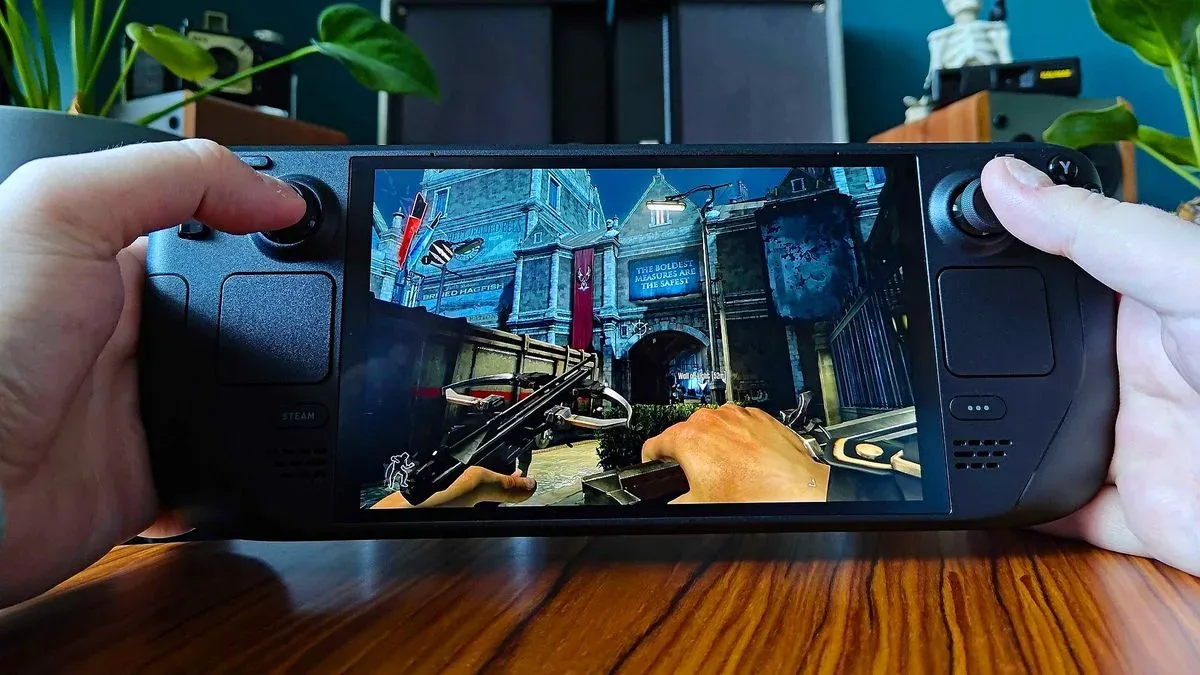
That is why the prospect of a generative AI process altering those images has prompted caution. GamesRadar+ specifically raised the concern that a game such as Dishonored, known for its distinctive stylized world, could lose part of what makes it memorable if a technical layer attempted to make it look more conventionally realistic. Nvidia's assurance that developers must choose to support DLSS 5, rather than having it imposed on their games, is significant in that context.
Still, opt-in support does not end the discussion. Developers regularly face pressure to adopt prominent graphics technologies, particularly when they are associated with new GPU hardware and are marketed as a route to a premium visual experience. A tool can be optional in a strict technical sense while becoming difficult to ignore in a market where performance comparisons, screenshots, feature checklists, and hardware partnerships influence purchasing decisions.
The question is therefore not only whether a studio can decline DLSS 5. It is also whether the technology can be used without encouraging a narrower definition of what a "good-looking" game should be.
Photorealism and realism are not quite the same thing
The modern games industry has spent decades chasing more detailed worlds. Higher-resolution textures, advanced lighting, improved facial animation, denser geometry, motion capture, and physically based rendering have all made games more capable of resembling the real world. Yet graphical progress has also helped artists do more than mimic reality. It gives them better tools to distort, simplify, exaggerate, and reinterpret it.
Many games that appear realistic are still highly authored images. Battlefield 6, Control, Grand Theft Auto 6, The Last of Us Part II, and Hunt: Showdown can all be discussed in terms of lifelike environments, lighting, animation, faces, or equipment. But each has an intentional visual language beyond pure replication. Lighting is chosen for atmosphere, colour grading establishes tone, materials are tuned for readability, and characters are shaped to fit a game's mood and narrative needs.
Even sports simulations, where recognizable athletes and arenas are central to the appeal, rely on interpretation. A virtual basketball game must function under changing camera angles, animation states, gameplay readability requirements, and technical constraints that do not exist in broadcast footage. The goal may be realism, but the final image remains a constructed one.
This is the heart of the concern around any technology advertised through the language of "more photoreal." A game can look extraordinarily impressive without resembling live-action footage. In some cases, it may be more visually memorable precisely because it does not. The sharp silhouettes of a stylized game can be easier to read in motion. A less literal face can leave room for the player's imagination. Imperfect, hand-authored textures and animation can make a world feel designed rather than processed.
What Nvidia says developers can control
Nvidia's developer controls are intended to give creators a degree of authorship over DLSS 5's generative results. As described in the Gamescom presentation, developers can select between three AI models for individual objects, characters, and, in some situations, clothing. They can also adjust structural and tonal intensity through sliders, determining how strongly the system applies its processing within its own set of parameters.
Those controls suggest that DLSS 5 is not simply a one-button effect. Studios could potentially tune its use around specific assets or scenes, rather than allowing the same level of transformation across an entire game. That is especially relevant for character rendering, where tiny differences in facial structure, fabric, skin detail, and lighting can have a major effect on how players perceive a person on screen.
However, creative control over intensity is not identical to control over the model's underlying visual assumptions. The critical view raised by GamesRadar+ is that DLSS 5 remains a generative AI technology trained toward photorealistic output. Reducing or increasing an effect may alter how noticeable it is, but it does not necessarily solve the concern that the system's preferred direction could smooth away the quirks that make an art style feel human-made.
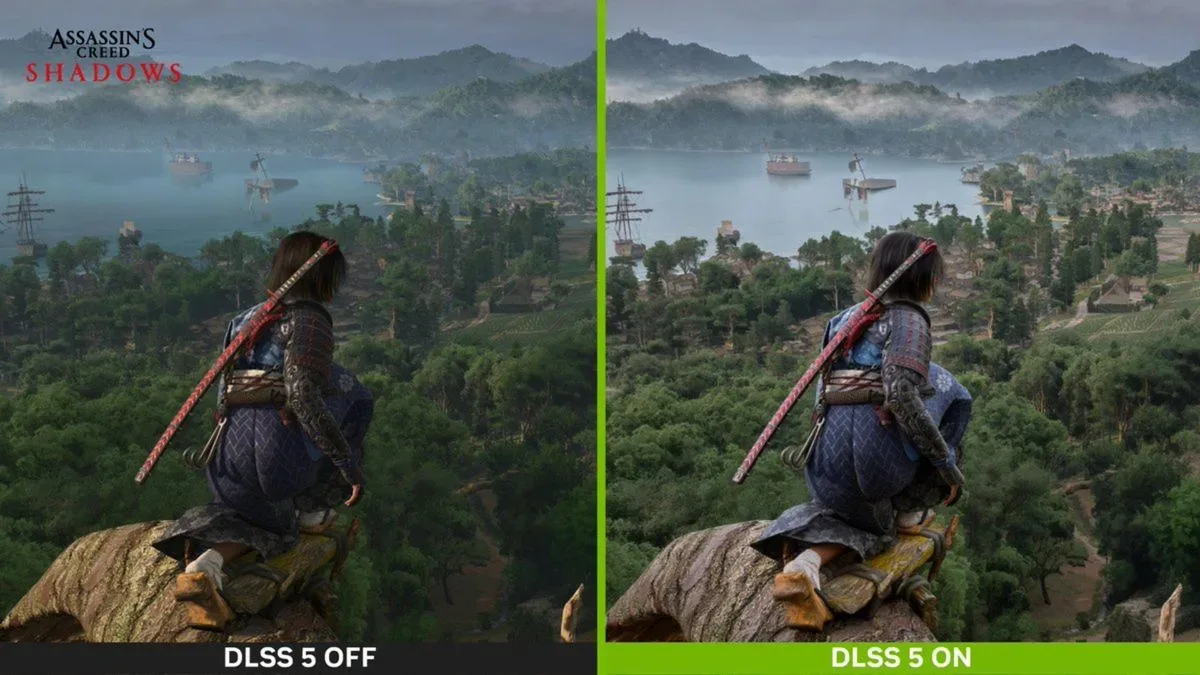
That concern has particular weight following the earlier reaction to DLSS 5 images shown in March. Some viewers described the presentation's altered characters, including Grace and Leon, as looking "yassified" -- internet shorthand for an excessively beautified or artificial transformation. Nvidia's newer tools may be more flexible than the first public examples implied, but early comparisons have already shaped the conversation around what the feature does to a game's original look.
NBA 2K27 makes a clear showcase, but not a universal case
NBA 2K27 is an understandable first showcase for Nvidia's pitch. Basketball simulations are built around the challenge of recreating real athletes, venues, uniforms, broadcasts, and physical movement with as much fidelity as possible. In that setting, a DLSS 5 image that appears closer to the appearance of a real player directly supports the game's presentation goals.
The comparisons shown for the game were described by GamesRadar+ as convincingly more photorealistic when DLSS 5 was enabled. That does not automatically mean they are objectively superior to the original, hand-crafted character work, but it does demonstrate why Nvidia sees the technology as a natural fit for certain genres. For players seeking a high-end simulation experience, additional realism may be an immediate and tangible benefit.
Yet the leap from "useful for a basketball simulation" to "better for games" is where the argument becomes far less certain. A game's visuals have to serve more than screenshot comparisons. They must support animation, player comprehension, world-building, emotional tone, technical consistency, and the identity of the studio that made them. A highly polished AI-assisted face may look more like a person in a still image, while feeling less expressive, less distinctive, or more distracting in play.
The generative AI issue goes beyond image quality
The debate is also inseparable from broader unease about generative AI in creative fields. For some players, the objection is not merely that AI output can be uncanny. It is that seeing a generative process inside a game can become a distraction in itself. Rather than increasing immersion, it can remind audiences of the technology's disruptive role in art, writing, illustration, performance, and other creative work.
As generative imagery becomes more widespread, viewers are also becoming more alert to its visual signatures. Faces that seem overly polished, textures that lack convincing intentionality, or details that appear subtly inconsistent can make an image feel artificial even when the technical result is advanced. In a medium built around immersion, that reaction is important. The most detailed image is not automatically the most believable one to a player.
Nvidia's ambitions are understandable. The company has built its reputation on enabling higher-end PC graphics, and photorealistic lighting, geometry, and character work have been central benchmarks for GPU progress. DLSS 5 appears to extend that mission by using generative AI to pursue a more lifelike image than conventional rendering alone can provide at a given performance target.
But games are not a single visual category. A healthy medium needs photoreal sports games, cinematic adventures, striking indies, stylized action titles, surreal horror, retro-inspired projects, and everything between them. The value of DLSS 5 will ultimately depend on whether developers can use it as a carefully chosen tool rather than allowing its drive toward realism to become a default aesthetic expectation.
With its RTX 50 Series rollout and NBA 2K27 debut approaching, DLSS 5 will soon move from controlled demonstrations to wider scrutiny. Its technical potential is clear, particularly for projects that genuinely want a near-photographic presentation. Whether it can preserve the character of the games it touches -- and whether players want that kind of AI-assisted realism at all -- remains the more consequential test.




Community
Discussion
Start the conversation.
No comments have been posted yet.