

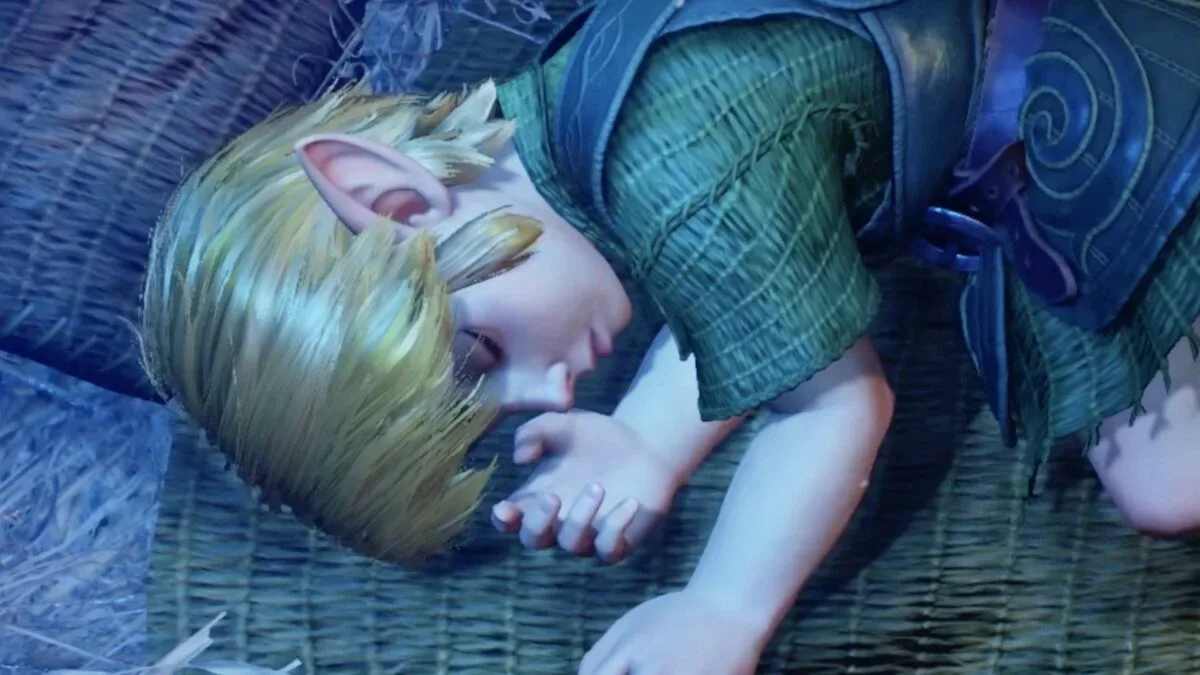
The Legend of Zelda: Ocarina of Time remake may have received its first apparent pricing clue ahead of Nintendo's September presentations. A result visible through searches on Nintendo's Australian and New Zealand websites lists the digital version at AU$94.95, a figure that could translate to a US$59.99 digital price if the listing is accurate.
Nintendo has so far confirmed very little about the Switch 2 project. The company has shown only a short teaser, attached a 2026 launch window, and left fans waiting for a closer look at what form this return to Hyrule will take. The newly spotted store result does not answer every major question, but it has intensified debate around the scale of the remake, its eventual retail pricing, and how much it may change one of the Nintendo 64 era's defining games.
The listing was initially noticed by Australian Nintendo-focused site Vooks. While an ordinary official eShop product page for the game was not available, entering "Zelda" into the search tools on Nintendo's Australian and New Zealand sites surfaced an entry carrying the AU$94.95 digital price. As with any page that appears before a formal announcement, the information should be treated cautiously. Store data can be incomplete, placeholder material can appear unexpectedly, and regional conversions do not guarantee a final price elsewhere.
Embedded X/Twitter post
Still, the figure is specific enough to make the listing notable, particularly with Nintendo scheduled to share more information across two Direct broadcasts this week.
For useful background on this topic, read Radical Dreamers Remains a Fascinating Chrono Detour.
What AU$94.95 could mean for the U.S. price
The Australian figure points to a possible US$59.99 price for the download version in the United States. It also suggests that a physical edition, if Nintendo follows the usual regional difference implied by the listing, could cost AU$109.95 in Australia.
That potential US$60 tier would put Ocarina of Time above the recent Star Fox remake, which carried a price $10 lower, while aligning it with Yoshi and the Mysterious Book. Pricing is never a perfect measure of a game's ambition, especially within Nintendo's catalog, but it can reveal how the company intends to position a release. A remake sold at $60 may be treated as a substantial premium release without necessarily being built as an entirely new open-world production.
For players, the important caveat is that no U.S. price has been announced. Exchange rates, regional tax structures, publishing strategies, and product configurations all make direct comparisons imperfect. Nintendo could also announce multiple editions, bundle arrangements, or a different physical and digital structure. Until Nintendo itself confirms details, AU$94.95 is best understood as a strong indication rather than settled fact.
A pricing clue, not a complete picture of the remake
The possibility of a $59.99 digital version has prompted a familiar question: how expansive is this remake actually going to be? The original Ocarina of Time remains enormously influential, and a Switch 2 remake naturally creates expectations that extend beyond higher-resolution visuals. Some fans have imagined a dramatic reworking inspired by the freedom and scale of The Legend of Zelda: Breath of the Wild and The Legend of Zelda: Tears of the Kingdom.
Nothing confirmed so far establishes that Nintendo is rebuilding the adventure into that kind of open-air Zelda. A potential $60 price may instead support the idea of a more focused remake: one that modernizes presentation, improves performance, refines controls, and adds convenience features while preserving the core structure of the 1998 Nintendo 64 game.
That would not automatically make it a minor effort. Updating a landmark game for modern hardware can involve extensive work on art, animation, lighting, interfaces, audio, accessibility, camera behavior, and navigation. The difference is one of design philosophy. A faithful remake would retain Ocarina of Time's dungeon progression, field layout, story flow, and deliberate transition between childhood and adulthood. A more radical reinterpretation could alter the world's structure, systems, encounters, and pacing.
At the moment, Nintendo has not stated where the project lands on that spectrum. The teaser and 2026 window established the game's existence, but not the practical details fans are most eager to see. A listing price cannot reveal whether every area has been recreated from scratch, whether new quests are planned, or whether the game will substantially expand the original version's content.
Star Fox offers one possible point of comparison
Nintendo's recent approach to Star Fox may provide a useful, though not definitive, comparison. That remake included newly produced story scenes with voice acting, various adjustments, quality-of-life work, and additional features. Yet its central identity remained close to the decades-old game that inspired it rather than becoming a complete reinvention.
If Ocarina of Time follows a similar strategy, players could expect a polished contemporary version that respects the original's recognizable framework. Such an approach would be especially significant for a game whose design has been studied and celebrated for decades. Its temples, items, musical progression, bosses, and time-spanning narrative are not merely old content in need of sharper graphics; they are foundational pieces of Zelda history.
There are arguments for both restraint and ambitious change. A close remake would preserve the carefully built cadence of the original adventure and allow a new generation to experience its structure in a form that is easier to access on modern hardware. A broader redesign, meanwhile, could surprise veterans who know every route through Kokiri Forest, Hyrule Field, Kakariko Village, and the Temple of Time.
Nintendo's eventual presentation should make its intentions clearer. The apparent pricing information has raised expectations, but it does not settle the creative question by itself.
Two Nintendo Directs could clarify the situation quickly
The timing of the listing is particularly interesting because Nintendo has two Direct events scheduled on consecutive days. A Zelda-focused Direct is set to air on September 8, followed by a general Nintendo Direct on September 9. The dedicated presentation is the likelier venue for a meaningful Ocarina of Time update, though Nintendo has not publicly detailed what will be shown in advance.
Fans will be watching for considerably more than a price. Key areas that could be addressed include:
- Whether the remake is a faithful recreation or a more extensive redesign.
- How the game uses Switch 2 hardware for visuals and performance.
- Whether its controls, camera, menus, and targeting systems have been modernized.
- Whether any new story sequences, side content, dungeons, or gameplay systems are included.
- Whether Nintendo will confirm physical editions and regional pricing.
- Whether 2026 remains the only launch guidance or a firmer date is ready to share.
A trailer with direct gameplay would do far more to establish the project's identity than the brief initial teaser. It could also settle whether the early Australian search result reflects final product information or simply an early entry that was published before Nintendo intended.
Why the remake carries unusual expectations
Ocarina of Time is not just another legacy title returning in a new form. Its original Nintendo 64 release is frequently regarded as one of the most important transitions in the medium's history, helping define how action-adventure games could function in 3D. Its lock-on combat, spatial dungeon puzzles, cinematic storytelling, and world design influenced Nintendo's own work as well as countless games that followed.
That history makes any new version a difficult balancing act. Players who first encountered Link's journey decades ago may want reverence for the original's distinctive atmosphere and structure. Newcomers may expect the responsiveness, visual density, and usability standards of a major modern Switch 2 release. Nintendo has to decide how much friction is a meaningful part of the classic design and how much should be reconsidered for an audience that may have begun with the open-world entries.
The suggested $60 level, if confirmed, would place the remake in an intriguing middle ground. It would not necessarily signal a low-effort remaster, but it may indicate a release designed around a classic foundation rather than an enormous reboot on the scale that some speculation has envisioned.
For now, the Australian and New Zealand search result is an early signal, not final confirmation. Nintendo's official announcements remain the deciding factor for pricing, editions, and the exact nature of the remake. With the Zelda Direct arriving on September 8 and the wider Nintendo Direct following on September 9, the wait for firmer answers may be short.
Community
Discussion
Start the conversation.
No comments have been posted yet.