

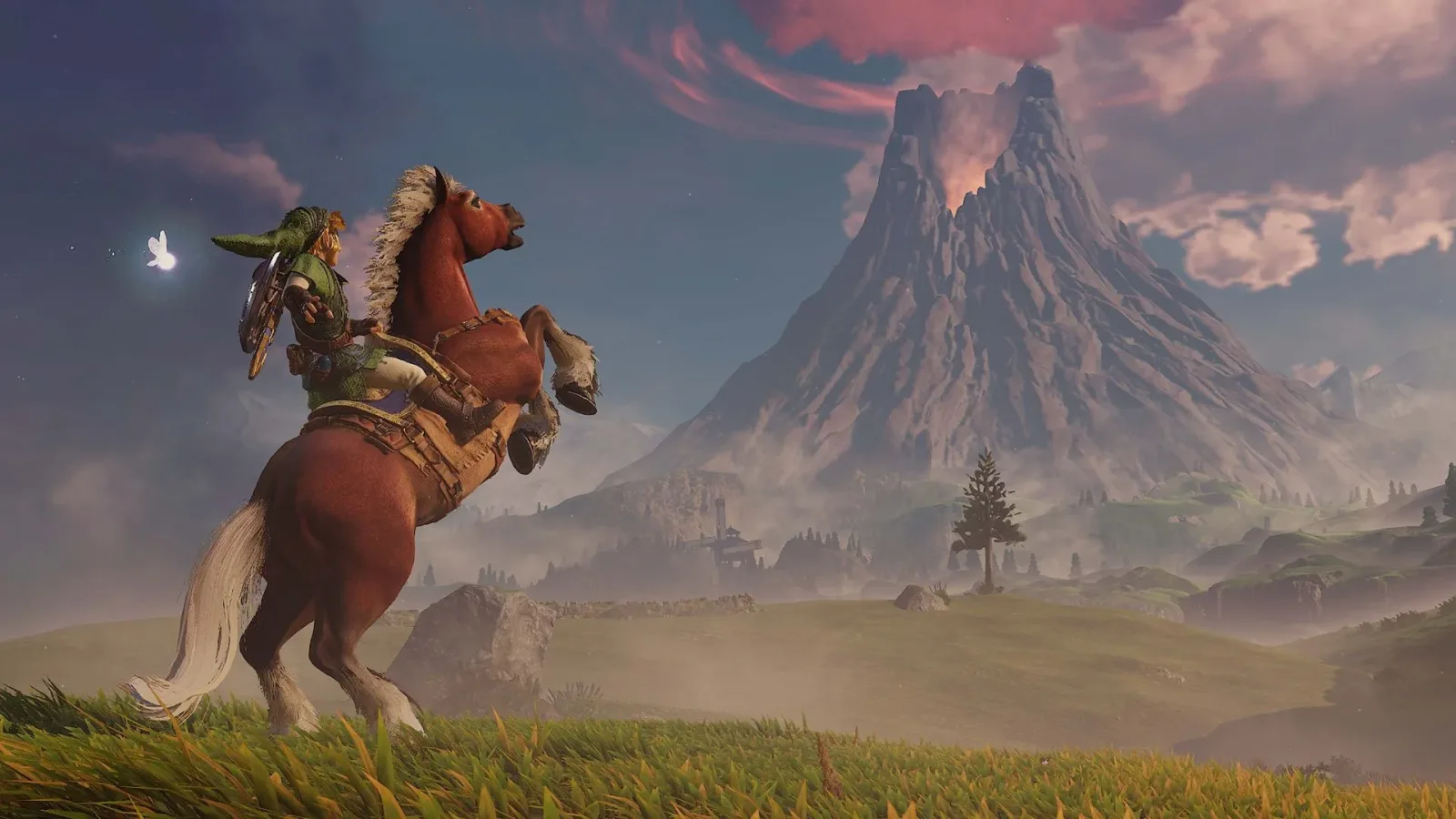
The Legend of Zelda: Ocarina of Time is returning on November 5 with a remake that appears determined to preserve the identity of the Nintendo 64 landmark while making Hyrule feel far more inhabited. A recent hands-on session at an official preview event showcased a version of Link's journey that is immediately recognizable in its major places, characters and story beats, yet noticeably different in how those places are framed, explored and navigated.
The central impression is not simply one of upgraded assets. This remake seems to approach Hyrule as a world with more context around its familiar landmarks. Kokiri Forest carries a stronger sense of shelter and daily life. Hyrule Field better connects its destinations through natural-looking terrain. Castle Town has more interiors to visit and visual details that suggest a history beyond the player's immediate objective. Even the Forest Temple, long one of the game's most unsettling dungeons, gains extra personality through revised enemy designs and denser environmental detail.
For players who know the 1998 original inside and out, that could be the remake's most meaningful change. Ocarina of Time has never lacked atmosphere, but its technical limits often required it to communicate a great deal with very little. The remake has the opportunity to retain the purpose and layout of classic locations while adding the texture that earlier hardware could only imply.
A more expressive Link and a fuller Kokiri Forest
Link's redesigned face is one of the most immediate signals of the project's modern presentation. His large blue eyes stand out sharply, creating a look that recalls the emotional clarity of later Zelda games without abandoning the character's youthful appearance at the beginning of Ocarina of Time. It is a visual choice that reflects the balance the remake is trying to strike: familiar enough to trigger memories of the original, but polished enough to establish that this is not merely the old game running at a higher resolution.
For useful background on this topic, read Hokko Spaces Brings Cozy Diorama Building to PC and Switch on October 29.
Kokiri Forest similarly benefits from a more developed visual identity. The original's home area was designed as a compact, enclosed introduction to Link's life before his wider adventure begins. The new version reportedly maintains that restricted structure, but its edges now appear more organic. Rather than reading primarily as artificial gameplay boundaries, the surrounding walls and terrain help convey the forest as a protected place.
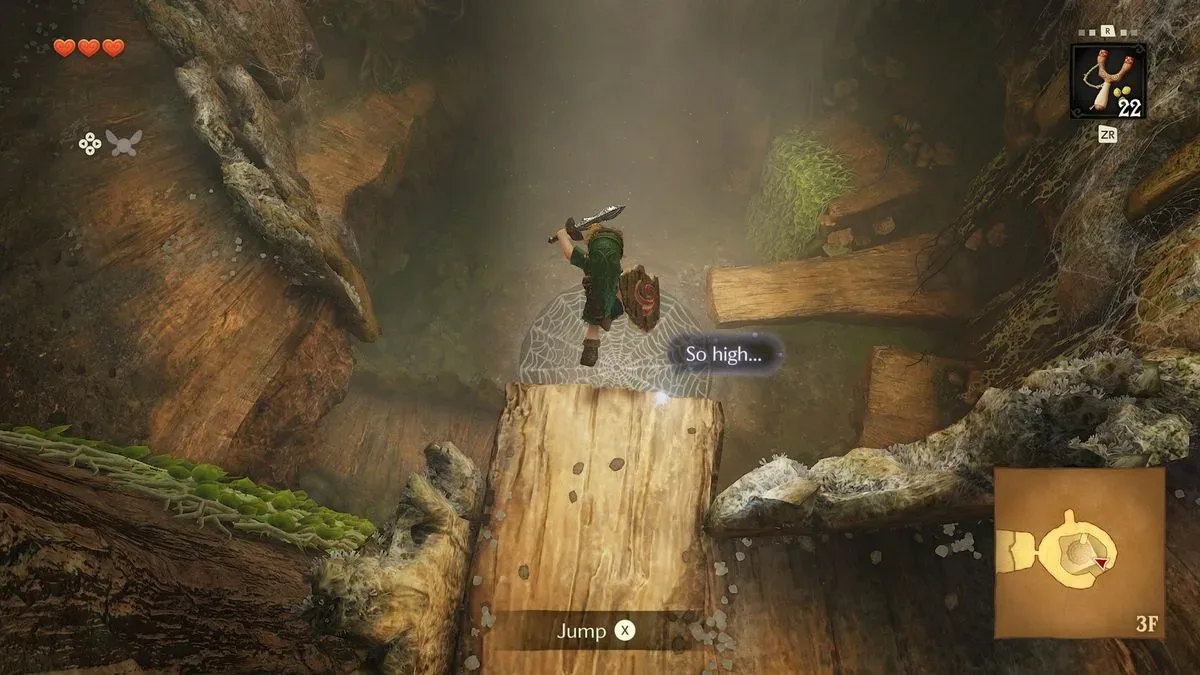
That framing matters narratively. Kokiri Forest is supposed to feel safe, insular and childlike before Link is pushed toward the dangers of Hyrule. A richer environment can make the eventual departure more powerful because the player gets a clearer sense of what is being left behind. The remake also lets Link jump across floating platforms on command, a small but notable movement update that gives this early space a little more physical playfulness.
Jumping may sound like a modest addition, especially in a series that has featured it in various forms for decades. In the context of Ocarina of Time, however, it represents a welcome refinement. The original game relied heavily on automatic jumps at ledges, a system that was advanced for its era but could feel restrictive. Giving the player more direct control should make platforming and traversal feel smoother without necessarily changing the game's overall structure.
Hyrule Field gains connections and history
Hyrule Field is where the remake's larger-scale ambitions become especially apparent. The open expanse between the game's key settlements and dungeons has been reworked to make its geography feel more cohesive. Lon Lon Ranch, for instance, sits more naturally among the surrounding rolling hills, rather than seeming like a distinct gameplay destination placed within a broad field.
That kind of environmental integration is important for a remake of Ocarina of Time. The original Hyrule Field was revolutionary in 1998 because it gave players a sensation of journeying across a connected kingdom. Today, its sparse spaces and separated points of interest can feel more abstract. A modern reinterpretation does not need to transform the field into a gigantic open world to address that. Simply making the landscape feel more deliberately shaped and making landmarks belong to it more convincingly can substantially improve the sense of place.
The preview also pointed to a desolate building near the moat outside Hyrule Castle Town. It is the sort of addition that may not alter the main quest directly, but it gives the region an air of a past that existed before Link arrived. Hyrule has always been a kingdom defined by cycles, ruins, legends and lost eras. Environmental storytelling is a natural way to reinforce those themes, especially when revisiting a game whose original environments had to be economical.
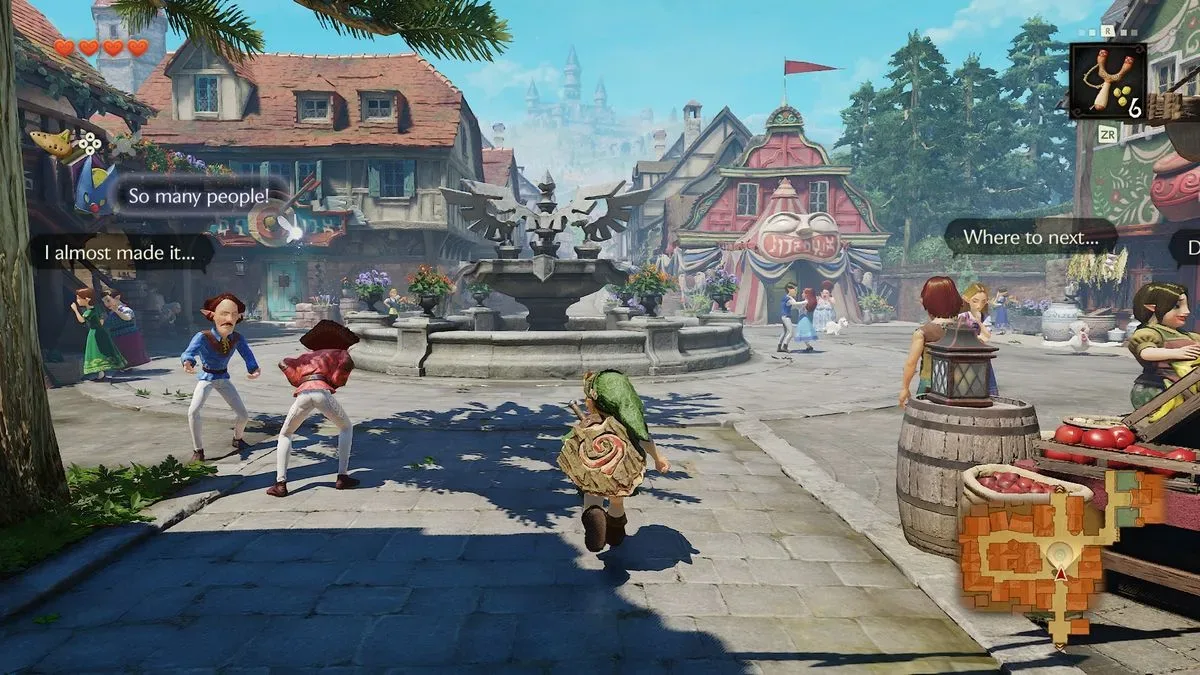
Castle Town itself appears livelier and more colorful, with returning non-player characters receiving substantial visual updates. More buildings can be entered as well, expanding the town beyond the familiar paths of the N64 version. This should make the location feel less like a transitional hub and more like the bustling center of a kingdom on the verge of catastrophe.
Not every detail is purely cheerful. One previewed scene includes a character slumped in the town's back alley, a quietly ominous image for anyone familiar with the events that follow. Ocarina of Time is remembered in part for how effectively it shifts tone between childhood wonder and a darker adulthood. The remake's added detail appears poised to sharpen that contrast, letting its early locations carry hints of the trouble already gathering beneath the surface.
The Temple of Time remains an essential landmark
Among all of these additions, the Temple of Time remains a visual and thematic anchor. Its place in Ocarina of Time is foundational: it is at once a sacred site, a narrative turning point and one of the series' most enduring structures. The remake's more elaborate Hyrule may make that building stand out even more. As Castle Town grows denser and more animated around it, the Temple of Time can retain its imposing stillness.
That contrast is at the heart of the game's story. Ocarina of Time moves from a child's relatively straightforward mission into a tale of interrupted lives, damaged worlds and responsibility carried across years. The Temple is where the game makes its most dramatic transition, and presenting it with appropriate grandeur is one of the remake's most important visual tasks.
A Forest Temple with added character
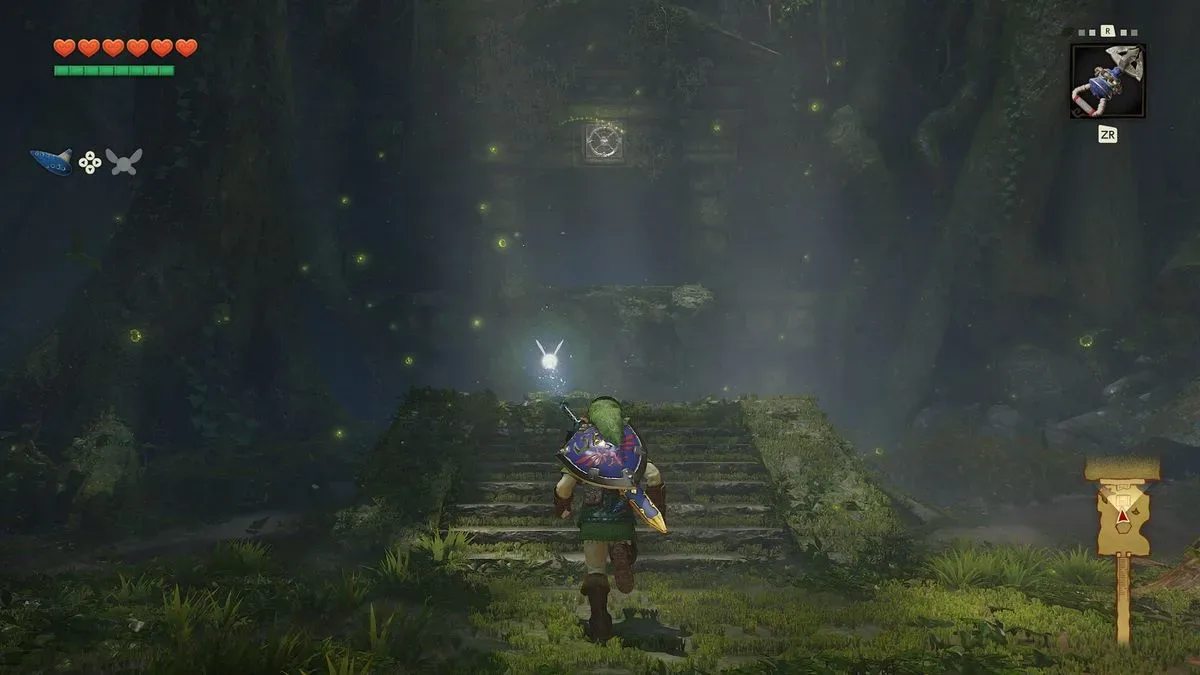
The preview session later moved to the Forest Temple, the first major adult-era dungeon. Its mansion-like setting has always separated it from the more overtly ancient or cavernous spaces elsewhere in the game. With an eerie interior, hidden rooms and the memorable objective of recovering flames from four Poes, it has often been celebrated as one of the strongest examples of Ocarina of Time's darker mood.
The remake appears to emphasize that identity. The four Poes are no longer distinguished only through their colors; each reportedly has its own face and body shape. That is a valuable touch because these spirits are more than interchangeable markers for a puzzle. Making them visually individual gives the hunt through the temple more character while strengthening the unsettling idea that the dungeon is inhabited by distinct supernatural presences.
Updated stonework and underground spaces add a greater sense of age to the temple, while decorative pool tiles invite questions about who might have occupied or maintained such a place in the past. The dungeon's mansion atmosphere has long prompted comparisons with survival-horror spaces: corridors, doors, ghosts and an uneasy uncertainty about what lies beyond the next room. Those qualities are reportedly more pronounced here, suggesting that the remake understands the Forest Temple's appeal is as much about mood as it is about its puzzles.
Breath of the Wild influences the interface, not the adventure's core
Several modern design choices take clear inspiration from The Legend of Zelda: Breath of the Wild. Hyrule Field is introduced with a sweeping camera presentation reminiscent of the 2017 game, while the menus, quest text and loading screens use a similarly contemporary visual language.
The equipment interface is one of the most practical examples. Holding the R button on the Switch 2 Pro Controller opens an item-selection display that allows players to cycle through a line of available equipment. In a game where Link's tools are constantly changing, that can be a meaningful convenience. Swapping from the Hookshot to Din's Fire during a fight, including encounters with Stalfos, should be less disruptive than diving into a more cumbersome menu arrangement.
These updates do not appear to be an attempt to turn Ocarina of Time into Breath of the Wild. Instead, they provide a modern layer of usability around the classic adventure. The original's occasional fixed camera angles have been replaced by a consistent over-the-shoulder view, which may make some secrets easier to spot. Purists may notice that difference, but it also reflects how player expectations have changed over the past several decades.
There is room for both versions of the experience. The 1998 Ocarina of Time remains available through multiple avenues, preserving its original pacing, presentation and design constraints. The remake's role is different: it is a new interpretation designed to make a foundational Zelda adventure more approachable and visually persuasive for a contemporary audience.
An adaptation rather than a replacement
That distinction is crucial. The most promising remakes are not those that erase every sign of age, nor those that refuse to adjust anything at all. They are the ones that identify what made a game endure and then use new technology to communicate those strengths in a different era. The early look at Ocarina of Time suggests a project aiming for precisely that balance.
Its Hyrule still has the same essential destinations, and its dungeons still carry the recognizable structure that made the original so influential. Yet the spaces between those landmarks have gained more life, the characters and enemies have gained more expression, and the interface has gained a layer of speed and clarity shaped by later Zelda design.
For returning fans, the appeal may be discovering how familiar moments feel when the world around them is allowed to breathe more fully. For newcomers, the appeal is an opportunity to meet one of gaming's most influential adventures in a form built around present-day expectations. With its November 5 release approaching, the remake is shaping up less as a museum piece and more as a carefully modernized journey through a Hyrule that remains instantly recognizable.
Community
Discussion
Start the conversation.
No comments have been posted yet.