

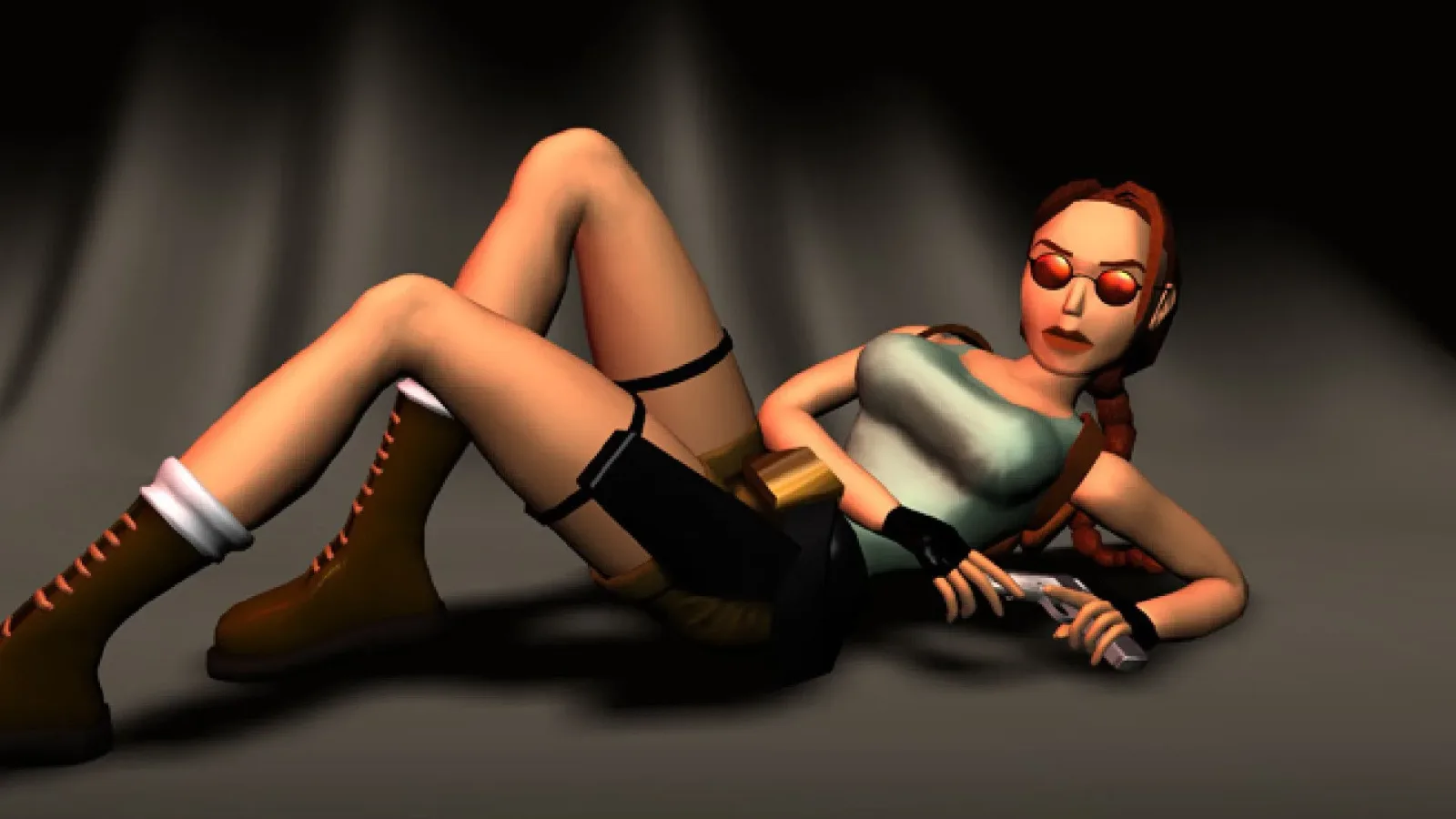
Lara Croft became one of the most recognizable figures in video games almost as quickly as Tomb Raider became a blockbuster. Her twin pistols, acrobatic movement, archaeological adventures, and instantly identifiable silhouette helped define the original PlayStation era. Yet the version of Lara that dominated magazine covers, advertisements, and promotional art was not exactly the character the original development team expected to create.
Veterans of Core Design have reflected on the gap between Lara Croft as a playable protagonist and Lara as a marketing phenomenon. Speaking to The Guardian, co-creator and lead programmer Paul Douglas and level designer Heather Stevens discussed the character's earliest concepts, the commercial assumptions around women leads in games during the 1990s, and the increasingly sexualized promotional material used as the series grew.
Both developers acknowledge that Lara's appeal played a major role in turning Tomb Raider into a cultural giant. But they also argue that some campaigns placed too much emphasis on suggestive imagery rather than the game itself. Stevens, in particular, felt the publisher's approach eventually lacked creativity.
A very different starting point for Tomb Raider's hero
Before she was Lara Croft, the adventurer was conceived as Laura Cruz, a Latin American character whose appearance was intended to be more grounded than the figure audiences would later associate with the franchise. Douglas said the early version of the heroine was more realistic and "almost androgynous" in her presentation.
For useful background on this topic, read GTA 6's November Launch Could Leave Room for Zelda and WoW: Forever.
That concept changed as the team worked out how its hero should move. The original Tomb Raider was built around a remarkable degree of physical expression for its time: running, climbing, swimming, leaping across gaps, pulling switches, and carefully navigating ancient spaces in fully 3D environments. A stylized animation approach was considered more effective for the game, and Lara's physique changed alongside it.
The resulting character was unmistakable even within the technical limits of the era. Lara's angular polygonal model, exaggerated proportions, teal top, shorts, holsters, and braid created a visual identity that could be recognized immediately. That clarity mattered in a period when game characters had to communicate personality through relatively simple models and low-resolution imagery.
Still, the original concept process complicates the common idea that Lara began solely as a deliberately provocative mascot. The early team was building a capable adventure lead for a game about exploration, isolation, puzzles, and action. Her image became inseparable from the game's commercial success, but the developers' memories suggest that the later promotional direction was not simply a direct extension of their initial priorities.
The industry assumption that women leads would not sell
Douglas recalled a prevailing belief among publishers at the time that a female lead could not sell a game. That view now seems especially striking considering Lara Croft's eventual reach, but it reflects an industry that often treated male protagonists as the default commercial choice.
Tomb Raider helped challenge that assumption in spectacular fashion. The game had a compelling hook beyond its lead character: players explored tombs and ruins in a then-novel 3D format, with an emphasis on spatial awareness and environmental problem-solving. Its success came from the combination of technology, atmosphere, adventure design, and Lara herself. Her presence was central, but she was not the only reason players responded to the experience.
Once the first game proved successful, however, the commercial calculation changed. Eidos Interactive recognized that Lara could function as a brand unto herself. She could be placed at the center of ads, covers, licensing arrangements, celebrity-adjacent appearances, and promotional art. The publisher had found a character who was marketable well beyond the usual audience for a new action-adventure game.
Douglas described that marketability as a force that sent Tomb Raider "into the stratosphere." He also stressed that he believes the quality of the game could stand on its own regardless of how Lara was presented in advertising. That distinction is important: the development team could appreciate the immense visibility the character brought while remaining uncomfortable with some of the ways that visibility was used.
When character promotion became pin-up marketing
As sequels arrived, Lara's marketing shifted further toward highly stylized pin-up imagery. Promotional renders increasingly put attention on her body, wardrobe, and poses. In some material, the tomb-raiding adventurer was presented less as a daring explorer and more as an object designed to attract attention at a glance.
Stevens said Eidos had correctly identified Lara's potential, but felt that the focus on the character sometimes came at the expense of the game. In her view, some choices involving Lara's clothing and poses went too far. She described the oversexualization in certain campaigns as a lack of imagination.
That criticism does not deny the cultural impact of the marketing. Lara became one of gaming's first truly mainstream icons, and the promotional push made her visible to people who might never have played the games. But broad recognition and thoughtful representation are not necessarily the same thing. A campaign can establish a character as famous while also reducing what makes that character interesting.
For many players, Lara was compelling because she moved through dangerous ruins alone, survived elaborate traps, and solved mysteries through athleticism and intelligence. She was confident and unusually self-directed for a major game hero of the period. The tension identified by the original developers is that promotional material could make those traits secondary to a narrower, more sexualized image.
Lara Croft's image has changed repeatedly
The history of Tomb Raider is also the history of Lara being reinterpreted for new hardware, new audiences, and changing expectations. The classic games established the exaggerated, adventurous version of the character. Later entries adjusted her visual design and tone in different directions, sometimes retaining the series' glamorous edge and sometimes attempting a more grounded portrayal.
Crystal Dynamics' 2013 Tomb Raider reboot represented one of the clearest pivots. Its Lara was rendered with a more naturalistic visual style and framed as a younger survivor at the beginning of her journey. The reboot did not fully mirror the "almost androgynous" quality Douglas associated with the earliest concept, but it did move the character closer to a realistic presentation than the classic promotional image of the 1990s.
That reboot's approach also put greater emphasis on vulnerability, endurance, and origin-story drama. It was a substantial tonal change from the confident, already-established raider seen in the earliest games. The shift showed how flexible the character could be, though it also prompted ongoing debate among fans about which interpretation best captures Lara's identity.
Those debates have never been limited to character model details. They are about tone, too. Is Lara best understood as a pulpy, larger-than-life adventurer? A hardened survivor? A witty aristocratic explorer? Or some blend of the above? Her long history means different generations have encountered markedly different versions of the same icon.
A new era with familiar questions
The upcoming Tomb Raider: Catalyst and Legacy of Atlantis appear to be moving back toward a more campy and exaggerated take on Lara Croft. That direction has clear roots in the classic era, when the series embraced globe-trotting spectacle, impossible tombs, and a hero with the poise to make the absurd feel exciting.
A heightened version of Lara does not automatically require a return to the marketing habits criticized by Douglas and Stevens. Exaggeration can be about adventure, fashion, humor, action, and confidence. The distinction lies in whether promotional work treats Lara as the active center of an adventure or simply as an image to be consumed.
Modern game marketing exists in a very different media environment from the one that surrounded the original Tomb Raider. Audiences can scrutinize trailers, character designs, social posts, and advertising campaigns immediately. The conversation around representation is also more developed than it was during Lara's initial rise. That does not eliminate disagreement, but it does make it harder to separate a character's visual presentation from the values communicated by the campaign around her.
The legacy of an icon remains bigger than any campaign
Lara Croft's status was never built on one ad, one render, or one interpretation. It rests on decades of games and on a character who made exploration feel thrilling. The original Tomb Raider gave players an adventure hero who could command vast, lonely spaces at a time when 3D game worlds were still revealing their possibilities.
The comments from Douglas and Stevens add useful context to that legacy. They show that the people involved in making the original game could recognize Lara's extraordinary value as a character while questioning an approach that foregrounded sexualization over imagination. Their reflections also underline how much of Lara's public identity was shaped after the core creative work had left the studio floor and entered the machinery of global marketing.
As Tomb Raider prepares for its next chapters, Lara Croft remains a rare kind of game icon: one who has survived dramatic reinventions without losing the basic appeal of the premise. She is still the explorer at the edge of a collapsing ruin, still the protagonist who turns an ancient mystery into a personal challenge. The question for each new era is not whether Lara should be visible. It is whether that visibility captures the adventurous character players have spent decades following.
Community
Discussion
Start the conversation.
No comments have been posted yet.