

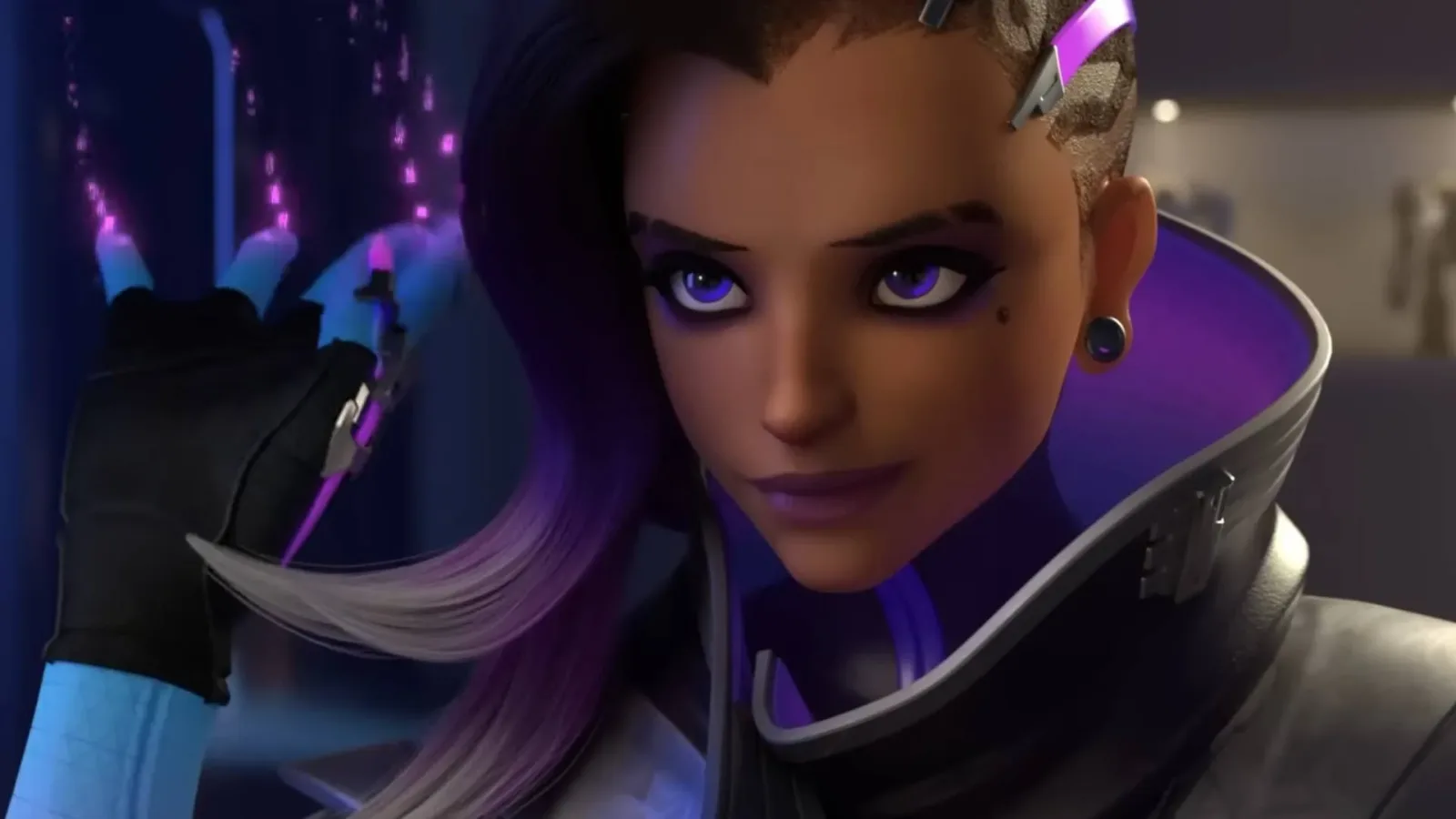
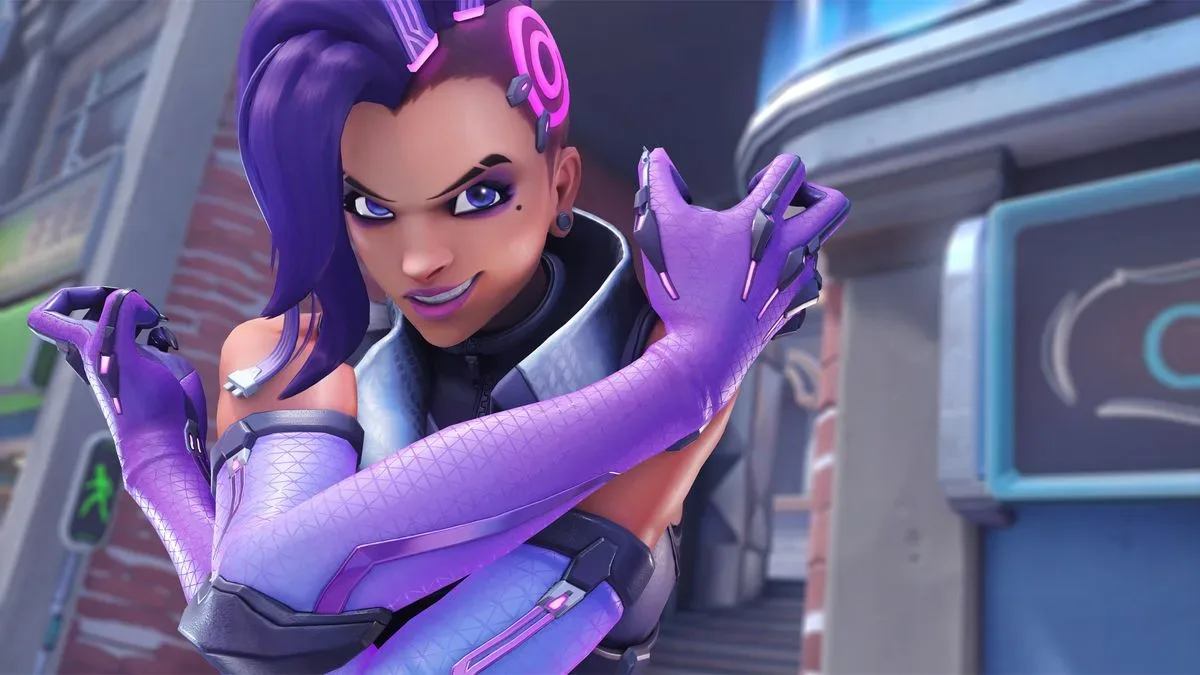
Overwatch is preparing one of its boldest hero overhauls yet. Sombra, the stealth-focused hacker who has spent a decade in the Damage role, is set to move into the Support category in Season 5. The redesign is intended to address years of complaints about the character's ability to disrupt opponents, escape danger, and operate far from her own team--without stripping away the distinctive playstyle that made her one of the roster's most recognizable heroes.
Game director Aaron Keller discussed the reasoning behind the change during BlizzCon, acknowledging that Sombra has remained a difficult hero for the team to balance in a way that feels fair and enjoyable across both sides of a match. The issue, as Keller described it, is not necessarily one individual ability. Instead, it is the way several disruptive tools are combined in a single kit.
Sombra has been part of Overwatch since 2016, and her identity has long centered on information, infiltration, hacking, stealth, and sudden pressure against vulnerable targets. Her ability to deny or interrupt enemy options, vanish from sight, relocate out of danger, and repeatedly approach fights on her own terms has made her especially divisive. Players who enjoy the character often value her tactical flexibility and mind games. Players on the receiving end can feel as though they have limited opportunities to respond.
Why Sombra Has Been So Difficult to Rework
Keller said Blizzard has been grappling with Sombra's design for some time and has already attempted multiple reworks. Those revisions have repeatedly returned to a familiar cluster of concerns: opponents can lose access to important abilities, Sombra can remain elusive for extended periods, and she can quickly exit situations that would be fatal for many other heroes.
For useful background on this topic, read The Last of Us Part II PC Multiplayer Mod Cancelled After Sony Request.
In competitive shooters, disabling another player's options can be especially sensitive. A hero taking damage is one thing; a hero temporarily unable to use the abilities that define their response can create a much sharper feeling of helplessness. Sombra's Hack has therefore always been at the center of the conversation around her. The frustration becomes greater when that denial is paired with stealth and an effective escape route, allowing Sombra to choose engagements with unusual freedom.
The problem is cumulative rather than isolated. Invisible movement, surprise attacks, ability denial, and fast disengagement can each be workable tools on their own. When they all belong to one character, however, the experience can become oppressive for opponents. Keller's comments suggest the Season 5 redesign is less about declaring any single Sombra mechanic fundamentally wrong and more about changing the conditions under which she can use those mechanics.
That distinction is important. A successful hero rework should not merely weaken a controversial character until she stops causing complaints. It also needs to retain a clear purpose, preserve the appeal for existing players, and give teammates and opponents understandable ways to react. Blizzard appears to be approaching Sombra's role swap as a structural solution: shift the rhythm of the hero's match involvement, then limit how long she can be away from the team doing her familiar infiltration work.
A Frustration for Allies as Well as Enemies
The criticism aimed at Sombra has not only come from the enemy team. Keller also pointed to the sometimes awkward experience of playing alongside her. Even when a Sombra player is performing well, teammates may not always see the impact of her work. A flanker who is invisible, scouting, contesting an isolated enemy, or setting up a future attack can be contributing substantially, but that contribution may be less immediately visible than a tank holding a frontline or a support healing allies in the middle of a fight.
That can create a perception problem. When a team is trying to move an objective and one player is physically absent from the main group, allies can feel as though they are operating with fewer people--even if the Sombra is creating pressure elsewhere. Other highly mobile heroes can spend time away from the group, too. Keller specifically compared that broad idea to heroes such as Tracer and Wrecking Ball, though he noted that Sombra can be absent to a more extreme degree. Her ultimate can become one of the clearest occasions when her presence is plainly felt by everyone.
Moving Sombra into Support could make her contribution easier to understand in real time. Healing is among the most visible forms of teamwork in Overwatch. It directly ties a player to the survival and momentum of their teammates, and it creates a natural reason for Sombra to rotate back toward her group after a brief excursion behind enemy lines.
How the Support Version of Sombra May Play
Blizzard has not laid out every element of the redesigned kit in the available discussion, but Keller described the central loop. The new Support Sombra will heal her team, and doing so will give her opportunities to enter stealth and make a limited trip toward the enemy back line. She can still perform the disruptive, opportunistic actions associated with the hero, but only for a restricted duration before she is expected to return and resume helping her allies.
That proposed cadence could meaningfully change the character's place in a match. Rather than functioning as a Damage hero who may spend lengthy stretches disconnected from her team, Sombra would have a support responsibility anchoring her to the group. Her stealth excursions could become deliberate windows created through team support, rather than an almost continuous state of independence.
It is a potentially intriguing fit for her established fantasy. Sombra has always been less about direct firepower than manipulation: gathering information, exploiting weak points, and turning an opponent's reliance on abilities against them. A Support role does not have to erase that fantasy. It can refocus it. The character could become someone who stabilizes allies, identifies openings, briefly pressures a critical target, and returns before the team loses the benefits of having its support present.
Of course, the final result will depend on details Blizzard has yet to fully reveal. The strength and delivery method of Sombra's healing, the exact limits on stealth, the fate of Hack and Translocator, the handling of her damage output, and the role of her ultimate will all determine whether the redesign feels like a genuine evolution or a completely different hero wearing Sombra's name.
Keeping the Character's Core Intact
Keller emphasized that the development team's goal is to keep Sombra's identity. That means the change is not being framed as a decision to abandon stealth, hacking, and backline harassment altogether. Instead, those elements are expected to remain available in a more constrained form tied to her responsibilities as a support player.
This is the balancing challenge at the heart of the rework. If Sombra remains capable of denying too much while safely disappearing whenever a fight turns against her, opponents may continue to find her aggravating. If those tools are reduced too drastically, longtime Sombra players could reasonably feel that the hero they learned has disappeared. A limited-duration infiltration model is Blizzard's apparent attempt to find the middle ground: let Sombra be Sombra, but make her moments of disruption more readable, temporary, and connected to team play.
It could also give the Support roster a markedly different flavor. Support heroes are often judged by healing throughput, defensive utility, mobility, and lifesaving cooldowns. A Sombra built around temporary stealth missions and enemy interference could add a more proactive, covert angle to that role. That possibility is likely to be exciting for players who like Support but want an option that influences fights through positioning and disruption as much as direct healing.
Season 5 Brings More Than One Major Change
Sombra's role transition will not be the only notable development arriving with Overwatch Season 5. Blizzard is also planning additional changes for Roadhog, another hero who has experienced substantial revisions over the life of the game. The season will also introduce a new hero named Doctrine.
With a new character, a Roadhog update, and a full category shift for one of Overwatch's most debated heroes, Season 5 is shaping up to be a significant moment for the game's roster. The Sombra rework in particular will be closely watched because it asks a fundamental question: can a hero famous for frustrating opponents be reshaped into a teammate-centered support without losing the traits that made her memorable?
Blizzard's answer appears to be yes, but with a clear condition. Sombra can still infiltrate, disrupt, and pressure the back line--but she will need to come home, heal her team, and make her value visible far more often than before.
Community
Discussion
Start the conversation.
No comments have been posted yet.