

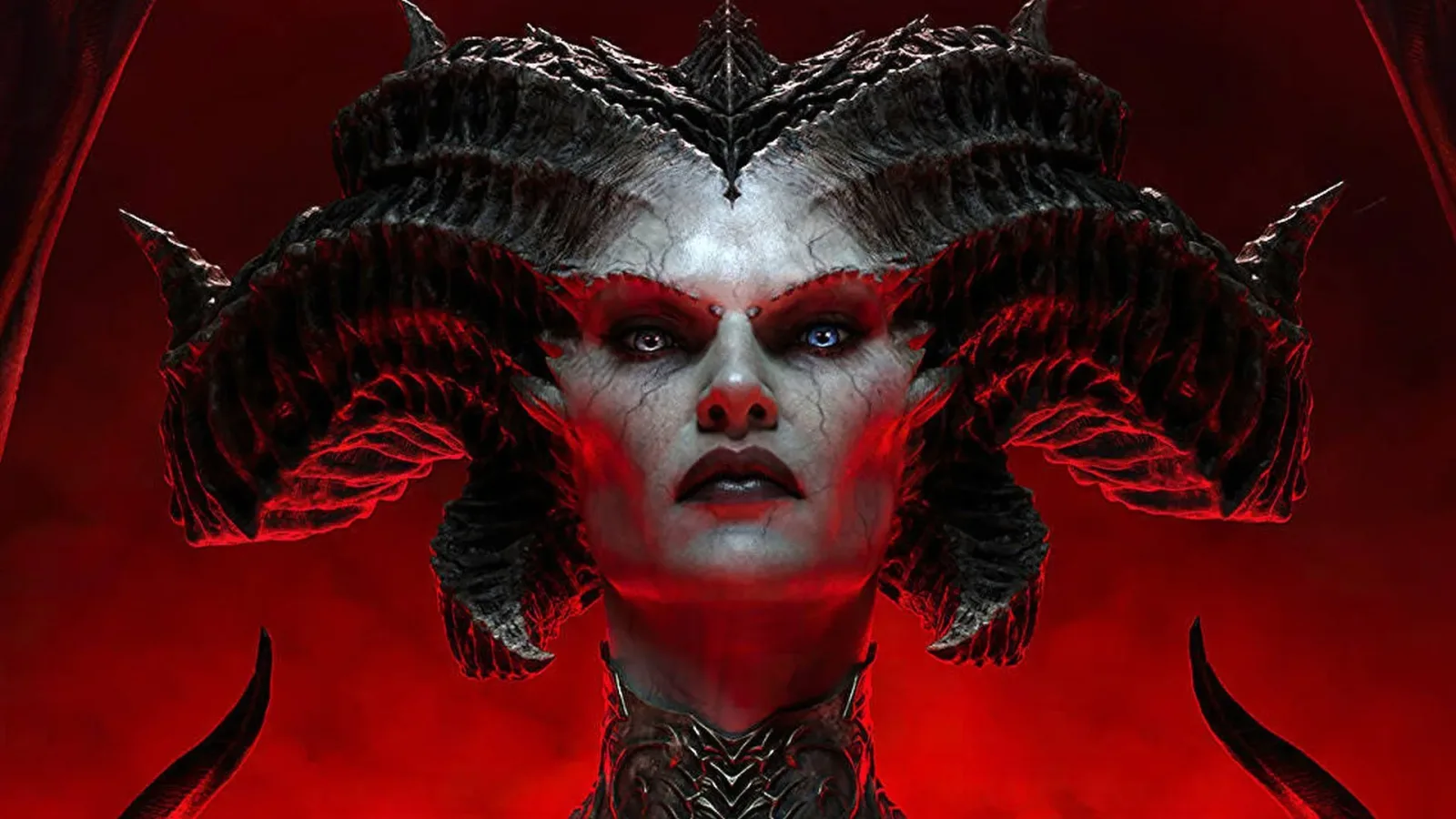
Diablo 4's planned 30th-anniversary celebration has drawn criticism from Chris Wilson, one of the co-creators and central designers behind Path of Exile. Speaking in a YouTube video following BlizzCon's Diablo announcements, Wilson said the upcoming in-game event, titled Season of Hell's Legacy, feels at odds with the dramatic weight he believes the franchise's story and villains should retain.
The comments arrive at a transitional moment for Blizzard's action-RPG series. Diablo 5 was announced at BlizzCon, though the next mainline entry remains years away. At the same time, Diablo 4 is moving toward a lighter ongoing-support model: Blizzard has said that no further major expansions are planned, although additional content is still expected to arrive. Wilson interpreted that shift as a sign that the current game is being left behind before its larger narrative potential has been fully realized.
"It feels like they're abandoning Diablo 4," Wilson said, pointing specifically to the confirmation that major expansions have come to an end. He suggested that whatever continues to be released for the game may be handled by a smaller remaining team, and he described the proposed roadmap as disappointing.
A Concern Over Narrative Weight
Wilson's main objection is not simply that Diablo 4 is receiving an anniversary event. Rather, he takes issue with the way Season of Hell's Legacy appears set to bring several of the series' biggest antagonists into a limited-time framework that is not directly bound to Diablo 4's core campaign storyline.
For useful background on this topic, read Gabe Newell Confirms Valve's Throat Singing Era Was as Distracting as Former Staff Remember.
For Wilson, Diablo 4 had been establishing a longer arc in which players could eventually confront the Prime Evils. Those figures are among the most important threats in Diablo mythology, and their appearances have traditionally been connected to the franchise's largest conflicts. Introducing them together for a special event, he argued, risks making those encounters feel less meaningful than they would within a carefully developed main narrative.
"I feel that games should have respect for their core storylines, and treat their antagonists with the respect that they deserve," Wilson said.
That perspective reflects a broader design philosophy that has often shaped discussion around long-running live-service games. Seasonal content can provide a reason for players to return, experiment with new systems, and experience time-limited twists on established worlds. However, it can also create tension when major lore moments, famous villains, or supposedly permanent developments are used as temporary attractions.
In Wilson's view, the issue is especially pronounced for Diablo because the series has spent decades building its identity around a struggle against the forces of Hell. The title character is not merely another recognizable mascot: Diablo is the Lord of Terror and the central figure whose defeat has defined major chapters of the franchise. Wilson argued that the game's villains should be presented with gravity rather than as event-driven novelty content.
Deckard Cain's Return Raises Canon Questions
Wilson also highlighted the reported return of Deckard Cain as part of the anniversary material. Cain was killed during the events of Diablo 3, making his apparent involvement a particular point of concern for players who value the continuity of the series' established timeline.
His argument was not necessarily that a beloved character can never reappear in any form. Diablo is a fantasy setting built around demons, resurrection, magical realms, visions, and eras that often overlap in unusual ways. Still, Wilson said that bringing Cain back in this context sends an undesirable message about the significance of past events.
If a character's death can be set aside for a celebratory event without a meaningful narrative framework, he suggested, players may have less reason to take later deaths and story developments seriously. The same applies to the introduction of major villains outside the central plot. Wilson characterized that approach as weakening the sense that causality matters in the world of Sanctuary.
That is a familiar concern in franchises with decades of history. Long-running series often face pressure to reintroduce familiar characters and enemies because they are instantly recognizable and can generate excitement. Yet the stronger the emotional or plot significance of a previous event, the more carefully a return generally needs to be handled if it is to avoid feeling like a reversal made for promotion rather than storytelling.
"Birthday Boy" Language Also Drew Criticism
Another detail that bothered Wilson was the on-stage description of Diablo as "the birthday boy." He viewed that phrasing as a tonal mismatch for a villain who represents the ultimate evil at the heart of the franchise.
The objection may sound small in isolation, but it connects directly to his larger point. Diablo's appeal has long rested on a dark fantasy atmosphere: ruined sanctuaries, corrupted kingdoms, desperate survivors, and the looming possibility that humanity's struggles are being manipulated by powers beyond its control. The Lord of Terror is supposed to embody a threat players spend substantial time preparing to face.
Wilson argued that a franchise which has earned billions by selling the fantasy of eventually confronting Diablo should preserve the villain's stature. A playful label, combined with an event format that seemingly assembles multiple legendary antagonists outside the main story, struck him as a sign that Blizzard's presentation may be prioritizing a short-term celebratory moment over the tone that made the series resonate.
His criticism is ultimately about consistency. A game can include humor, fan service, or anniversary festivities without abandoning its identity, but Wilson believes Diablo's central antagonists need to be handled with enough seriousness that players still feel the stakes behind the world and its conflicts.
Diablo 4 Enters a New Support Phase
Wilson's reaction also reflects unease over Diablo 4's changing place within Blizzard's plans. The announcement that no more major expansions are in development is significant because expansions have historically been where Diablo games can broaden their worlds, introduce substantial systems, and move their principal stories forward.
Smaller additions can still be valuable, especially for a game with an established seasonal audience. New gameplay activities, balance changes, rewards, and event content can keep a community engaged. But Wilson's comments suggest he sees a potential mismatch between the scale of Diablo's mythology and the scale of the content now planned for Diablo 4.
For players, the unanswered question is how much narrative importance future Diablo 4 updates will carry. If Season of Hell's Legacy includes confrontations or appearances tied to the Prime Evils and Deckard Cain, fans will likely be watching closely to see whether the event is framed as a non-canon celebration, a story with an in-universe explanation, or a development that has lasting consequences for the wider series.
The distinction matters. A clearly separated anniversary scenario gives developers room to celebrate the past without rewriting it. A canonical storyline, on the other hand, needs to account for where characters are, what they know, and why major events are happening now. Wilson's concern is that the announcement, as presented, does not seem to provide enough assurance that those distinctions are being treated carefully.
Wilson Still Sees Reasons for Hope in Diablo 5
Despite his disappointment with Diablo 4's apparent wind-down and its anniversary plans, Wilson did not dismiss Diablo 5. He said he is tentatively hopeful about the newly announced sequel.
Several elements of Diablo 5's early direction appealed to him. The game is said to be returning to a more RNG-heavy approach to world design, a choice that could help make exploration and repeat playthroughs less predictable. Wilson also responded positively to the project's notably desolate worldview, which suggests a renewed emphasis on the bleak, hostile atmosphere closely associated with the series.
Even the Diablo 5 logo's font received approval from Wilson, a small observation that nevertheless underscores how much tone and presentation matter to him. In a franchise built on mood as much as combat and loot, visual identity can signal whether a new installment understands the qualities players associate with its darkest, most memorable entries.
Diablo 5 is also planned to tell "three stories" spanning the past, present, and future. Its biomes will reportedly change shape depending on which of Diablo's minions holds power. Those ideas point toward a structure with considerable scope, and they could offer a way to explore the series' history while making its shifting demonic hierarchy meaningful within the game world.
For Wilson, the hope appears to be that Blizzard can maintain that sense of purpose as Diablo 5 develops. His critique of Season of Hell's Legacy is not a rejection of Diablo as a whole; it is a call for the series to protect the importance of its own mythology, especially when it uses figures as consequential as the Prime Evils, Deckard Cain, and Diablo himself.
With Diablo 4 entering a reduced expansion phase and Diablo 5 still some distance away, the anniversary event may become an important test of how Blizzard intends to balance nostalgia, seasonal content, and canon. Players who share Wilson's concerns will be looking for reassurance that Sanctuary's biggest names are more than familiar faces brought out for a celebration--and that the events surrounding them still have consequences worth believing in.
Community
Discussion
Start the conversation.
No comments have been posted yet.