

Patrick Stewart's appearance in The Elder Scrolls IV: Oblivion remains one of the most memorable celebrity performances in role-playing game history, even though his character is present for only a brief portion of the adventure. As Emperor Uriel Septim VII, Stewart establishes the gravity, age, and political tension surrounding Bethesda's world before the player is sent into Cyrodiil. His voice is heard at one of the game's most important turning points, and it helped give a vast fantasy setting a sense of immediate prestige.
Behind that performance was a level of preparation that impressed Stewart himself. In footage from the making-of documentary included with the original 2006 Collector's Edition of Oblivion, Todd Howard recalled sending the actor an enormous set of notes about the Emperor and his history. Howard initially worried the material, assembled by lead designer Ken Rolston, was excessively long. Stewart's response put those concerns to rest.
When Stewart arrived to record, he told the team that he had received the character materials. Howard remembered being nervous about the size of the document, only for Stewart to say that he had never before been given such detailed notes for a role. More importantly, the actor said he loved the material, found the character intriguing, and was excited to begin.
It is a small anecdote, but it says a great deal about both Stewart's approach to performance and Bethesda's ambitions for Oblivion. The studio was not simply hiring a recognizable actor to add a famous name to its cast. It wanted the performer playing the Emperor to understand a character shaped by multiple prior games, a complicated dynasty, and the long-running mythology of Tamriel.
For useful background on this topic, read Deep Fishing codes for October 2026: Every Active Bait, Cash and Potion Reward.
A short appearance with a huge narrative purpose
Uriel Septim VII does not spend much time on screen in Oblivion. The Emperor appears at the very beginning, as the player escapes the Imperial City's prison and sewer passages alongside him and members of the Blades. The sequence rapidly makes clear that the Empire is in danger and that the Septim bloodline is nearing its end.
For players who had not followed the earlier Elder Scrolls games, Uriel's scenes needed to establish the stakes without demanding prior knowledge. For veterans, however, he was already a significant figure with deep roots in the series. Bethesda therefore had to make the Emperor feel like a person with a long history rather than a fantasy monarch who existed only to deliver a quest prompt.
That context explains why Rolston's notes were so substantial. Uriel Septim was not merely an elderly ruler placed in the opening tutorial. He was part of a lineage and an imperial system that had been explored over several games. His status, outlook, fears, responsibilities, and connection to the player's role in the story all benefited from being understood at a deeper level.
Stewart's willingness to engage with that background gave Bethesda an ideal fit. The actor had already built a career around performances that could communicate authority, introspection, vulnerability, and forcefulness with remarkable economy. Whether audiences knew him from Star Trek, X-Men, theatre, film, or television, his voice carried an unmistakable presence. In Oblivion, that presence allowed the Emperor's limited screen time to feel consequential.
Ken Rolston's lore packet became an unexpected advantage
Howard's recollection centers on a familiar concern in game development: the fear that too much background information might overwhelm a collaborator. Developers often work with years of internal documents, discarded concepts, worldbuilding notes, and continuity details. What feels essential to the people who made the game can look intimidating when sent to someone outside the studio.
In this case, Rolston had prepared extensive character material for Stewart, and Howard feared it might be "embarrassingly long." Instead of seeing the packet as unnecessary homework, Stewart saw it as evidence that the role had been taken seriously. His enthusiasm validated the team's desire to treat even a relatively compact voice role with the kind of care normally associated with a much larger dramatic part.
That reaction also highlights an important difference between celebrity casting used as simple marketing and casting built around collaboration. A well-known performer can attract attention, but the performance still has to serve the game. Stewart's response suggests that Bethesda offered him enough material to locate the Emperor within the larger story and make choices that reflected the character's history.
The result is especially clear in the tone of Uriel's dialogue. He does not sound like he is reciting lore entries or explaining a fantasy universe solely for the audience's benefit. Stewart gives the Emperor a calm but pressing quality, as though the character has spent a lifetime carrying the burden of power and has finally reached a moment when that burden can no longer be held back.
"Generals and kings" and the sound of authority
Another portion of the documentary shows Bethesda developers hearing Stewart's recorded lines for the first time. Rolston described the performance as if Stewart were a reverend speaking before a congregation, precisely the effect the team had wanted. It was a fitting description for a character whose words carry both political authority and the weight of prophecy.
One line in particular drew attention: "Generals and kings have knelt at my command." Designer Mark Nelson remarked that it was the kind of dialogue that could easily come across as overly dramatic, but Stewart made it work. That observation captures why voice casting matters so much in an RPG. Written dialogue exists on the page, but delivery determines whether grand fantasy language feels hollow, theatrical, intimate, frightening, or inspiring.
For Uriel Septim VII, the heightened language is appropriate. He is an Emperor speaking from the center of a world on the edge of catastrophe. Yet the performance avoids turning him into a cartoonish ruler. Stewart gives the words enough conviction that the audience can believe in the character's command of armies and nations, while his quieter moments preserve the sense that he knows how fragile his position has become.
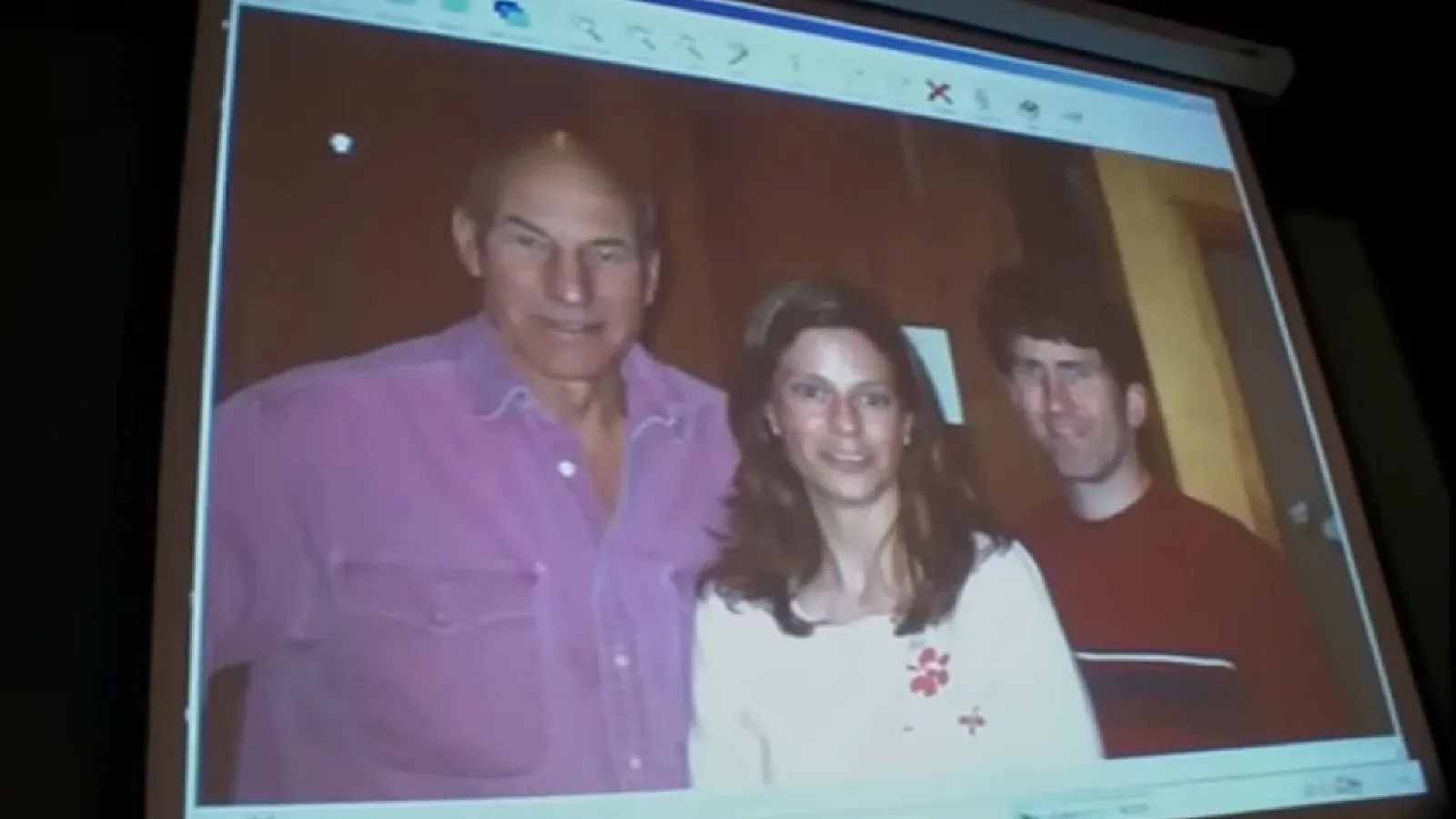
Nelson's reaction in the documentary was more than professional admiration. He openly described himself as a longtime Star Trek fan, recalling college nights spent watching the series with friends. He also joked that he did not have a photograph of his wife in his wallet at the time, but did have a worn picture of Stewart. The moment reflects the surreal excitement the team felt when a performer they had admired for years was suddenly bringing their dialogue to life.
Oblivion arrived during a changing moment for Bethesda
The behind-the-scenes footage also preserves a notable period in Bethesda's history. Before Oblivion, the studio was still emerging from an era in which its games were frequently viewed as ambitious, complex, and comparatively niche PC role-playing experiences. The Elder Scrolls already had devoted fans, but the franchise had not yet become the mainstream cultural force it would later become.
Oblivion helped change that. Its broad world, first-person exploration, extensive questing, and striking presentation placed Bethesda's design philosophy before a much larger audience. The game's original launch on PC and Xbox 360 put it in a major moment for high-definition console gaming, while its later PlayStation 3 release expanded its reach further.
Within that wider push, Stewart's casting mattered. His role was brief, but it told players immediately that Bethesda was aiming for a more cinematic presentation without abandoning the density of its RPG worldbuilding. The detailed notes sent to him are a useful symbol of that balance: a game could feature celebrated actors and polished dramatic scenes while still being built on a foundation of extensive lore.
The documentary reportedly begins with Howard reflecting on the old perception that games were primarily toys for children. Looking back, the team's response to Stewart's performance feels tied to that cultural moment. Hearing an actor of his stature perform dialogue for a fantasy game was not merely a fun production story for Bethesda's developers. It was a sign that the medium was attracting performers and audiences willing to take its characters and stories seriously.
A lasting performance in Tamriel
Following Stewart's death at age 86, fans have revisited stories from across his career, including his work in games. His role in Oblivion is a particularly resonant one because it demonstrates how seriously he approached a medium that was still, at the time, fighting for broader recognition.
His performance did not depend on a massive number of scenes. Instead, it made an impact through precision. Uriel Septim VII had to convey history, responsibility, danger, and belief in the player's potential in a short span of time. Stewart's voice gave those elements shape, while Bethesda's expansive lore notes ensured he had the context needed to understand the man behind the crown.
For Elder Scrolls fans, the story is also a reminder that the series' sprawling mythology is not only there for bookshelves, dialogue trees, and online lore discussions. When shared effectively, that material can inform a performance and make a fictional world feel inhabited by people who existed before the player arrived. Stewart recognized that value immediately. What Howard feared was too much preparation became the reason the actor was so eager to step into Tamriel.
Community
Discussion
Start the conversation.
No comments have been posted yet.