


Phantom Blade Zero is making a powerful case for a different kind of action RPG progression. Its appeal is not simply that it gives protagonist Soul a huge collection of stylish weapons, each realized through martial-arts-inspired animation and wuxia spectacle. The more important idea may be what the game lets players do with those weapons after they find them.
For many players, the thrill of defeating a difficult boss in a Soulslike comes with an immediate follow-up question: what did it drop? A boss weapon should feel like a trophy, a new possibility, and perhaps the start of an entirely different combat approach. Too often, however, that excitement turns into a calculation about scarce upgrade stones, character attributes, and whether a newly acquired weapon can ever catch up with the familiar blade that has already consumed hours of investment.
Phantom Blade Zero appears to address that problem with a straightforward answer: let players reclaim their investment when they want to switch. In practice, that means a weapon discovery can remain exciting rather than becoming another item to inspect, admire, and leave in storage.
A boss weapon should be more than a better-stat sword
The action RPG genre has no shortage of memorable weapons on paper. Players can collect blades attached to legendary warriors, monstrous hammers, elaborate polearms, magical instruments, and strange tools that sound far more exciting than they sometimes feel in combat. Yet a common disappointment is that a supposedly iconic weapon can play almost exactly like a basic sword found much earlier in the adventure, merely with stronger numbers or a situational special move.
For useful background on this topic, read LEGO Harry Potter Hogwarts Castle and Grounds Drops to $137.
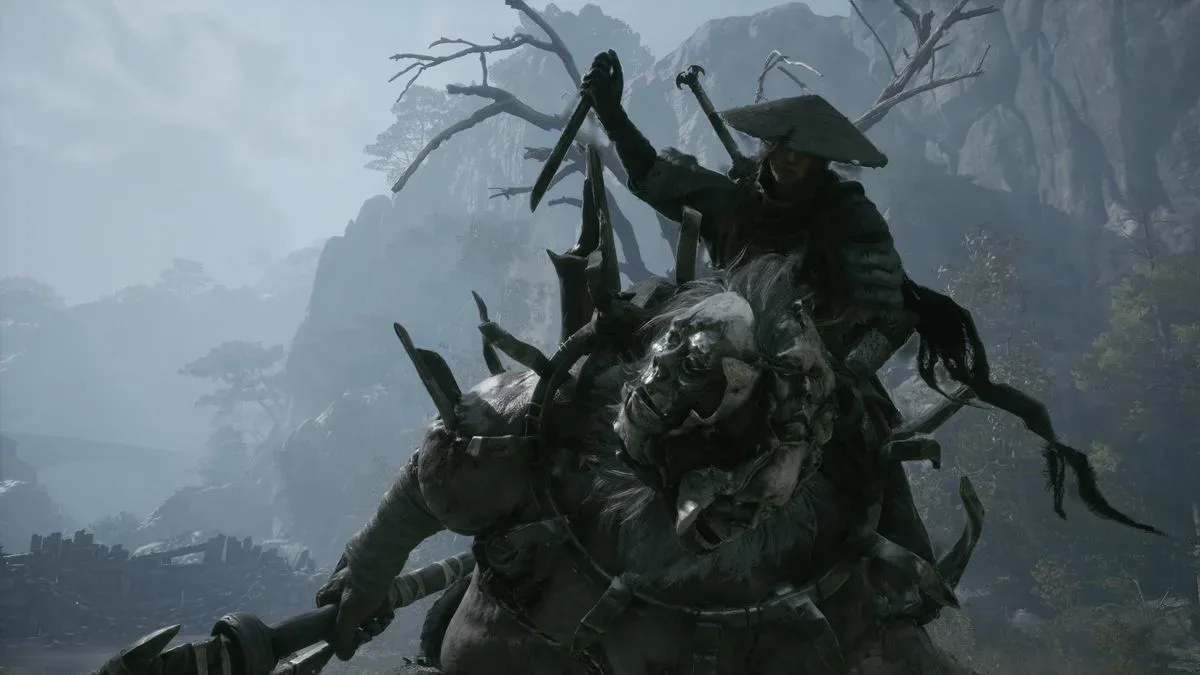
Phantom Blade Zero's weapon selection is presented as a major point of distinction because the weapons are designed to feel meaningfully different in motion. Soul can wield conventional swords, but the lineup goes much further. Twin daggers can attack independently. Gauntlets turn close-quarters combat into a crushing barrage. Great swords can exchange health for greater damage. Chained axes bring a heavy, extended-range style, while musical instruments can send destructive energy across the battlefield through their strings.
That variety extends to both the principal weapons used constantly in normal combat and sub-weapons reserved for more specialized moments. There are many boss encounters, and nearly every major boss reportedly leaves behind a weapon. That creates a steady stream of new toys, but the crucial detail is that the game gives players a practical reason to use those toys instead of treating them as collectibles.
The best loot systems do not only reward ownership. They encourage experimentation. A newly found weapon should prompt a player to ask how its timing, reach, defensive options, and damage windows might change the next encounter. When the financial or material penalty for testing it is too steep, curiosity gives way to caution. Phantom Blade Zero's progression model is built to keep curiosity alive.
Upgradeable without becoming locked in
Weapons in Phantom Blade Zero can be improved by investing materials, increasing their attack power and opening additional attacks and bonuses. On the surface, that is familiar action RPG design. The difference lies in how the game handles a player who decides that their current weapon is no longer the one they want to use.
A weapon can be downgraded to return the stones and experience spent on it. Up to level 10, doing so has no cost. Beyond that threshold, the process requires a coupon, but these coupons are described as plentiful rather than rare. The end result is a system where investment is flexible instead of permanent.
This is a deceptively significant quality-of-life feature. In many Soulslike games, upgrading a weapon is a commitment that can shape dozens of hours of play. It can discourage changing builds even when a new weapon seems more fun, because the player knows the old favorite is already upgraded while the newcomer will need a long trail of scarce resources to become competitive. The choice stops being about which weapon is enjoyable and becomes a question of whether the player can afford the transition.
Phantom Blade Zero changes that equation. If a boss drop looks appealing, the player can move resources out of their current weapon and into the new one. Finding upgrade materials effectively raises the potential strength of a broader weapon collection rather than tying progress forever to a single choice. The player still makes decisions, but those decisions are no longer punished by an inflexible economy.
That distinction matters especially in a game built around flamboyant combat tools. A game can boast a long list of weapons, but the list has less value if only a small fraction can be kept at a viable level during a normal run. An easy refund system helps ensure that the game's breadth is experienced in play, not merely viewed in menus.
Categories create choice without excessive punishment
Phantom Blade Zero does not eliminate progression entirely. Instead, it separates upgrade materials across weapon classes. One-handed weapons, two-handed weapons, and dual-wielded weapons use different resources. Sub-weapons are also divided by archetype for their upgrade needs.
That structure encourages a varied loadout. A player using a one-handed sword can invest alongside a dual weapon because the two categories do not compete for the same materials in the same way. By contrast, two weapons from the same category create a more direct resource conflict. This preserves the value of decision-making while avoiding the feeling that every experiment destroys progress.
It is a smart middle ground. Completely unrestricted upgrades could make individual choices feel weightless, while highly restrictive upgrades can turn experimentation into a luxury. Category-based materials provide an incentive to build around contrasting tools and combat roles. The player is nudged toward variety, but is not permanently trapped if a different sword, dagger set, or heavy weapon eventually proves more appealing.
There is also an important psychological benefit. Players often hesitate to change gear not because they think the new item is bad, but because abandoning a fully upgraded favorite feels wasteful. Refundable materials make a change feel reversible. That makes the discovery of every boss weapon more exciting, since it comes with an immediate invitation to test it under real combat conditions.
Not a Soulslike, but a useful lesson for Soulslikes
Phantom Blade Zero should not be reduced to a Soulslike comparison. Its structure differs in several key ways. Death does not cause players to lose resources. Standard enemies do not respawn. Stamina is generous, and there are no RPG statistics governing a character build. The boss structure is also forgiving in a specific way: once a player has cleared a boss's first phase, a later attempt begins at phase two instead of requiring that first phase to be repeated.
Those details position the game as an action RPG with its own priorities rather than a strict follower of the Souls formula. Still, its approach to weapon upgrades speaks directly to a complaint many Soulslike players recognize. In games with elaborate upgrade paths, unique weapons are often available long before the materials needed to make them competitive. Even once upgrade resources become easier to obtain late in a playthrough, fully improving several weapons may remain impractical.
The result is an odd contradiction. A game can offer a treasure chest full of inventive instruments of destruction while quietly pushing the player toward a small, reliable handful. The player may technically possess dozens of options, but the real usable selection feels much smaller.
Phantom Blade Zero treats equipment progression less like a permanent bet and more like an evolving martial-arts toolkit. That approach fits the game's emphasis on distinct choreography and combat expression. If the weapons are meant to be different, players should be encouraged to feel those differences rather than simply reading about them.
Variety becomes part of the playthrough
The promise of this design is not merely convenience. It changes the rhythm of an entire adventure. A new weapon can alter the next stretch of combat immediately. A player can switch because a particular boss, enemy group, or personal mood calls for a different style. The motivation is not boredom with the old weapon; it is the desire to experience more of what the game has made available.
That may be the strongest argument for Phantom Blade Zero's system. Loot is more satisfying when it creates fresh decisions, and progression is more satisfying when it supports those decisions rather than closing them off. The game still asks players to develop their preferred loadout and decide how to distribute category-specific resources. But it does not make a single early investment feel like a sentence for the rest of the campaign.
For an action RPG filled with swords, chained axes, gauntlets, daggers, heavy blades, and weaponized instruments, that freedom could be essential. A large arsenal only reaches its full potential when players can actually take it into battle. Phantom Blade Zero's downgrade-and-refund approach offers an elegant way to make every major weapon drop feel like an opportunity instead of an upgrade-material problem.
Community
Discussion
Start the conversation.
No comments have been posted yet.