

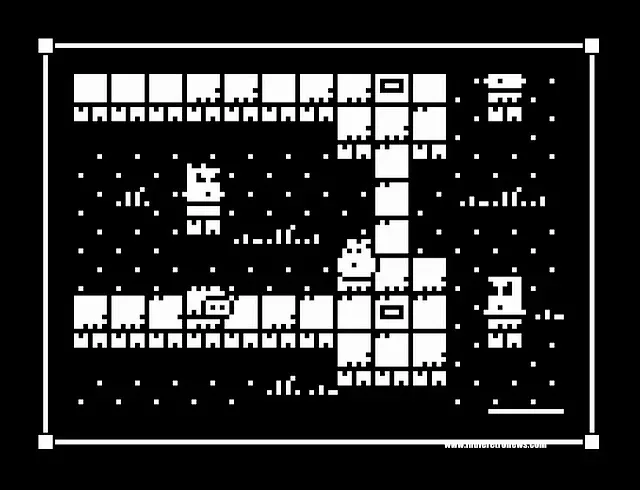
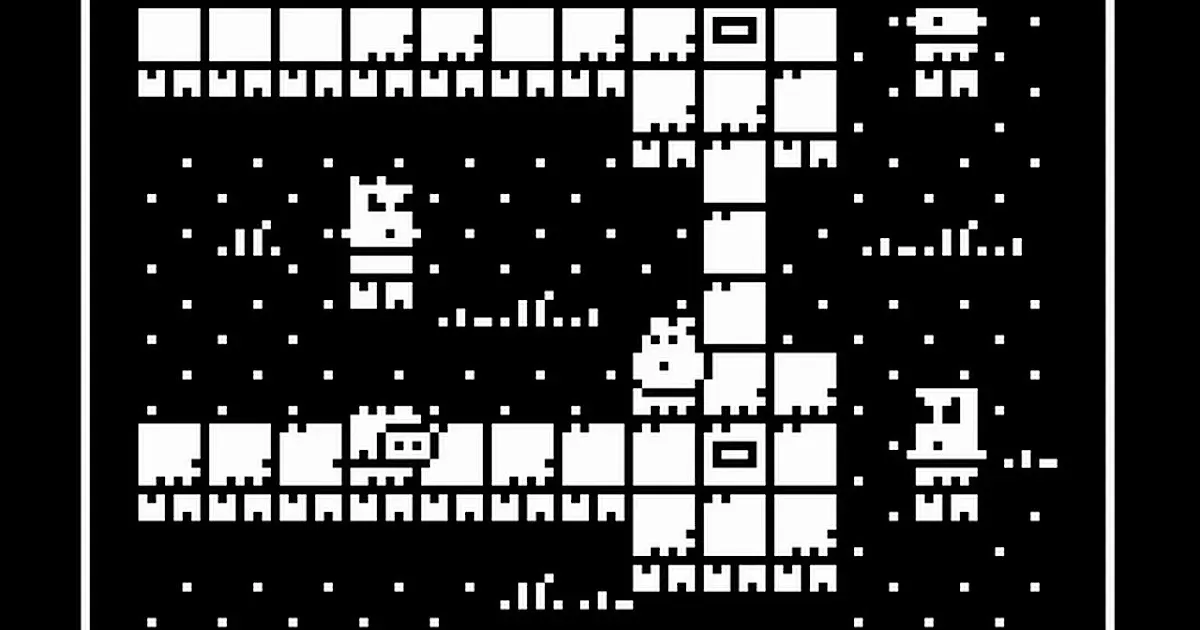
RetroSouls has released PiglyFlag, a new monochrome puzzle adventure for the ZX Spectrum. Built around a small but evocative premise, the game imagines what happens to beloved game pixels when a display is switched off: they are left in complete darkness, alone and frightened. Players are sent into that darkened world to help a terrified little piglet find safety, navigating each compact challenge while avoiding hostile creatures known as the Brymlis.
The new release continues the kind of focused, purpose-built development that remains central to the ZX Spectrum homebrew scene. Rather than chasing excess, PiglyFlag is designed around a clearly stated objective: guide and push the piglet toward the exit of every level. The monochrome presentation gives the game an immediately appropriate visual identity, matching its tale of pixels stranded after the screen goes dark while keeping the action readable on the Spectrum.
A rescue mission in the dark
PiglyFlag's story starts with an affectionate question about the characters and images players leave behind after turning off their machines. Creator Denis Grachev presents those digital inhabitants as isolated in pitch blackness and missing the people who had been playing with them. The piglet at the center of the game is particularly scared, and that turns the puzzle structure into a simple rescue mission rather than an abstract trip through a set of rooms.
That framing is a natural fit for a ZX Spectrum game. The platform's enduring appeal is tied not only to its library of classics but also to the imagination required to make memorable worlds with limited memory, controls, and visual resources. PiglyFlag embraces those limitations rather than obscuring them. Its black-and-white approach is part of the theme, and the central task is communicated without needing a complicated setup: get the piglet through the danger and to the exit.
For useful background on this topic, read OutRun Amiga Edition Receives a Major Performance Boost for the Arcade Racer's 40th Anniversary.
The game's levels put players in the role of guide and protector. Moving forward is not simply a matter of reaching a goal alone; the vulnerable piglet must be brought along and pushed safely through the route. That added responsibility is where the tension comes from. Players need to consider the path ahead, preserve room to manoeuvre, and avoid allowing the Brymlis to catch the piglet off guard.
Brymlis turn simple movement into puzzle pressure
The primary threat in PiglyFlag comes from the Brymlis, the dangerous creatures encountered across its stages. Their presence means a level cannot be treated as a casual stroll to the finish. The player must find a safe way through while keeping the piglet out of harm's way, making positioning and timing important parts of each attempt.
That combination of escort-style objectives and enemy avoidance gives the game a straightforward foundation for repeatable puzzle play. An exit may be visible, but reaching it safely is what matters. A push that seems helpful can potentially leave the piglet in a poor position, while a route that initially appears risky may prove to be the route that offers enough safety from the Brymlis. PiglyFlag's design is therefore built around reading a situation and adjusting after mistakes, rather than overwhelming players with an elaborate set of systems.
For Spectrum players, this kind of immediate, room-by-room challenge should also suit short sessions. The objective is easy to understand, but success depends on executing a plan around the hazards in front of the player. The monochrome look supports that directness, placing emphasis on the stage layout, the piglet, and the creatures that can end a run.
Classic Spectrum control options
RetroSouls has included several familiar keyboard layouts for PiglyFlag. Players can use the traditional Sinclair 1/2 configuration or the widely recognised OPQAM/Space setup. Providing both schemes is a practical decision for a machine whose users often have strong preferences based on the games they grew up with, the joystick interfaces they use, or the keyboard controls they find most natural.
The game also has a quick recovery option when a Brymli encounter goes wrong. Pressing R immediately restarts the current level. In a puzzle game based on careful movement and safe escorting, instant restarts are especially useful. They make it easier to test an idea, learn from an unsuccessful route, and return to the beginning without interrupting the flow with a lengthy reset process.
That small quality-of-life feature can matter greatly in a game where failure is part of discovering the answer. The player is encouraged to try again rather than being slowed down by the consequences of a mistake. It is a clean, old-school solution: the danger is real, but the route back into the action is only a key press away.
A collaborative ZX Spectrum production
While Grachev is credited as PiglyFlag's creator, the game also brings together several contributors from the retro development scene. Ivan Seleznev created the loading screen, providing the first visual impression before players begin the adventure. Loading screens have long held a special place in Spectrum culture, serving as more than a technical necessity; they are often a game's opening piece of artwork and help establish its personality before play begins.
The soundtrack comes from Oleg Nikitin, whose chiptune music accompanies PiglyFlag's monochrome journey. Music is an important part of establishing the mood in a game centered on darkness and a nervous digital companion. The premise may be playful, but the piglet's predicament calls for an atmosphere that helps sell the sense of a small character trying to escape an unfriendly space.
RetroSouls also notes moral support from Artemka Vasilev and Dmitri Ponomarjov. Credits like these underline the collaborative spirit that continues to sustain new software for vintage platforms. Modern ZX Spectrum projects can be compact in scope while still involving artists, musicians, developers, testers, and supporters who share enthusiasm for the hardware and its creative possibilities.
Why monochrome fits the concept
PiglyFlag's monochrome styling is not merely a visual constraint. It is directly connected to its central idea of a world left behind when the screen goes dark. A reduced palette can create strong contrast, define danger clearly, and give environments an uncluttered, graphic appearance. In this case, it also helps the game turn the absence of colour into a feature of the fiction.
That makes PiglyFlag an interesting fit for players who enjoy contemporary Spectrum releases that use retro technology as a starting point for new ideas. The game does not need to imitate a specific famous title to feel at home on the system. Its piglet-escort mechanic, its dangerous Brymlis, and its dark digital setting give it a distinct premise, while the control options and instant retry key show awareness of how Spectrum games are commonly played.
For newcomers to ZX Spectrum homebrew, PiglyFlag also sounds approachable in the best sense. The goal is visible and understandable, the controls support classic layouts, and a failed attempt can be restarted immediately. For experienced players, the appeal lies in working through the routes efficiently and keeping the piglet away from every lurking threat.
A compact new adventure for Spectrum fans
PiglyFlag arrives as a deliberately focused puzzle adventure: a small frightened piglet, a series of exits, and Brymlis standing between the two. Its premise adds charm to that familiar structure, imagining digital characters as lonely after players leave them behind in the dark. The result is a game that uses its monochrome identity, simple objective, and restart-friendly design to create a concise rescue challenge for ZX Spectrum enthusiasts.
With art by Ivan Seleznev, chiptunes by Oleg Nikitin, and support acknowledged from Artemka Vasilev and Dmitri Ponomarjov, RetroSouls' latest release is also a reminder that new Spectrum games remain collaborative projects. Players looking for a fresh reason to return to the machine can now take on PiglyFlag's darkened stages, choose Sinclair 1/2 or OPQAM/Space controls, and guide its pixel piglet toward safety one level at a time.
Community
Discussion
Start the conversation.
No comments have been posted yet.