

The Pimax Dream Air is a striking example of what high-end wired PC VR can still achieve. At its best, this compact headset pairs extraordinarily sharp Micro-OLED screens with a remarkably light 170-gram design, producing an image that can make familiar virtual worlds feel newly convincing. It is also a reminder that cutting-edge specifications alone do not guarantee a painless premium experience.
Available from $2,000 / £1,542 for the Lighthouse headset-only edition, or $2,299 / £1,774 for the SLAM package with controllers and inside-out tracking, the Dream Air costs substantially more than many of the VR headsets most players will be considering. That makes its technical inconsistencies, controller shortcomings, and software-related crashes much harder to overlook. Pimax has created hardware capable of genuine visual magic, but prospective buyers need an extremely capable PC and a willingness to troubleshoot.
A rare commitment to lossless wired PC VR
Modern VR has increasingly shifted toward standalone convenience and wireless streaming. Those approaches can be excellent for accessibility and ease of use, but they also introduce compromises compared with a direct wired connection to a gaming PC. The Dream Air is part of a much smaller group of contemporary headsets still pursuing the traditional PC VR ideal: a lossless DisplayPort link between the headset and a desktop graphics card.
That focus puts it in a different category from standalone-first devices such as Meta Quest 3, while also making it a more specialist product than PlayStation VR2. It is aimed at enthusiasts who want their PC hardware to drive the most detailed image possible, rather than players seeking the least complicated way to jump into VR.
For useful background on this topic, read Fable Director Says Playground's Reboot Team Is Built Around Fans of the Original Trilogy.
The cable arrangement is necessarily extensive, but Pimax has handled it thoughtfully. Connections split from the rear of the headset and combine behind the player before one longer lead reaches a block that separates USB, DisplayPort, and wall power. It is not an elegant wireless solution, but once installed, the design keeps the most distracting cable management away from the headset itself.
Small, light, and unusually comfortable
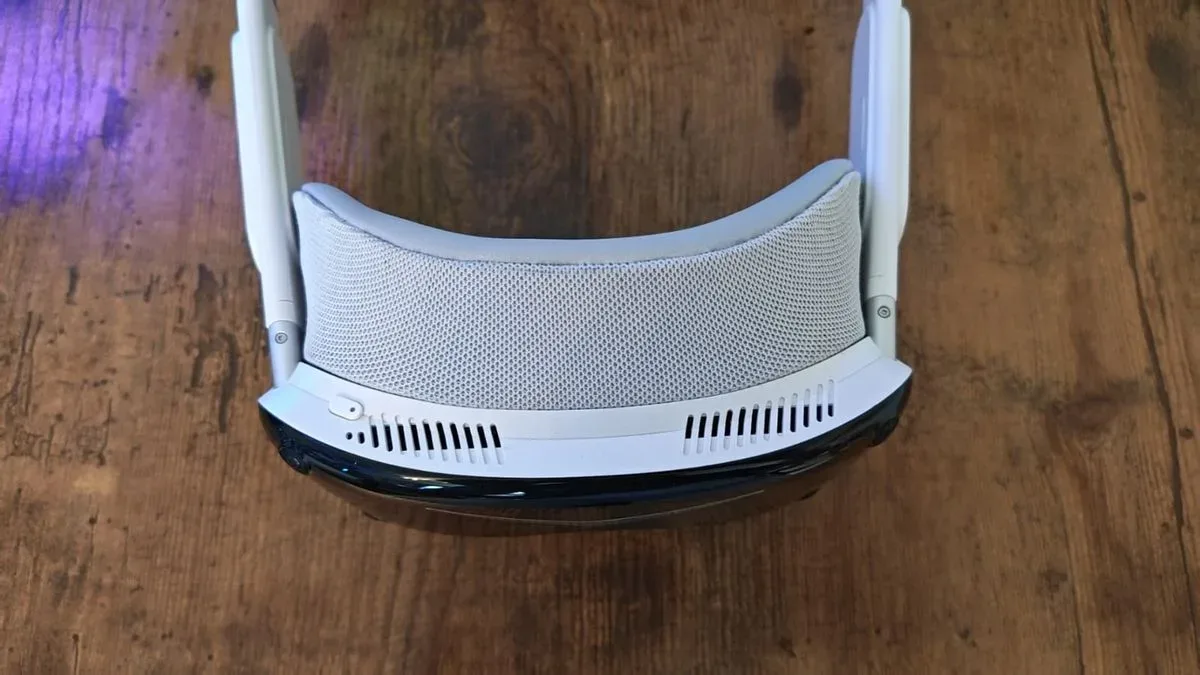
One of the Dream Air's biggest achievements is its form factor. Previous Pimax devices, including the Crystal family, demonstrated that the company could chase impressive image quality. They also carried a reputation for bulk. The Dream Air goes in the opposite direction. Its Apple Vision Pro-like styling is paired with an exceptionally compact body that feels almost like a smart-glasses concept expanded into a proper VR headset.
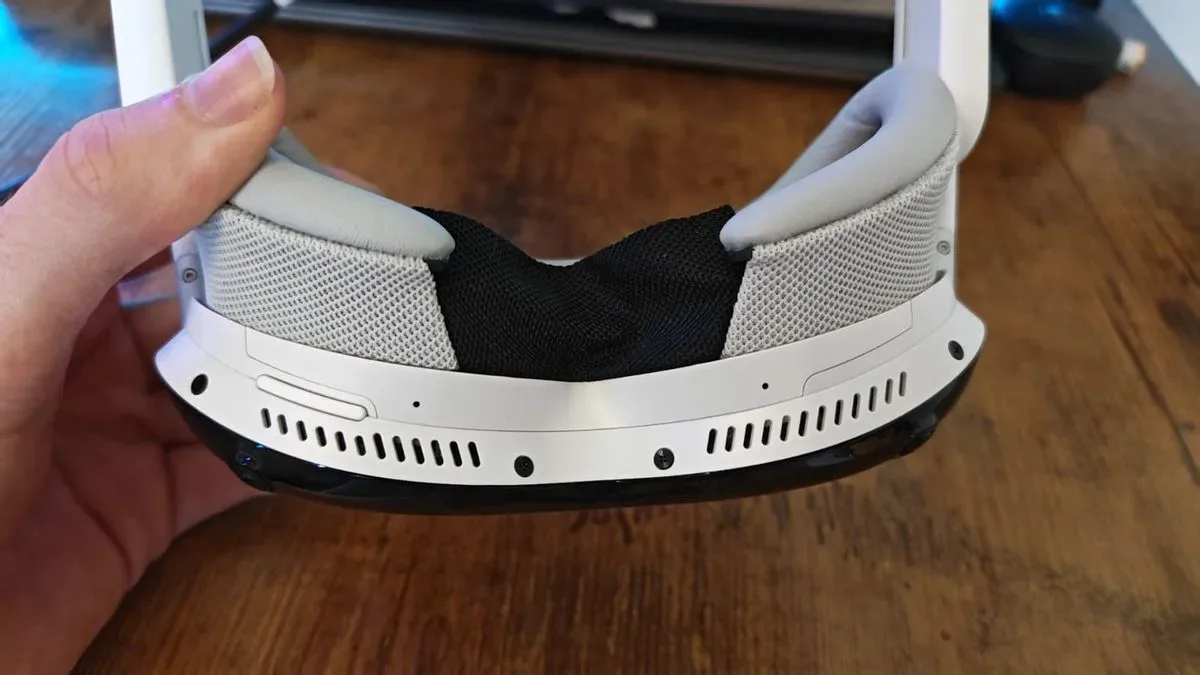
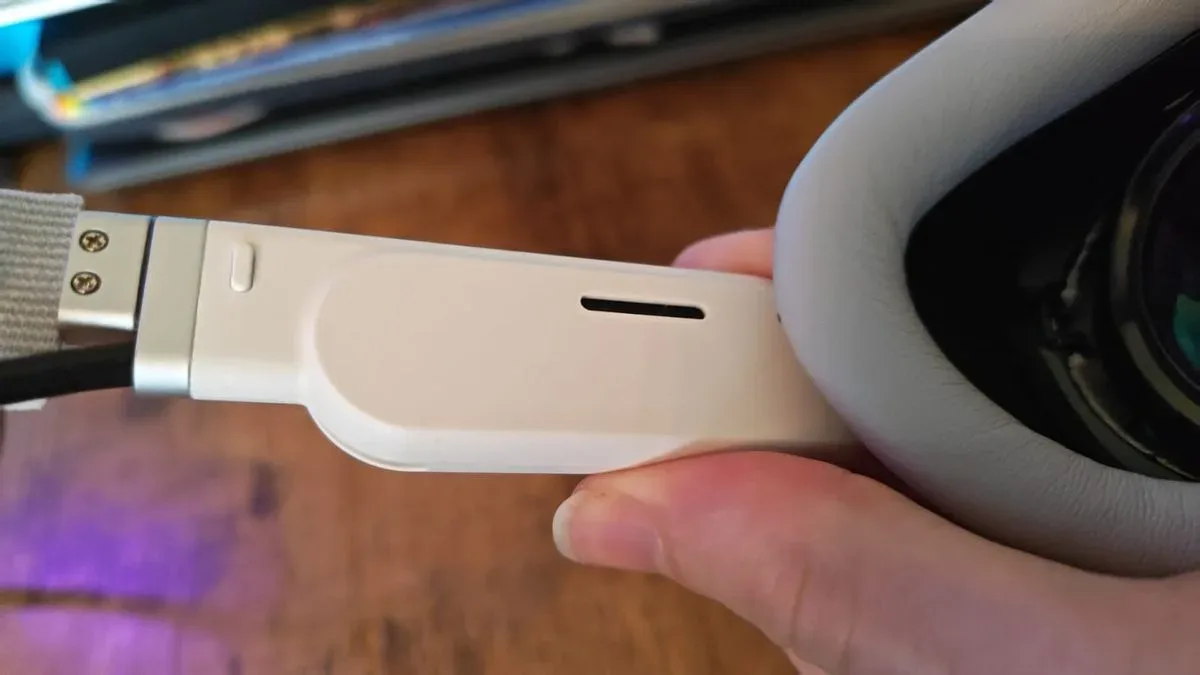
At 170 grams, it is dramatically lighter than many mainstream headsets. Fabric materials, a Velcro-secured strap, and a dense yet breathable facial interface help it remain comfortable over long sessions. The headset does not carry the downward pull that can make heavier devices rest uncomfortably on the nose and cheeks. Ventilation is another positive: extended use did not produce the sweaty, enclosed feeling that can affect some VR hardware.
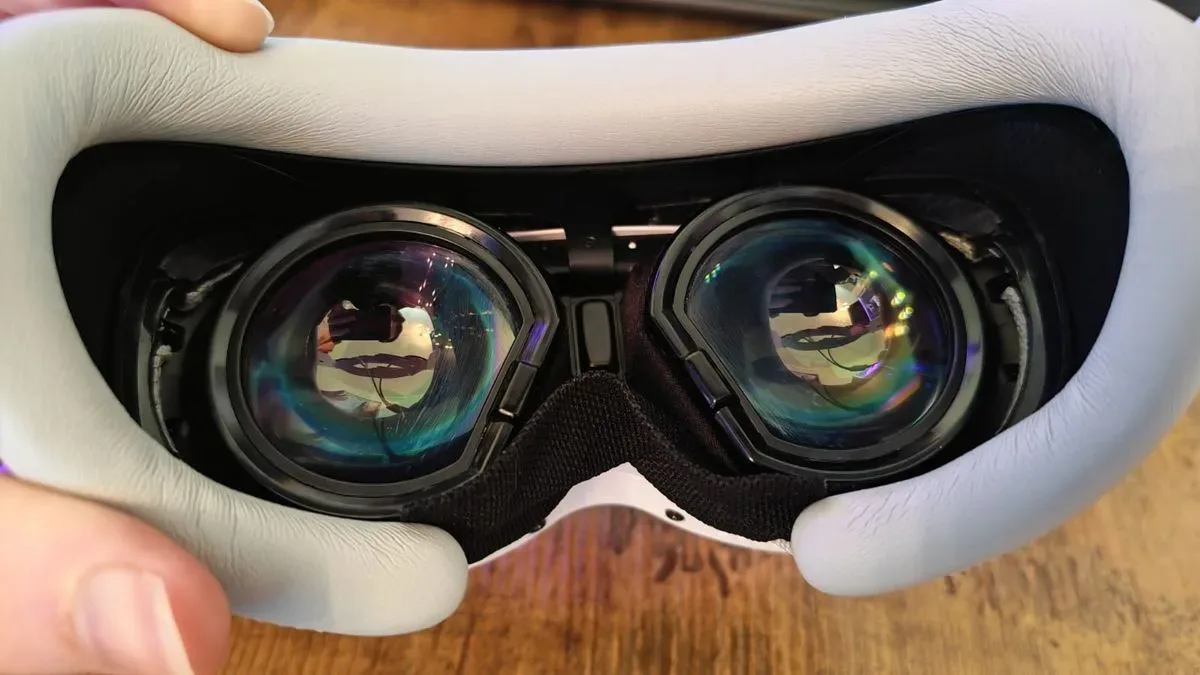
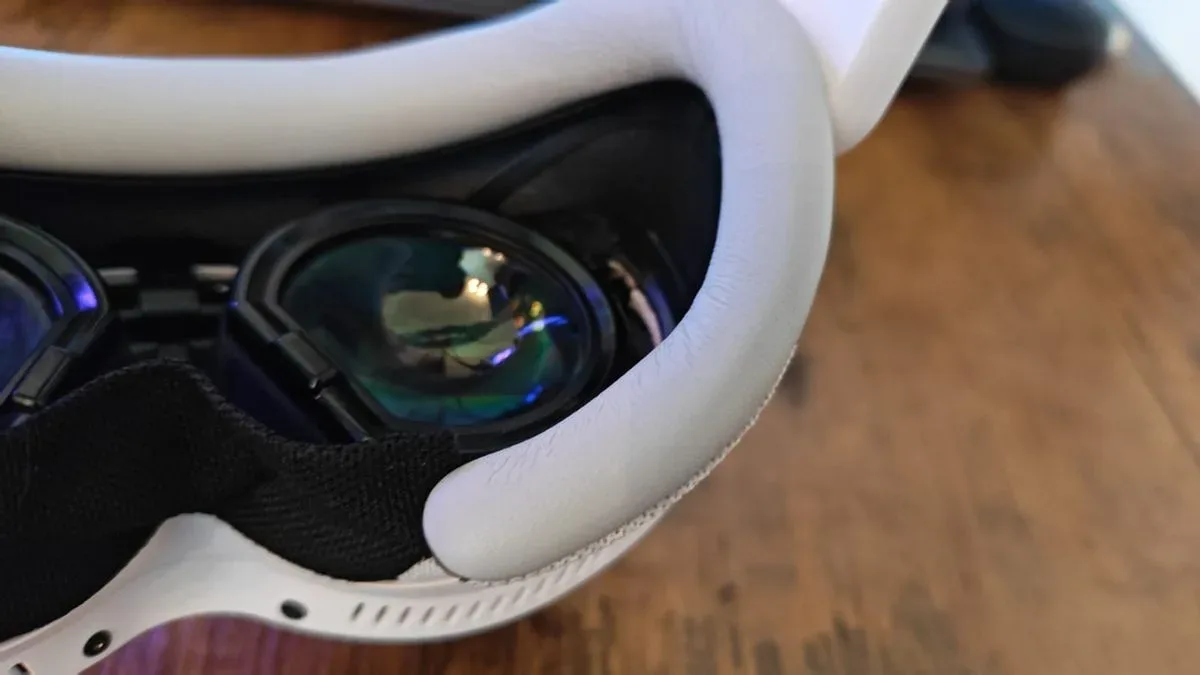
There are trade-offs to making a headset this small. Getting it positioned perfectly can take some care, and movement around the brow can shift it slightly. It is also a poor fit for glasses wearers because there is little room inside. Users who normally rely on prescription lenses should investigate compatible vision solutions before treating the Dream Air as an easy upgrade.
Micro-OLED screens are the star attraction
The headline specification is formidable. The Dream Air uses Sony Micro-OLED panels viewed through ConcaveView pancake lenses, delivering a stated resolution of 3840 x 3552 per eye. Pimax calls it the world's smallest full-feature 8K VR headset, and the visual result makes that claim easy to understand.
Across games including Walkabout Mini Golf, Half-Life: Alyx, Blade & Sorcery, and Maestro VR, the headset's clarity can be breathtaking. Bright scenes gain vivid color and texture, while highly detailed environments take on an almost photorealistic character. The lenses help maintain a broad, usable area of focus, creating an image that feels balanced rather than merely sharp in a tiny central spot.
Its maximum refresh rate is 90Hz, which is not an industry-leading figure but is appropriate considering the display resolution involved. The Dream Air also includes eye tracking, opening the door to foveated-rendering-style performance benefits. Pimax Play does not present a conventional foveated rendering switch, though it offers options that enhance the central image and reduce detail toward the edges.
Unfortunately, some software smoothing, interpolation, motion-blur, and upscaling options can introduce visual noise or a warped effect when the headset is not maintaining its target performance. The raw display quality is exceptional; attempts to compensate for lower frame rates appear less convincing.
Field of view can feel more restricted than the specification suggests
Pimax quotes a 110-degree horizontal field of view. In practice, the Dream Air's physical design makes the edges of the visible image easier to notice than on devices such as Quest 3 or PSVR2. A conspicuous dark boundary can frame the image, particularly in games where players are focused on the center of the display. Once noticed, those borders may become a repeated reminder that the experience is taking place inside a headset rather than in an uninterrupted virtual space.
This does not erase the value of the displays, but it means the Dream Air's immersion is not flawless even when its panels are performing at their best.
Two versions, with a meaningful divide
The lower-priced Lighthouse model is designed for players who already own compatible base stations and controllers from the established wired PC VR ecosystem. It does not include hand tracking or passthrough support. For existing enthusiasts with the necessary equipment, that may be an acceptable, if still expensive, route into Pimax's new display technology.
The SLAM model is the more complete package. It adds four headset cameras for inside-out tracking, passthrough, hand tracking, and a pair of controllers. Yet it is also the version where the gap between the Dream Air headset's premium construction and its accessories becomes especially obvious.
Controllers do not match the headset's ambition
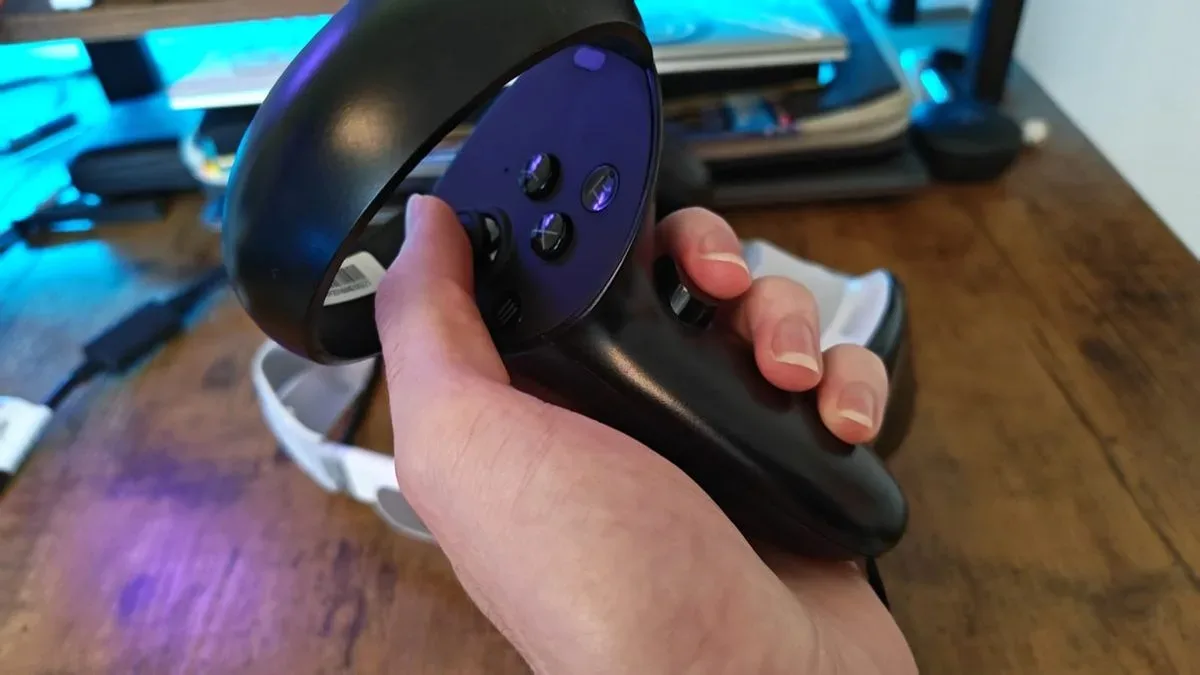
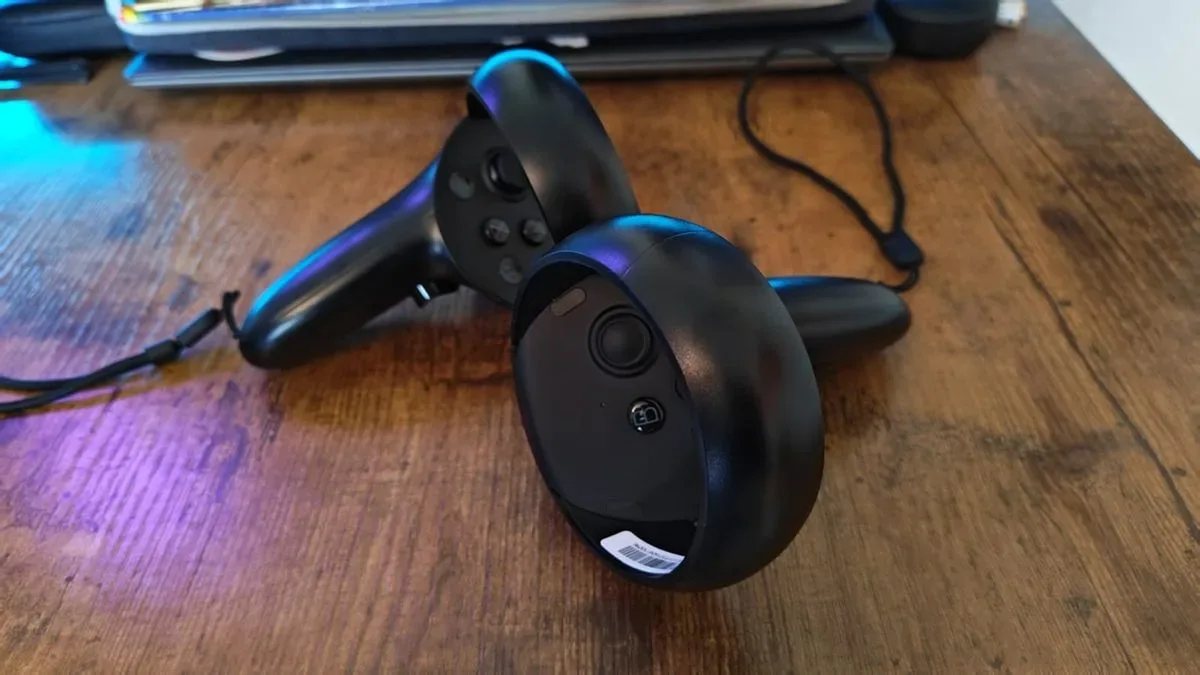
The bundled controllers use familiar tracking rings and have comfortable grips, with thumbsticks that are slightly larger than those on some competing VR controllers. Haptic feedback is also capable enough to add useful texture to interactions, including contact sensations in Half-Life: Alyx.
However, they feel unusually light and hollow next to such a costly headset. More importantly, their behavior can be unreliable. Testing revealed occasions where controllers registered at an incorrect height, twitched despite steady hands, or behaved inconsistently between games. A left trigger also became stuck in a pressed position during play.
Tracking was not uniformly bad. In Blade & Sorcery, it could work very well, while headset positional tracking generally held up across varying room-lighting conditions. But a premium VR setup should not make a player wonder whether a missed putt in Walkabout Mini Golf came from their own mistake or a controller glitch. At this price, inconsistency is a serious flaw.
Pimax Play may be the larger obstacle
The most significant concern is software stability. Pimax Play handles firmware, room configuration, IPD adjustments, and headset settings, while Pimax Home provides its own interface. Those functions are useful in principle, but their interaction with SteamVR can become problematic.
Games themselves can run well. In testing, titles played smoothly at high settings when the Dream Air was functioning normally. But opening either the Pimax or SteamVR overlay could trigger stutters, freezes, and even full PC crashes. Reducing overlay resolution and other settings did not fully resolve the issue. Notifications as minor as an in-game achievement appearing through SteamVR could risk disrupting the session.
This suggests a possible conflict between multiple VR overlays, although the exact cause remains uncertain. Regardless of the underlying explanation, Steam is fundamental to PC VR gaming, so a headset priced at this level needs to coexist with SteamVR more reliably. Pimax recommends at least an RTX 2070, RTX 3060, or RTX 4060 for basic VR use, and suggests an RTX 5090 for ideal performance. Yet the instability appeared on a system built around an RTX 5080, Intel Core Ultra 7 270K Plus processor, 32GB of DDR5 memory, and NVMe storage, with current firmware and drivers installed.
That is difficult to dismiss as simply a case of underpowered hardware. The same PC can run these VR games at their highest settings with other headsets. Problems such as changing player height mid-game, frozen display borders, controller instability, and overlay crashes point toward issues within the Dream Air ecosystem rather than a simple shortage of graphics horsepower.
Should you buy the Pimax Dream Air?
The Pimax Dream Air is easy to admire and difficult to recommend broadly. Its screens are among the most impressive available for VR gaming, and the fact that Pimax has brought that fidelity to such a lightweight, comfortable wired design is genuinely exciting. It represents a future many PC VR fans want: less facial strain, less bulk, and uncompromised visuals from a direct desktop connection.
But the headset asks buyers to spend $2,000 before controllers, or $2,299 for the fuller SLAM configuration, and it does not consistently deliver the flawless experience that price should command. The intrusive display borders, lack of glasses space, fragile-feeling controllers, erratic tracking moments, and Pimax Play instability all diminish the value proposition.
For a wealthy PC VR enthusiast with hardware at least as powerful as the test system, existing tolerance for fiddling with settings, and a specific desire for the best possible Micro-OLED image quality, the Dream Air can be a spectacular purchase. When everything aligns, it can be among the finest headsets to wear.
For most players, however, Quest 3, Pico 4 Ultra, or PSVR2 remain more sensible choices. They may not match the Dream Air's breathtaking wired visual output, but they cost far less and avoid asking users to pay a luxury premium for an experience that can still be unpredictable.
Community
Discussion
Start the conversation.
No comments have been posted yet.